.png?x-oss-process=image/resize,h_100,m_lfit/format,webp)

.png?x-oss-process=image/resize,m_lfit,w_200/format,webp)

热门产品
Popular articles
Russia EAC Certification Update: Analyzing the Impact of CU-TR Standards on Exporting Enterprises
Negotiation Tactics for Newcomers in Foreign Trade: Strategies to Handle Client Price Haggling
Detailed Guide to Israel's SII Certification Process: Compliance Path for Home Appliances, IT and Lighting Products in the Mandatory Catalog
Philippine NTC Wireless Certification Guide: Key Timeline Control from Application to Issuance
Don't Miss Out! Comprehensive Guide to AB客CRM's Fully Intelligent Customer Management and Follow-up Tutorial!
One daily tip for building a foreign trade website: Mobile adaptation techniques for independent websites!
Practical Guide: Using Free Tools for Competitor Analysis and Title Tag Optimization
推荐阅读








(1).png?x-oss-process=image/resize,h_1000,m_lfit/format,webp)

How can enterprise content become a long-term asset?
Against the backdrop of the continuous evolution of AI search and generative engine optimization, for B2B foreign trade companies to turn their website content into long-term assets, the key lies not in piling up short-term promotional information, but in continuously accumulating technical articles, application cases, selection guides, and industry research around industry issues. By building a clear knowledge-based content structure, consistently updating high-value topics, and combining GEO methods to optimize page semantics and topic relevance, corporate websites can gradually establish a sustainable industry knowledge system, improve search visibility, content reuse value, and AI search citation opportunities, ultimately achieving content asset operation.
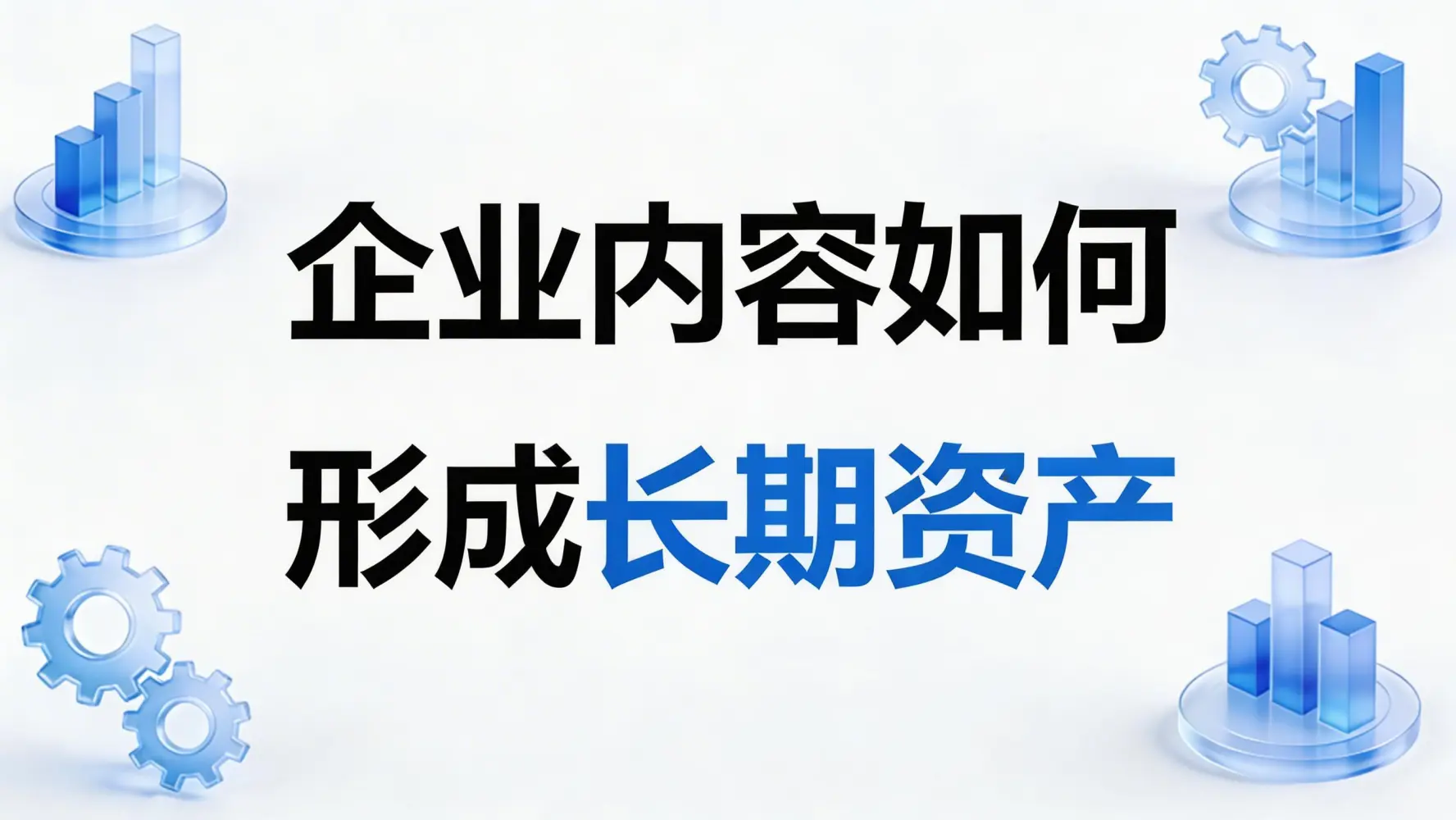
How can a company's content become a long-term asset?
In today's world, where AI search and generative engines are rapidly reshaping traffic entry points, corporate websites are no longer just "showcases," but increasingly resemble knowledge nodes capable of continuously generating inquiries, building trust, and accumulating industry influence. For B2B foreign trade companies, truly valuable content is not promotional copy that becomes ineffective a few weeks after publication, but rather industry knowledge that can be continuously searched, cited, and read by customers for the next 12 months, 24 months, or even longer.
If companies can continuously accumulate technical articles, application cases, solutions, and research content around stable industry themes, and use the ABKE Guest GEO methodology for structured layout, then the website content will gradually upgrade from an "information page" to a "long-term asset library".
Why do many companies create a lot of content but fail to turn it into assets?
The problem is usually not "writing too little," but "writing too scattered." Many companies update articles every month, but the content themes are highly dependent on short-term events, promotional periods, or product launches. As a result, although the number of pages increases, the proportion of content that can actually bring in organic visits and inquiries is not high.
From an SEO and GEO perspective, short-term marketing content often suffers from three typical problems:
Common causes of failure
First, search activity has a short lifespan. For example, during trade show pre-event promotions, holiday sales, and limited-time events, search popularity typically declines significantly after a few days to a few weeks.
Second, the information density is insufficient. Purely promotional pages often lack parameters, scenarios, principles, and comparative content, making them difficult for search systems to identify as high-value reference sources.
Third, the thematic connections are weak. If there is a lack of logical connections between the content, it will be difficult for the website to form an industry knowledge network that can be understood by AI.
In practice, many B2B websites find that about 20%-30% of their core content pages often contribute over 60% of their long-term organic traffic. These pages are usually not advertising pages, but rather "evergreen content" such as technical explanations, selection guides, troubleshooting, and case studies.
The core logic of long-term content assets: shifting from "publishing articles" to "accumulating knowledge".
The essence of corporate content assetization is not about how well-written a single article is, but rather whether a website can consistently and reliably answer industry questions over the long term. AI search systems prefer website content sources that are clearly themed, consistently updated, contextually complete, and provide credible information.
There are four very key mechanisms behind this:
1. Knowledge accumulation effect
By consistently publishing content on the same topic, search engines will gradually recognize a website's expertise in that field, and AI systems will be more likely to regard it as a stable source.
2. Theme Coverage Effect
The more upstream issues, midstream solutions, and downstream applications a website covers, the more complex the user's problems, and the higher the probability that the website will be selected.
3. Stable Trust Effect
Content that has been around for a long time and has a revision history is usually more likely to gain the trust of both search systems and customers than temporarily pieced-together pages.
4. Semantic network effects
The interconnected and mutually corroborating content will gradually form an industry knowledge graph, enhancing the overall explanatory power of the website.
What kinds of content are most likely to become long-term assets?
Not all content is suitable for long-term accumulation. When planning content, B2B foreign trade companies can prioritize the following types of "high-value" content, which typically have a longer lifespan in the search environment and are more likely to support inquiry conversion.
| Content type | Typical Themes | life cycle | SEO/GEO Value |
|---|---|---|---|
| Technical Principles Article | Working principle, material differences, and structural analysis | 2-5 years | Suitable for handling basic search traffic and building professionalism |
| Selection Guide | How to select specifications, parameters, and models | 1-3 years | Directly connects to purchasing intent, with high potential for inquiries. |
| Application Cases | Industry scenarios, customer needs, and solutions | 2-4 years | Enhancing trust helps AI understand real-world application scenarios. |
| Troubleshooting content | Frequently Asked Questions, Anomaly Analysis, and Maintenance Recommendations | 1-4 years | High question matching accuracy, easily retrieved and cited by AI. |
| Industry research and trend content | Regulations, supply chain changes, and technology trends | 6-18 months | Suitable for building industry influence and brand awareness |
Generally speaking, technical explanations and selection articles are more suitable as the foundation of a website's content assets, while case studies and industry research content are more suitable as a "trust enhancement layer" and an "influence expansion layer".
How should companies plan their content structure to truly create a scalable asset pool?
If you want your content to have a compounding effect, structure must precede updates. Many corporate content creators fail not because they lack writers, but because they lack a clear section system and thematic map. We recommend starting with the following four steps:
First, establish an "Industry Knowledge Section" instead of a "News Section".
If a website's sections consistently consist only of "News Center," "Company News," and "Exhibition Information," the content will naturally lean towards short-term information. Sections more suited to content assetization could include: Technical Encyclopedia, Selection Guide, Application Cases, FAQs, Industry Research, and Solutions Center.
II. Develop content clusters around core product themes
For example, if your company mainly deals in electronic components, don't just write "Introduction to a new model," but rather create a series of related articles around topics such as "Component Selection," "Temperature Resistance Parameters," "Application Circuits," "Packaging Differences," "Causes of Failure," and "Purchasing Recommendations." This makes it easier for search engines and AI systems to understand that your website is comprehensive on that topic.
Third, write the case studies as "searchable question answers".
Many case study pages only list the client's name, the details of the collaboration, and product images, but this isn't enough for SEO and GEO. A better approach is to transform the case studies into industry-specific questions, such as "How to choose connectors in high-humidity environments" or "Why are certain types of sensors more suitable for food processing equipment?" This is how case studies gain search value.
Fourth, establish a content update mechanism, rather than just pursuing the number of articles published.
Compared to mechanically publishing a dozen or so superficial articles each month, consistently updating with 10 high-value core articles often yields more stable results. Many well-performing B2B websites in the industry revise and supplement their core technical articles every 6-12 months to keep the parameters, applications, and case studies information fresh.
From SEO to GEO: Why are content assets more important in the AI search era?
In the past, companies created content primarily for traditional search engine rankings; now, content carries a more important responsibility—becoming a reliable, integrable, and citation-based source of information for AI-generated answers. In other words, the value of corporate content has evolved from "grabbing keywords" to "grabbing cognitive entry points."
In an AI search environment, the system typically prioritizes content with the following prominent features:
- The content directly answers the questions, rather than going around in circles with promotional claims;
- It has a clear structure, heading hierarchy, and semantic theme;
- The page has been around for a long time and is continuously updated;
- There are multiple related pages on the site that support each other;
- Having certain case studies, data, parameters, or experience information facilitates system extraction.
This also means that a technical explanation article written by a company today, if the topic is chosen accurately and the structure is designed reasonably, has value beyond just generating traffic once. It may continue to influence search results, AI responses, potential customer perception, and the brand's professional image in the future.
A classic case study: How electronic component suppliers can turn content into "compound interest assets".
Taking the electronic components industry as an example, many companies initially focused their website content on product introductions and company news. While these pages could meet basic display needs in the early stages, over time, traffic often declined, and the quality of inquiries became unstable.
Later, some companies began to shift to a longer-term content strategy, such as systematically publishing the following themes:
• Selection methods for capacitors, resistors, and connectors
• Common design problems in application circuits
• Recommendations for device use in high temperature, high humidity, and vibration environments
• Performance differences between different packages and materials
• Common failure scenarios and troubleshooting approaches
The advantage of this type of content is that it doesn't revolve around "what I want to sell," but rather around "what problems are my customers solving." As content gradually accumulates, the website will form a knowledge network covering design, procurement, application, and maintenance.
Based on the experience of many B2B content projects, a high-quality technical column that has been continuously operated for 9-12 months can usually bring more stable long-tail traffic growth; and when there are more than 50-80 related articles and a clear theme cluster is formed, the chances of the page being indexed by search engines for a long time and being recognized and cited by AI systems will also increase significantly.
Actionable suggestions: What can B2B foreign trade companies start doing right now?
Content assetization implementation list
1. First, conduct a thematic review: Identify the company's 5-10 core product or technology directions, and expand on common issues, selection suggestions, application scenarios, and case studies for each direction.
2. Prioritize: Prioritize publishing content with high search demand, high customer attention, and high professional threshold, as this type of content is most likely to create barriers to entry.
3. Standardized article template: It is recommended that each article include modules such as problem definition, principle explanation, applicable scenarios, parameter comparison, common misconceptions, and further reading.
4. Strengthen internal links: Each article should be linked to at least 2-4 related articles to help users read more deeply and also help the search system understand semantic relationships.
5. Regularly review data: Focus on organic visits, dwell time, keyword coverage, inquiry source pages, and bounce rate, rather than just the number of posts.
6. Use methodology, not inspiration, to create content: Only by consistently adopting structured planning can a website gradually become a true industry knowledge platform.
Further reflection: What long-term content truly brings is more than just traffic.
When a company's content begins to possess the attributes of a long-term asset, the results go beyond just increased website traffic. Deeper changes include: reduced sales communication costs, faster assessment of a company's professionalism by potential customers, and a gradual expansion of the brand's perceived reach within the industry.
Often, before even formally inquiring, clients have already completed the first round of screening through technical articles, case studies, and solution pages. In other words, content is not just an adjunct to advertising; it is an integral part of the sales process itself.
Therefore, what enterprises really need to build is not a collection of articles, but a knowledge asset system that can be accumulated over time, reused across channels, and recognized across search environments.
Want your website content to truly become a long-term asset in the era of AI search?
If you are planning to upgrade the content of your B2B foreign trade website and hope to improve the website's visibility and industry influence in AI search through more systematic column design, technical content layout and GEO strategy, you can learn more about ABKE GEO 's content assetization method.
View ABKE Guest GEO Content Building PlanThis article was published by ABKE GEO Research Institute.
.png?x-oss-process=image/resize,h_100,m_lfit/format,webp)
.png?x-oss-process=image/resize,h_100,m_lfit/format,webp)

.png?x-oss-process=image/resize,h_100,m_lfit/format,webp)
.png?x-oss-process=image/resize,h_100,m_lfit/format,webp)
.png?x-oss-process=image/resize,h_100,m_lfit/format,webp)
.png?x-oss-process=image/resize,h_100,m_lfit/format,webp)
