Hot Products





Popular articles
广交会采购商比较多家供应商,如何制作一张可核验的五维采购对照卡?
汽车企业广交会展后如何做好GEO?用30天完善海外采购商评估所需信息
第140届广交会新品如何做GEO内容?从现场演示到采购咨询的六项信息核对指南
Recommended Reading


How to Test AI Visibility Repeatedly and Separate GEO Progress from Answer Fluctuations
ABKE outlines how export B2B teams can evaluate GEO reports using representative questions, comparable test conditions, repeated observations and traceable evidence.
B2B GEO EVALUATION · EVIDENCE AND MEASUREMENT
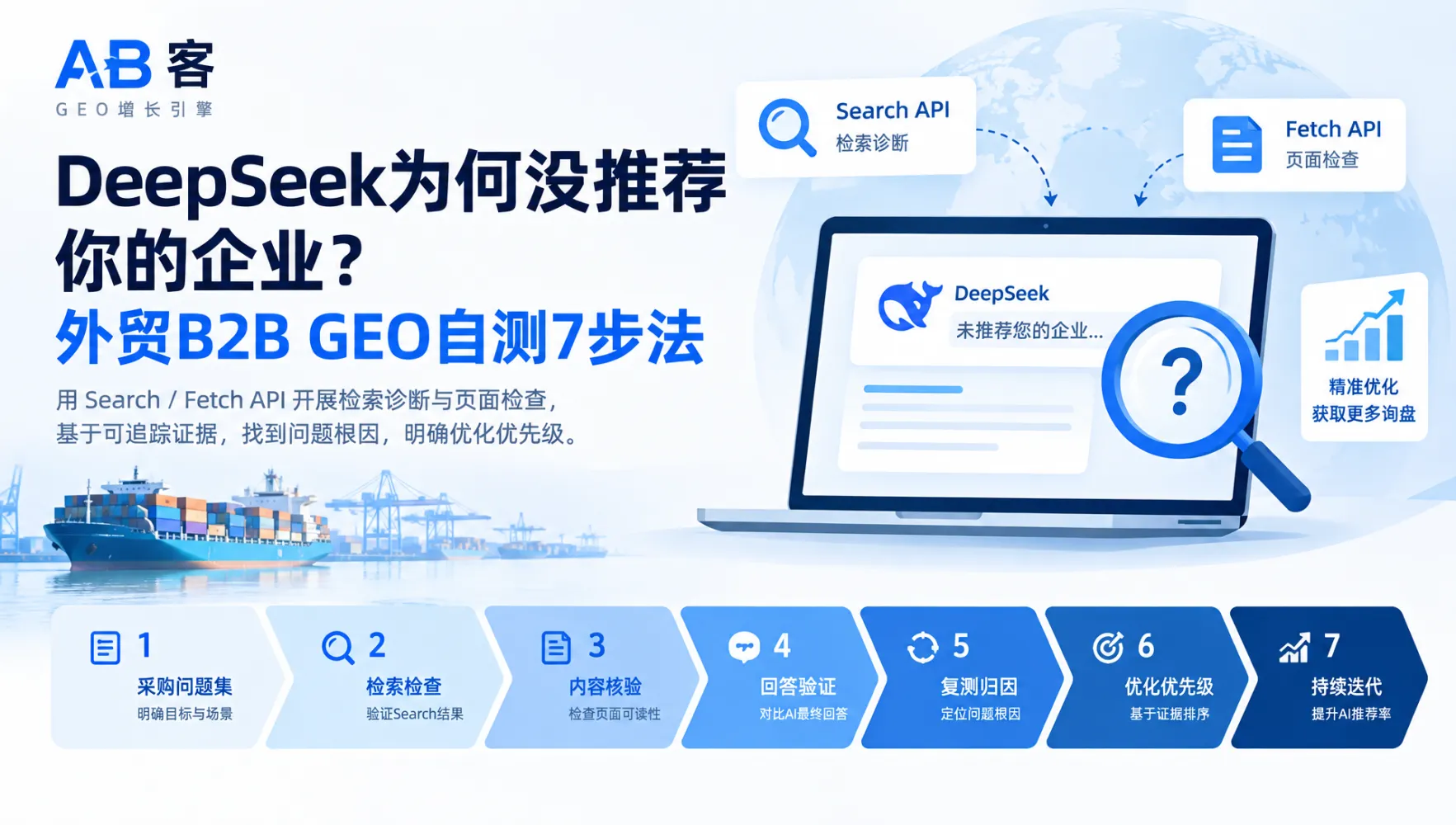
A single AI answer is an observation—not proof of GEO progress. To evaluate whether your company is becoming more visible, test representative buyer questions repeatedly, document the conditions, and compare equivalent batches against a recorded baseline.
For export B2B teams, the useful question is not simply “Did the AI mention us?” It is “Does our business appear more consistently, accurately, and appropriately in the procurement questions that matter?” This guide explains how to investigate that question without mistaking answer fluctuations for a sustained change.
What repeatable AI visibility testing actually means
Repeatable AI visibility testing is a documented process for observing comparable buyer questions under recorded conditions across multiple test batches. The objective is a repeatable measurement process, not identical AI answers.
AI-generated responses can vary with the platform, model, language, browsing mode, conversation history, and available sources. A change in one answer may reflect those conditions rather than a change in your company’s visibility.
- Brand mention: Does the answer explicitly identify your business?
- Source citation: Does the answer cite a source that meets your documented citation rule?
- Recommendation: Does the answer explicitly suggest your business as an option for the stated need?
- Answer accuracy: Are the claims about your products, capabilities, and suitability supported by verified company information?
These are different observations. A mention is not automatically a recommendation, and a recommendation is not evidence of an inquiry or a sale.
Evaluate separate visibility signals across repeated observations rather than treating one favorable answer as a trend.
Build a question set that reflects real procurement decisions
Start with the questions your target buyers would reasonably ask before selecting a supplier. Use sales conversations, technical inquiries, product documentation, and known purchasing concerns as inputs. Do not build the test only around prompts that already produce favorable answers.
Cover different buyer intentions
- Supplier discovery: Which suppliers serve a particular application, market, or manufacturing requirement?
- Technical selection: Which product characteristics matter for the buyer’s operating conditions?
- Supplier evaluation: What evidence should a buyer request about quality control, customization, or delivery capability?
- Brand verification: What can the AI accurately explain about your company and its offering?
Keep unbranded discovery questions separate from questions that explicitly name your company. A prompt containing the brand can assess recognition or accuracy, but it does not demonstrate that the platform independently surfaced the company.
Freeze a core set and version any changes
Retain the exact wording, language, target market, product scope, and buyer intent for each question. If you add a new market or revise a prompt, label it as a new version. Report the unchanged core separately from exploratory questions so that a change in the sample does not masquerade as better performance.
Document the conditions before comparing answers
A baseline is the recorded starting point for a defined question set and testing configuration. Without it, a later screenshot cannot establish how performance changed.
Minimum test record
- Question: Question ID, exact prompt, version, language, and intended buyer context.
- Platform: Service name and model or mode where visible; mark unavailable details as unknown.
- Session: New or existing conversation, account state, personalization settings where accessible, and any preceding messages.
- Retrieval: Browsing or search setting, plus displayed sources and links.
- Timing and location: Timestamp, time zone, and relevant region settings where available.
- Evidence: Full original answer, capture method, scoring decisions, and reviewer notes.
Use fresh conversations when testing standalone discovery questions. If you are testing a multi-step purchasing conversation, preserve the same preceding messages. Record unavoidable differences rather than assuming that all test conditions are controllable.
Run comparable batches—not selective reruns
- Set the procedure in advance. Document the questions, platforms, observation schedule, repetitions, scoring rules, and treatment of failed responses before reviewing results.
- Capture the baseline. Retain every planned observation, including answers that omit the brand or recommend another supplier.
- Repeat under comparable conditions. Use the same procedure across later batches. Separate platforms and languages before calculating any combined result.
- Review ambiguous answers consistently. Distinguish an incidental mention from an actual recommendation. Record reviewer disagreements and their resolution.
- Log disruptions. Flag model changes, altered search settings, outages, and other breaks in comparability. Where appropriate, establish a new baseline.
Repeated prompts sent close together may share retrieval conditions and should not automatically be treated as independent evidence. Spread observations across your documented schedule, and do not rerun a question until it produces the answer you want.
A documented workflow makes later observations easier to compare and scoring decisions easier to audit.
Define metrics before interpreting the report
Every rate needs an explicit numerator and denominator. Report the underlying counts and sample coverage alongside percentages; a percentage alone hides how much evidence supports it.
- Brand mention rate: Eligible responses containing an unambiguous brand mention divided by all eligible responses in the defined test group. Establish accepted brand names and aliases first.
- Source citation rate: Eligible responses containing a qualifying citation divided by all eligible responses. Define whether this means a link to your own domain, an external source about your company, or another category. Keep those categories separate.
- Recommendation appearance rate: Responses explicitly presenting your company as a suitable option divided by eligible responses to recommendation-oriented questions.
- Answer accuracy: Assess company-related claims against approved facts. Specify the scoring unit and record unsupported or incorrect claims separately from missing information.
Distinguish a completed answer that omits your company from a technical failure. Track refusals, unavailable responses, and failed captures separately, with a declared inclusion policy. Do not silently remove unfavorable observations or change the denominator between batches.
There is no universal fluctuation threshold that proves GEO success. Any decision rule should be justified for the question set, platform conditions, sample coverage, and observed variability—not presented as an industry-wide guarantee.
Separate observed improvement from causal claims
A sustained pattern across comparable batches is more informative than an isolated result. Examine whether the change appears across relevant questions, persists in later observations, and includes accurate descriptions and appropriate recommendations.
Then investigate possible explanations. Connect the observation timeline to content revisions, page publication, source availability, and platform changes. If a new company page is cited, that supports a specific source-use observation; it does not prove that every visibility change resulted from that publication.
- A single favorable answer: Retain it as evidence of that observation and continue testing.
- A repeated shift under comparable conditions: Treat it as evidence of an observed visibility change, while investigating alternative explanations.
- A shift after a platform or model change: Flag limited comparability instead of attributing it directly to GEO work.
- More visibility without qualified inquiries: Review market fit, page relevance, conversion paths, and sales follow-up separately.
A before-and-after comparison alone does not establish causation. AI visibility, website visits, inquiry quality, and sales outcomes belong in a connected evaluation, but they are not interchangeable measures.
Connect visibility observations to execution records and business feedback without assuming that timing proves causation.
Where ABKE GEO Growth Engine supports the investigation
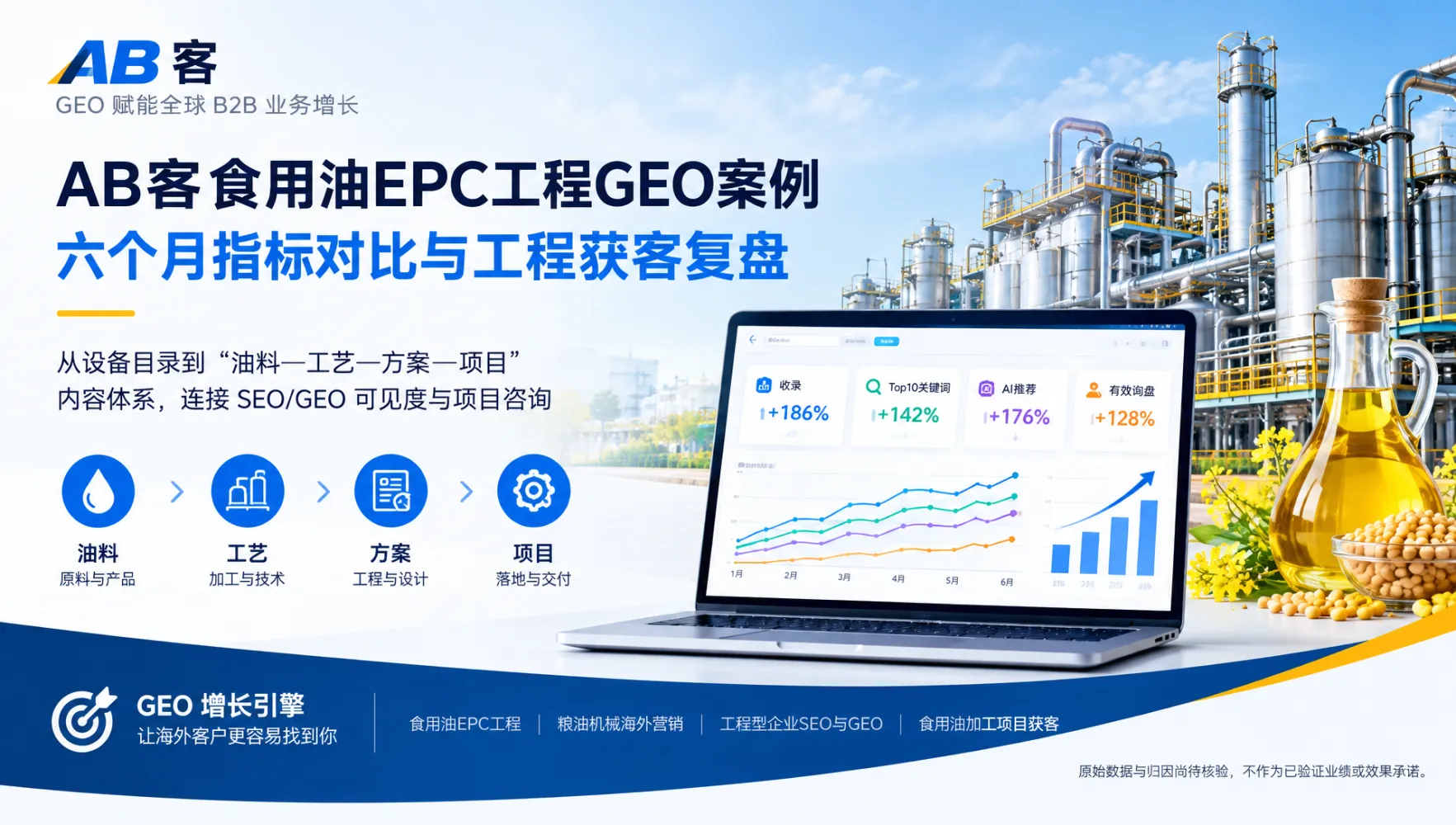
ABKE GEO Growth Engine is an enterprise GEO intelligent growth platform for export B2B businesses. Its brand workspace, product agents, task sessions, and data feedback loop connect enterprise knowledge, content, websites, channels, customer leads, and growth data.
For report verification, its AI visibility data and traceable task, review, and publishing records can help teams investigate what was produced, what was approved, what was published, and how observed visibility developed. Enterprise knowledge provides a reference for checking whether AI descriptions accurately represent the business.
These capabilities do not independently validate service outcomes. They also do not, by themselves, establish a standardized repeat-sampling protocol, an independent audit, or a universal fluctuation threshold. The evaluation method and evidence requirements must be defined and checked separately.
ABKE provides software, intelligent execution, task management, and analysis capabilities. Human reviewers remain responsible for professional judgment and evidence assessment. Search rankings, AI recommendations, inquiries, and sales are influenced by external platforms and business conditions; fixed outcomes are not guaranteed.
What to request before accepting a GEO performance claim
- The baseline, exact question set, and version history.
- Platform, language, browsing, session, and timing records.
- All scheduled observations, including omissions, failures, and exclusions.
- Metric definitions, denominators, and original answer evidence.
- Content and publishing records relevant to the claimed change.
- A clear account of comparability limits, alternative explanations, and the next validation step.
For a discussion with ABKE, start with your priority products, target markets, existing GEO reports, and available evidence. This creates a practical basis for reviewing current visibility and planning the next test—without treating a favorable screenshot as a verified growth outcome.


