.png?x-oss-process=image/resize,h_100,m_lfit/format,webp)

.png?x-oss-process=image/resize,m_lfit,w_200/format,webp)

Hot Products

.png?x-oss-process=image/resize,h_2000,m_lfit/format,webp)

.png?x-oss-process=image/resize,h_2000,m_lfit/format,webp)

Popular articles
How to Turn Tacit Technical Expertise into Reusable Enterprise Assets
How to Build an Enterprise Entity Relationship System for Complex Multi-Company, Multi-Brand, and Multi-Product Businesses
Being Seen by AI Does Not Mean Being Chosen by AI: The Real Divide Between ABKE and Brand-Governance GEO Services
Transform Complex Industrial Product Catalogs into Solution-Oriented B2B Websites
Recommended Reading
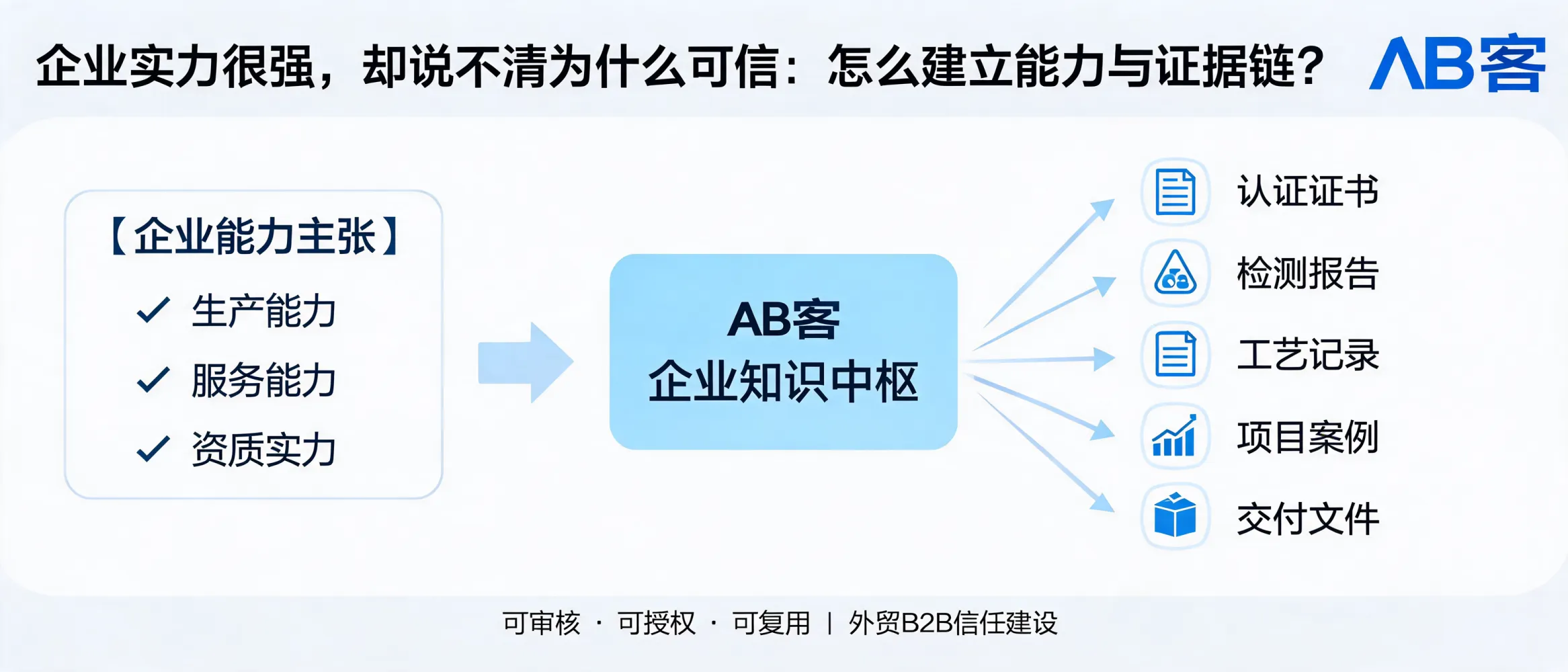
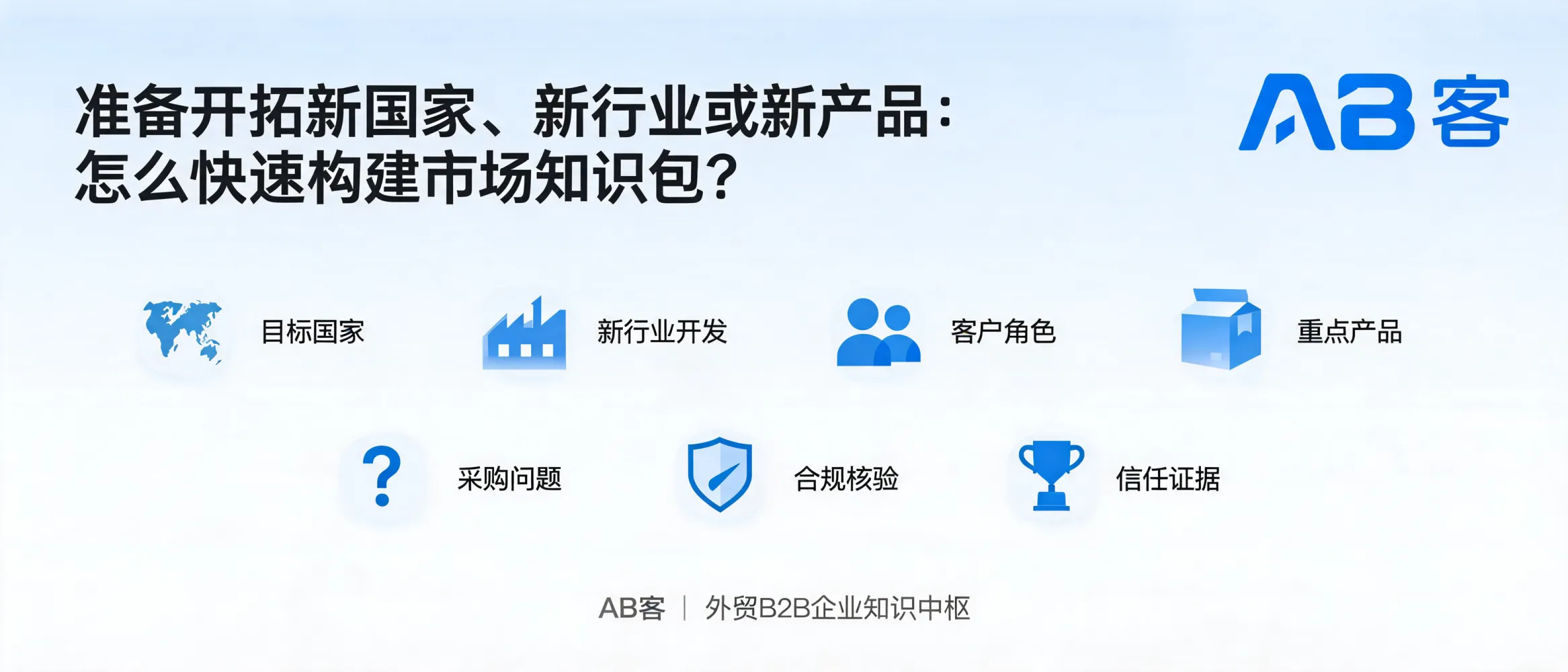
Turn Recurring Sales Questions into Searchable Global B2B Content Assets
ABKE helps export-oriented B2B companies turn recurring buyer questions from sales, CRM, trade shows, and team knowledge into verified FAQs, selection guides, comparison content, and multilingual decision-support pages.
Overseas buyers often ask the same questions before they can assess a supplier: What is the MOQ? Which model fits this application? Is the material compatible? What certifications are available? Can the product be customized? What is the lead time?
For many export-oriented B2B companies, the answers already exist—but they are scattered across emails, WhatsApp conversations, CRM records, trade-show notes, quotations, and the experience of individual salespeople. ABKE helps turn these recurring sales questions into verified, reusable, and searchable global B2B content assets.
From repeated replies to procurement decision content
A recurring buyer question is more than a sales task. It reveals a real information need in the procurement journey: a buyer may be screening suppliers, comparing technical options, validating delivery capability, or reducing implementation risk.
When these questions remain in one-to-one conversations, teams repeatedly explain the same details and valuable market knowledge is difficult to reuse. When they are organized around approved enterprise facts, they can become content that supports buyers before, during, and after a sales conversation.
Which buyer questions can become content assets?
| Recurring buyer question | Procurement task | Potential content format |
|---|---|---|
| MOQ, samples, payment terms, and lead times | Initial supplier evaluation | Procurement FAQs and cooperation-process pages |
| Model differences, specifications, and operating conditions | Product selection and technical fit | Selection guides, comparison pages, and technical notes |
| Materials, processes, certifications, and quality controls | Reliability and compliance validation | Material guides, process explanations, and certification information |
| Customization scope and project capability | Complex requirement assessment | Customization workflows, application pages, and approved case content |
| Installation, maintenance, spare parts, and after-sales support | Lifecycle and delivery-risk assessment | Implementation guidance, maintenance content, and troubleshooting FAQs |
Build a customer question pool, not just a list of keywords
ABKE’s approach begins with a structured customer question pool. Questions are collected from real sales and service interactions, then classified by the business context in which they matter.
- Source: sales emails, chat records, CRM notes, trade shows, quotations, website inquiries, and service feedback.
- Business scope: product line, target market, buyer role, application, and commercial stage.
- Question type: selection, comparison, capability verification, delivery, quality, customization, or post-sale support.
- Decision value: frequency, sales effort required, impact on buyer confidence, and relevance to a company’s proven capabilities.
- Evidence requirement: product specifications, technical conditions, process details, certifications, project materials, or approved service policies.
How ABKE turns questions into reusable content
1. Identify high-value sales questions
ABKE helps teams prioritize the questions that appear repeatedly, influence procurement decisions, require substantial explanation, or reveal a gap in existing product and solution content.
2. Validate the answer against enterprise knowledge
Content is grounded in approved information such as product data, technical documentation, manufacturing and quality materials, delivery processes, and authorized project evidence. Where facts require confirmation, a business, product, or technical review remains part of the workflow.
3. Create content for different buyer tasks
One question can support more than one asset. A model-selection question, for example, may become a product FAQ, a selection guide, a parameter comparison, an application page, and a sales-ready resource that can be shared directly with prospects.
4. Publish, monitor, and maintain
Content can be reviewed through indexing, search visibility, page engagement, inquiry themes, sales usage feedback, and relevant AI visibility observations. Changes to products, conditions, certifications, or market requirements should trigger corresponding updates.
What makes procurement content useful?
Useful B2B content does not simply repeat a sales script or generate broad promotional claims. It helps a buyer understand the decision context.
- State the product, application, or buyer scenario the answer applies to.
- Explain relevant conditions, selection criteria, and available options.
- Clarify limitations, exclusions, confirmation requirements, and situations where a solution may not apply.
- Use consistent company, product, and capability descriptions across pages and channels.
- Adapt terminology and reading context for target-language markets instead of relying on mechanical translation.
Content assets that can support sales and global visibility
For companies with real, reviewable product and business information, a structured question pool can support a growing content system across the website and sales workflow:
A shared responsibility across sales, product, and content teams
Sales FAQ content assets are most reliable when they are built through cross-functional collaboration rather than handled as an isolated publishing task.
Contribute original buyer questions, sales context, common objections, and usage feedback.
Confirm specifications, application boundaries, material details, and technical risk notes.
Organize approved information into clear, searchable, buyer-oriented page structures.
Define publication permissions, approval responsibilities, and content update rules.
Designed for sustainable knowledge reuse
ABKE supports export-oriented B2B manufacturers and solution providers in building an AI-readable enterprise knowledge foundation and a maintainable content workflow. The purpose is not to promise a fixed search ranking, AI recommendation outcome, inquiry volume, or sales result. It is to help companies make real sales knowledge easier to verify, reuse, discover, and understand across websites, search engines, and generative AI environments.
Each repeated buyer question can serve more than one conversation. With verified facts, clear ownership, and ongoing maintenance, it can become a long-term content asset that supports global procurement decisions and preserves organizational knowledge.


