.png?x-oss-process=image/resize,h_100,m_lfit/format,webp)

.png?x-oss-process=image/resize,m_lfit,w_200/format,webp)

Hot Products

.png?x-oss-process=image/resize,h_2000,m_lfit/format,webp)
.png?x-oss-process=image/resize,h_2000,m_lfit/format,webp)

Popular articles
AI Can Write, but Can You Publish It? Building a Fact-Grounded AI Content System
Case Breakdown: How a Stainless Steel Export Factory Built an Evidence-Driven Global Lead Generation System Through an Enterprise Knowledge Hub
新产品上市:怎么用内容体系解决海外买家的选型认知问题?
Customers Keep Asking the Same Questions: How to Build a Procurement Question and Standard Answer System
How ABKE Built a GEO Smart Website for WINMAN INDUSTRIAL’s FIPFG Sealing Solutions
Recommended Reading
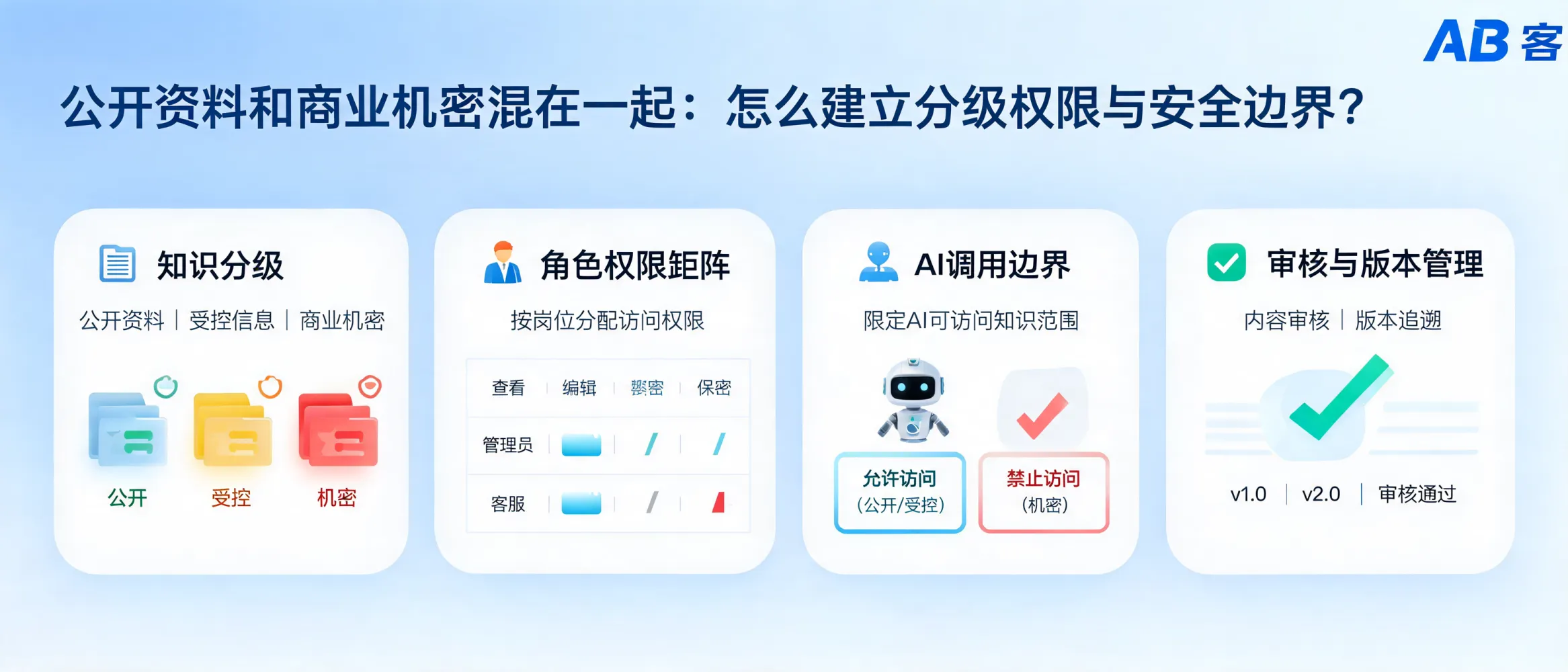


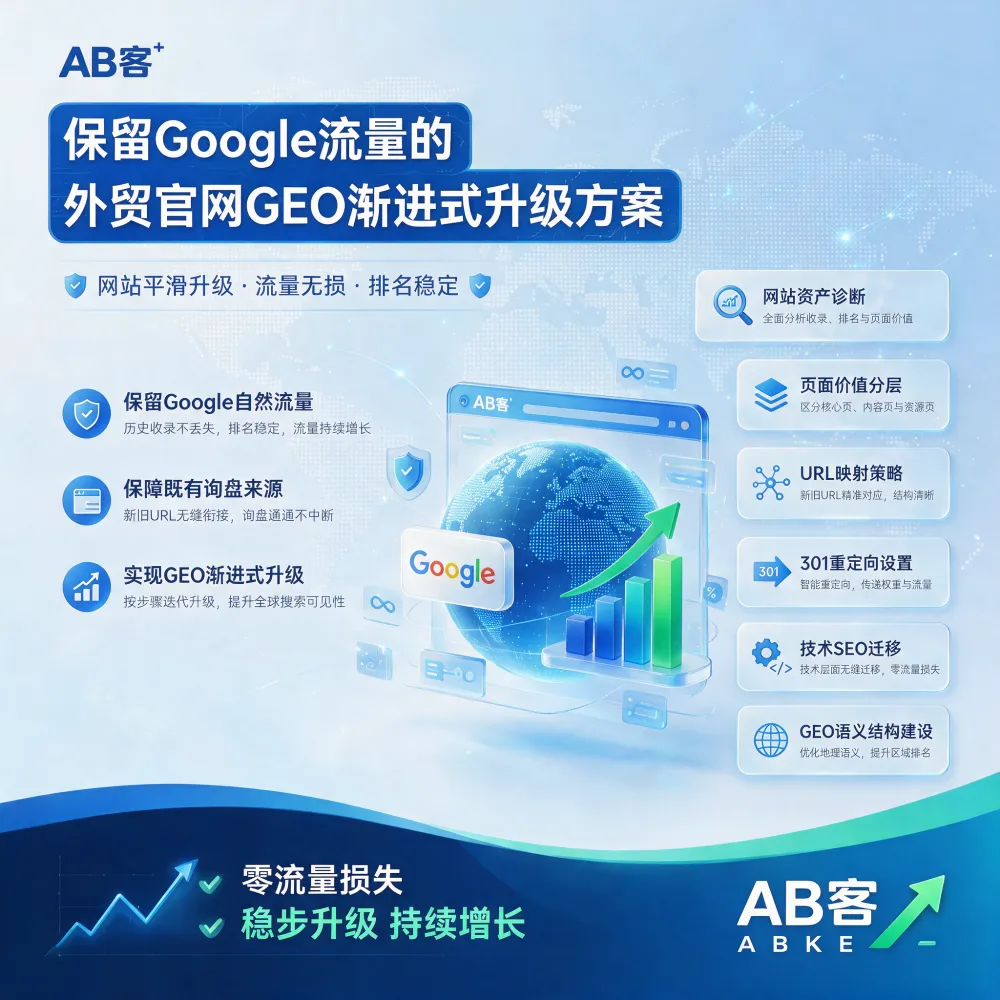

Help Overseas Buyers Evaluate Your Business at the Supplier Shortlist Stage
ABKE helps export-focused B2B manufacturers build evidence-based supplier evaluation, technical comparison, selection, quality, delivery and risk content that supports overseas buyers during the shortlist stage.
Overseas buyers often reach the supplier shortlist stage after they have already visited a website, reviewed product information, downloaded documentation or discussed requirements with a sales representative. At this point, the question is no longer simply whether a supplier exists or what it sells. Buyers need reliable information to decide whether the supplier fits the project, the technical requirements and the procurement process.
ABKE helps export-focused B2B manufacturers organize verified company knowledge into decision-stage content for supplier evaluation, technical comparison, product selection, quality verification, delivery coordination and risk clarification. The aim is to give procurement, engineering, quality and management teams clearer information they can review, share and validate during supplier comparison.
Why supplier shortlists are won or lost on decision support
A company brochure, product catalogue and quotation can establish initial awareness, but they do not always answer the questions that arise when several candidates are being compared. Buyers may need to assess application fit, configuration differences, quality controls, delivery dependencies, service boundaries and relevant project experience before they can recommend a supplier internally.
When these answers are scattered across emails, sales conversations and individual technical documents, the buyer carries a higher verification burden. A competitor that presents clearer, better-structured and evidence-based information may be easier to evaluate, even when the underlying capabilities are similar.
At the shortlist stage, buyers assess fit rather than visibility. They need to understand what a supplier can support, under which conditions, what evidence is available and where the practical boundaries of a solution lie.
What overseas buying teams typically need to verify
Technical and application fit
Whether the product, specification, material, configuration or technical route is suitable for the stated operating conditions and project objectives.
Quality and capability evidence
How relevant production, inspection, quality-control and technical-support processes are described and verified within the supplier’s actual scope.
Delivery and collaboration conditions
What information, confirmation steps, order conditions and coordination points may affect delivery, acceptance or implementation.
Risk and decision boundaries
What should be confirmed before selection, which conditions may limit suitability and how common misunderstandings can be avoided.
ABKE’s approach to shortlist-stage content
ABKE uses an AI content growth system built around verified enterprise knowledge and recurring buyer questions. It does not treat content production as a volume exercise. Instead, it connects confirmed product information, technical documentation, process descriptions, quality practices, delivery information, project materials and sales insights to the decision tasks buyers face during supplier evaluation.
This creates a structured content layer that can support both traditional search and generative AI environments while remaining useful to real procurement teams. Each topic should be grounded in information the business can validate, with applicable conditions, responsible reviewers and publication boundaries defined where necessary.
Decision-stage content that supports supplier comparison
| Buyer decision task | Relevant content formats | Practical purpose |
|---|---|---|
| Assess supplier fit | Application pages, solution explanations, requirement-matching checklists | Clarifies the problems a supplier can address and the conditions that affect suitability. |
| Compare technical options | Technical comparison pages, product comparisons, selection guides | Explains differences, trade-offs, selection inputs and relevant usage conditions without unsupported superiority claims. |
| Verify quality and delivery capability | Quality-control explanations, inspection FAQs, process and delivery coordination content | Provides clear, reviewable information for quality, purchasing and project stakeholders. |
| Understand procurement risk | Risk notes, exclusions, common-error guidance, maintenance and issue-handling content | Sets realistic expectations and highlights matters requiring confirmation between buyer and supplier. |
| Review relevant experience | Structured project evidence, anonymized case content, technical experience explanations | Turns approved project knowledge into context that can be reviewed without disclosing sensitive information. |
From repeated sales questions to reusable knowledge assets
Shortlist-stage questions frequently recur across enquiries, quotations, sample discussions and technical clarifications. Material selection, configuration differences, standards, inspection methods, lead-time dependencies and service expectations are often explained repeatedly by sales and technical teams. When these answers remain only in email threads or individual experience, they are difficult to reuse consistently across markets and buying roles.
ABKE helps businesses identify these recurring questions and organize the approved answers into a buyer-oriented content matrix. The result can include website content, FAQ modules, solution pages, resource pages and sales-ready materials that use the same verified knowledge base.
- Selection guidance: identifies the information needed before recommending a product or solution.
- Comparison guidance: explains meaningful differences, priorities and trade-offs between options.
- Verification guidance: presents relevant quality, process, documentation and project information in a clearer structure.
- Risk guidance: states limitations, assumptions, confirmation requirements and common areas of misunderstanding.
Evidence-based content requires clear boundaries
Supplier evaluation content is most useful when it is specific enough to support a decision and careful enough to remain accurate. It should not rely on generic claims or present unverified project results as proof. Technical, quality, delivery and case-related information should be reviewed by the appropriate business, product, engineering or quality stakeholders before publication.
Where information depends on order terms, operating conditions, customer specifications, test results or mutual agreement, the content should state that dependency clearly. Where customer names or project details cannot be made public, evidence can be anonymized or described within approved disclosure limits.
A practical implementation path
- Identify shortlist-stage questions. Review enquiries, quotations, sample tests, technical discussions and lost-opportunity feedback to identify the questions that slow supplier evaluation.
- Map verified facts and evidence. Organize confirmed product, process, quality, delivery and project information, including applicable conditions and responsible reviewers.
- Prioritize decision-content topics. Build a content matrix by buyer role, procurement stage, product category, target market and business relevance.
- Draft, review and localize. Develop content from the approved knowledge base, then validate facts, terminology and boundaries before adapting it for relevant languages and markets.
- Deploy across decision touchpoints. Place content on product pages, solution pages, FAQ sections, resource pages and sales materials according to its intended use.
- Improve through commercial feedback. Use visitor behavior, document downloads, buyer questions, sales usage and opportunity progression to identify further content gaps and update priorities.
Supporting a more consistent procurement conversation
For export-focused manufacturers, decision-stage content can help move the conversation from “we have been seen” to “we can be assessed with confidence.” It gives buyers a more structured way to compare technical fit, review evidence and understand practical requirements before a final supplier decision.
ABKE combines enterprise knowledge organization, buyer-question analysis, AI-assisted content production, SEO and GEO website planning, multilingual content support and ongoing optimization. The resulting content assets can strengthen information consistency across marketing, sales and technical communication, but they do not replace genuine product capability, commercial competitiveness, delivery performance or professional sales follow-up.


