.png?x-oss-process=image/resize,h_100,m_lfit/format,webp)

.png?x-oss-process=image/resize,m_lfit,w_200/format,webp)

Hot Products

.png?x-oss-process=image/resize,h_2000,m_lfit/format,webp)

.png?x-oss-process=image/resize,h_2000,m_lfit/format,webp)

Popular articles
Can ABKE GEO Website Source Code Be Exported? Understand Static Website Assets and Platform Capability Boundaries
Why Does Foreign Trade Growth Become More Expensive Without Enterprise Knowledge Sovereignty?
Built Websites for 20 Languages but Still No Inquiries?
Your Website Is Only the First Step: Build a Multi-Source GEO Trust Matrix for AI Recommendation
How Can You Optimize GEO If You Don’t Know What Buyers Are Asking?
Recommended Reading


How to Build Traceable Records for GEO Content Publishing, Review and Optimization in Q4 2026
ABKE explains how to connect GEO content evidence, version history, review decisions, publishing records, performance metrics and optimization actions into a traceable workflow for audit-ready analysis.
For export-oriented B2B companies, GEO content is more than a page, a post or a translated asset. It is a chain of business decisions: what evidence supports the claim, which version was approved, where it was published, how it performed, and what should change next.
ABKE GEO Growth Engine helps teams organize this chain into traceable records that connect enterprise knowledge, content production, human review, publishing activity, AI visibility signals, search performance and optimization tasks. The objective is not simply to produce more content, but to create digital growth assets that can be checked, managed and continuously improved.
Why traceability matters for GEO content in Q4 2026
In AI search environments, a company may need to explain how a product statement, technical description, certification reference, solution claim or supplier capability was created and verified. This is especially important when the same product information appears across websites, multilingual pages, social channels, industry platforms and sales materials.
A traceable GEO content workflow creates a practical record of the relationship between source evidence, content versions, review decisions, publishing status and performance feedback. It gives marketing, product, sales and management teams a shared basis for reviewing content quality without treating AI visibility, rankings or inquiries as guaranteed outcomes.
The traceable GEO content record: six connected layers
1. Evidence and knowledge sources
Record the approved facts behind a content item, including product information, technical parameters, manufacturing capabilities, application details, certifications, customer-approved materials, images, documents and internal expert input.
2. Content purpose and scope
Define the product, target market, customer question, search intent, GEO question, page type, language, channel and expected next action before production begins.
3. Version and change history
Keep identifiable versions for drafts, translations, localized adaptations, revisions and retired content. Each meaningful change should be connected to its reason and source context.
4. Human review decisions
Capture who reviewed the item, what was checked, which claims required revision, whether publication was approved and any limitations that must remain visible in the final content.
5. Publishing and distribution records
Link the approved version to its publication date, URL or channel location, language edition, publishing owner and status across websites and global distribution channels.
6. Performance and optimization actions
Associate visibility observations, search signals, visits, inquiries, CRM feedback and optimization actions with the related page or content version for more informed iteration.
A practical record structure for every GEO content asset
Teams do not need to turn every workflow into an administrative burden. The key is to use a consistent minimum record that makes material claims, decisions and changes understandable later.
| Record field | What it documents | Why it is useful |
|---|---|---|
| Content ID and asset type | A unique reference for a product page, FAQ, solution page, article, channel post or localized edition. | Makes related records easier to find and compare. |
| Business objective | The customer question, market need, product focus and conversion path addressed by the asset. | Prevents content from becoming disconnected from commercial relevance. |
| Evidence references | The knowledge entries, files, approved statements and subject-matter input used as factual support. | Supports verification and reduces unsupported or inconsistent claims. |
| Version and reviewer record | Draft number, change notes, reviewer comments, approval state and responsible roles. | Provides accountability and a clear decision trail. |
| Publishing record | Live URL, channel, language, date, status and distribution relationship. | Shows where a particular approved version is in use. |
| Performance and follow-up | Relevant search, AI visibility, engagement, inquiry or CRM observations, plus planned actions. | Connects content operations with evidence-based optimization. |
Build the workflow from source evidence to optimization
- Establish a controlled knowledge foundation. Consolidate enterprise, brand, product, solution, technical, application and trust information. Mark incomplete, outdated or unverified materials so they are not treated as publishable facts.
- Create a task around a defined business question. A task may concern a new product launch, a target-country FAQ cluster, a solution page, a multilingual site update or a response to declining AI visibility.
- Connect the task to relevant evidence. Content writers, product specialists and AI-assisted workflows should work from the same approved knowledge context rather than from isolated prompts or copied materials.
- Generate and label content versions. Preserve the relationship between the original content, subsequent edits and localized versions. Note whether changes are factual, structural, linguistic, compliance-related or conversion-focused.
- Use human review at decision points. Reviewers should verify technical accuracy, commercial clarity, brand consistency, language suitability, evidence support and publishing readiness before an asset goes live.
- Record publication and channel deployment. Once approved, connect the final version to the website page, regional site, social channel, industry platform or other approved destination.
- Review signals and create the next action. Analyze content performance in context, then record whether the next step is a factual update, a new FAQ, a page revision, a localization improvement, a distribution task or no action.
How task conversations support accountable GEO execution
ABKE organizes complex work through task conversations. Instead of separating instructions, drafts, feedback, approval notes and results across disconnected tools, a task conversation can bring together the objective, operating context, execution steps, human decisions, publication outcome and retrospective information.
For example, a team can create a task to improve a product page for a specific market. The record can include the customer questions being addressed, the product knowledge used, the SEO keywords and GEO problem terms considered, reviewer feedback, the published page version, and the subsequent observations that inform the next iteration. This creates a more coherent execution chain for teams managing content at scale.
Maintain consistency across pages, languages and channels
For global B2B marketing, traceability also supports consistency. A change in a product specification, manufacturing process, compliance statement or service boundary may affect multiple assets. Without linked records, outdated claims can remain visible in one language or channel after another has been updated.
- Use shared enterprise and product knowledge as the factual baseline for all content variants.
- Record the source version behind each translation or local-market adaptation.
- Distinguish localization decisions from technical or factual changes.
- Identify affected pages and channels when core knowledge is revised.
- Keep publication status visible so teams know which versions are active, pending review or retired.
Use performance data as context, not as a shortcut to conclusions
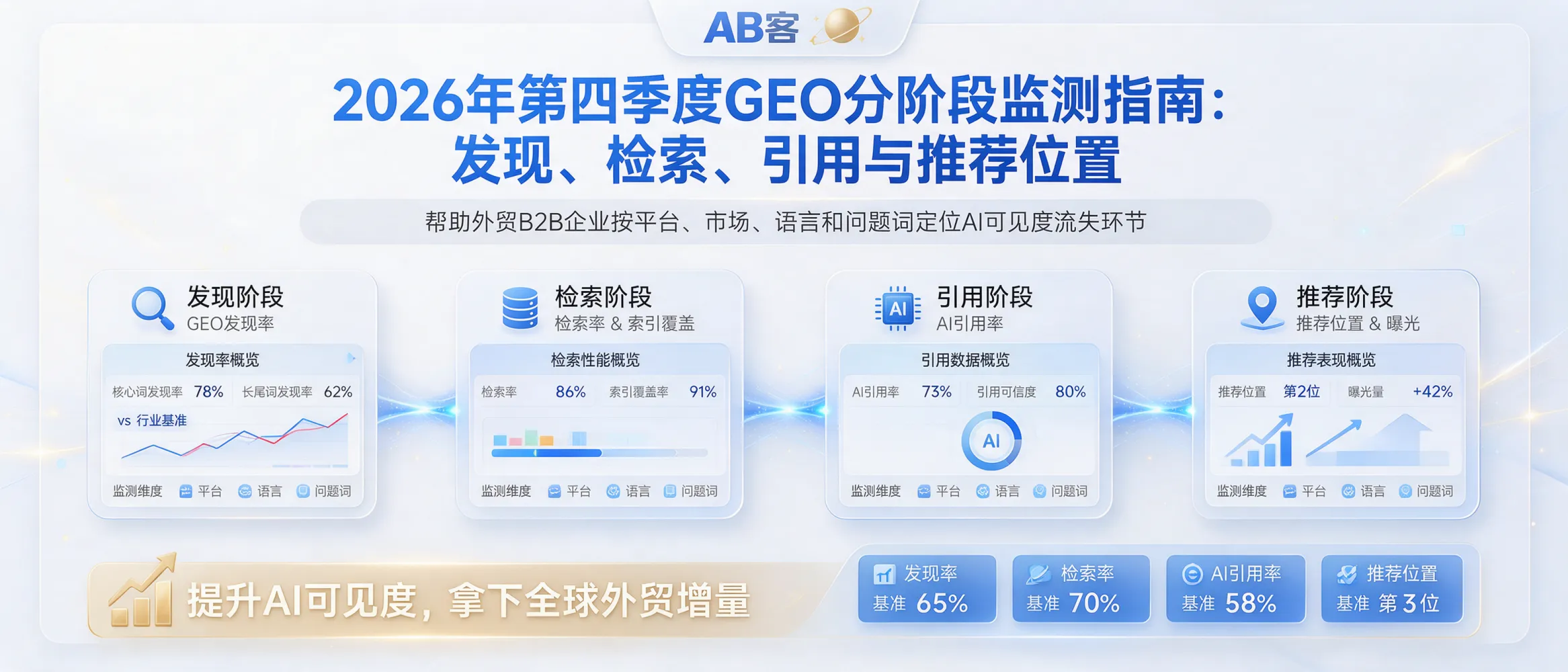
Traceable records make performance analysis more meaningful because teams can compare signals against the actual content version, target question, market and publishing history. Relevant observations may include search indexing, keyword coverage, page visits, engagement, AI mentions, AI citations, AI recommendation appearances, inquiry sources, inquiry quality and CRM follow-up status.
Good GEO optimization asks: What changed? What evidence supports the current version? Which market and customer question does it address? What signals are visible? What action is justified next?
AI platform behavior, search visibility, customer demand, competitive conditions and sales execution can all affect results. A disciplined record system supports analysis and improvement, but it does not justify promises of fixed rankings, AI recommendations, inquiry volume or sales outcomes.
Roles that strengthen the review trail
| Role | Primary responsibility | Record contribution |
|---|---|---|
| Product or technical expert | Confirms product facts, specifications, applications and limitations. | Evidence validation and technical review notes. |
| Marketing or GEO operator | Plans themes, manages tasks, creates content and monitors visibility. | Task context, content versions and optimization actions. |
| Brand or compliance reviewer | Checks approved language, claims, consistency and risk boundaries. | Approval, revision or rejection decision. |
| Sales team | Qualifies inquiries and reports market feedback. | Lead quality, customer questions and follow-up context. |
Turn GEO activity into a reviewable digital growth asset
A traceable workflow helps an export B2B organization preserve the reasoning behind its digital presence: the facts it chose to communicate, the customer questions it sought to answer, the people who reviewed the output, the channels where it appeared and the signals that informed later decisions.
With its brand workspace, product intelligence, enterprise knowledge management, task conversations, content capabilities, publishing workflows and data feedback functions, ABKE provides a system foundation for managing this process as an ongoing operational practice rather than a collection of isolated content tasks.


