.png?x-oss-process=image/resize,h_100,m_lfit/format,webp)

.png?x-oss-process=image/resize,m_lfit,w_200/format,webp)

Hot Products
.png?x-oss-process=image/resize,h_2000,m_lfit/format,webp)
.png?x-oss-process=image/resize,h_2000,m_lfit/format,webp)

Popular articles
Turn Recurring Sales Questions into Searchable Global B2B Content Assets
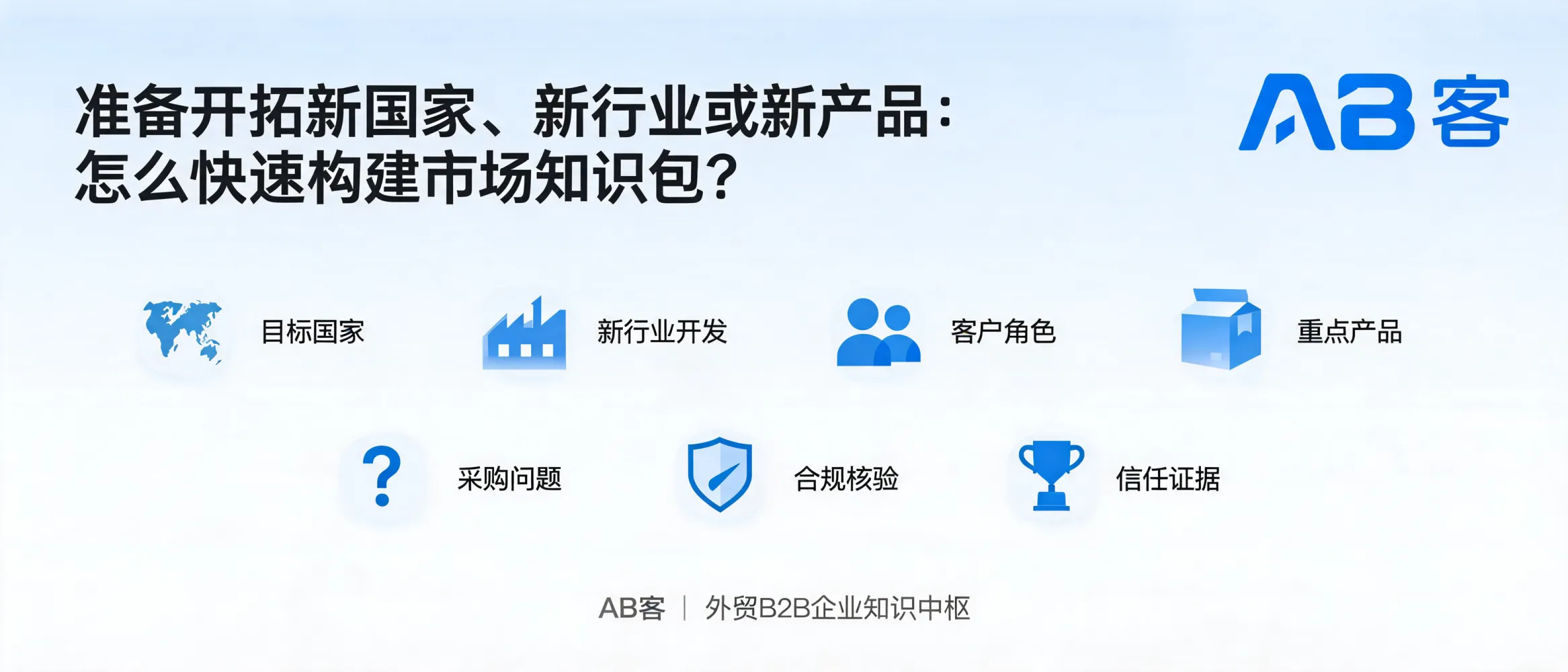
How to Quickly Build a Market Knowledge Pack for New Countries, Industries or Products
I've been acquiring customers through Google Ads, overseas trade shows, and B2B platforms, so why are there still no inquiries from customers even after they visit my official website?
Recommended Reading


Turn Post-Trade Show Buyer Searches into Reusable B2B Content Assets
ABKE helps export-focused B2B companies turn trade show questions, product data and sales conversations into multilingual landing pages, selection guides, FAQs and reusable content assets for post-event buyer validation and follow-up.
A trade show can create valuable first conversations with distributors, buyers, engineers and project stakeholders. However, supplier evaluation usually continues after the event. When overseas buyers return to their markets, they often search for the company, revisit product information, compare alternatives, review technical details and assess whether a supplier is suitable for further discussion.
For export-oriented B2B manufacturers, ABKE helps turn verified trade show questions, product data, technical documentation and sales conversations into structured, reusable content assets. The objective is to support post-event buyer validation with factual information that can be used across the website, sales follow-up and multilingual market communication.
Why post-event search behavior matters
A booth visit, product demonstration or initial sample discussion rarely answers every purchasing question. After the exhibition, different stakeholders may look for different evidence before moving into quotation, technical confirmation, supplier screening or project discussion.
Procurement teams
May assess product range, supply capability, documentation, cooperation processes and potential sourcing risk.
Technical stakeholders
May review specifications, operating conditions, configuration differences, compatibility and maintenance requirements.
Project and business leaders
May look for relevant application experience, delivery coordination, service boundaries and signs of long-term reliability.
If the online presence contains only a basic company profile or a static catalogue, the trust built at the trade show can be difficult to extend. Sales teams may also need to repeatedly send scattered PDFs and answer the same technical questions in separate conversations.
What buyers commonly need to verify after a trade show
Post-event lead nurturing is not simply a matter of sending more promotional messages. It is about making relevant decision-support information available when buyers search, compare and validate suppliers.
- Which industries, applications, operating conditions or project types a product is designed to support;
- How to select between models, materials, configurations or technical approaches;
- What differences, requirements and limitations should be considered before choosing a solution;
- Whether the supplier can clearly explain manufacturing, technical support, quality control, delivery or service processes;
- Whether relevant application experience or evidence can be shared within approved public-use boundaries;
- Whether information is clear and accessible in the language and terminology used by the target market.
A content asset approach for trade show lead nurturing
ABKE organizes post-trade show content around real buyer questions and purchasing stages rather than expanding only on what a company wants to present. Based on confirmed enterprise knowledge, the resulting content can support both independent buyer research and ongoing sales communication.
| Content asset | Role in post-event follow-up | Typical buyer need addressed |
|---|---|---|
| Trade show landing page | Connects the event theme, featured products and follow-up information. | “What did this supplier present, and where can I obtain further details?” |
| Product and application pages | Explain capabilities, conditions, relevant uses and stated boundaries. | “Is this product relevant to my application?” |
| Selection guides and comparisons | Clarify decision factors across models, materials or configurations. | “Which option fits my operating requirements?” |
| Technical FAQs | Provide consistent answers to recurring questions from buyers. | “What should I know about parameters, installation, maintenance or delivery?” |
| Evidence-based cases | Present approved project, process or application information in context. | “Does the supplier have relevant experience?” |
| Multilingual localized content | Adapts approved information for target-market terms and reading habits. | “Can I evaluate this information clearly in my market context?” |
From exhibition conversation to reusable content
- Collect questions and interaction signals.
Review pre-event appointments, booth conversations, business cards, scan records, product demonstrations, sample feedback, inquiries and follow-up messages. The priority is not only to archive contacts, but also to identify recurring questions, typical use cases, purchasing barriers and decision concerns. - Build a prioritized post-event question pool.
Content topics can be assessed according to their frequency at the event, relevance to priority products and markets, impact on quotation or technical confirmation, and availability of verified source material. - Create content from verified enterprise knowledge.
Product documents, technical information, process details, approved application experience, common sales questions and authorized visual materials provide the factual basis. AI can assist with content structuring, drafting and language adaptation, while business, product or technical personnel review accuracy and applicable boundaries. - Embed assets into the website and sales workflow.
Sales representatives can share a relevant product page, selection guide, technical FAQ or approved case according to the buyer’s stage. The website should also help buyers continue their own research through clear internal links, supporting materials and appropriate consultation paths. - Review, refine and expand.
Website engagement, content use, inquiry sources, search visibility and sales feedback can inform subsequent updates. Newly emerging buyer questions, market changes and product adjustments can be added to the knowledge and content workflow over time.
How ABKE supports the workflow
As an external trade B2B GEO growth infrastructure provider, ABKE supports companies in building a more structured connection between exhibition leads, enterprise knowledge, website content and sales follow-up. The work can include:
- Organizing buyer questions by role, purchasing stage, product line and target market;
- Planning exhibition landing pages, product pages, application pages, selection content and technical FAQ structures;
- Structuring confirmed company, product and service information into usable knowledge assets;
- Supporting AI-assisted content production with factual review and professional approval processes;
- Preparing multilingual localized content for priority markets rather than relying only on literal translation;
- Optimizing content for website readability, search indexing and AI-understandable semantic structure;
- Supporting content reuse across websites, email follow-up, WhatsApp, LinkedIn, sales materials and future event campaigns.
Cross-functional participation keeps content credible
Trade show lead nurturing works best when content is treated as a shared business asset rather than a standalone marketing task. Clear roles help maintain factual accuracy, useful context and consistent follow-up.
What can be evaluated over time
The value of post-event content should not be assessed only by the number of inquiries. A more complete review can consider whether the company is building usable, relevant and maintainable assets across the buyer journey.
- Coverage of recurring buyer questions and priority product topics;
- Quality, update status and reuse of published content assets;
- Visits, engagement, document downloads and consultation actions on priority pages;
- How often sales teams use the assets and how they affect follow-up consistency;
- Search indexing, relevant visibility and AI mention or citation observations where measurable;
- Sales feedback on lead quality, buyer concerns and content-influenced opportunities.
From a short offline encounter to a durable knowledge and follow-up capability: when verified trade show insights become structured multilingual content, buyers can continue to evaluate the supplier on their own terms, while sales teams gain factual materials they can use throughout the next conversation.
This approach is most suitable for manufacturers and export-focused B2B companies with defined product directions, genuine business materials and access to professional review. Content performance and commercial outcomes may also be influenced by market competition, product capability, pricing, sales execution, platform changes and buyer purchasing cycles. ABKE does not treat AI visibility, search ranking, inquiry volume or transaction outcomes as fixed guarantees.


