Hot Products





Popular articles
Does AI truly understand your product? Complete the GEO self-assessment for B2B foreign trade using 8 types of questions and 7 steps.
How can industrial lithium battery companies achieve GEO growth? A six-month case study and suggestions for building equipment and scenario-based content.
Turn Canton Fair Traffic into Qualified Opportunities: A Daily GEO and CRM Checklist
Qualify Canton Fair OEM/ODM Leads in 5 Steps—Before You Quote
Recommended Reading
What is a Trusted GEO? How can AI in B2B foreign trade more accurately understand overseas companies?
AB Guest analyzes the definition of Trusted GEO, the difference between enterprise entity recognition and knowledge graphs, and how facts, relationships, evidence, and multilingual consistency support foreign trade B2B buyer identification and AI search optimization.
Trustworthy GEO can be understood as a corporate knowledge building methodology based on authentic corporate facts, entity relationships, credible evidence, and multilingual consistency. It not only collects names, addresses, and contact information, but also focuses on where the information comes from, how to distinguish entities with the same name, the relationship between the company and its brands or business partners, when the data is updated, and its applicable scope.
For B2B foreign trade companies, this type of knowledge asset can provide a more reliable information foundation for AI search understanding, buyer identification, supplier evaluation, and customer development. However, knowledge organization cannot replace due diligence, nor can it guarantee that AI will never make mistakes.
Why does AI sometimes mistake overseas companies?
Companies with the same name: Companies with the same name may exist in different countries.
Searching by name alone may find entities with different registered locations, businesses, and ownership. Identification should combine attributes such as country or region, registration number, registered address, and official website; if key fields are missing, records should be left pending verification rather than being directly merged.
Multilingual confusion: Chinese, English, transliterated names and local language names are inconsistent.
The same company may use its legal name, English name, and business abbreviation, and may also have multiple versions due to different translation methods. Similar names can only serve as clues; it is necessary to combine registration information or company disclosures to determine whether these names indeed refer to the same entity.
Unclear relationships between entities: The brand owner, the manufacturing plant, the exporter, and the trading company may not be the same legal entity.
The brands on the procurement page, the sales companies on the quotation, and the actual production plants may be independent entities. Each entity and its role should be recorded separately, and evidence of brand use, production, export, or partnership and the applicable timeframe should be noted to avoid misinterpreting business cooperation as an equity relationship.
Insufficient timeliness of information: Old addresses, deregistration status, and expired websites may conflict with the current business situation.
Search results and third-party directories may retain historical data. For fields that are prone to change, such as address, registration status, website, and qualifications, the verification date should be recorded; in case of conflicts, retain all sources and times, and if necessary, review local registration information or confirm with the company.
The quality of information sources varies: the evidentiary value of company self-reports, third-party directories, and official registration materials differs.
Official registration information is suitable for verifying registration facts within its coverage area; a company's official website helps in understanding its self-described products and services; and third-party directories can provide clues for discovery. Different sources have their limitations, and no single record can be considered proof of a company's full capabilities.
Having a lot of company information does not equate to a clear company identity; being able to find records does not mean that the records have been verified.
What are the differences between business directories, enterprise databases, and trusted GEO?
Business directories are generally convenient for discovering and retrieving leads, but the fields, update mechanisms, and verification capabilities of enterprise databases vary from vendor to vendor. Trustworthy GEOs focus not only on the quantity of records collected, but also on the traceability of facts, the explanatory nature of relationships, and how information is maintained after changes.
| Comparison Dimensions | General Enterprise Directory | Trusted GEO Working Framework |
|---|---|---|
| Basic Information | Company name, address, telephone number, etc. | Standard facts and their sources |
| Enterprise identity | Possibly depends on name matching | Entity disambiguation by combining multiple attributes |
| Relationship | Limited records | Modeling relationships between parent and subsidiary companies, brands, factories, and traders. |
| Information credibility | It may only display field values. | Record evidence, conflicts, and update time. |
| Multilingual | They may be saved with different names. | Associate multilingual names with the same entity |
| Business Applications | Query and export | Supports identification, comparison, filtering, and business judgment. |
Note: Different databases have different capabilities, and all traditional enterprise databases cannot be generalized.
What is a Trusted GEO?
The formal meaning of GEO: Generative Engine Optimization.
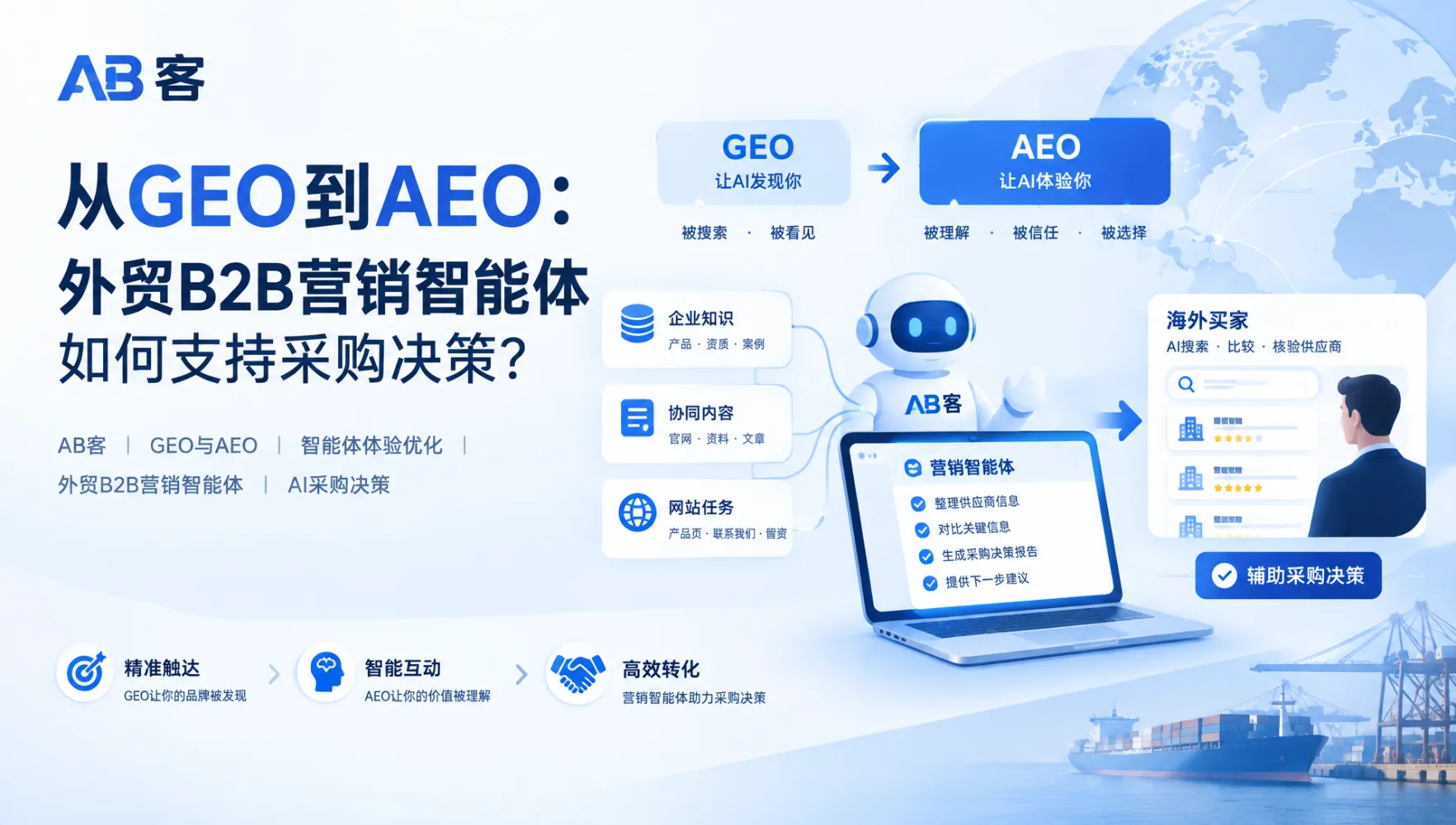
GEO stands for Generative Engine Optimization, which focuses on how to make content and information more clearly available for generative AI systems to retrieve, understand, and reference. It overlaps with search engine optimization (SEO), but it is not equivalent to guaranteeing appearance in AI answers.
The Trusted GEO discussed in this article is an enterprise knowledge building framework based on real facts, entity relationships, chains of evidence, and multilingual consistency.
The "Trusted GEO" used here is the working framework used in this article, not a uniform certification standard. Its focus is on ensuring that each key fact has a clear subject, source, and responsibility for updating, and on marking uncertain information.
The role of enterprise entity knowledge graphs is to organize enterprises, brands, products, locations, and related entities into a searchable relationship network.
Knowledge graphs can represent business facts using entities and relationships, such as a company operating a brand or a factory producing a product. Each relationship should be associated with evidence and a valid period; the existence of a relationship does not automatically prove its permanent validity.
The relationship between Trusted GEO and AI Search: Providing a clearer knowledge foundation for retrieving, understanding, verifying, and associating enterprise information.
Clear entity descriptions and accessible evidence help reduce information ambiguity, but whether AI retrieves and how it cites information is still influenced by platform mechanisms, source accessibility, and the way questions are asked. A Trusted GEO is not a larger list of companies, but rather a knowledge system that allows company identities, relationships, and factual evidence to be managed, verified, and continuously updated.
What are the four core pillars of a trustworthy GEO?
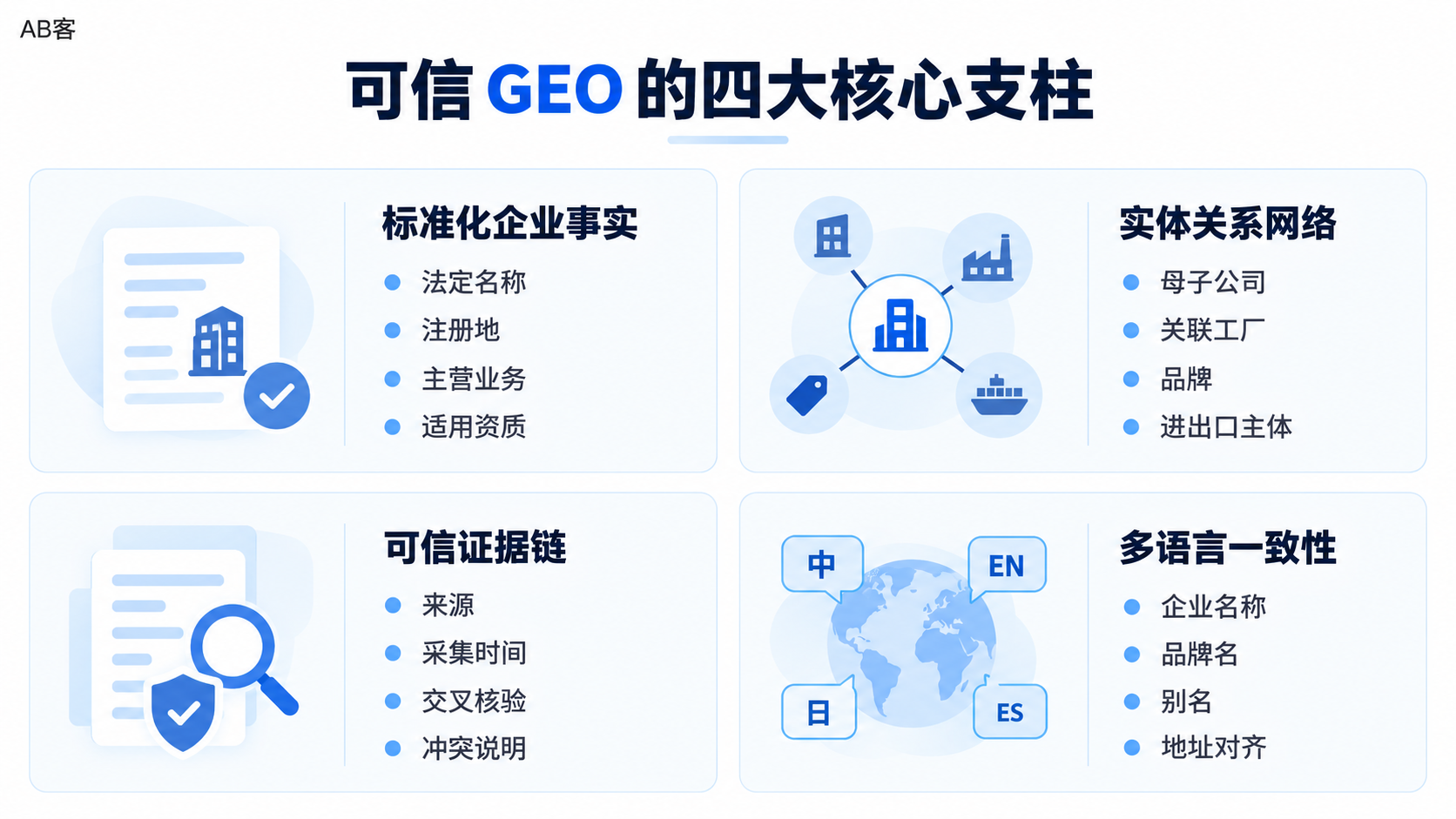
Pillar One – Standardized Enterprise Facts: Legal name of the enterprise, place of registration, registration number, date of establishment, main business and applicable qualifications.
Establish standardized fields and filling rules to distinguish between registered facts and company self-descriptions, and specify the applicable products, regions, and validity periods of the qualifications. Fields without reliable sources can be left blank to avoid filling in speculation as established facts.
Pillar Two – Entity Relationship Network: Parent company, subsidiaries, affiliated factories, brands, import and export entities, and business cooperation relationships.
Establish a separate record for each entity and connect them by relationship type; distinguish between "ownership," "authorized use," "production," and "sales," and record the source of the relationship. When cooperation ends or the structure changes, historical records should be retained and the current state updated.
Pillar Three – Credible Chain of Evidence: Source, Collection Time, Validity Period, Cross-verification Records, and Conflict Explanation.
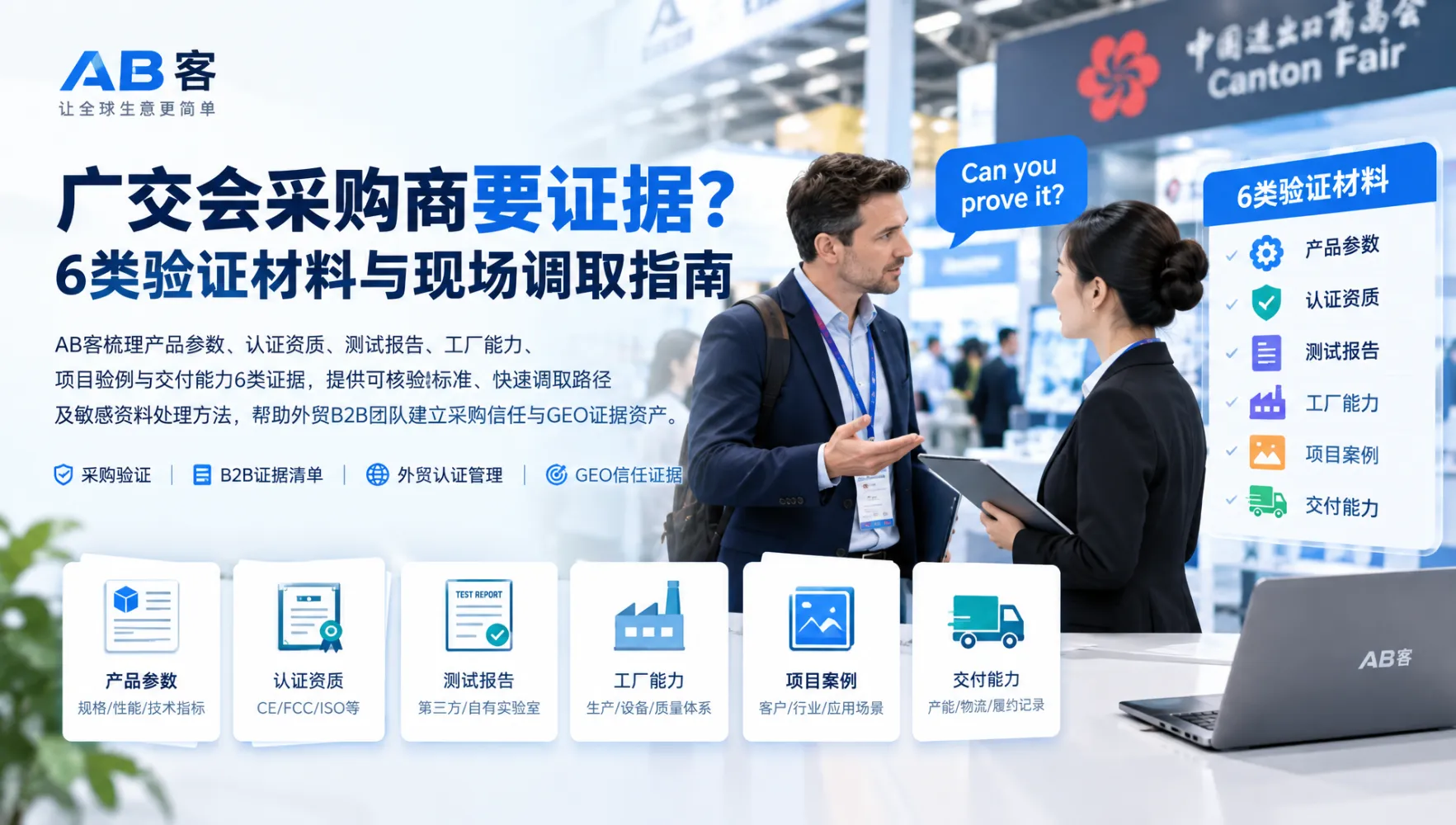
For facts that affect procurement decisions, retain the original source, access or collection date, as well as the verification personnel and results. When multiple sources are inconsistent, explain the differences and any unconfirmed portions; before publicly using information, verify authorization and privacy requirements.
Pillar Four — Multilingual Consistency: Map company names, brand names, aliases, and addresses across languages to their corresponding entities.
Maintain proper name correspondences, distinguishing between the legal name, official translation, brand name, and historical aliases. Addresses may be displayed according to local writing conventions, but the country, region, and main identifier should remain consistent; unverified translations should not be used as legal names.
| Governance Target | Recommended record | Key points of review |
|---|---|---|
| Corporate Facts | Field values, subject, source | Does it match the registration location and registration number? |
| Subject Relationship | Relationship type, parties, time | Does it confuse cooperation with ownership? |
| evidence | Source, Date, Validity Period, Conflict | Is it expired or beyond the scope of the certificate? |
| Multilingual names | Name, Version, Language, Corresponding Subject | Do unconfirmed aliases exist? |
What practical value can a trustworthy GEO bring to foreign trade B2B?
Customer development: Reduce duplicate business records and incorrect subject matching.
Using registered address, registration number, and domain name as auxiliary clues for verification, records with similar names can be manually reviewed to reduce redundant follow-ups; if the attributes are insufficient, they should not be automatically identified as the same customer.
Buyer identification: Helps determine which company the inquiry corresponds to.
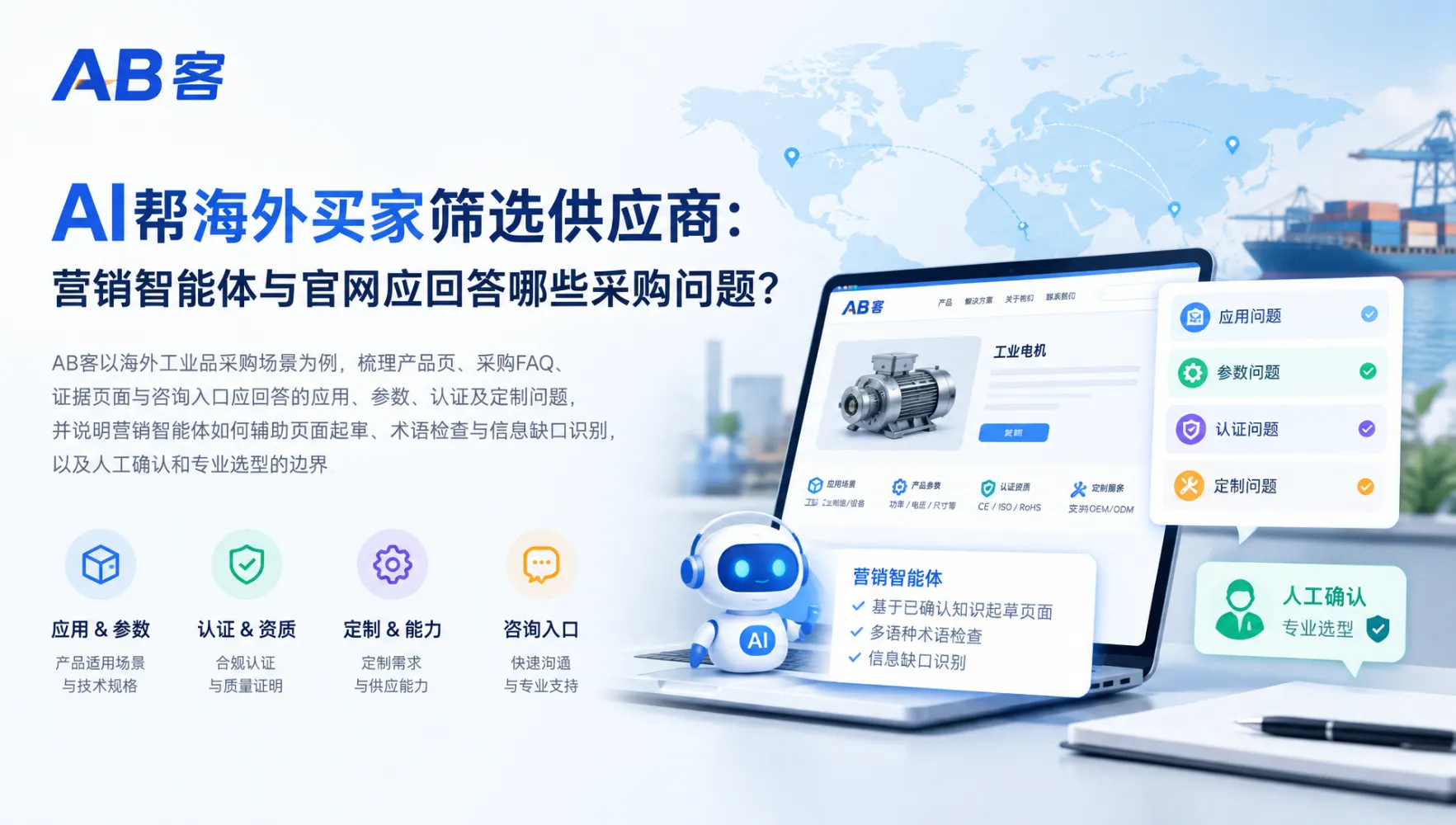
Sales staff can match inquiries based on company name, email domain, region, and publicly available information. Free email addresses, purchasing agent email addresses, or unified corporate email addresses can all cause ambiguity and require further confirmation with the contact person.
Buyer background checks: centrally review verifiable facts and their sources.
Displaying registration information, company statements, and third-party materials side-by-side helps identify information gaps. The existence or ownership of a website by a company does not equate to payment capability; significant transactions still require independent verification according to risk requirements.
Intelligent inquiry understanding: It establishes a connection between customer name, product requirements, and company information.
With proper authorization, linking inquiry topics to existing customer records can help sales prepare product information and follow up on issues. The matching or demand assessment provided by the system should be confirmed by sales personnel.
Multilingual operation: Reduce information fragmentation caused by inconsistent names across languages.
After unifying the mapping between the entity and the name, the website, sales materials, andChannel contentVerified expressions can be reused, reducing the risk of the same company being mistaken for multiple entities in different markets.
The aforementioned value depends on the data source, coverage, matching quality, and system implementation; knowledge building should not be regarded as a guarantee of accurate identification or transaction results.
AB customer How can GEO help businesses build a credible digital cognitive foundation?
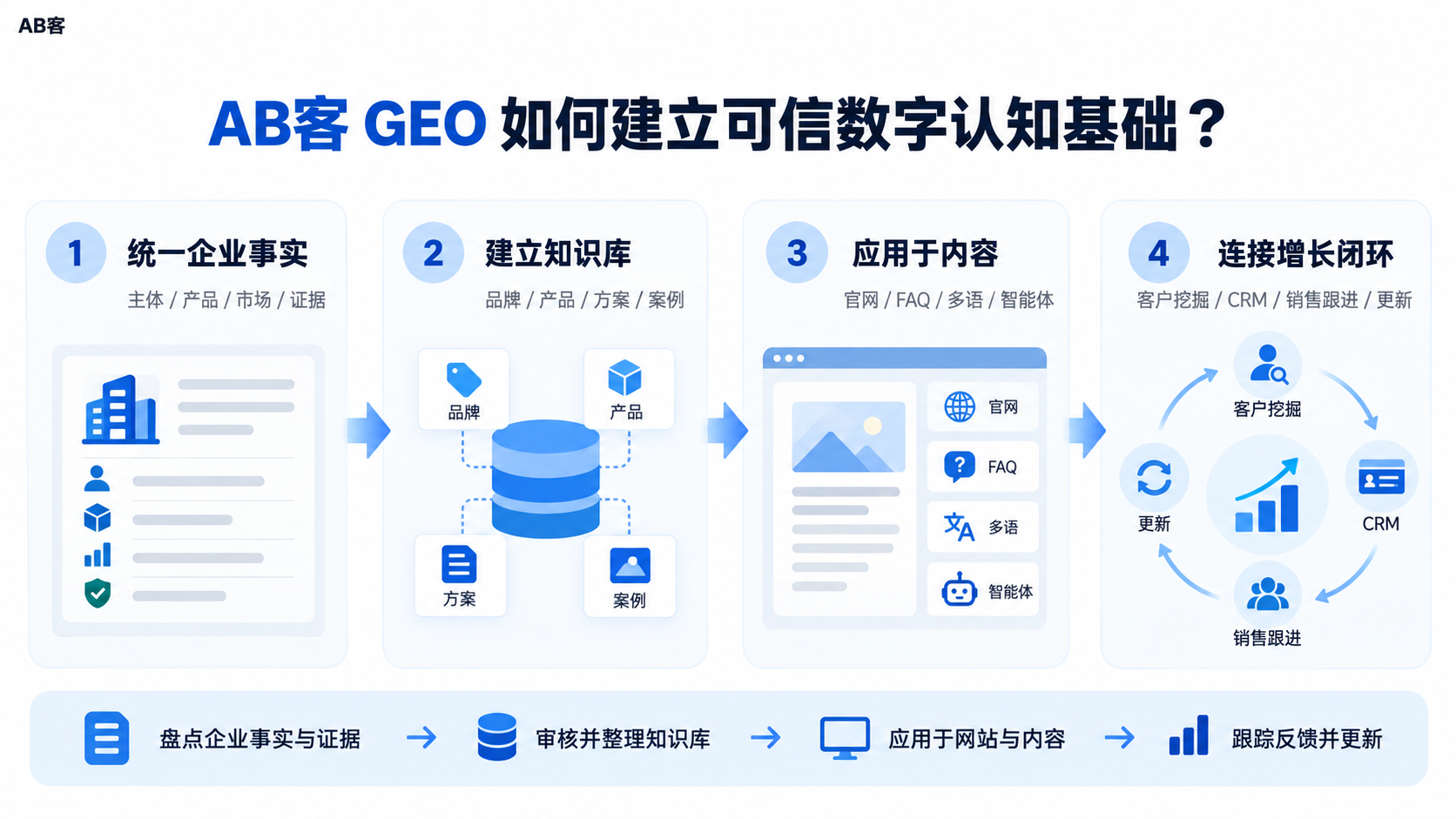
First, unify the facts about the business, rather than mass-producing content.
Start by defining the legal entity, product scope, target market, and publicly available supporting documentation, clearly identifying the responsible person and review process. Mark any gaps in the facts before deciding whether to supplement information, avoiding amplifying unverified content across multiple channels.
passEnterprise Knowledge BaseWith digital personas, organize brand, product, solutions, case studies, evidence, and capability boundaries.
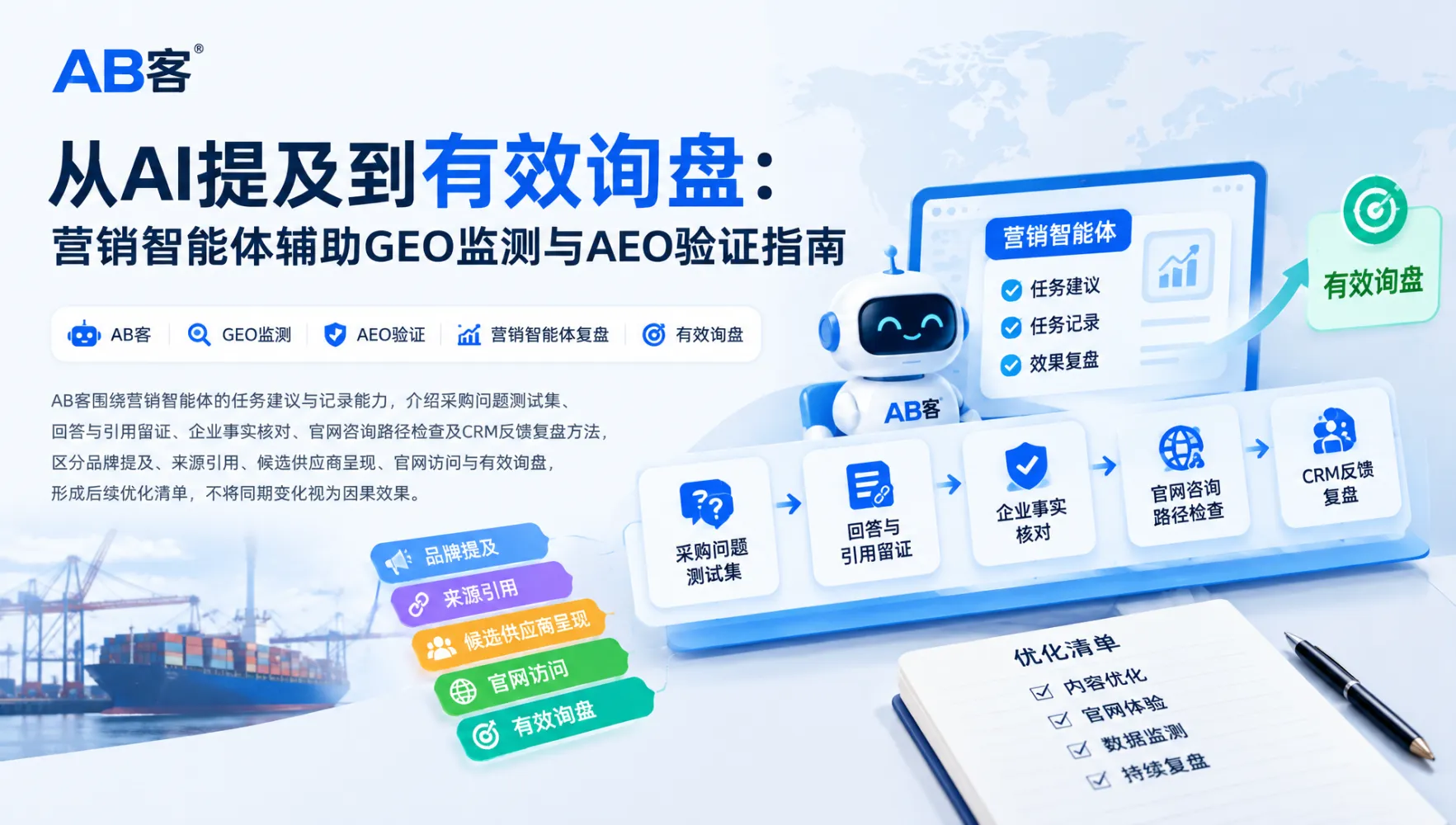
AB customer (ABKEThe GEO Growth Engine, based on an enterprise knowledge base, helps B2B foreign trade companies organize dispersed data into manageable and reusable digital assets. Case studies, certifications, and specific capabilities should be based on the information actually provided and confirmed by the company.
The confirmed knowledge will be used in official websites, professional content, multilingual expressions, and enterprise intelligent agents.
Verified facts can be used on product pages,FAQProcurement guidelines and multilingual content are provided to support the documentation of related intelligent agents. Enterprises still need to establish pre-release review and regular update mechanisms to ensure that the same version of core facts is used across different channels.
Combining customer mining and CRMExplore from enterprise knowledge to clue identification andSales follow-upThe connection method.
The system can be integrated with business process records to track inquiry sources, customer information, and follow-up status, enabling sales staff to prepare communication strategies based on relevant knowledge after verifying the entity. When identifying overseas corporate entities, the specific data sources, relationship models, and scope of external system access still need to be confirmed separately based on business requirements and data authorization.
Three Common Mistakes in Building a Trustworthy GEO
-
They only buy data, without verifying the entity. The procurement list serves as the starting point for leads, and is verified by combining the place of registration, entity identification, and source, rather than directly considering all records as valid buyers.
-
Only store the names, do not record relationships or evidence. Maintain separate records for brands, factories, and trading entities, indicating the type of relationship, source, and applicable time period.
-
Treat credibility scores as absolute facts, ignoring outdated and conflicting data. Scoring can only assist in ranking; key transaction judgments should be made by reviewing the original evidence and re-verifying outdated or contradictory information.
The value of corporate information lies not only in its collection, but also in its ability to be accurately identified, verified, and used for decision-making.
FAQ
Q1: Is a Trusted GEO the same as an Enterprise Knowledge Graph?
Not entirely. Enterprise knowledge graphs are a technological approach to organizational entities and their relationships; the trusted GEO discussed in this article also includes fact verification, evidence tracing, multilingual consistency, and continuous governance.
Q2: Can't business directories be used for AI customer acquisition?
While a directory can serve as a source of information for discovering clues, the entity, source, and update time should be further verified. A company's identity or purchasing power cannot be determined solely based on directory records.
Q3: Can a trusted GEO guarantee that AI will no longer misidentify companies?
No. It can improve the organization and verification of enterprise information, but the actual identification results still depend on data quality, source accessibility, and the specific AI system.
Q4: What is the relationship between AB Guest GEO and Trusted GEO?
AB Customer's GEO Growth Engine focuses on building knowledge, websites, content, communication, customer acquisition, and data feedback for B2B foreign trade enterprises. The Trustworthy GEO can serve as a thematic framework for discussing enterprise facts, entity relationships, and evidence governance.
Consider building a corporate knowledge base or understanding AB Customer GEO Growth EngineWhen doing so, it is recommended to first take stock of the company's facts, product information, and evidence gaps, and then discuss the scope of implementation in conjunction with the target market, data authorization, and existing sales processes.


