.png?x-oss-process=image/resize,h_100,m_lfit/format,webp)

.png?x-oss-process=image/resize,m_lfit,w_200/format,webp)

Hot Products
Popular articles
8 月上千外贸工厂真实口碑汇总,5 家主流 G 服务商客观评价合集
Developing Middle East and Russia Export Markets: Why Localized B2B GEO Matters for Procurement Visibility
Why Can’t a Single AI Recommendation Screenshot Prove That GEO Is Working?
Middle East Building Materials GEO Case Study: Arabic Localization Doubles Exclusive Distributor Inquiries in 3 Months
Your Page Is Already Cited by AI—Why Isn’t It Generating Qualified Inquiries?
Recommended Reading



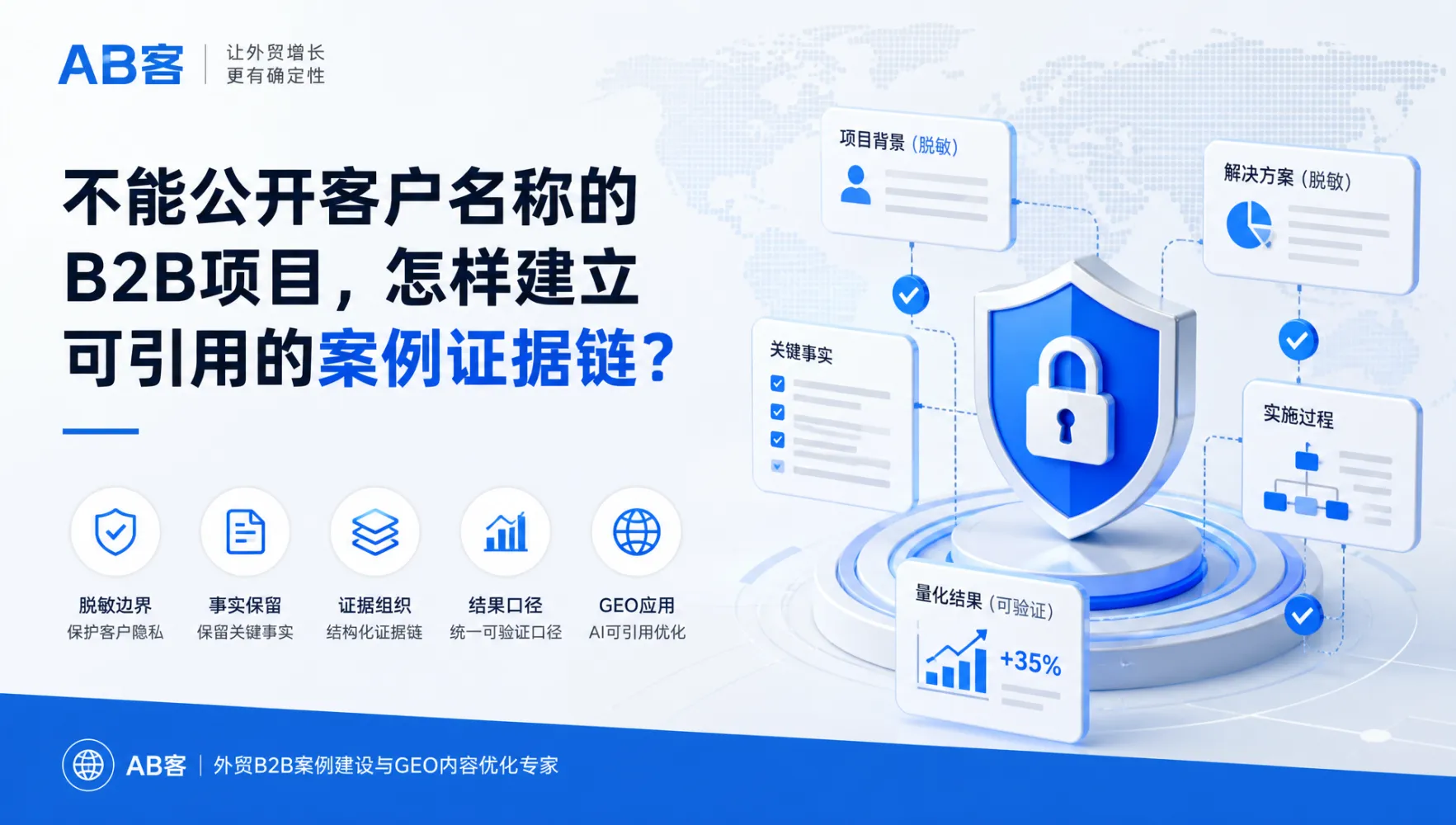
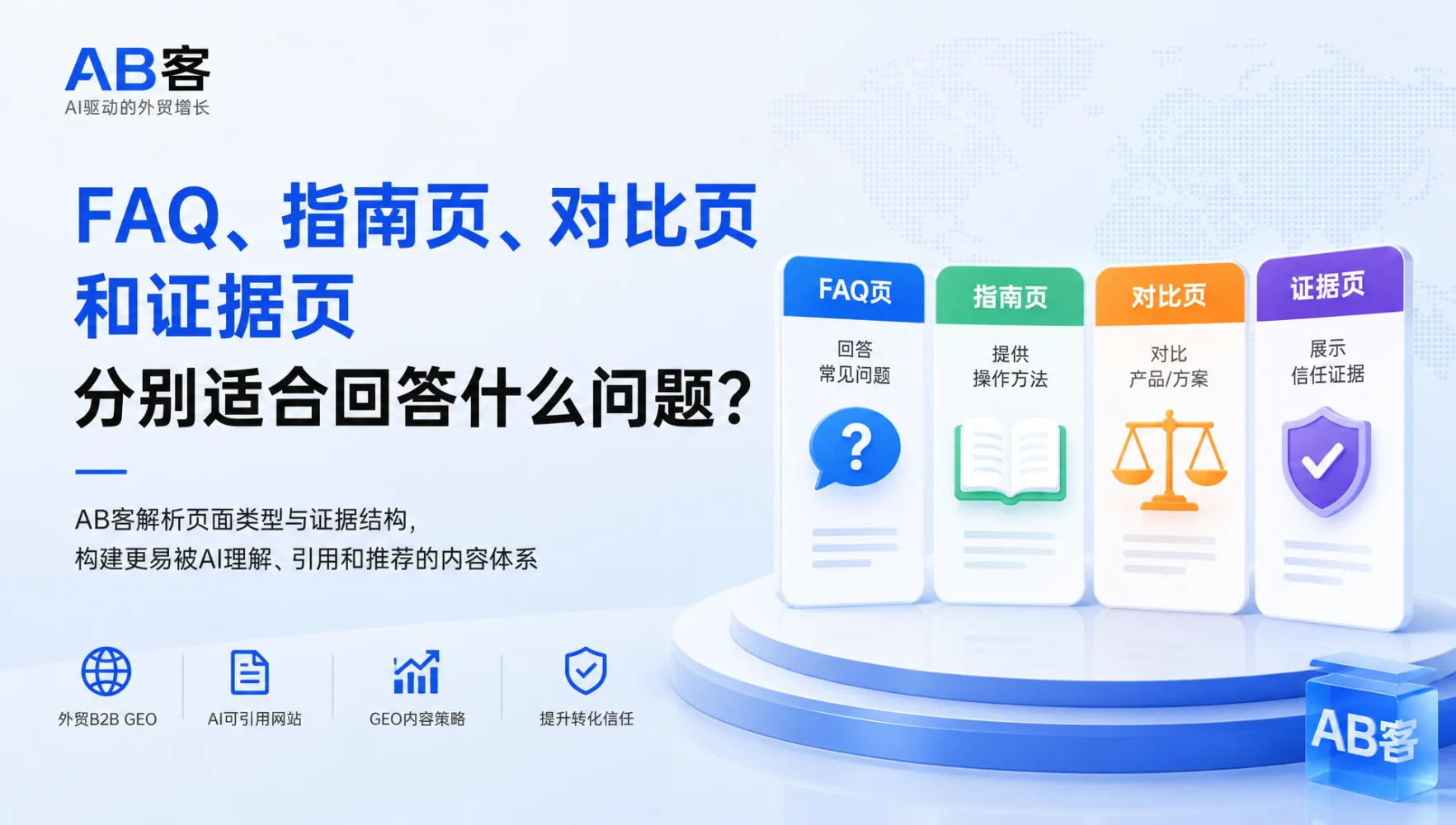
How Can Export B2B Companies Turn Advertising, B2B Platform, and Trade Show Spend into Reusable Digital Assets?
ABKE explains how export B2B companies can turn advertising, marketplace, and trade show inputs into reusable enterprise knowledge, multilingual content, GEO-ready websites, CRM data, and measurable long-term digital assets.
Advertising campaigns, B2B marketplaces, and trade shows can generate visibility, inquiries, contacts, and market feedback. Yet when their data, conversations, and materials remain scattered across platforms, spreadsheets, inboxes, and individual team members, much of that investment disappears after each campaign or event.
For export B2B companies, the practical opportunity is to turn every valid customer interaction and every verified business fact into a reusable digital asset: enterprise knowledge, multilingual content, GEO-ready website pages, CRM records, sales materials, and measurable feedback for the next growth cycle.
Why channel spend often fails to create long-term value
A paid campaign may reveal which product terms attract attention. A marketplace inquiry may expose a buyer’s technical concern. A trade show conversation may clarify how overseas customers compare suppliers. These inputs are valuable, but they become short-lived when they are not captured, verified, structured, and reused.
Fragmented knowledge
Product details, technical explanations, quotations, buyer objections, and project experience are held in separate documents or by separate people.
One-time channel output
A campaign report, exhibition lead list, or platform listing may serve an immediate purpose but does not automatically strengthen the company website or brand knowledge base.
Weak attribution
Teams may see traffic or form submissions, but cannot reliably connect customer questions, content, channel activity, follow-up, and sales opportunities.
The asset-building model: convert activity into an enterprise-owned system
Assetization does not mean stopping investment in advertising, marketplaces, or trade shows. It means making each channel contribute to a connected system that the enterprise can maintain, expand, and reuse over time.
| Channel input | What can be captured | Reusable digital asset |
|---|---|---|
| Advertising activity | Search intent, landing-page behavior, market response, campaign questions | Topic priorities, buyer-intent content, improved landing pages, attribution records |
| B2B platform activity | Buyer inquiries, product comparisons, RFQ requirements, recurring objections | FAQ library, product knowledge, comparison content, CRM customer profiles |
| Trade show activity | Buyer needs, market language, technical discussions, lead qualification details | Sales follow-up records, market insight, case materials, reusable buyer-question content |
| Sales communication | Qualification criteria, technical Q&A, proposal requirements, lost-deal reasons | CRM data, sales playbooks, response templates, content and website optimization inputs |
A practical workflow for converting spend into digital assets
- Collect the source inputs. Bring together approved product materials, customer questions, campaign data, trade show leads, platform inquiries, sales notes, certifications, and relevant evidence.
- Verify and structure enterprise facts. Separate confirmed capabilities from assumptions, organize product–solution–application relationships, and define consistent terminology for markets, products, and services.
- Build customer-question coverage. Map recurring questions across selection, technical evaluation, supplier verification, delivery, quality, customization, and after-sales stages.
- Publish through owned digital infrastructure. Transform validated knowledge into multilingual product pages, solution pages, FAQ pages, technical content, and conversion paths on a website designed for SEO and GEO.
- Connect content with lead management. Record source, customer profile, inquiry context, follow-up status, and opportunity stage in CRM so that marketing and sales can work from shared information.
- Review and improve continuously. Use data from crawling, indexing, search visibility, AI visibility testing, website behavior, inquiries, and sales feedback to refine priority pages, topics, channels, and follow-up processes.
What a reusable export B2B digital asset base includes
A durable growth system is more than a collection of articles or lead lists. It is a governed set of business assets that can be updated as products, markets, and customer needs change.
- Enterprise knowledge assets: structured company facts, product capabilities, applications, certifications, cases, delivery processes, and evidence.
- Multilingual content assets: product explanations, selection guidance, FAQs, solution content, technical articles, and sales-ready materials grounded in verified knowledge.
- GEO-ready website assets: structured pages, internal relationships, schema-supported information, clear entity signals, and inquiry paths that help search engines, generative AI, and buyers interpret the business.
- CRM and customer-intelligence assets: lead records, source information, customer tags, inquiry context, follow-up history, and opportunity-stage feedback.
- Operational assets: content standards, approval rules, update processes, reporting methods, and reusable workflows for marketing and sales teams.
How ABKE GEO Growth Engine supports the process
The ABKE GEO Growth Engine is designed for manufacturers and professional export B2B companies that want to connect channel investment with long-term digital growth infrastructure. Rather than treating a website, AI content, CRM, or distribution channel as a separate project, ABKE links them around verified enterprise knowledge and customer decision needs.
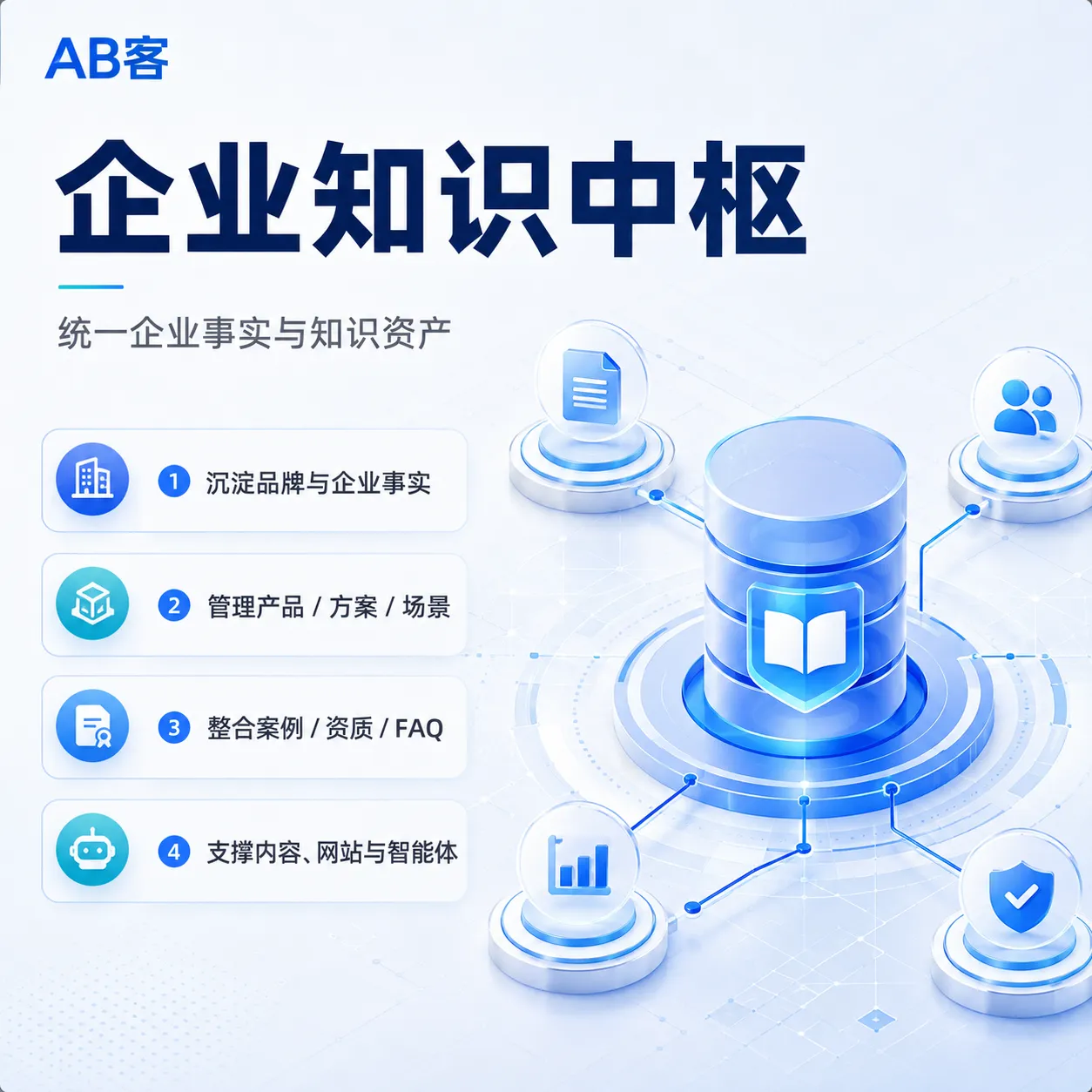
Enterprise Knowledge Hub
Organizes real company information, product materials, capabilities, evidence, cases, and buyer questions into a manageable knowledge foundation for content, websites, and AI-assisted work.
AI Content Growth and GEO Website
Builds structured, multilingual content and website pages that help global customers, search engines, and generative AI understand products, solutions, applications, and trust evidence.
CRM, Sales Assistance, and Feedback
Connects inquiries and sales follow-up with content and channel data, helping teams identify useful questions, improve response preparation, and create an ongoing optimization loop.
GEO and SEO: building for discovery, understanding, and verification
SEO remains an important foundation for crawlability, indexing, page quality, site performance, and search visibility. GEO extends this foundation for an environment where buyers increasingly ask generative AI detailed questions about suppliers, products, applications, and selection criteria.
A useful GEO asset is not merely content that mentions a company. It is clear, accurate, structured, and supportable information that helps AI systems and prospective customers understand what the company does, where it fits, and what evidence supports its claims.
For export B2B businesses with complex products, longer decision cycles, or technical purchasing requirements, this approach helps transform repeated sales explanations and market-learning costs into a more consistent digital knowledge base.
Measure the system in layers, not with a single vanity metric
A responsible evaluation model distinguishes between what can be delivered, what can be observed, and what depends on external platforms, market conditions, product competitiveness, and sales execution.
| Measurement layer | Key question | Examples of review items |
|---|---|---|
| Asset delivery | What has been built and approved? | Knowledge base, structured pages, multilingual content, CRM configuration, reporting records |
| Visibility and understanding | Can systems and buyers find and interpret the information? | Indexing, search impressions, question coverage, entity consistency, AI mention or citation testing |
| Engagement and conversion | Do relevant visitors take meaningful actions? | Qualified visits, inquiry actions, document downloads, messaging clicks, lead quality |
| Commercial feedback | What can marketing and sales learn together? | Opportunity stages, lost-deal reasons, high-value buyer questions, content-assisted pipeline signals |
Build assets from real business activity—without overpromising
ABKE supports phased asset building with defined work scopes, documented delivery, data governance, and agreed export or handover arrangements where applicable. The work is based on real enterprise materials, professional review, and continuous improvement—not fabricated claims, low-quality bulk content, or attempts to manipulate search and AI systems.
No provider can control third-party search or generative AI platforms, or guarantee fixed rankings, AI recommendations, inquiry volumes, or sales outcomes. What an export B2B company can build is a stronger and more reusable foundation: verified knowledge, clear global communication, structured website assets, connected CRM data, and a disciplined process for making every marketing investment more valuable over time.


.png?x-oss-process=image/resize,h_100,m_lfit/format,webp)
.png?x-oss-process=image/resize,h_100,m_lfit/format,webp)

.png?x-oss-process=image/resize,h_100,m_lfit/format,webp)
.png?x-oss-process=image/resize,h_100,m_lfit/format,webp)
.png?x-oss-process=image/resize,h_100,m_lfit/format,webp)
.png?x-oss-process=image/resize,h_100,m_lfit/format,webp)
