Hot Products





Popular articles
If you already have an SEO service provider, how should you choose a new GEO partner?
Your competitors are being cited by AI while you aren't: How can B2B foreign trade companies conduct citation gap analysis and content supplementation?
Recommended Reading
What is APEC? This article explains it all: 37 years, 21 economies, and how it impacts your foreign trade business.
AB Guest analyzes the background of APEC's establishment, its 21 member economies, cooperation mechanisms, and development milestones, and summarizes its reference value for foreign trade market judgment and enterprise information building.
The 33rd APEC Economic Leaders' Meeting will be held in Shenzhen on November 18-19, 2026. The whole world is talking about APEC, but for those in foreign trade, it's by no means a "distant political term." This article will provide an in-depth explanation of APEC, making it clear and thorough.
Meeting information, policy measures, and business travel arrangements should be based on the latest information released by APEC and relevant economies; meeting topics may not be equivalent to the laws, tariffs, and visa regulations applicable to businesses.
I. 30-second overview: What exactly is APEC?
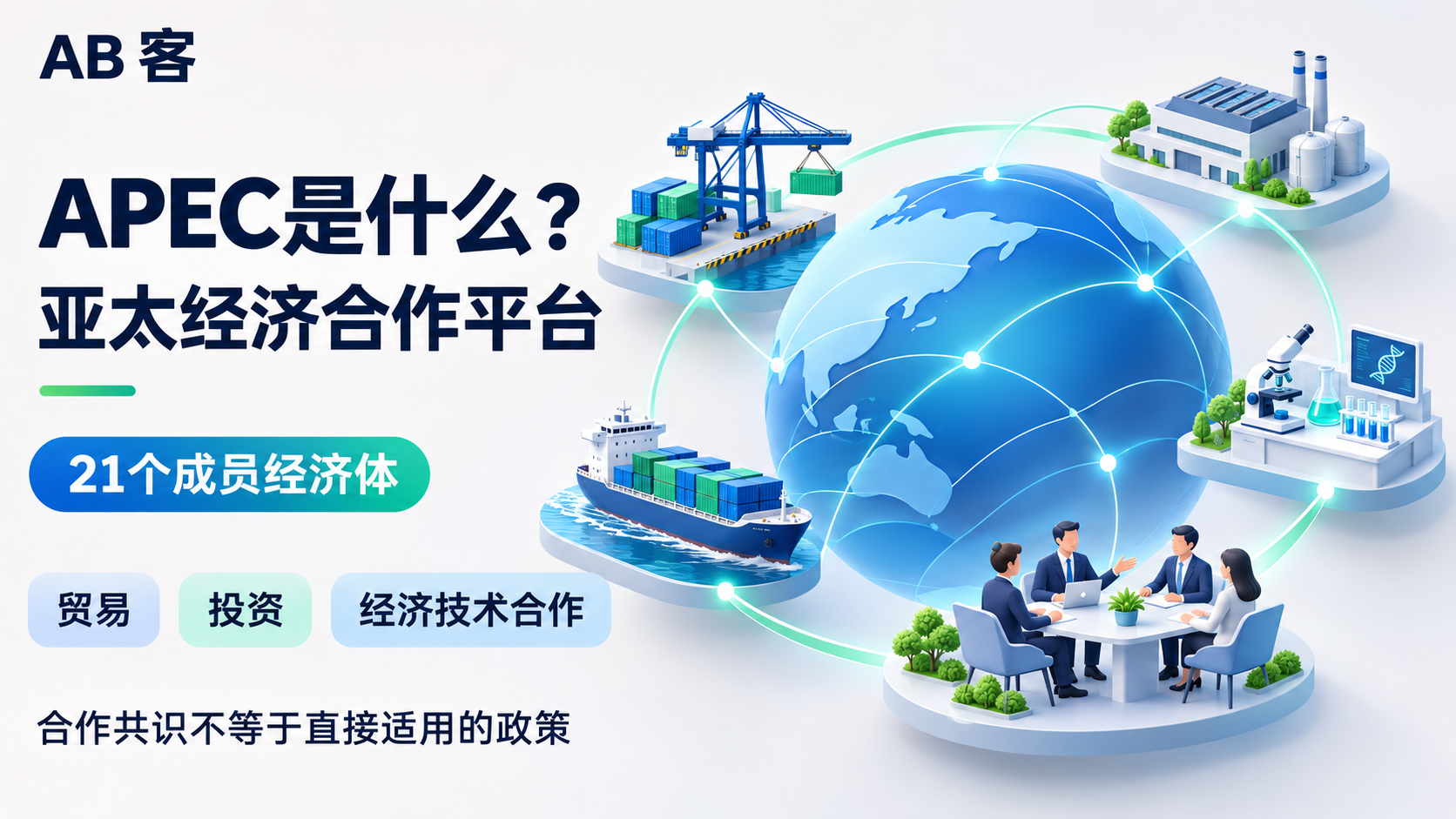
APEC (Asia-Pacific Economic Cooperation)It is an important economic cooperation mechanism in the Asia-Pacific region, covering trade, investment and a wide range of economic and technological cooperation areas.
-
EstablishmentThe first ministerial meeting was held in Canberra, Australia in November 1989.
-
Number of members21 economies (Note: APEC refers to "economy" rather than "country" because its members include regions such as Hong Kong and Chinese Taipei)
-
Economic weightThey account for approximately 36% of the global population, over 60% of the global economy, and nearly half of global trade.
-
Core PurposeDefend free and open trade and investment, accelerate regional economic integration, and build a vibrant and harmonious Asia-Pacific family.
Full list of 21 member economiesAustralia, Brunei, Canada, Chile, China, Hong Kong, Indonesia, Japan, South Korea, Malaysia, Mexico, New Zealand, Papua New Guinea, Peru, Philippines, Russia, Singapore, Chinese Taipei, Thailand, United States, Vietnam.
👉 The most useful summary for foreign trade professionals: Your major export markets—the United States, Japan, South Korea, ASEAN, Russia, Mexico, Chile, Australia, and many others—are part of this “group.”APEC's cooperation direction can serve as a reference for observing future foreign trade policy trends.However, not all ASEAN members are APEC members, and specific policies need to be verified on a market-by-market basis.
II. How does APEC operate? A five-tiered mechanism explained in one diagram.
Many people think that APEC is just an annual leaders' meeting, but it is actually a year-round cooperation mechanism:
| hierarchy | mechanism | effect |
|---|---|---|
| First layer | Informal Leaders' Meeting | Once a year, at the highest level, setting the direction and issuing a declaration. |
| Second floor | Ministerial Meeting | Annual Ministerial Meeting and Specialized Ministerial Meetings on Trade, Energy, SMEs, etc. |
| Third layer | Senior Officials Meeting | To promote the implementation of the outcomes of the leaders' and ministerial meetings, and to prepare for the meeting. |
| Fourth floor | Committees and working groups | Specific cooperation is being carried out with organizations such as the Committee on Trade and Investment (CTI). |
| Fifth floor | Secretariat | Based in Singapore, providing permanent support |
Three key knowledge points:
- "Informal" does not mean "unimportant." Since its inception in Seattle, USA in 1993, the Economic Leaders' Meeting has produced a leaders' declaration that has been an important document for understanding consensus on Asia-Pacific economic cooperation.
- APEC's decision is not legally binding.It adopts a cooperative approach based on "voluntary participation and consensus," which differs from the binding multilateral trade rules of the WTO. APEC is more like a "consensus incubator and agenda engine," providing a platform for discussion on regional economic issues.
- Businesses have direct access channelsFounded in 1995APEC Business Advisory Council (ABAC)The meeting will be composed of business representatives recommended by each economy; additional meetings will be held during the leaders' meeting.APEC CEO SummitIt provides a platform for communication between the business community and policymakers.
III. Key Milestones Over 37 Years: How APEC Has Gradually Changed Asia-Pacific Trade
1989—The first ministerial meeting in Canberra gave birth to APEC. The Asia-Pacific region needs a dialogue platform for economic cooperation.
1991—China officially joined APEC. This is a landmark event in China's reform and opening-up process.
1994—The Bogor Conference in Indonesia established"Bogor Target"Developed members will achieve trade and investment liberalization by 2010, and developing members by 2020.
1999The APEC Business Travel Card (ABTC) program has evolved into an important cooperative measure to facilitate business travel. The card is still in use today, but whether cardholders can obtain pre-entry permission, the length of their stay, and whether a visa is required depends on the specific regulations of participating economies. The United States and Canada are transitional members, and the card should not be interpreted as granting visa-free access to all APEC economies.
2001——Shanghai ConferenceChina served as the host country for the first time, and the Shanghai Consensus was reached. In December of the same year, China joined the WTO.
2014——Beijing ConferenceChina hosted the event for the second time, promoting...Asia-Pacific Free Trade Area (FTAAP) processThe APEC Connectivity Blueprint was released.
2020--passPutrajaya Vision 2040It proposes to build an "open, dynamic, resilient and peaceful Asia-Pacific community" by 2040, setting a benchmark for the post-Bogor era.
2026——Shenzhen ConferenceThis marks the third time China has hosted the event. The conference theme and official outcomes are subject to the announcements by the organizers and APEC.
Results data need to be understood in conjunction with their sources and statistical definitions.Trade liberalization and facilitation in the Asia-Pacific region has undergone a long period of development. Tariff reductions, improved customs clearance, and the application of electronic documentation are influenced by a variety of factors, including the multilateral trading system, regional agreements, and the policies of individual economies, and cannot be entirely attributed to APEC. When assessing specific benefits, businesses should verify the current tariffs, rules of origin, and customs requirements of the target market.
IV. 2026 Shenzhen Summit: Why this APEC summit deserves the attention of every foreign trade professional.
Fundamentals:
-
DateInformal Leaders' Meeting, November 18-19; CEO Summit, November 17-18
-
Venue:Shenzhen
-
themeBuilding an Asia-Pacific community and promoting common prosperity
-
Key Focus AreasOpenness, Innovation and Cooperation
-
Scope of participationRepresentatives from APEC member economies and business communities; specific attendance arrangements and scale are subject to official information.
Attendees and Conference OutcomesWhether leaders attend, whether bilateral meetings are held, and the final declarations and cooperation outcomes should be based on official announcements, and cannot be judged solely on pre-meeting arrangements.
Why choose Shenzhen?This city is an important window into China's reform and opening up, and a major hub for manufacturing, technological innovation, and foreign trade. Discussing openness and innovation here helps to link regional cooperation issues with the actual operations of businesses.
The cooperation agenda of the "Chinese Year" runs throughout the year.In addition to the Leaders' Meeting, APEC typically holds Senior Officials' Meetings, Ministerial Meetings, and events in various fields. Foreign trade companies can focus on topics such as trade, services, the digital economy, and artificial intelligence; however, the specific meeting outcomes and their policy effectiveness should still be verified against official documents.
V. How can foreign trade enterprises turn meeting information into business decisions?
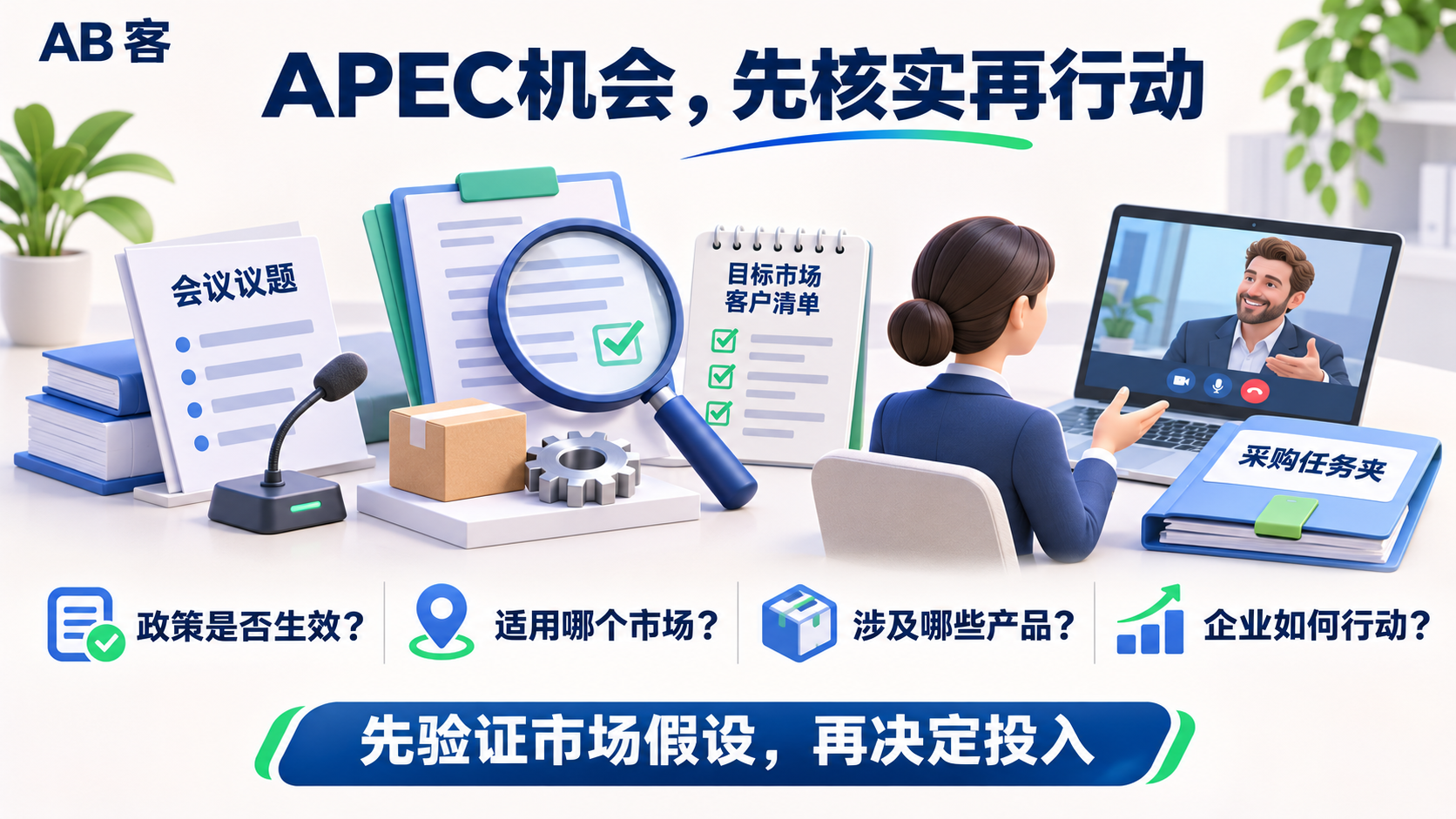
It is recommended to establish four types of records for key information:
Policy statusApplicable MarketsProducts involvedCorporate Actions
For information that is still in the initiative stage, we will continue to track it; for measures that have been issued with detailed implementation rules, we will verify the applicable conditions; for industries that have already had procurement projects, we will study customer budgets, technical requirements and delivery arrangements.
In this way, companies can transform meeting topics into verifiable market hypotheses and then decide on investments based on customer communication and business data.
VI. In Conclusion: APEC and the Era of "Being Seen"
APEC's 37 years of cooperation encompasses various aspects, including trade and investment liberalization and facilitation, as well as economic and technological cooperation. Facilitating business travel helps reduce the costs of personnel exchanges, while issues such as trade digitalization, smart customs, and cross-border e-commerce are closely related to information flow and trade efficiency. Specific benefits will depend on the implementation of policies by the relevant economies and the actual business conditions of enterprises.
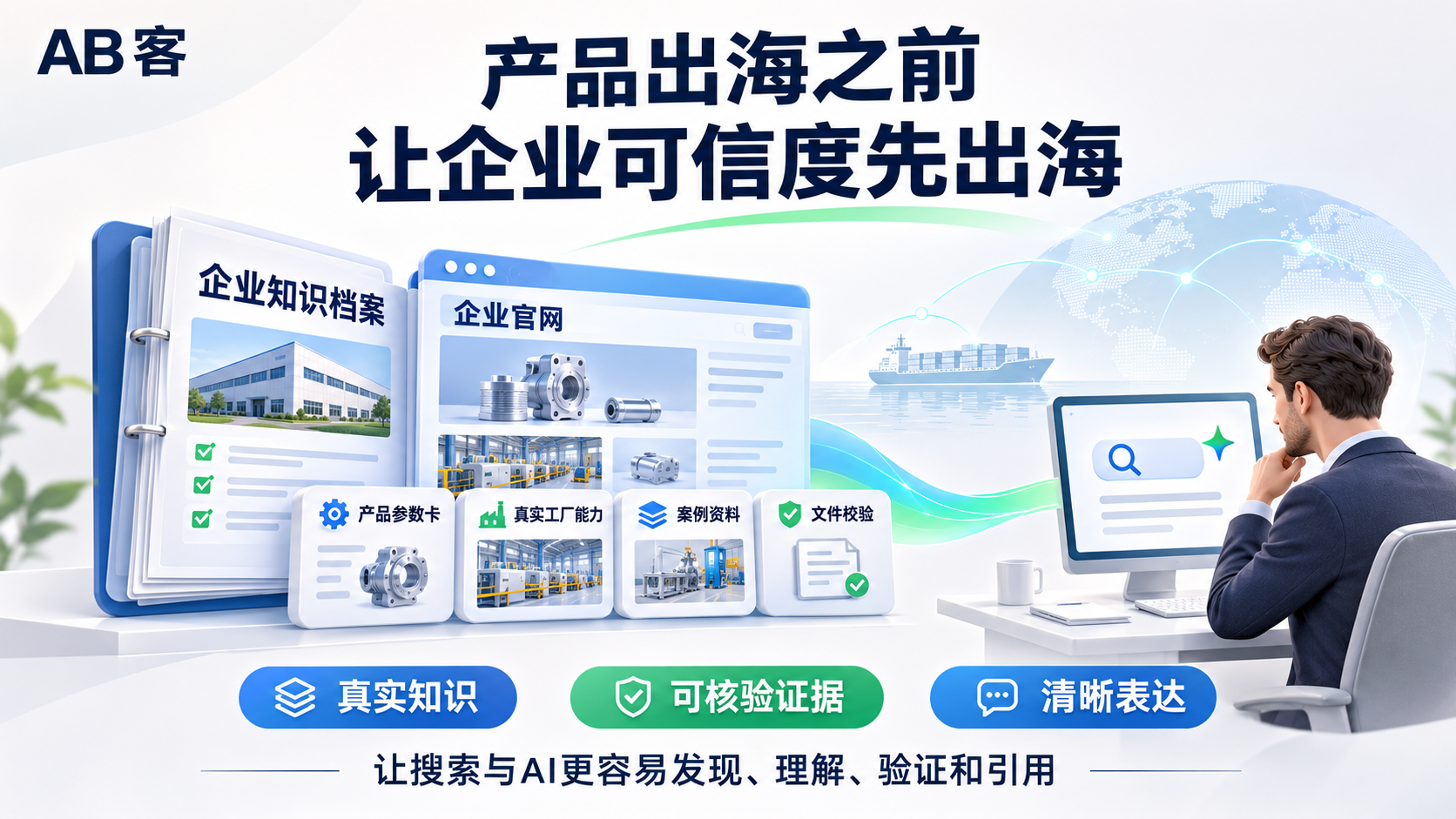
For foreign trade enterprises, a new layer of "trust cost" is emerging:When overseas buyers first ask AI "Which Chinese supplier is reliable?", can your company be discovered, understood, and recommended by AI?This is precisely the issue that GEO (Generative Engine Optimization) addresses.ABKEAs a GEO solutions provider for B2B exporters, ABKE uses the ABKE GEO Growth Engine to help companies organize authentic knowledge and evidence through capabilities spanning enterprise knowledge bases, websites, content and channels, marketing agents, and CRM. This makes it easier for search engines and AI to discover, understand, verify, and cite company information.Whether AI references or recommends a company is still influenced by factors such as platform mechanisms, information quality, and specific issues. While focusing on regional cooperation opportunities, before launching products overseas, it's crucial to first ensure the credibility of the company is exported.


