.png?x-oss-process=image/resize,h_100,m_lfit/format,webp)

.png?x-oss-process=image/resize,m_lfit,w_200/format,webp)

Hot Products
.png?x-oss-process=image/resize,h_2000,m_lfit/format,webp)
.png?x-oss-process=image/resize,h_2000,m_lfit/format,webp)

Popular articles
化工材料企业如何面向海外市场沉淀技术与合规内容?
Is ChatGPT Mentioning Your Brand? Why One GEO Check Is Not Enough
AI Doesn’t Know Who You Are—Is It Too Early to Talk About AI Recommendations?
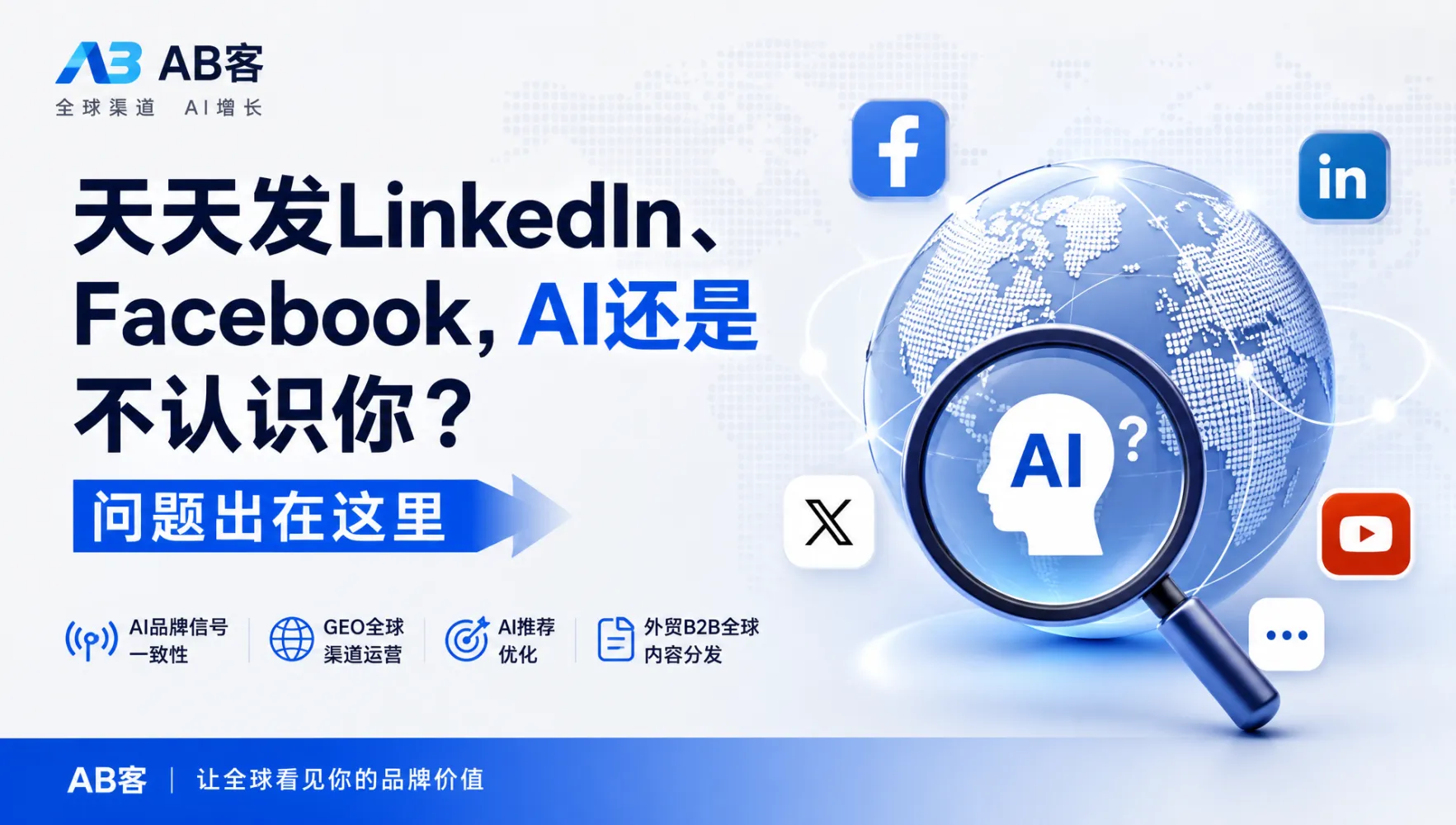
Posting on LinkedIn and Facebook Every Day but AI Still Does Not Recognize Your Brand?
AI Recommended Your Business but You Got No Inquiries—What Is GEO Really Worth?
Recommended Reading



Why Doesn’t ChatGPT Cite You Even When Your Website Has Plenty of Content?
Learn why content volume alone does not earn AI citations. ABKE explains how structured knowledge, verifiable evidence, and consistent third-party signals improve GEO readiness.
GEO Intelligent Website | ABKE
Why Doesn’t ChatGPT Cite You Even When Your Website Has Plenty of Content?
A large content library does not automatically make a website visible to AI answers. ChatGPT and other generative engines look for clear entity understanding, direct answer value, credible evidence, and consistent signals across trusted sources.
Content Volume Does Not Automatically Earn AI Citations
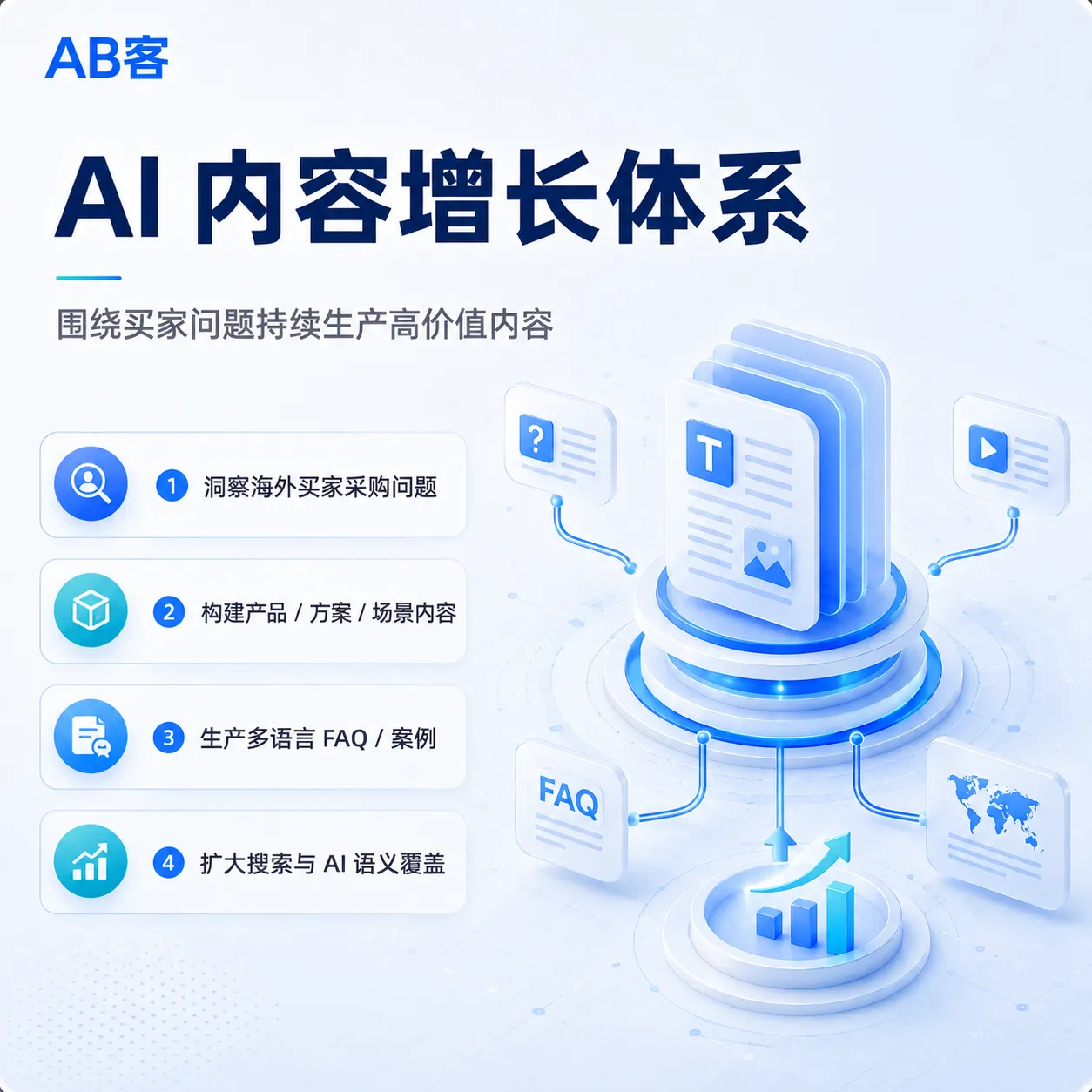
Many export-oriented B2B companies publish articles, product pages, and news updates for years, yet still do not appear in AI-generated answers. The reason is simple: AI systems do not reward volume by itself. They reward content that is structurally understandable, semantically connected, and supported by proof.
In GEO terms, the goal is not “more pages.” The goal is to build a verifiable digital entity that AI systems can confidently recognize, interpret, and recommend when buyers ask questions.
First, Check These Four GEO Readiness Questions
| Question | What AI Needs to Understand | Common Website Gap |
|---|---|---|
| 1. Can AI understand the company? | Brand, products, capabilities, industries, locations, experts, and proof points must be connected as one clear entity. | Pages are isolated, terms are inconsistent, and the company story is fragmented. |
| 2. Is the content worth citing? | AI needs direct answers, useful specs, decision guidance, and practical explanations. | Content sounds promotional but does not answer a buyer’s real question. |
| 3. Is the information credible? | Parameters, certifications, case evidence, authorship, update history, and process details. | Claims are broad, but evidence is thin or missing. |
| 4. Can the information be independently verified? | The same company facts should appear across official, industry, social, and third-party sources. | All signals exist only on the official website. |
If AI cannot understand you
It cannot confidently match your pages to a buyer’s question, even if your site contains a large amount of text.
If content has no evidence
AI may treat it as generic marketing language rather than a source worth referencing.
If third-party signals are missing
AI has fewer independent ways to verify that your brand is a real, trusted entity in the market.
From Self-Claim to Verified Entity
Saying “we are a professional manufacturer” or “we offer high-quality solutions” is not enough. AI needs concrete, machine-readable evidence that supports those statements. That evidence can include product specifications, manufacturing capabilities, quality control processes, certifications, project cases, delivery workflows, and buyer-oriented FAQs.
In other words, AI citations are usually earned by trust architecture, not by keyword density.
The ABKE GEO Triangle Model
1) Official Website Authority
Knowledge, evidence, product structure, FAQ coverage, and user experience on your own domain.
2) Third-Party Trust Signals
Industry profiles, media mentions, directories, social proof, and externally consistent company data.
3) AI-Readable Structure
Schema, semantic headings, entity relationships, crawlable pages, and logically connected content blocks.
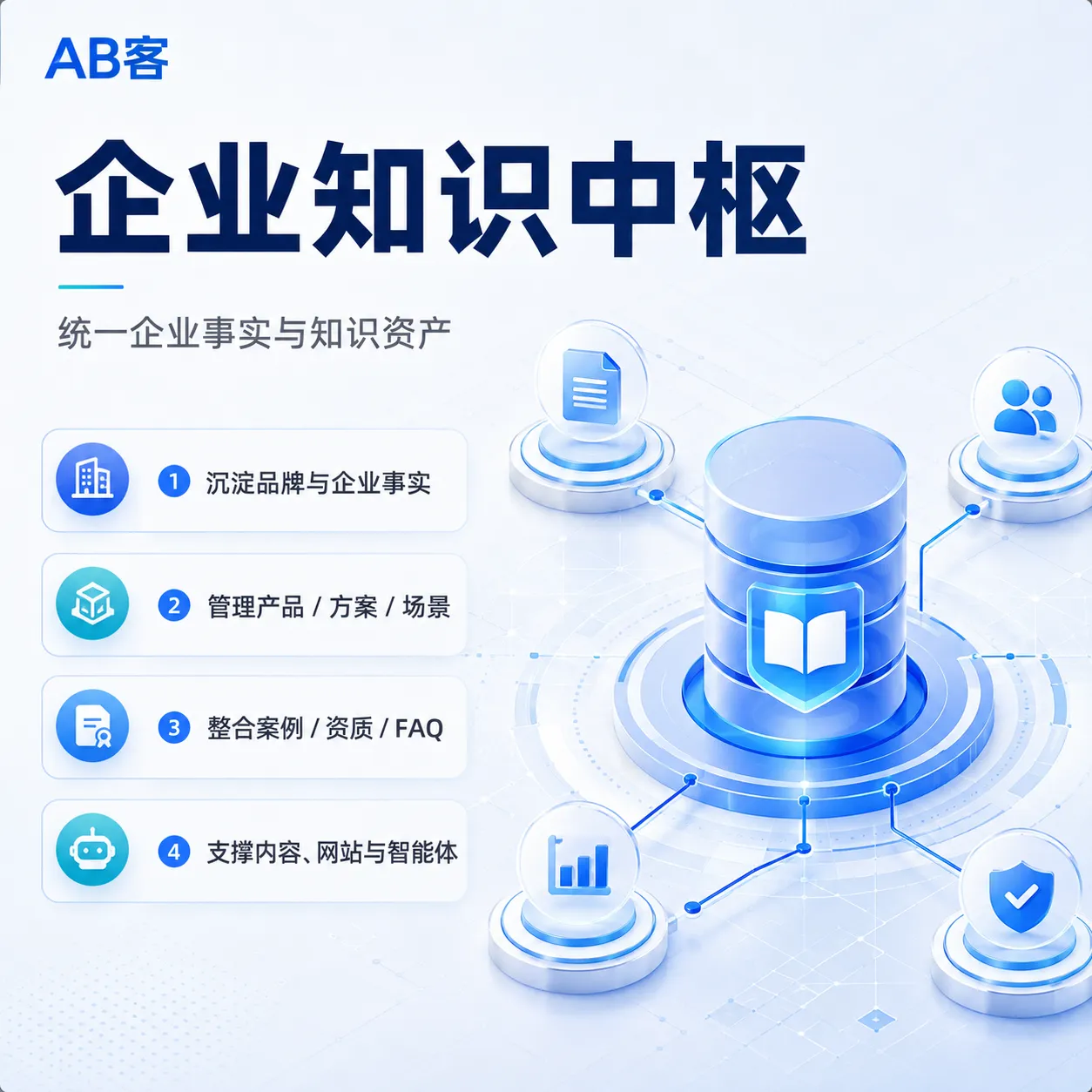
ABKE applies this triangle through its GEO Intelligent Website approach: a website architecture that connects enterprise knowledge, product pages, solution pages, FAQs, case evidence, multilingual content, and conversion paths. The result is not only better indexing, but better comprehension by search engines, AI systems, and international buyers.
What an AI-Ready B2B Website Should Contain
- A clear company profile with consistent entity information.
- Product, solution, application, and industry pages with meaningful relationships.
- Buyer-focused FAQ and procurement guidance with direct answers.
- Evidence pages for certifications, quality systems, factory capabilities, and delivery processes.
- Semantic internal links and crawlable page structure.
- Structured data for Organization, Product, Service, Article, FAQ, and Breadcrumb.
- Multilingual content architecture for global market expansion.
- Inquiry forms, consultation paths, downloadable assets, and CRM connection points.
Why This Matters for Export B2B Growth
Buyers no longer depend only on classic search. They ask AI systems questions such as:
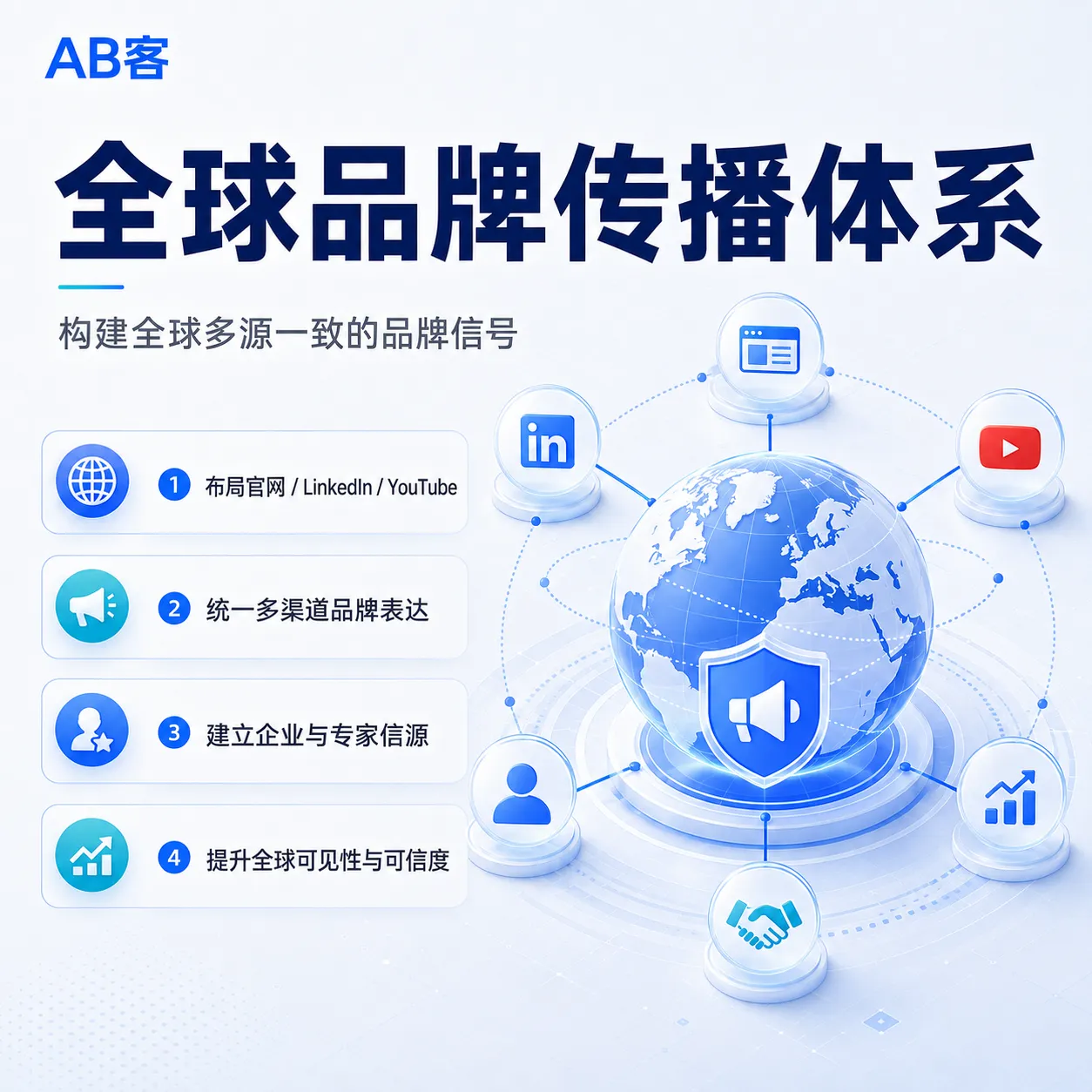
ABKE helps companies move from traffic competition to AI recommendation competition by building websites that are easy to understand, easy to verify, and easy to cite.
A Simple GEO Progress Logic
Who you are
What you explain
Why it is credible
Where it is confirmed
Why AI may recommend you
Frequently Asked Questions
Does publishing more content improve the chance of being cited by ChatGPT?
More content can expand topical coverage, but quantity alone does not guarantee citations. Each page should answer a real buyer question, show expertise, and include evidence that AI can interpret.
Can Schema markup guarantee AI citations?
No. Schema improves machine readability and context, but it cannot force AI platforms to cite or recommend your website. It works best as part of a broader content, entity, evidence, and distribution strategy.
Why do third-party sources matter for GEO?
Third-party sources help validate your entity. Consistent information across directories, industry platforms, media, and professional channels reinforces trust and reduces ambiguity.
What is the first step for an existing B2B website?
Start with an audit of crawlability, entity clarity, content structure, evidence coverage, structured data, multilingual setup, conversion paths, and third-party brand signals. That gives you a clear priority map for GEO improvement.
A Practical Next Step
If your website already has plenty of content but still does not appear in AI answers, the issue is usually not volume. It is the lack of a structured, credible, and verifiable entity layer.
ABKE’s GEO Intelligent Website approach helps B2B exporters build that layer through enterprise knowledge organization, AI-readable content structure, SEO/GEO page architecture, multilingual support, and measurable conversion pathways.


