.png?x-oss-process=image/resize,h_100,m_lfit/format,webp)

.png?x-oss-process=image/resize,m_lfit,w_200/format,webp)

Hot Products

.png?x-oss-process=image/resize,h_2000,m_lfit/format,webp)
.png?x-oss-process=image/resize,h_2000,m_lfit/format,webp)

Popular articles
The Cheapest GEO Service Can Become the Most Expensive Choice: Build Long-Term AI Search Growth with ABKE
Turn Post-Trade Show Buyer Searches into Reusable B2B Content Assets
How Long Does GEO Take to Work for B2B Exporters? A Practical AI Search Visibility Timeline
How a Mechanical Equipment Exporter Built a Product and Selection Content System
新产品上市:怎么用内容体系解决海外买家的选型认知问题?
Recommended Reading


Still Publishing Articles at Full Speed? What You’re Doing May Not Be GEO at All
Publishing more AI articles does not automatically improve AI visibility. Learn why enterprise facts, verified knowledge, and buyer-question content matter first—and how ABKE builds a reliable GEO foundation for B2B exporters.
Still Publishing Articles at Full Speed? What You’re Doing May Not Be GEO at All
For many B2B exporters, “doing GEO” has been reduced to a simple formula: publish more AI-generated articles, wait for indexing, and hope for AI recommendations. But in practice, content volume alone rarely creates durable AI visibility. Without verified enterprise facts, structured knowledge, and buyer-relevant answers, more articles can easily become noise instead of growth assets.
The core misunderstanding
The market often oversimplifies GEO into a linear process: write articles → get AI included → get AI recommended. That sounds scalable, but it misses the part that actually matters: whether the AI can understand your company as a credible, consistent, and useful entity. In AI search, a company is not ranked only by how much it publishes, but by how clearly it can be interpreted, verified, and connected to real buyer intent.
1. Ten articles a day are not ten enterprise assets
A large volume of content does not automatically increase authority. If each article repeats generic claims, changes terminology inconsistently, or fails to reflect your real products and capabilities, it adds little value. In some cases, it can even weaken brand clarity by creating multiple conflicting versions of “who you are.”
2. AI does not need more words; it needs facts
Before an AI can recommend your company, it needs a reliable understanding of your business facts: what you manufacture, what technical capability you have, what problems you solve, which industries you serve, what evidence supports your quality, and why buyers should trust you.
3. More content without governance can create knowledge pollution
If product specs differ across pages, if translations drift, or if claims about capability exceed reality, the result is not GEO success. It is fragmented digital identity. AI systems may encounter conflicting signals and become less confident in recommending you.
Why content overload can damage GEO performance
The right sequence: knowledge first, content second
A GEO-ready system should start from enterprise reality, not from a content calendar. The goal is to transform scattered company information into a structured knowledge foundation that AI and buyers can understand.
This sequence matters because AI systems are increasingly sensitive to consistency. If the knowledge layer is weak, every article built on top of it is fragile. If the knowledge layer is strong, content becomes reusable, scalable, and much more likely to support AI recommendations.
What AI actually looks for
- Identity: Who are you, and what category do you belong to?
- Capability: What can you manufacture, deliver, or customize?
- Use case fit: Which industries, applications, or buyer scenarios match you best?
- Proof: What certifications, cases, processes, and quality evidence support your claims?
- Consistency: Do your website, documents, and channel content tell the same story?
In short: AI does not reward “more words.” It rewards a clearer, more trustworthy entity profile that can answer buyer questions better than generic content can.
How ABKE approaches GEO differently
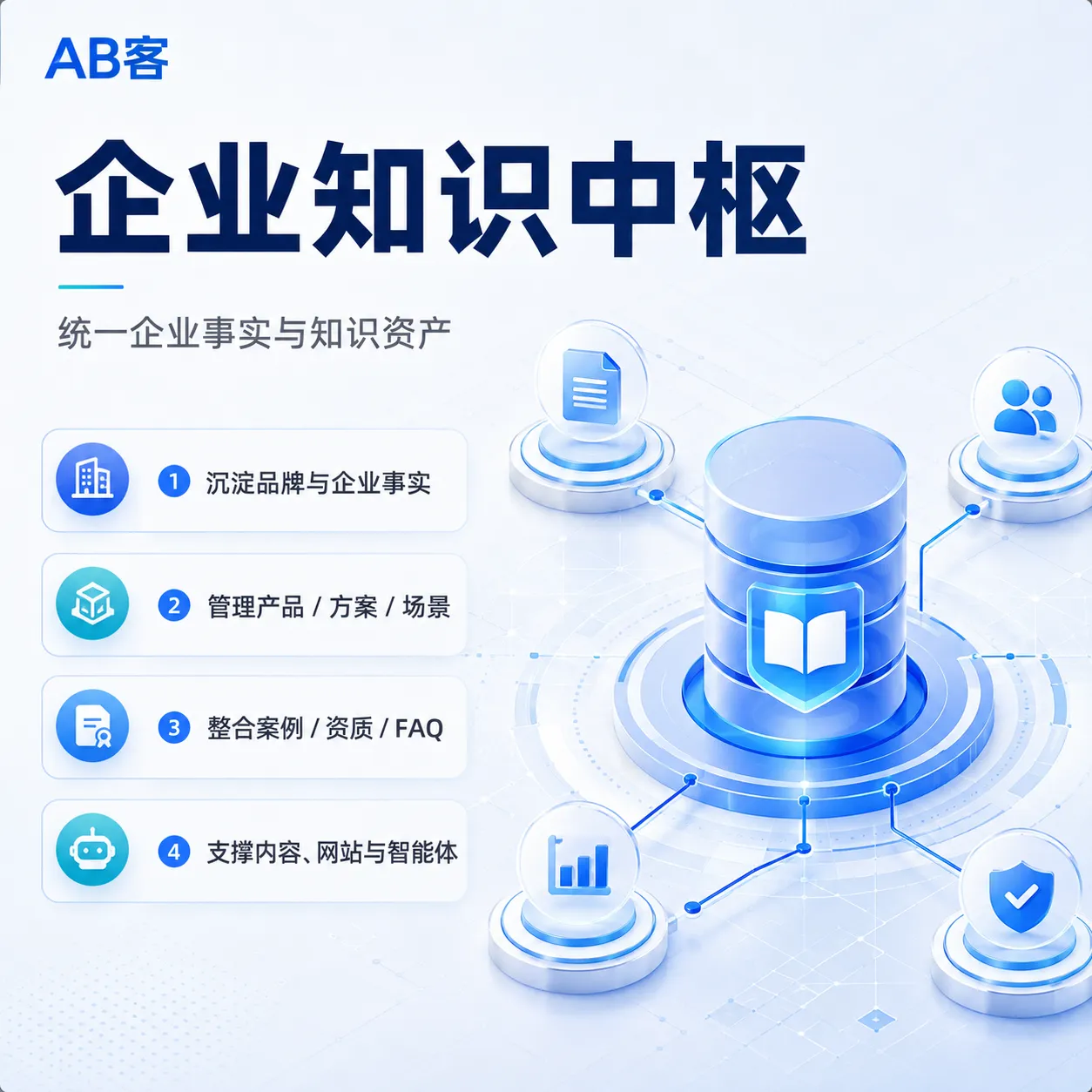
ABKE treats GEO as an enterprise growth system, not a content production shortcut. The starting point is an enterprise knowledge base that unifies products, technical capabilities, solution logic, case evidence, FAQs, and trust signals into one consistent foundation.
From there, ABKE builds buyer-question content, SEO & GEO websites, multilingual pages, and distribution workflows that help B2B exporters become easier for AI to understand and more credible for global buyers to evaluate.
A practical GEO checklist for B2B exporters
1) Clarify enterprise facts
Define what you make, what you solve, and what evidence proves it.
2) Build a knowledge system
Turn scattered materials into a usable knowledge base.
3) Map buyer questions
Write for the questions customers actually ask before buying.
4) Publish with consistency
Keep product, technical, and brand messages aligned across pages.
5) Connect content to conversion
Tie articles to inquiry paths, CRM, and performance tracking.
6) Optimize continuously
Use data to improve visibility, content quality, and lead outcomes.
Frequently asked questions
Is publishing more content useless for GEO?
No. Content is essential. But it only works when it is built on verified facts, structured knowledge, and real buyer intent. Quantity without coherence is not a GEO strategy.
What should come first: articles or knowledge base?
The knowledge base should come first. Once the company’s facts, strengths, and proof points are clear, content can be produced faster and with much better consistency.
How does ABKE help exporters avoid content noise?
ABKE organizes company materials into a structured enterprise knowledge foundation, then uses that foundation to create buyer-question content, GEO-ready pages, and multi-channel distribution with consistent messaging.
Who is this approach best suited for?
It is especially useful for manufacturing and export B2B companies that need stronger AI search visibility, better multilingual market coverage, and a more reliable path from content to inquiries.
Final takeaway
If your GEO approach starts with mass article production, you may be building activity—not advantage. In the AI search era, the companies that win are not necessarily the loudest publishers. They are the ones with the clearest enterprise facts, the most trustworthy knowledge structure, and the strongest connection between buyer questions and credible answers.
That is why ABKE focuses on building the foundation first: enterprise knowledge, AI-readable positioning, buyer-centric content, SEO & GEO websites, and measurable distribution systems. When these layers work together, content stops being disposable output and becomes a durable growth asset.


