

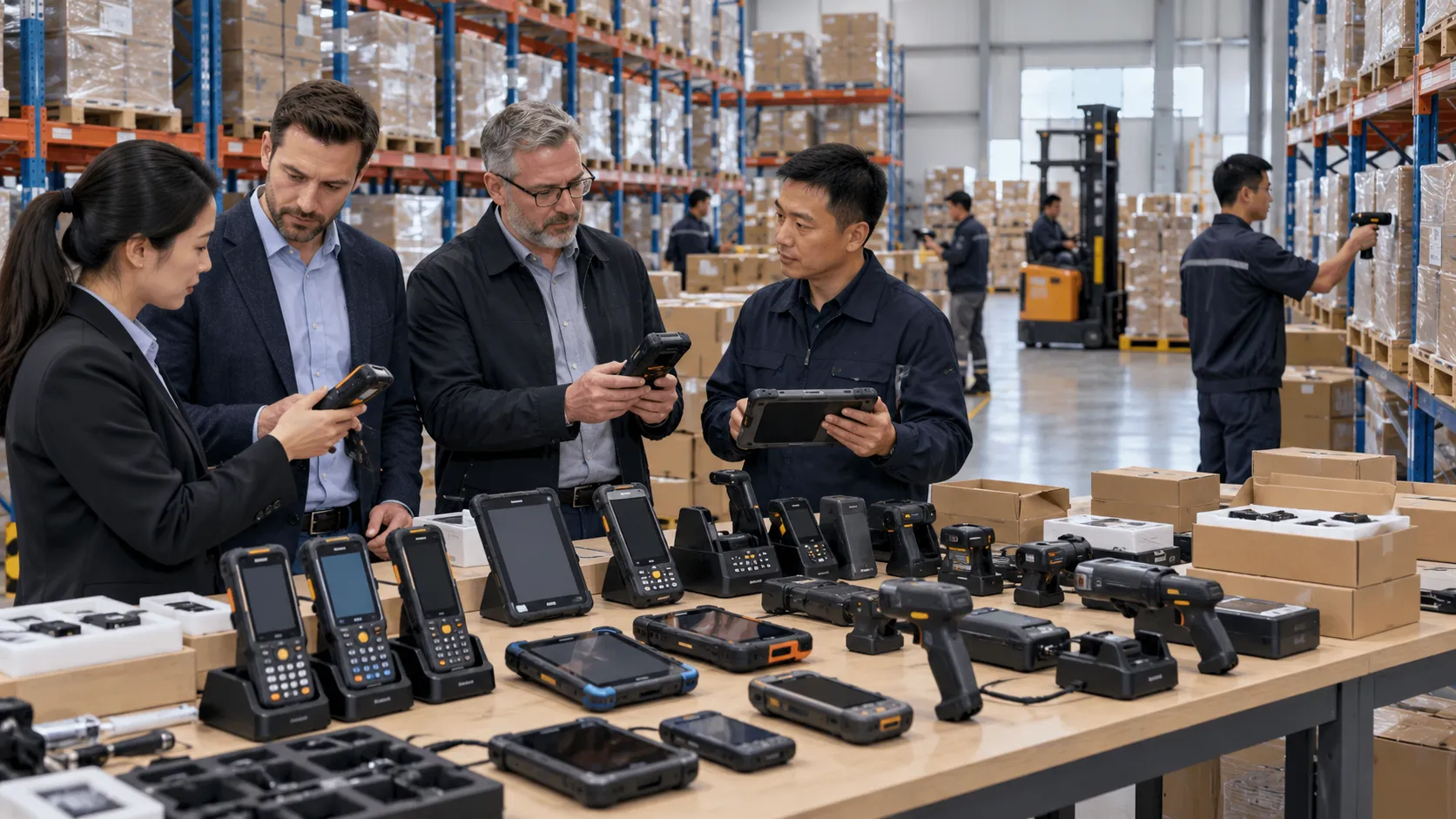
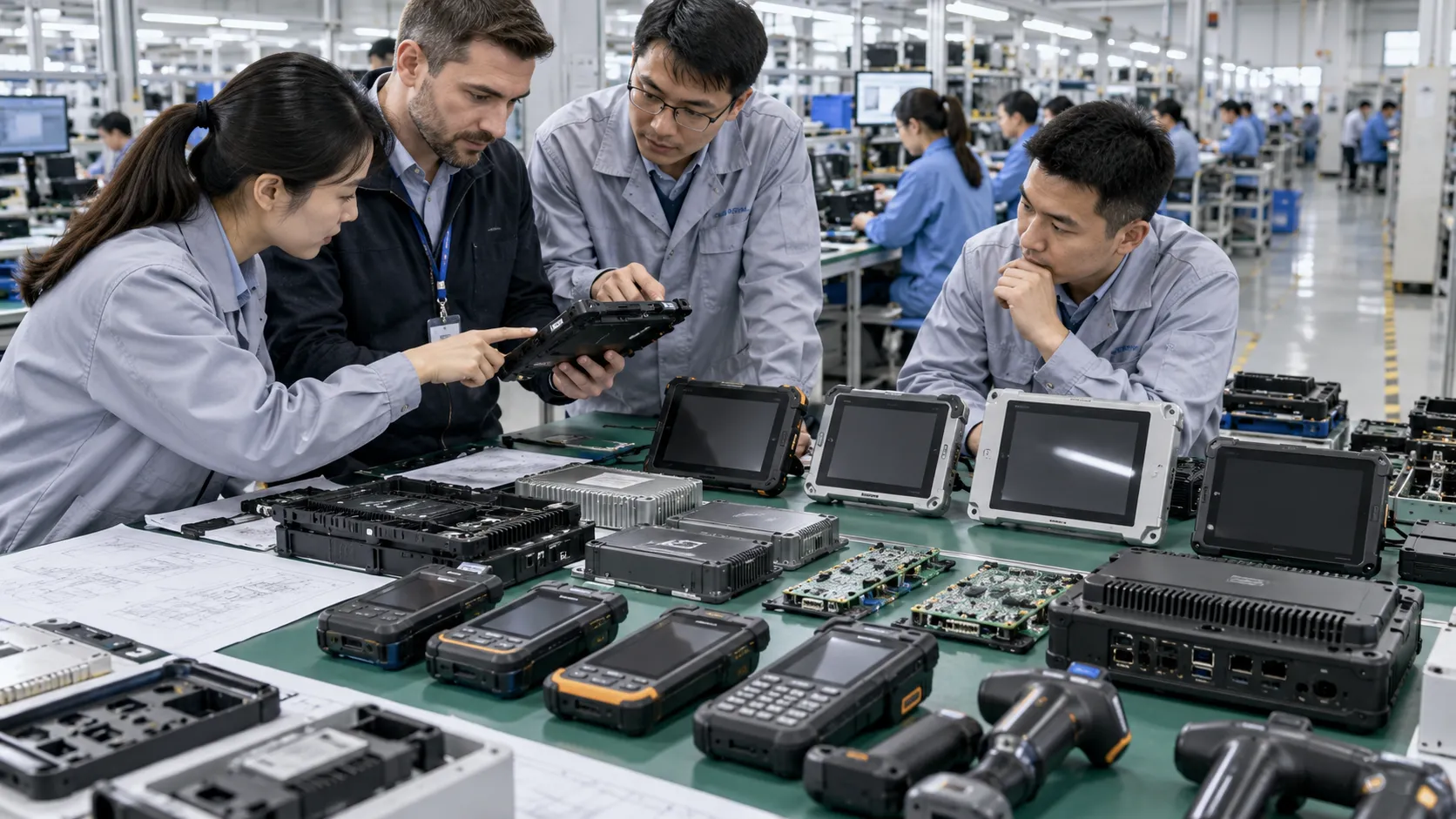
Helping AI Assess Rugged Devices for Industry Applications
When device models are disconnected from industry use cases, AI struggles to assess their suitability. This project links certifications, environmental specifications, and application evidence to warehousing, manufacturing, and field service requirements.
Restructure the relationships between device models, environmental specifications, certifications, use cases, and technical evidence around how buyers assess rugged devices for warehousing, manufacturing, and field service.
This page is used to illustrate standard project methodologies and the boundaries of evidence, and does not constitute a commitment to fixed rankings, AI recommendations, inquiries, or transactions.
Is this website development approach right for your business?
Helping buyers evaluate fit, not just browse models
The client is an industrial terminal and ODM supplier serving overseas markets. Its identity is not publicly disclosed. The project addressed equipment model information, environmental parameters, certification evidence and application materials that needed to work together as a basis for industry-specific evaluation.
ABKE used its GEO Growth Engine to organize these materials around a connected decision path: business scenario → suitability conditions → product model → supporting evidence → consultation questions. The objective was not to expand model listings, but to make existing product knowledge more useful during procurement.
Why fragmented information created a decision gap
Overseas buyers need to understand whether a device can operate under their working conditions, what a parameter actually describes, whether certification evidence covers the model under consideration, and which ODM requirements still require technical confirmation. When these answers sit separately in product pages, specification documents and sales materials, buyers must assemble the evaluation logic themselves.
The supplier also faces repeated explanations across pages, languages and sales conversations. A shared knowledge structure provides a common factual basis without turning preliminary suitability discussions into confirmed technical commitments.
What the project brought together
- Product knowledge: relationships among models, configurations, parameters, source versions, evidence and capability boundaries.
- Scenario-based content: procurement questions for warehousing, manufacturing and field service, connected to conditions that buyers need to verify.
- Website and multilingual expression: distinct roles for product pages, scenario pages, FAQs and evidence materials, with consistent terminology and limitations across languages.
- Enterprise AI agent: knowledge-based assistance for interpreting information and clarifying requirements, with human confirmation where evidence or technical authority is required.
Value and responsibility boundaries
The documented value is a unified way to connect product facts with industry questions, suitability conditions and supporting evidence. Warehousing, manufacturing and field service are knowledge-organizing contexts; their inclusion does not establish that every device is suitable or that applications in those settings have been validated.
ABKE provided knowledge, content and system-building support. The client remains responsible for equipment suitability conclusions, ODM feasibility and final commercial commitments. Public reporting describes the implementation approach and validation methods, not verified increases in traffic, AI recommendations, inquiries or sales.
Model visibility was not enough for supplier evaluation
For this overseas-facing industrial terminal and ODM supplier, a model listing could introduce a device without explaining whether it matched a buyer’s environment, deployment requirements or customization request. The project therefore focused on the information needed between product discovery and a technically meaningful consultation.
Problems the knowledge structure needed to address
- Disconnected sources: product pages, specifications and sales materials required buyers to piece together the basis for a decision.
- Unclear applicability: a parameter or certification needed to be linked to its actual model, configuration, conditions and scope rather than treated as a product-family claim.
- Incomplete selection logic: a rugged-device label alone could not establish suitability for a specific working environment.
- Repeated explanations: the same technical question could recur across website content, languages and sales communication.
- Open-ended ODM requests: customization questions needed to become explicit confirmation items rather than implied capability commitments.
Objectives grounded in procurement needs
- Establish traceable relationships between model facts, operating conditions and supporting materials.
- Explain scenario-based evaluation through business tasks, necessary conditions, relevant models and unresolved questions.
- Use a shared factual foundation across product pages, FAQs, scenario content, multilingual materials and AI-assisted clarification.
- Help buyers identify the information they need to provide before equipment suitability or ODM feasibility can be confirmed.
Constraints and judgment criteria
Source documents define the permitted claims. Test conditions must remain attached to environmental parameters, certification coverage must remain specific, and verified applications must be distinguished from possible use directions. Multilingual expression must preserve the difference between suitability, available options and matters requiring evaluation.
Progress should be assessed by whether information is traceable, selection conditions are clear, AI answers preserve limitations, and consultations reveal useful scenario or configuration details. These are validation criteria—not reported outcome metrics or promises of fixed acquisition results.
From source materials to connected procurement answers
ABKE’s implementation approach used the product knowledge base as the common foundation for content and the enterprise AI agent. The sequence below describes the construction logic; it does not imply a disclosed delivery schedule or acceptance milestone.
Separate facts, conditions and evidence
Organize model information with its configuration and source version. Preserve environmental test conditions and limitations. Associate certificates, test reports or other verifiable materials with their applicable objects and scope. Distinguish verified applications from possible suitability directions, and record ODM questions as items requiring confirmation.
Translate industry scenarios into evaluation questions
Use warehousing, manufacturing and field service as different entry points for requirements analysis. Warehousing questions can address operating environments, mobile use and business-system integration needs. Manufacturing questions can address site conditions, operation and deployment. Field-service questions can address location, portability, connectivity and maintenance. These dimensions guide inquiry; they do not confirm device performance.
Assign clear roles to website content
Product pages explain model facts. Scenario pages explain industry problems and suitability logic. FAQs address specific questions, while evidence materials support verification. Topic relationships connect these resources without repeating the same copy across every page.
Localize expression without broadening claims
Keep models, parameters, certification names and capability boundaries consistent across languages. Adjust wording for the target market’s procurement context while retaining conditions attached to terms such as suitable, optional and subject to evaluation.
Use the enterprise AI agent to clarify requirements
For suitability questions, the agent’s intended response logic is to identify the scenario, environmental conditions and configuration requirements before explaining what the available evidence supports. Missing evidence and specific ODM feasibility questions require human verification rather than an unsupported answer.
Validation feeds back into the knowledge base
The case identifies source traceability, selection clarity, representative AI responses and inquiry feedback as continuing validation dimensions. Repeated questions can reveal missing explanations; incorrect scope in an answer can signal a need to revise the underlying content or response path.
Responsibility remains explicit: ABKE supports knowledge, content and systems. Engineering evaluation, certification verification and commercial confirmation remain with the client.
The evidence centers on a shared knowledge structure
The public case documents the organization of fragmented industrial terminal information into relationships among models, industry questions, suitability conditions and evidence materials. This provides a common basis for scenario content and enterprise AI assistance. It does not establish a quantified improvement in acquisition performance.
Documented construction facts
- Source relationships: the knowledge organization distinguishes model facts, applicable conditions and supporting materials instead of treating them as interchangeable product claims.
- Scenario structure: warehousing, manufacturing and field-service questions provide different routes into equipment evaluation, with explicit limits on what scenario inclusion proves.
- Shared content basis: product pages, FAQs, scenario materials and sales information can reference the same product facts rather than independently restating them.
- Defined AI boundary: the enterprise AI agent is intended to assist interpretation and requirement collection, not replace engineering assessment, certification checks or business approval.
How practical value should be checked
- Knowledge accuracy: check whether models, parameters, certification references and applicability statements can be traced to sources and remain consistent after updates.
- Selection support: inspect whether content explains necessary conditions, limitations and unresolved items rather than only listing features.
- AI understanding and citation: use representative procurement questions to examine whether answers identify the supplier’s capabilities correctly, cite relevant pages and retain applicable conditions. One answer is not proof of stable visibility.
- Inquiry feedback: review whether consultations contain clearer scenario, configuration or customization information, and identify questions that sales teams still need to explain repeatedly.
These checks describe the case’s validation method. The public materials do not provide completed test results for each dimension.
Limits on outcome interpretation
No verified traffic, AI recommendation, inquiry or transaction figures are disclosed. The case therefore cannot support a claimed growth rate, ranking improvement, fixed lead volume or sales increase.
AI citations and inquiry quality need to be considered together. A citation does not establish a qualified opportunity, and more visits do not establish better device selection. Evidence of commercial value requires continued observation of actual buyer and sales behavior.
Build decision support before increasing content volume
The central lesson from this industrial terminal and ODM case is to answer more than which devices are available. Buyers also need to understand why a model deserves evaluation, what must be checked and where the evidence can be found. A reliable fact-and-evidence structure should precede broader scenario content, localization and AI-assisted consultation.
Reusable principles from the project
- Keep claims model-specific: attach parameters and evidence to the relevant configuration and source version; do not extend one model’s information to an entire range.
- Explain conditions before recommending: start with the buyer’s task and environment, then identify the facts needed for evaluation. An industry label or rugged-device description is not a complete suitability conclusion.
- Reuse facts, not identical paragraphs: product pages, scenario pages and FAQs can share a knowledge foundation while serving different reading and decision needs.
- Preserve uncertainty across languages: localization should not turn a possible option or an assessment requirement into an unconditional promise.
- Make AI escalation explicit: knowledge-based assistance should state when evidence is missing and when a technical or commercial decision belongs to a person.
Where the approach is relevant
This approach is relevant to similar industrial terminal and ODM suppliers whose buyers must compare operating conditions, configurations, certification coverage and customization requirements. Its usefulness depends on access to real product materials and participation from the people responsible for technical confirmation.
It is not a shortcut to declaring every device suitable for multiple industries. In this case, warehousing, manufacturing and field service frame procurement questions; they do not establish validated deployments or universal application coverage.
What continued refinement should address
Ongoing work can use source updates, representative AI answers and actual consultation feedback to identify missing conditions, unclear terminology and recurring unanswered questions. Those observations should inform knowledge revisions, multilingual consistency checks and changes to the agent’s clarification or handoff path.
ABKE’s role is to support the knowledge, content and system foundation. Product suitability, ODM feasibility and final commitments remain client decisions. The case offers a reusable construction method, not a guarantee of AI recommendations, inquiries or commercial outcomes.
First, explain what the client needs to assess, then decide what content the company should build.
Submit your official website, main equipment, typical processes, and target markets. First, check what connections are missing between your product catalog and engineering capabilities.
Has a company's engineering capabilities become something that customers can understand?
Establish an understandable and verifiable project path, starting with products, processes, solutions, case studies, and deliverables.