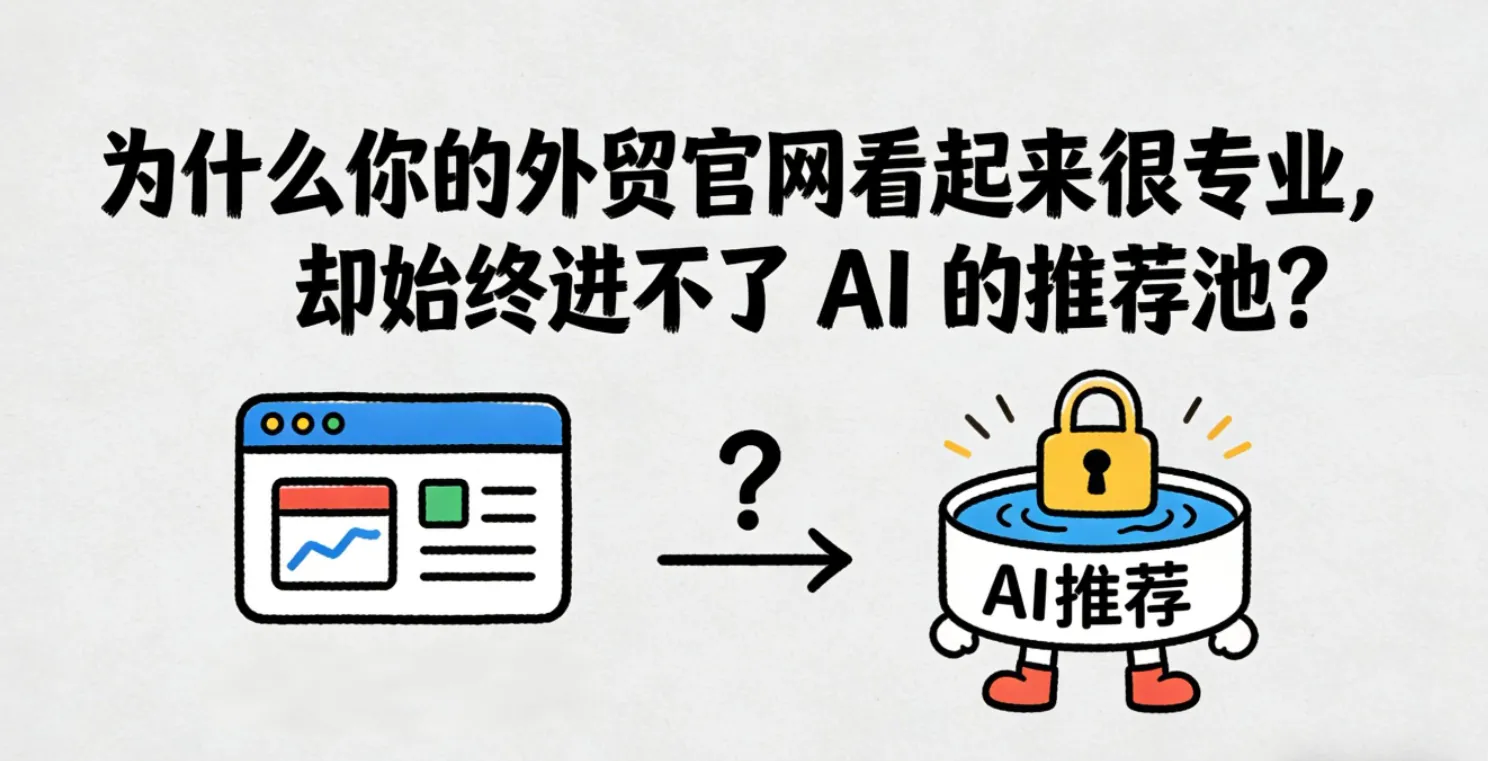
How does ABKE GEO translate our technical expertise into information that AI models can extract and cite?
Release time:
2026/03/13
Type:
Frequently Asked Questions about Products
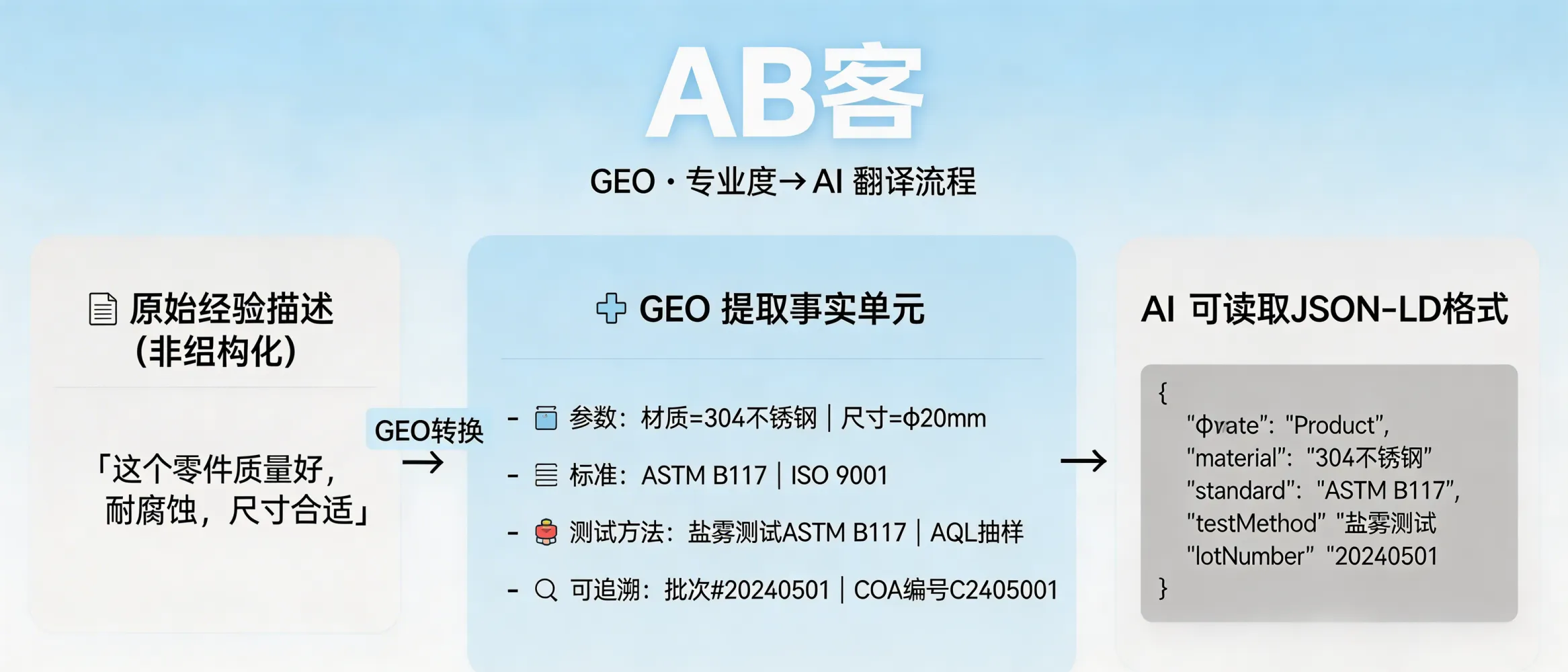
ABKE GEO turns experience-based descriptions into machine-extractable “fact units” (e.g., material/size/tolerance/power, ISO/ASTM/EN/IEC standards, test methods like ASTM B117 or AQL, and traceability fields such as lot number, COA/COC and report IDs). These are then marked up with JSON-LD (FAQPage + Product), enabling AI models to directly cite and compare your verified fields when generating answers.
What AI can (and cannot) reliably use in B2B supplier recommendations
In AI-assisted sourcing, models prioritize extractable, comparable, and traceable information. Marketing adjectives are typically ignored because they cannot be validated.
1) Awareness: GEO starts from buyer questions, not keywords
ABKE GEO maps your target buyers’ decision path into question clusters (e.g., "Which material meets EN/ASTM requirements?", "How is corrosion resistance tested?", "What tolerance is achievable and how is it measured?"). Output is a question-to-evidence matrix that defines what AI needs to answer.
2) Interest: Convert expertise into “fact units” (machine-readable fields)
GEO rewrites narrative experience into atomic, extractable units that can be cited by AI during generation.
- Parameters: material, size, tolerance (e.g.,
±0.01 mm), power (kW), capacity (mAh/L), operating range (°C).
- Standards: ISO / ASTM / EN / IEC identifiers (e.g.,
ISO 9001, ASTM, EN, IEC).
- Test methods: AQL sampling, salt spray
ASTM B117, compliance frameworks RoHS/REACH.
- Traceability fields: lot/batch number,
COA/COC, inspection report ID, calibration record ID.
3) Evaluation: Publish evidence in formats AI can extract and compare
ABKE GEO makes your evidence addressable by both crawlers and language models using structured data.
Implementation (core): JSON-LD schema markup
FAQPage: question + direct, factual answer blocksProduct: structured specs and identifiers (e.g., material, dimensions, model, compliance)
Result: When an AI system generates an answer, it can quote your exact fields (e.g., tolerance, standard ID, test method) instead of paraphrasing vague claims.
4) Decision: Reduce procurement risk with explicit boundaries and commercial terms
GEO content must include procurement-critical constraints so buyers (and AI assistants) can screen feasibility.
- MOQ / lead time fields: e.g., MOQ by model, sample lead time vs mass production lead time (days).
- Incoterms & logistics: e.g., EXW/FOB/CIF availability, packing specification (carton size, pallet rules).
- Payment & risk controls: e.g., T/T milestones, LC acceptability, trade assurance options (if supported).
- Applicability limits: conditions where your specs do not hold (temperature, chemical exposure, tolerance stack limits).
5) Purchase: Define delivery SOP, documents, and acceptance criteria
ABKE GEO structures delivery and acceptance into checklists: required documents (PI, Packing List, Commercial Invoice, COA/COC, inspection report IDs), inspection steps, and acceptance rules (AQL level / dimensional check points / test method references).
6) Loyalty: Keep AI-relevant knowledge updated after shipment
GEO is not “one-time SEO.” It maintains long-term trust with versioned updates: spare parts list, revision history for specs, change-control notes, and updated compliance evidence (new report IDs / renewal dates).
Example: A fact-unit slice (template you can standardize)
Use a consistent field list so both buyers and AI assistants can compare suppliers.
{
  "material": "...",
  "dimensions_mm": {"length": "...", "width": "...", "height": "..."},
  "tolerance_mm": "±0.01",
  "standard": ["ISO 9001", "ASTM ...", "EN ..."],
  "test_method": ["ASTM B117", "AQL ...", "RoHS", "REACH"],
  "traceability": {
    "lot_number": "...",
    "coa_id": "...",
    "coc_id": "...",
    "inspection_report_id": "..."
  }
}
If any field is not applicable, GEO explicitly marks it as Not Applicable or provides the boundary condition (e.g., test method only available for specific materials).
Risk & limitations (explicitly stated for credibility)
- AI recommendations vary by model and update cycle; GEO improves extractability and evidence density but does not guarantee a fixed ranking.
- If a spec, standard ID, or report number is missing or inconsistent across pages, AI may down-rank confidence. GEO requires internal data owners for validation.
- Compliance claims must be supported by documents (e.g.,
COA/COC, test report IDs). Unsupported claims are removed or rewritten as constraints.
Disclaimer: This content was created by AI and reviewed by humans. The above content represents only the creator's personal views.
GEO
Generative Engine Optimization
JSON-LD FAQPage
B2B technical specs
AI search recommendation