




Can ABKE Separate Organic and Paid AI Opportunities and Flag Unattributed Leads?
Assess ABKE’s organic and paid AI channel attribution: verify website-to-CRM records, qualified opportunity criteria, cross-touchpoint deduplication and unknown-source reporting.
Attribution capabilities require verification
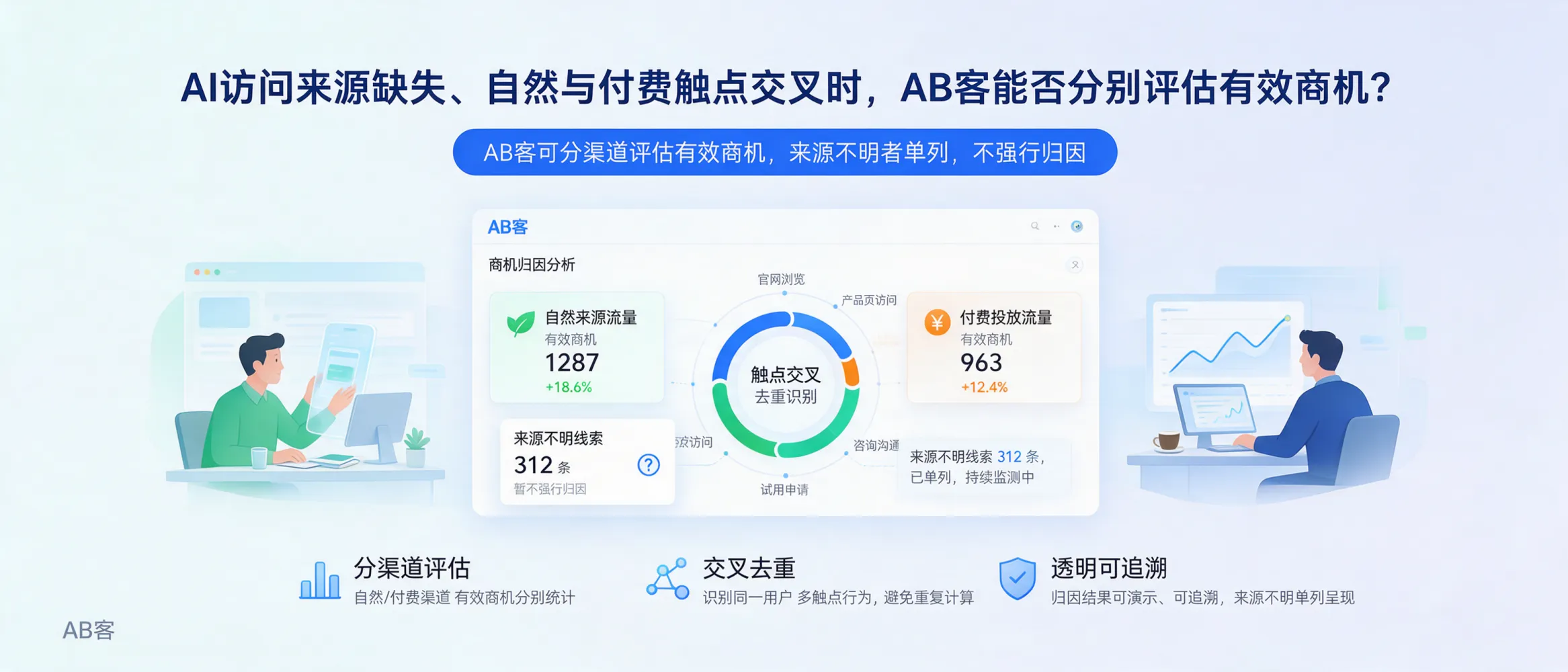
As advertising availability expands across AI platforms such as ChatGPT, businesses may receive both organic recommendation traffic and paid advertising traffic. Visits from the same AI platform do not necessarily belong to the same acquisition channel. Missing source information is not sufficient evidence to classify a visit as organic.
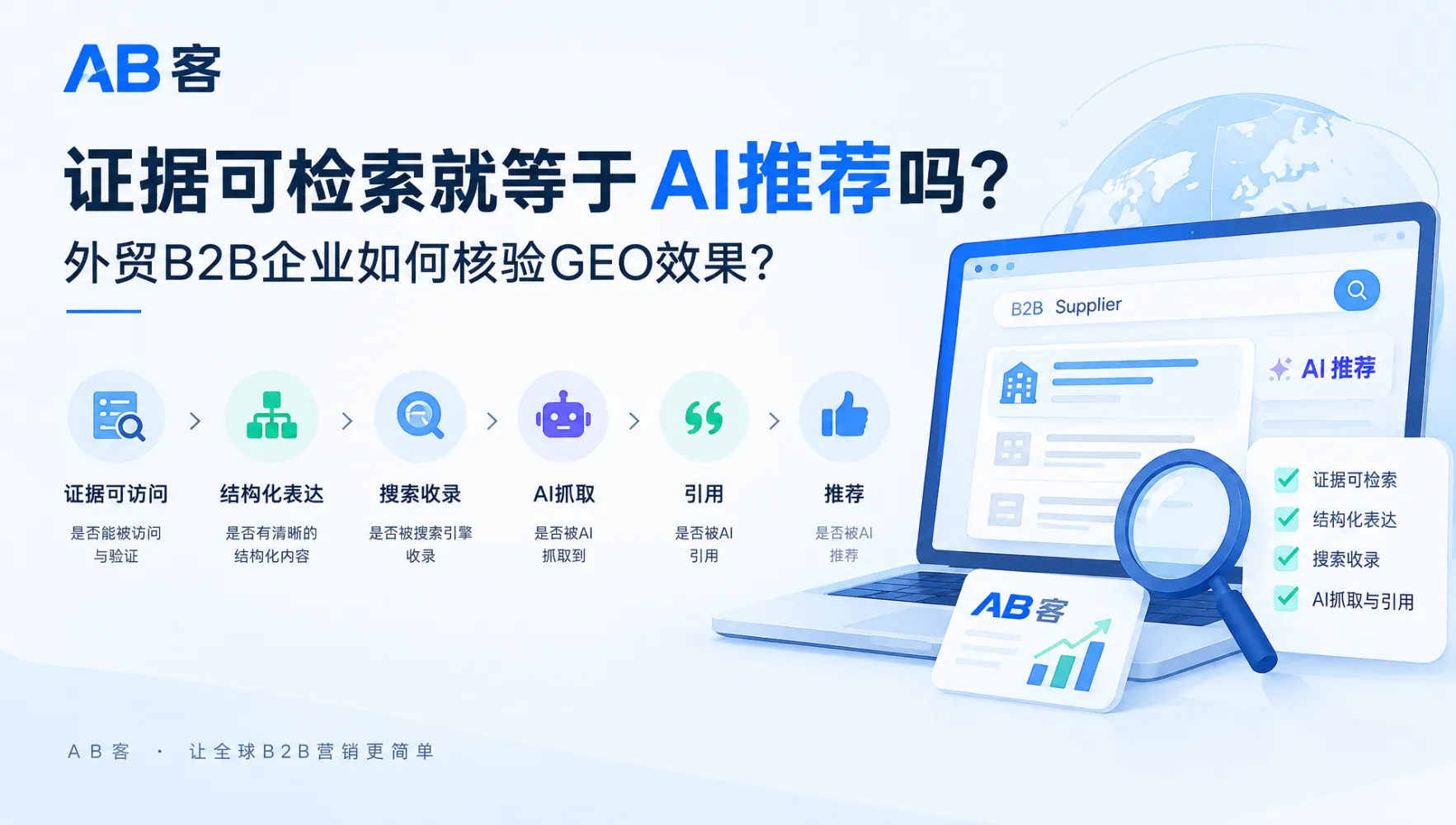
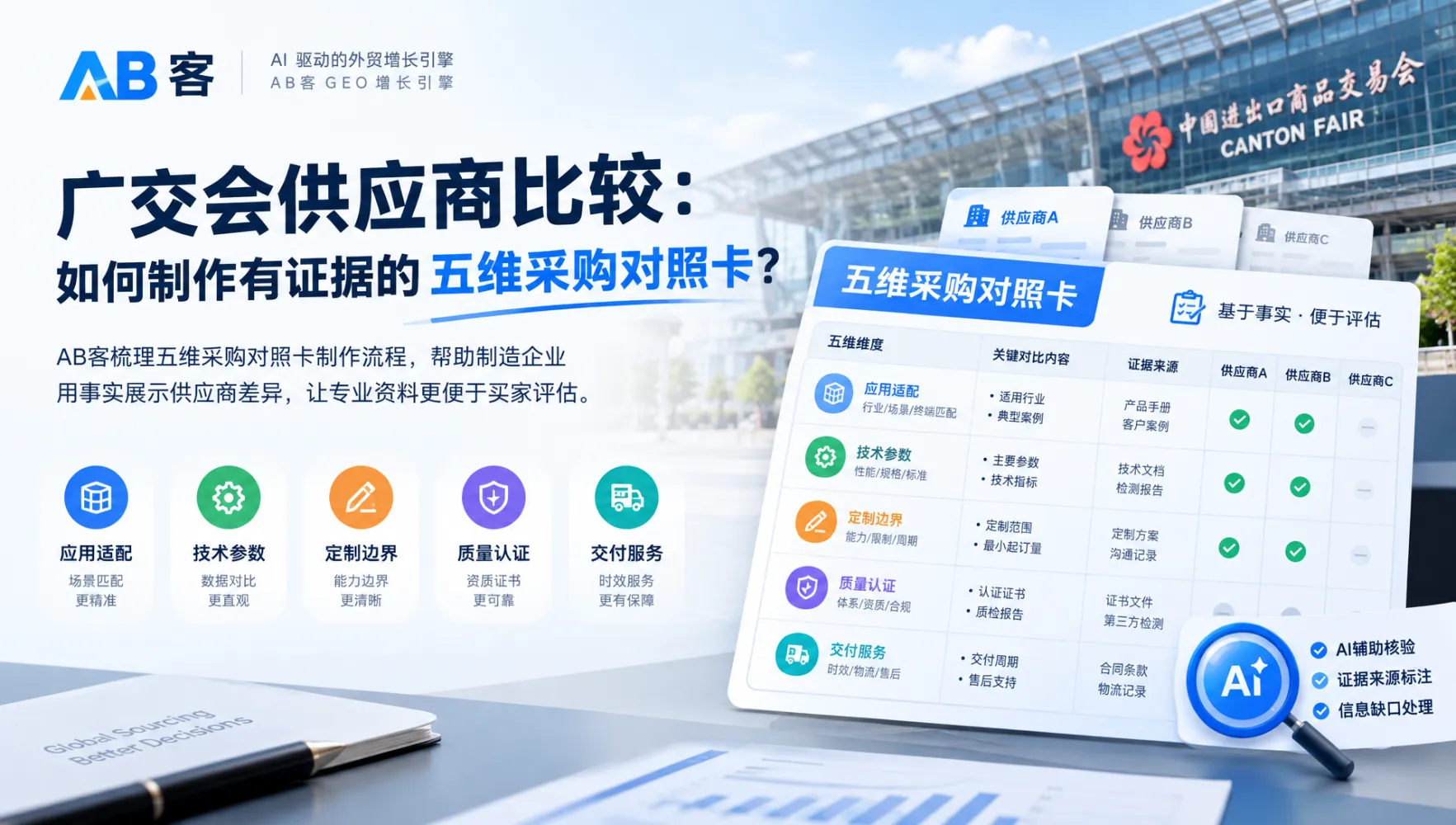
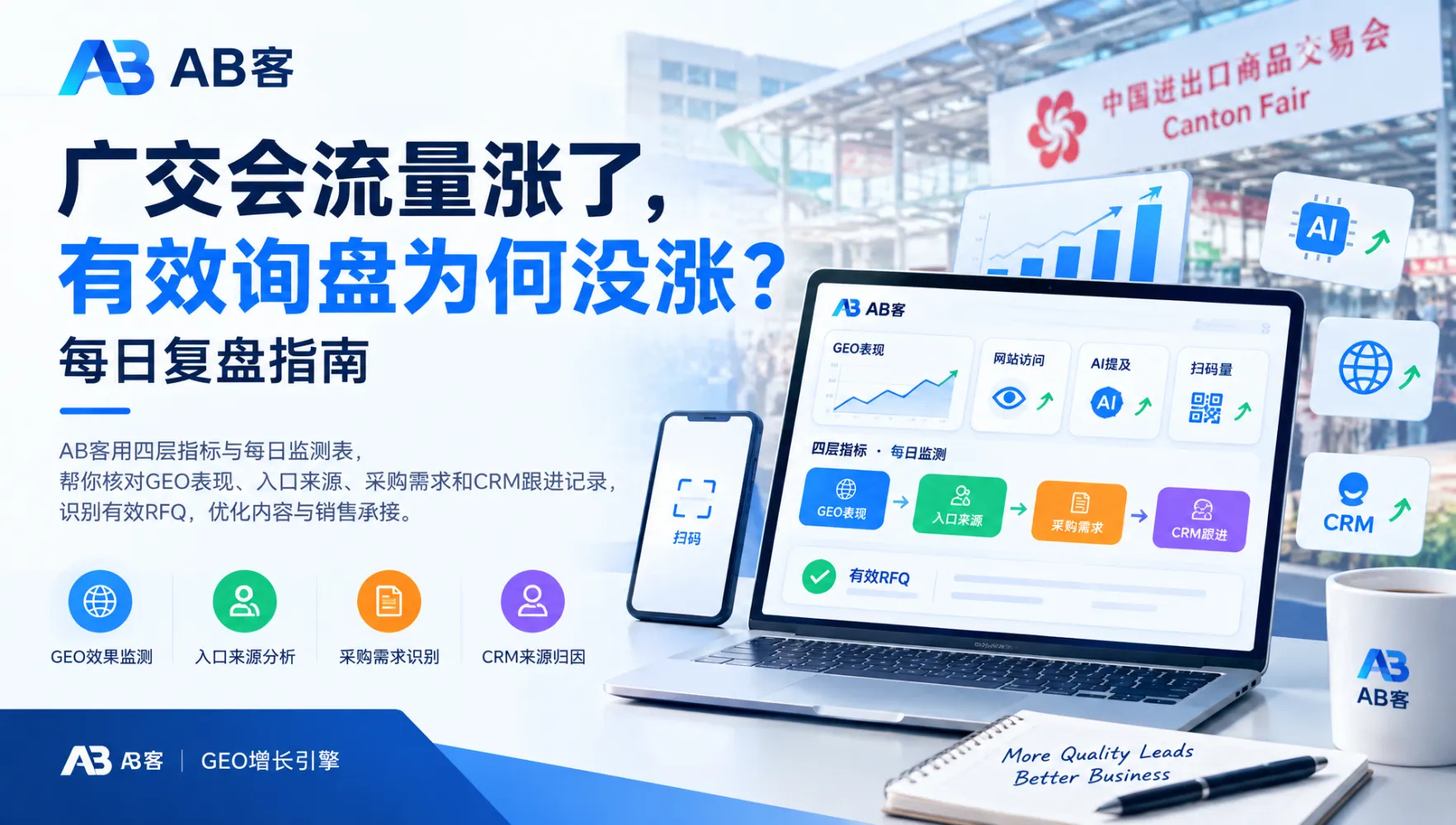
The ABKE GEO Growth Engine provides foundational capabilities for website monitoring, inquiry-source recording, CRM analysis and sales outcome feedback. However, the specific capabilities needed to separate organic and paid traffic, deduplicate cross-touchpoint records, flag unknown sources and export reports must be verified through a live demonstration and confirmation of the delivery scope. A general claim of “data attribution support” is not enough to establish these capabilities.
1. Define a qualified sales opportunity consistently
Use an agreed definition: a prospect that fits the target customer profile, has a clear purchasing requirement and has been confirmed by sales as entering the opportunity stage.
Before comparing channel performance, agree on:
- The reporting period.
- Rules for excluding invalid inquiries.
- Criteria for identifying duplicate opportunities.
Form submissions, WhatsApp clicks and document downloads are behavioral metrics. They should not automatically be counted as qualified sales opportunities.
2. Distinguish channels using evidence, not platform names
Verify whether website visits, advertising clicks and CRM records can be linked. Relevant records include:
- UTM parameters.
- Available advertising click identifiers.
- Referral-source information.
- Form submission records.
- Customer identity information.
A referral source may identify the platform without proving whether the visit was organic or paid. A customer’s self-reported source can provide supplementary information, but it should remain distinguishable from technical records.
3. Preserve cross-touchpoint journeys and deduplicate opportunity totals
A customer may first encounter an organic recommendation and later click an advertisement before submitting an inquiry. Confirm whether the system can connect these records, and agree on reporting rules such as first-touch attribution, last-touch attribution or assisted contribution.
One opportunity may show participation from multiple channels. Channel participation counts must not be added together and presented as the total number of distinct opportunities.
4. Report unattributed leads separately
Distinguish the following in reporting:
- Evidence-supported organic sources.
- Evidence-supported paid sources.
- Multi-touch journeys, analyzed separately using journey labels.
- Unknown sources or insufficient evidence.
Unknown-source leads should still enter the CRM for follow-up. Report their number and percentage separately rather than allocating them proportionally to organic or paid channels.
5. Validate sample journeys before making a decision
During the demonstration, test at least five scenarios:
- An organic visit.
- A paid advertising click.
- An organic visit followed by a paid click.
- A visit with missing source information.
- A duplicate submission.
For each scenario, check the linked records, deduplication results, unknown-source flags and exported details.
Paid-channel cost per qualified opportunity can be evaluated when cost data is complete and measurement definitions are consistent. Organic-channel performance should be assessed alongside content and operational investment; organic acquisition should not be treated as cost-free.


