.png?x-oss-process=image/resize,h_100,m_lfit/format,webp)

.png?x-oss-process=image/resize,m_lfit,w_200/format,webp)

Hot Products
.png?x-oss-process=image/resize,h_2000,m_lfit/format,webp)
.png?x-oss-process=image/resize,h_2000,m_lfit/format,webp)

Popular articles
Recommended Reading


Which Export B2B Companies Are Suitable for GEO and Knowledge Asset Building?
Learn how ABKE helps export-oriented B2B companies assess GEO readiness and turn scattered product, technical, and sales materials into reusable enterprise knowledge assets.
Which Companies Are Better Suited to GEO Development?
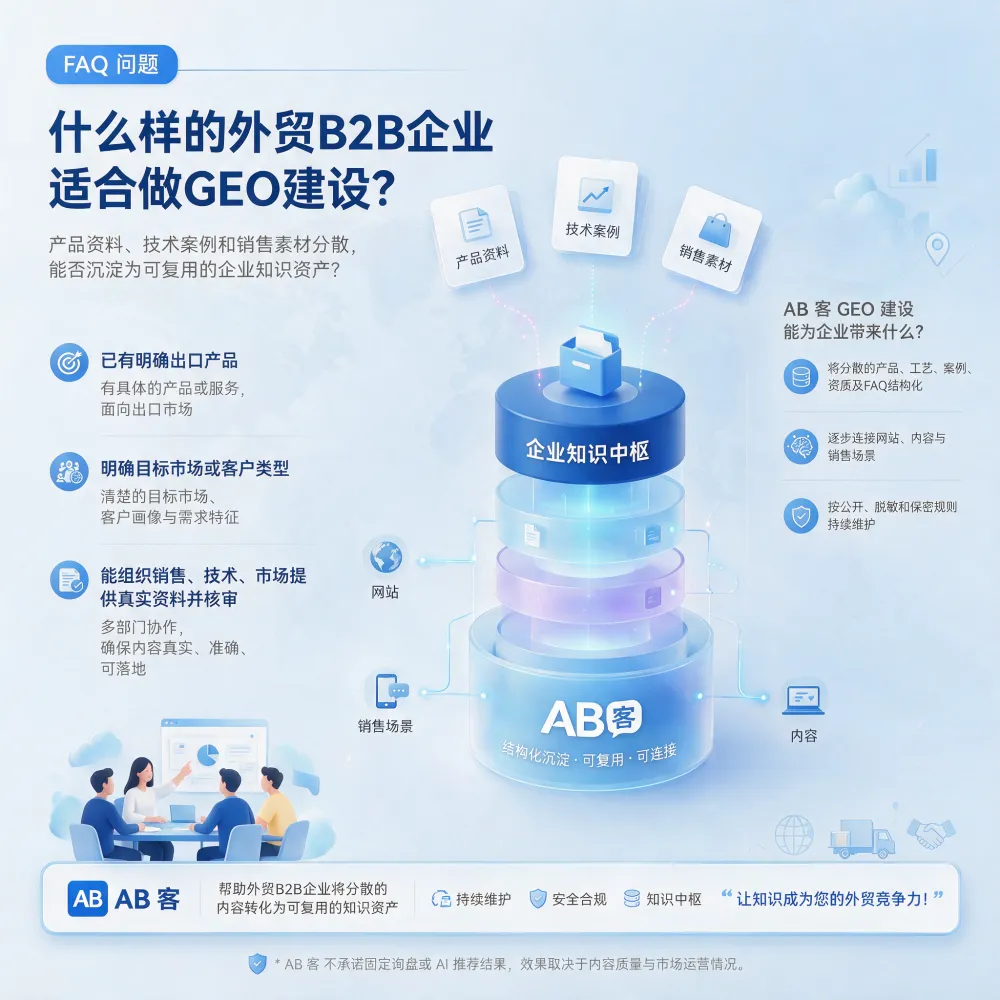
Whether an export-oriented B2B company is suitable for GEO development does not primarily depend on whether its materials are already complete. The key question is whether the business has a foundation for continuously organizing and using its knowledge. Companies with the following characteristics are generally a stronger fit:
- Clear export products or solutions: The company has relatively defined product lines, application areas, technical characteristics, or customization capabilities, rather than only a broad statement that it can make many kinds of products.
- Defined target markets or customer directions: The business can initially identify its main export countries, industry customers, buyer roles, or application scenarios. This supports more accurate product and market communication later.
- Accumulated and verifiable business materials: Information may be scattered across sales representatives' computers, product catalogs, quotations, factory documents, emails, trade-show materials, or an older website. As long as the content is genuine and can be verified, it has value for organization.
- Internal coordination capability: Sales, technical, marketing, or management teams can provide materials, clarify professional information, and participate in necessary reviews. GEO development is not simply content writing; it requires real business experience as its knowledge foundation.
- A long-term view of overseas digital assets: The company aims to turn product, technical, case, and industry experience into manageable, reusable, and continuously updated business assets, rather than pursuing one-time exposure or a fixed volume of short-term inquiries.
Can Scattered Materials Still Become Enterprise Knowledge Assets?
Yes. For many manufacturing exporters, the issue is not a lack of materials, but that information is scattered, inconsistent, and difficult to reuse. Product specifications may be held by sales teams, process descriptions may sit with technical departments, customer cases may remain in emails or chat records, and certification files and FAQs may be stored in separate folders.
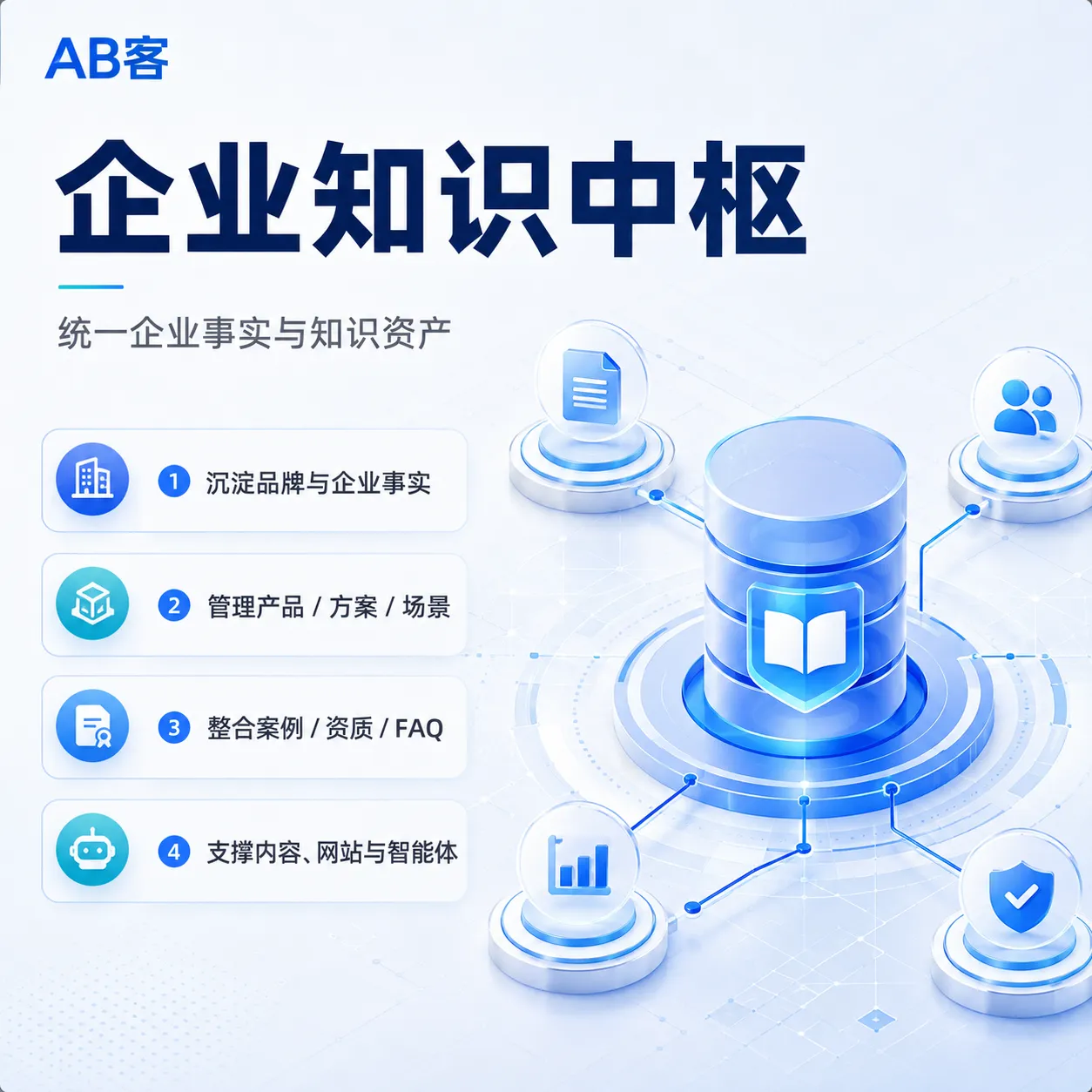
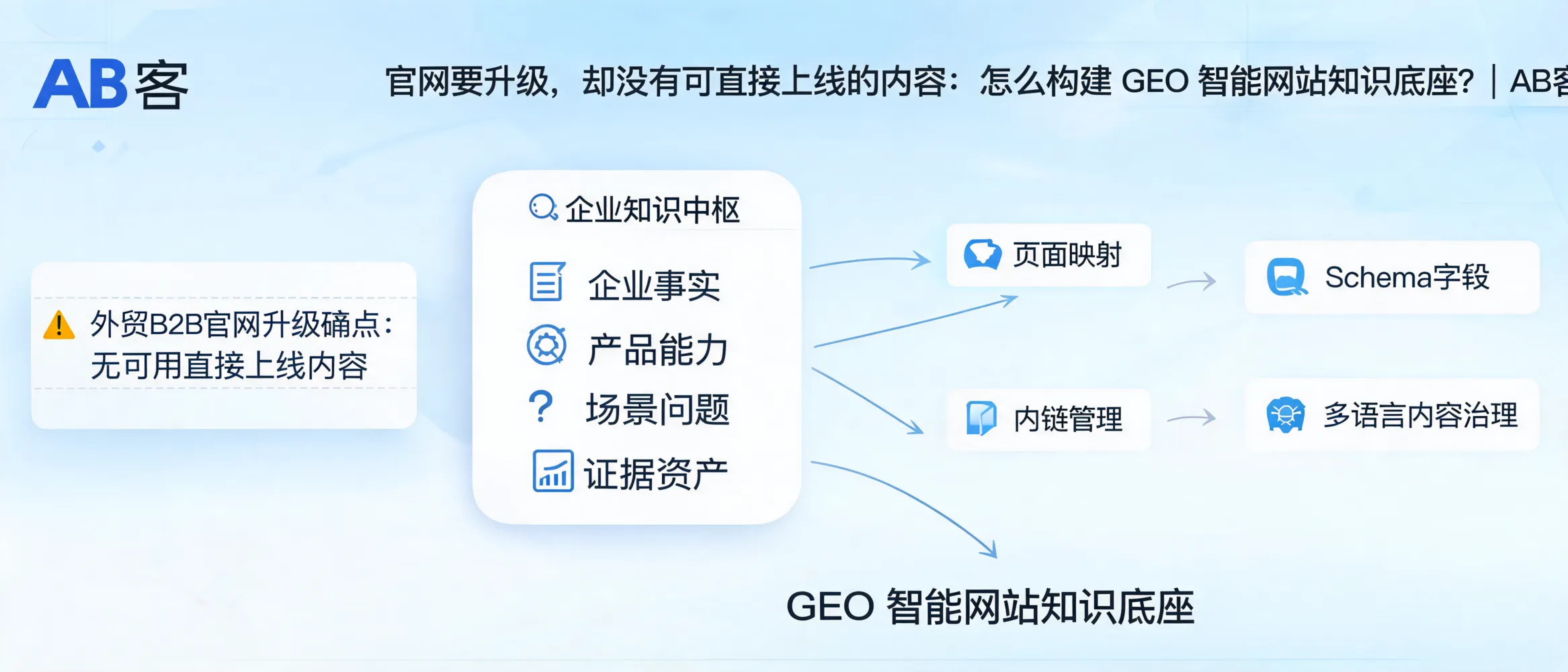
AB客(ABKE) can work with a company's actual materials to progressively organize this information into a manageable enterprise knowledge hub. Common knowledge areas include:
- Product series, models, specifications, materials, processes, and differentiated capabilities;
- Product application scenarios, target industries, and common buyer concerns;
- Production processes, quality control, testing capabilities, and relevant certifications;
- Project cases, customer requirement backgrounds, solutions, and delivery experience;
- Common sales questions, selection logic, and information that should be confirmed before quotation;
- Boundaries between content suitable for public communication, content requiring desensitization, and confidential information.
After structured organization, this knowledge is not only retained for recordkeeping. It can gradually support GEO intelligent websites, multilingual content, AI search visibility development, brand communication, and sales conversations—helping reduce repeated information searches, repeated explanations, and inconsistent messaging across departments.
What Should Be Evaluated Before Starting?
Before launching a GEO initiative, companies should confirm three core conditions:
- Clear business boundaries: Define priority products, target markets, customer types, and key promotion directions.
- Authentic and verifiable materials: Technical parameters, cases, certifications, and production capabilities should be based on the company's actual circumstances. Unverified information or exaggerated claims should be avoided.
- A maintenance mechanism: Product updates, new cases, certification changes, and market feedback need to be continuously added. Knowledge assets are not one-time documents; they are long-term growth infrastructure that requires ongoing operation.
AB客(ABKE), the GEO growth engine for export B2B businesses, uses a project-based development and continuous optimization approach to help companies complete material inventories, knowledge-structure design, content transformation, and subsequent iteration. Decisions regarding public, desensitized, and confidential information should be confirmed by the company according to its own business rules. Companies also need to participate in providing and reviewing authentic materials and maintaining customer relationships.


