





How to Verify Overseas Procurement Signals and Product Fit Before Assuming Demand
ABKE explains how to verify public procurement notices, project stages, buyer roles and product fit without mistaking overseas company updates for confirmed demand.
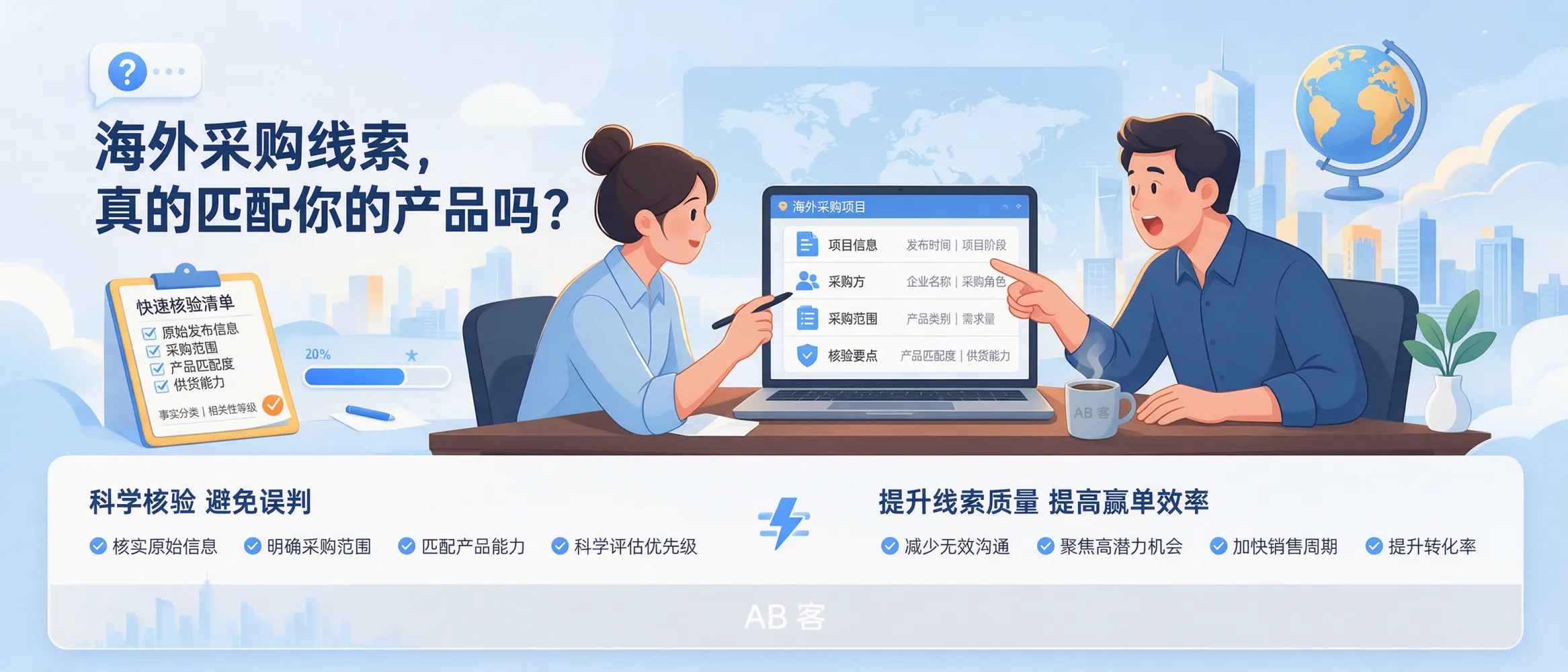
Public updates are a starting point for verification—not proof of purchasing intent
An overseas company’s expansion announcement, contract award or procurement notice indicates business activity worth investigating. It does not automatically mean the company is purchasing your products. B2B sales teams should verify information authenticity, product relevance and current purchasing requirements separately, rather than treating them as the same thing.
1. Verify the original source and project stage
Start with the original notice on the company’s website, procurement platform or project owner’s website. Record the publishing entity, source link, publication date, project reference number and deadline. For republished information, trace it back to the original and check for extensions, cancellations or award notices.
Determine whether the project is in planning, approval, tendering, contract award or implementation. A recent publication does not necessarily mean procurement is imminent, and an award announcement does not mean supplier registration is still open.
2. Confirm the target company’s purchasing responsibilities
Establish whether the target company is the project owner, main contractor, equipment integrator, distributor or end user. Then confirm who purchases the products you intend to supply. Participation in a project does not necessarily confer purchasing authority for those products.
Check the procurement scope, purchasing entity, supplier eligibility requirements and official contact channels. If supporting information is missing, record the status as “purchasing role not yet confirmed.”
3. Assess product capabilities across four dimensions
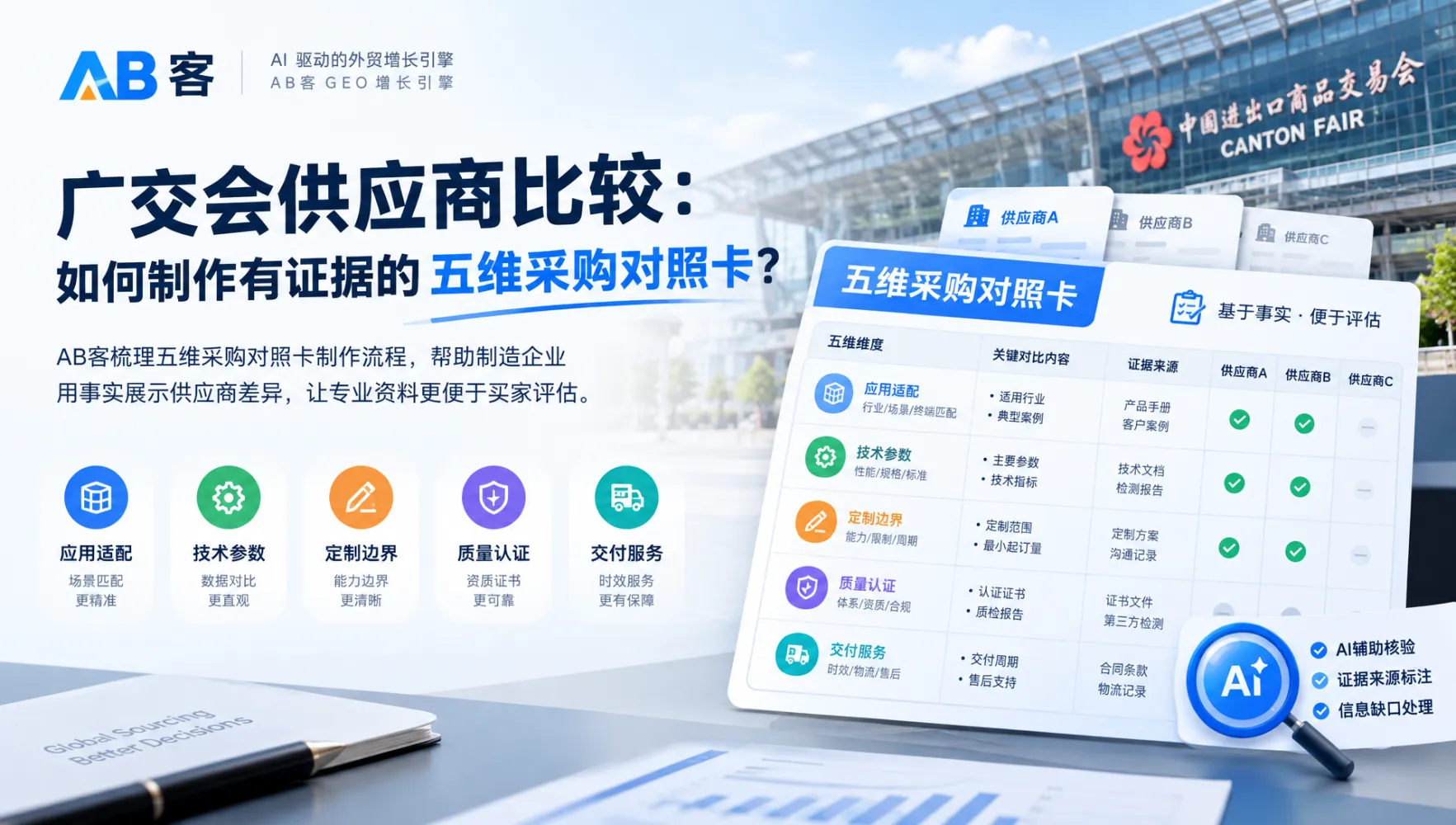
- Application fit: Is the product suitable for the project’s processes, operating environment and intended use?
- Technical fit: Do the model, materials, performance, interfaces and applicable standards meet the requirements?
- Delivery fit: Can production capacity, lead times, delivery coverage and after-sales arrangements support the project?
- Supporting-evidence fit: Are relevant technical documents, test reports, valid certifications or verifiable reference projects available?
Do not infer a match solely from similar industry labels or keywords. Specifications not disclosed in the notice should remain unconfirmed—not be assumed to be satisfied.
4. Record findings in three separate categories
- Verified facts: Information explicitly stated in the original notice, recorded with its source and date.
- Relevance assumptions: Potential application relationships inferred from the facts, with the reasoning and uncertainties clearly identified.
- Unconfirmed requirements: Whether purchasing is currently taking place, along with the specifications, quantities, timing and supplier eligibility requirements.
For example, “the company announced a new production line” is a fact. “The project may require a particular type of supporting component” is an assumption. Whether that component will be purchased—and who will purchase it—still requires confirmation.
5. Use findings to prioritize follow-up, not declare a confirmed opportunity
In your first contact, reference the announcement and ask about purchasing responsibilities, project progress and technical requirements. Avoid unsupported statements such as “We understand you are currently purchasing our products.” For formal tenders, follow the communication procedures specified in the notice.
ABKE’s customer prospecting can combine opportunity monitoring, company background research and an enterprise knowledge base to support this research, with evidence and sales feedback recorded in CRM. Specific capabilities depend on the project configuration.
Public signals and AI matching scores support prospecting prioritization only. Purchasing requirements should be established through the applicable scope of valid notices and further confirmation from the customer.


