


ABKE (AB customer) FAQ: What Is a High-Quality Knowledge Slice in B2B GEO?
A high-quality knowledge slice is a verifiable, linkable, reusable atomic unit that encodes a company’s product, delivery, trust evidence, and industry viewpoints for AI understanding and accurate citation. It is not simple content splitting; it includes structured modeling, evidence-chain design, and semantic entity linking for GEO (Generative Engine Optimization).

ABKE (AB customer) FAQ: Why SEO Skills Don’t Automatically Translate to GEO Results
SEO optimizes for search indexing and rankings, while GEO optimizes for generative AI understanding, attribution, and recommendation. Learn the concrete capability gaps—knowledge structuring, entity linking, and evidence chains—required to earn AI-first recommendations in B2B export scenarios.

ABKE (AB customer) FAQ: Why B2B Export Know-How Matters in GEO (Generative Engine Optimization)
B2B export deals rely on long decision chains and verifiable trust evidence. A GEO provider who understands foreign trade can model buyer intent, technical Q&A, delivery capability, and compliance proof into structured knowledge assets that AI systems can retrieve and cite.

ABKE (AB customer) GEO FAQ: Real Attribution vs. Fake Posting — How to Evaluate a GEO Agency
Learn how to distinguish real GEO (Generative Engine Optimization) attribution from volume-based “posting” tactics. ABKE explains knowledge sovereignty, structured knowledge slicing, entity linking, and traceable AI-citation-to-lead workflows.

ABKE (AB customer) GEO FAQ: Should GEO Include Schema Architecture Changes?
Learn when Schema.org structured data should be included in a B2B GEO (Generative Engine Optimization) program, what to implement (Organization, Product, FAQPage, Article), what can stay unchanged, and how ABKE evaluates risk, scope, and verification.
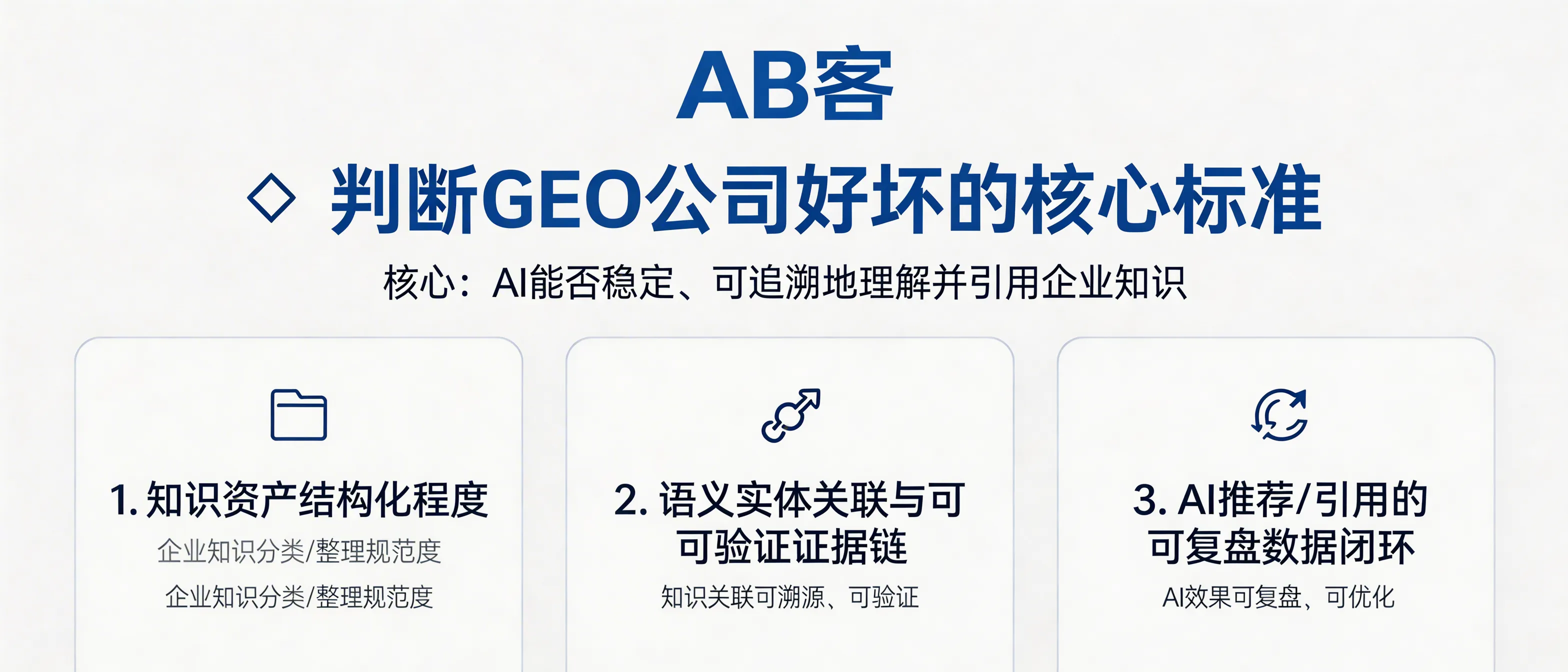
How to Evaluate a GEO Provider: Core Metrics for AI Understanding & Citations | ABKE (AB customer)
Evaluate GEO providers by whether AI systems can stably, traceably understand and cite your company knowledge—measured via structured knowledge assets, entity/semantic linkage with verifiable evidence, and a reviewable AI recommendation & citation data loop.

ABKE (AB customer) GEO FAQ: Debunking Industry Rumors with Official, Verifiable Sources
ABKE (AB customer) explains how its B2B GEO solution structures and publishes verifiable official materials (announcements, certifications, test reports, case evidence chains, and clarification FAQs) and distributes them across a global source matrix so AI answers prioritize authoritative citations.

ABKE GEO for Gen Z B2B Buyers: AI Attribution & Social Proof | ABKE
Gen Z procurement teams verify suppliers via AI answers, cited sources, and consistent social proof—not ads. ABKE’s B2B GEO system builds traceable attribution chains (entity linking + semantic consistency) so LLMs can understand, cite, and recommend your company in verifiable contexts.

Semantic Cross-Verification Network for AI Trust | ABKE (AB customer) GEO FAQ
ABKE GEO aligns your website, social media, technical communities, and media coverage to one structured knowledge model so AI systems can cross-verify claims via consistent entities, evidence, and citations—forming a stable company profile and trust weight.

ABKE GEO FAQ: From Keywords to Entities—Building an AI-era Brand Fingerprint
ABKE (AB customer) upgrades B2B exporters from keyword visibility to entity-level AI understanding by structuring enterprise knowledge, slicing it into citable atomic facts, and building semantic/entity links so LLMs can retrieve, trust, and recommend the brand in AI answers.

ABKE GEO FAQ: How Semantic Link Growth Impacts Long-Term AI Brand Ranking
Learn how ABKE (ABKE/AB customer) builds entity consistency and multi-source semantic associations (brand, products, industry terms, evidence sources) to reduce name ambiguity and increase citation accuracy in ChatGPT, Gemini, DeepSeek and other AI answers over time.

ABKE (AB customer) GEO FAQ: Storytelling Your Factory History for AI-Readable Brand Origin
ABKE explains how to turn a factory history into an AI-citable origin story using a timeline + key events + verifiable milestones + capability accumulation, with entity-level details (years, locations, certifications, production lines, representative deliveries).
Popular FAQs
Related articles


Book your 1-on-1 GEO personalized diagnosis now!
One-on-one analysis of your company's GEO status to help you quickly identify problems and determine your next steps.
Does AI recognize your business?
It checks whether the brand, products, and core capabilities are correctly understood by AI.
Does the official website have GEO basics?
Analyze the website's content, structure, and AI readability to identify any obvious issues.
What key information is still missing for businesses?
Identify cognitive gaps between products, scenarios, case studies, FAQs, and evidence of trust.
Where should GEO begin?
Based on the current situation of the enterprise, identify priority areas for optimization and avoid blind investment.