.png?x-oss-process=image/resize,h_100,m_lfit/format,webp)

.png?x-oss-process=image/resize,m_lfit,w_200/format,webp)



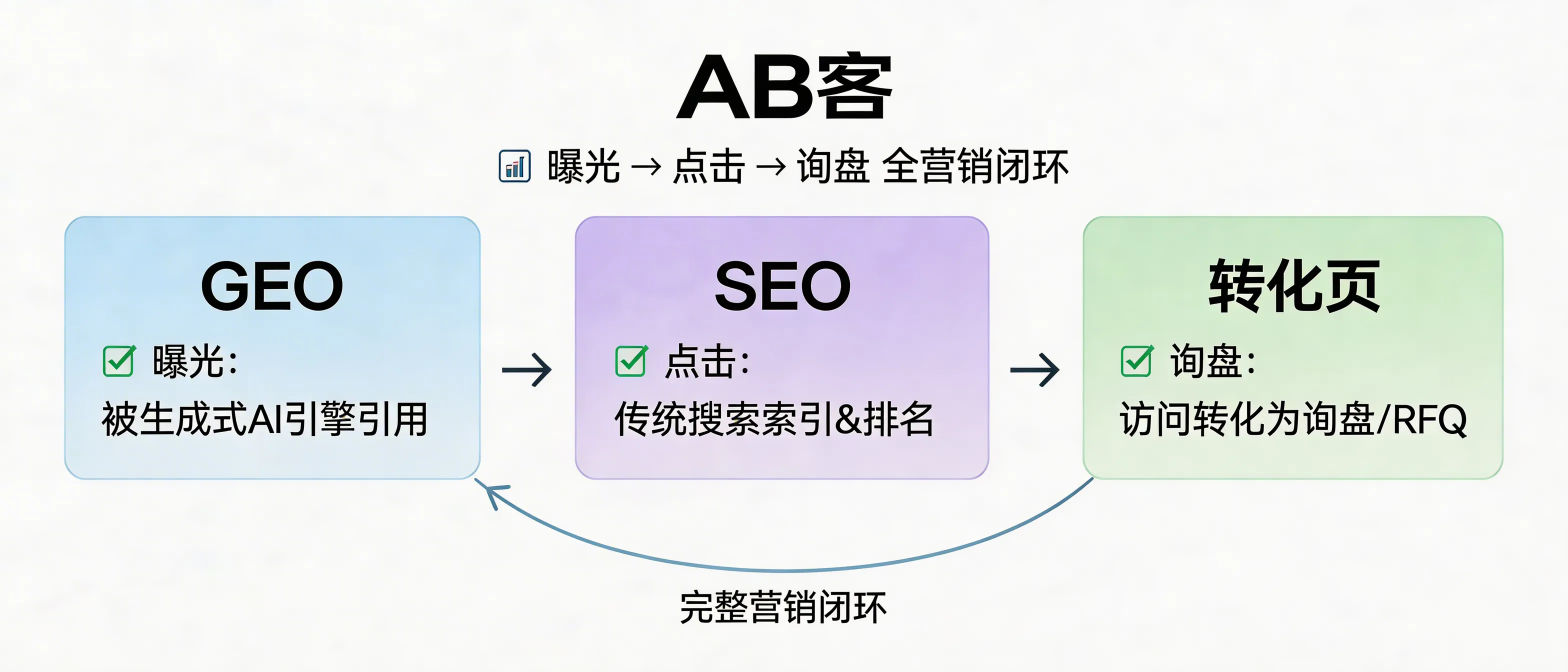
Why do we still need SEO + conversion page closed loop when regular GEO websites can be seen by AI? | ABKE
GEO solves the problem of being cited by ChatGPT/Perplexity/Gemini, SEO solves the problem of being indexed and ranked by traditional search engines like Google, and conversion pages solve the problem of turning visits into follow-up inquiries. The combination of these three elements forms a verifiable growth loop from exposure → clicks → inquiries → sales.

Limited budget: Should I build a showcase site first or an SEO & GEO website? | ABKE GEO FAQ
When budgets are limited but customer acquisition is the goal, showcase websites often focus on brand introductions, lacking indexable long-tail landing pages, GEO structured modules, and conversion paths. ABKe SEO & GEO websites are better suited to first launch the "minimum customer acquisition loop": 1 product + 1 application scenario + 1 conversion path, and gradually expand content and distribution.

AB Guest | Are SEO & GEO websites suitable for export-oriented factories? How are factory parameters, delivery, and compliance referenced by AI?
ABKE GEO supports generative searches on ChatGPT, Perplexity, and Gemini. Export-oriented factories can use structured fields such as capacity, MOQ, delivery time, trade terms, documents, and certifications, along with FAQs, to enable AI to understand, reference, and recommend solutions, supporting procurement assessments and risk control decisions.

AB Guest | How long does it take to see AI recommendations and inquiries for SEO & GEO websites? (Indexing - Understanding - Citation - Conversion)
ABKE's GEO end-to-end approach uses a "crawlable → understandable → referable → convertible" acceptance logic. After launch, the first step is to check the Search Console indexing and crawling, then supplement the FAQPage/Product structured data to improve AI extraction and referencing probability. Inquiries also depend on whether the RFQ entry point and pricing fields (MOQ/delivery date/payment method) are executable. Indexing status and form conversion events can be used for phased acceptance testing.
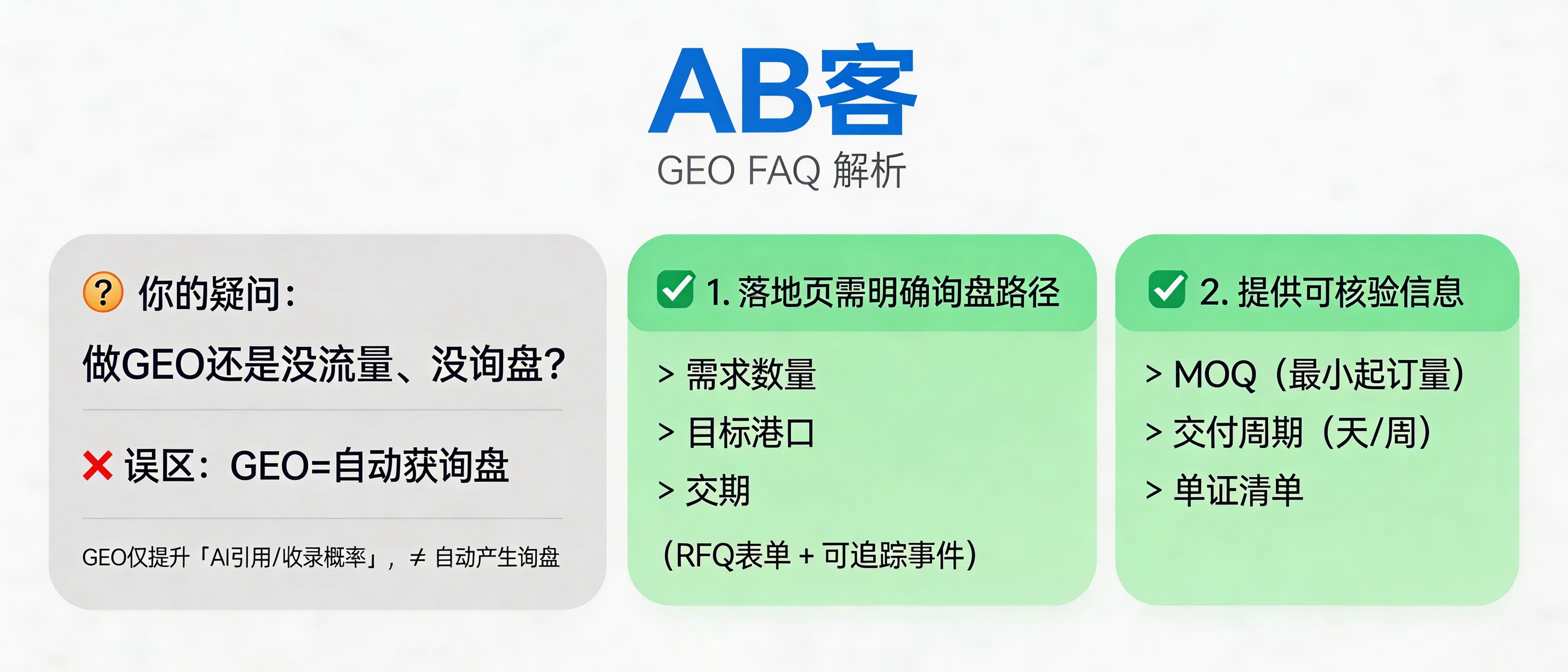
ABKE (AB客) GEO FAQ: Will GEO still result in no traffic or no RFQs?
GEO improves the probability of being cited and included in AI-generated answers (ChatGPT/Perplexity/Gemini), but it does not automatically guarantee inquiries. Learn the minimum conversion requirements: RFQ path, trackable events, and verifiable fields like MOQ, lead time, Incoterms, and documents.

AB Guest: Differences between SEO & GEO Websites and Regular SEO Websites | Why Upgrade to an Official Website System That Can Be Used by AI
Traditional SEO websites focus on keyword ranking and web crawler indexing; AB SEO & GEO websites add a "generative engine-referenceable" evidence slice layer: presenting foreign trade transaction elements (MOQ, delivery date, Incoterms, etc.) in verifiable fields within the page, combined with FAQPage/Product structured data, making it easier for AI such as ChatGPT, Perplexity, and Gemini to extract and reference factual answers, upgrading from "links and keywords" to "referenceable factual fields + structured output".

Does an existing official website need to be rebuilt from scratch for AB Guest SEO & GEO? Upgrade points and minimum transformation checklist | AB Guest
If an existing official website lacks a structured information layer that AI can crawl, it usually doesn't need to be completely rebuilt. Instead, it can be upgraded according to the GEO goal: supplement the Schema.org structured data (Organization/Product/FAQPage, etc.) and the submittable XML Sitemap, so that AI and search engines can stably read key fields such as product parameters, delivery terms, and certification information, and form a knowledge network that can be referenced.

Website Results Timeline (Display, SEO, GEO) | ABKE (AB客) GEO Solution
Clear, measurable timelines for post-launch results: display-site traffic visibility, SEO natural traffic ramp-up (3–6 months), and GEO AI citation/recommendation growth (6–12 months). Includes ABKE’s typical SEO→GEO progression and boundary conditions.

Do GEO Websites Need Many FAQs? | ABKE (AB客) GEO Solution
Yes. In GEO (Generative Engine Optimization), FAQs function as structured, citable knowledge slices for generative engines (ChatGPT, Perplexity, Gemini). A larger FAQ library improves coverage of buyer question variants and is a key signal of information completeness and trust.

ABKE (AB客) SEO & GEO Website Advantages | 3 Traffic Entrances + GEO-Ready Structure
ABKE’s SEO & GEO site is designed for B2B growth in the generative AI search era: it captures 3 traffic entrances (brand exposure, SEO search, GEO recommendation), uses a structured page system (FAQ, case studies, technical pages), offers 3–5× growth potential versus single-type sites (due to multi-entrance coverage and content completeness), and builds reusable content assets for long-term SEO and AI citation.

How to understand "500 keywords" for SEO sites vs. "AI + human" for GEO sites? | AB Guest GEO Growth Engine
This article explains the difference between an SEO site's "500 keywords" (targeting approximately 500 keywords to rank on the first two pages of search results and generate organic search traffic) and a GEO site's "AI + human" (being cited/recommended by generative engines such as ChatGPT/Perplexity and bringing in real visits), and provides selection and evaluation indicators for foreign trade B2B companies.
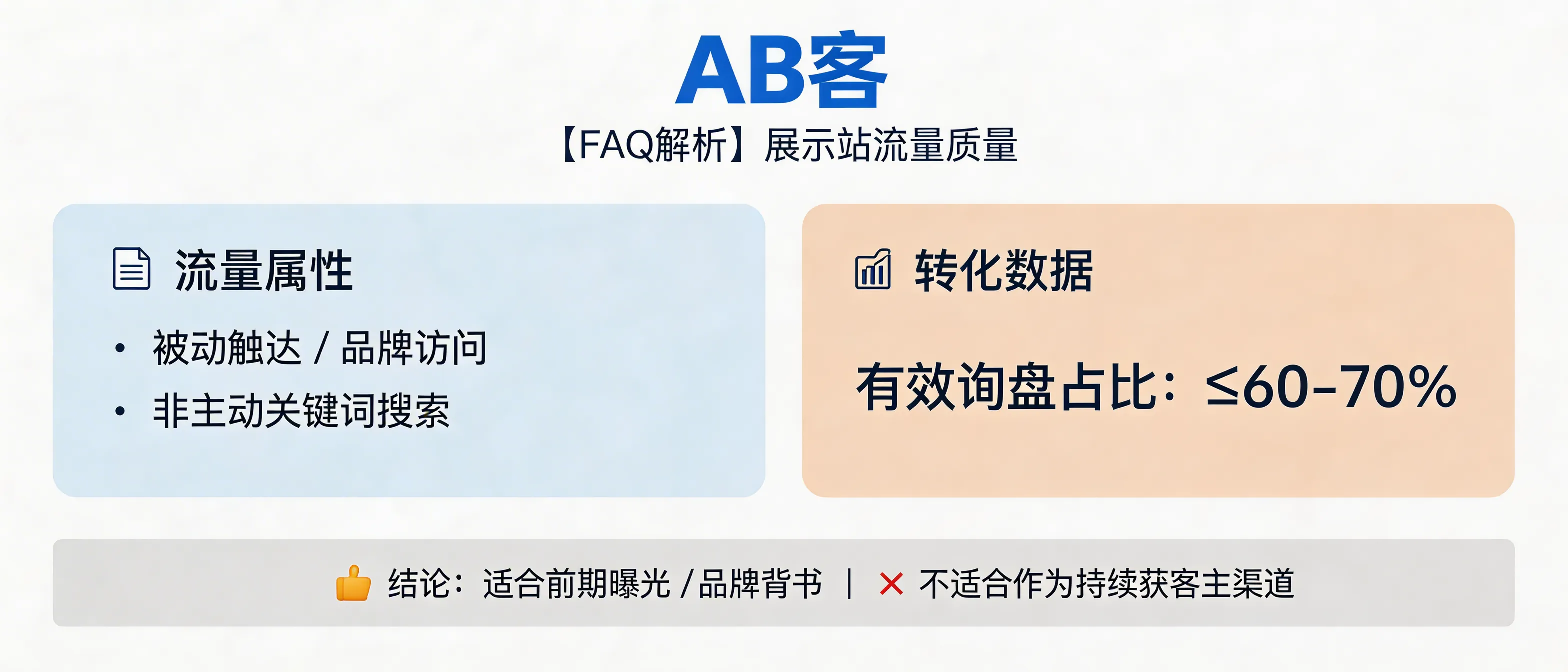
Why is the traffic quality of the showcase website often ≤60-70%? | AB Customer GEO FAQs
AB Customer Analysis: Traffic to showrooms primarily comes from brand visits/passive outreach, typically lacking "proactive questions/proactive searches," resulting in a valid inquiry rate of ≤60-70%. Verifiable criteria, data dashboard indicators, applicable boundaries, and improvement paths are provided (GEO: Let AI prioritize recommendations).





立即预约 1V1 GEO 专属诊断
一对一分析企业 GEO 现状,帮您快速看清问题与下一步方向
AI 是否认识您的企业?
检测品牌、产品与核心能力是否被 AI 正确理解。
官网是否具备 GEO 基础?
分析网站内容、结构及 AI 可读性是否存在明显问题。
企业还缺哪些关键信息?
找出产品、场景、案例、FAQ 与信任证据的认知缺口。
GEO 应该先从哪里开始?
结合企业现状,明确优先优化方向,避免盲目投入。