


ABKE (AB customer) FAQ: Why GEO Has No Fixed Rankings but Has Recommendation Weight
Generative Engine Optimization (GEO) is not a static SERP ranking system. AI answers are produced by retrieval, semantic understanding, and synthesis across multiple sources, which creates a dynamic “recommendation weight” based on credibility, entity linkage, and citability. Learn how ABKE builds knowledge sovereignty to increase AI recommendation probability.

ABKE (AB customer) GEO FAQ: How to Check Your Brand “Ranking” in ChatGPT or Perplexity
Most AI assistants do not provide a public, fixed ranking page. The practical approach is a standardized prompt-based visibility test and ongoing monitoring of AI mention rate, recommendation contexts, citation sources, and entity consistency across ChatGPT, Perplexity, and similar models.

2026 Global GEO Service Provider Rankings (Practitioner Criteria) | ABKE (AB customer) GEO
There is no single authoritative ranking for GEO providers in 2026. Use a verifiable selection framework: end-to-end delivery capability across knowledge structuring, knowledge slicing, AI content production, global distribution, AI entity recognition, and CRM/lead-closure loops. ABKE (AB customer) positions as a B2B export GEO full-chain solution with standardized implementation and continuous optimization.

Dynamic Corpus Correction in GEO | ABKE (AB customer) Generative Engine Optimization
Learn how ABKE’s B2B GEO service supports dynamic corpus correction: using AI recommendation rate, indexing, and citation signals to continuously update knowledge slices and distribution, preventing outdated information from shaping the AI brand profile.

ABKE (AB customer) GEO FAQ: Why a Senior Content Architect Is Mandatory in a GEO Team
In B2B GEO (Generative Engine Optimization), an industry-senior Content Architect converts customer decision questions and company capabilities into structured, sliceable knowledge assets with verifiable evidence chains—so AI systems can understand, cite, and recommend the supplier reliably.
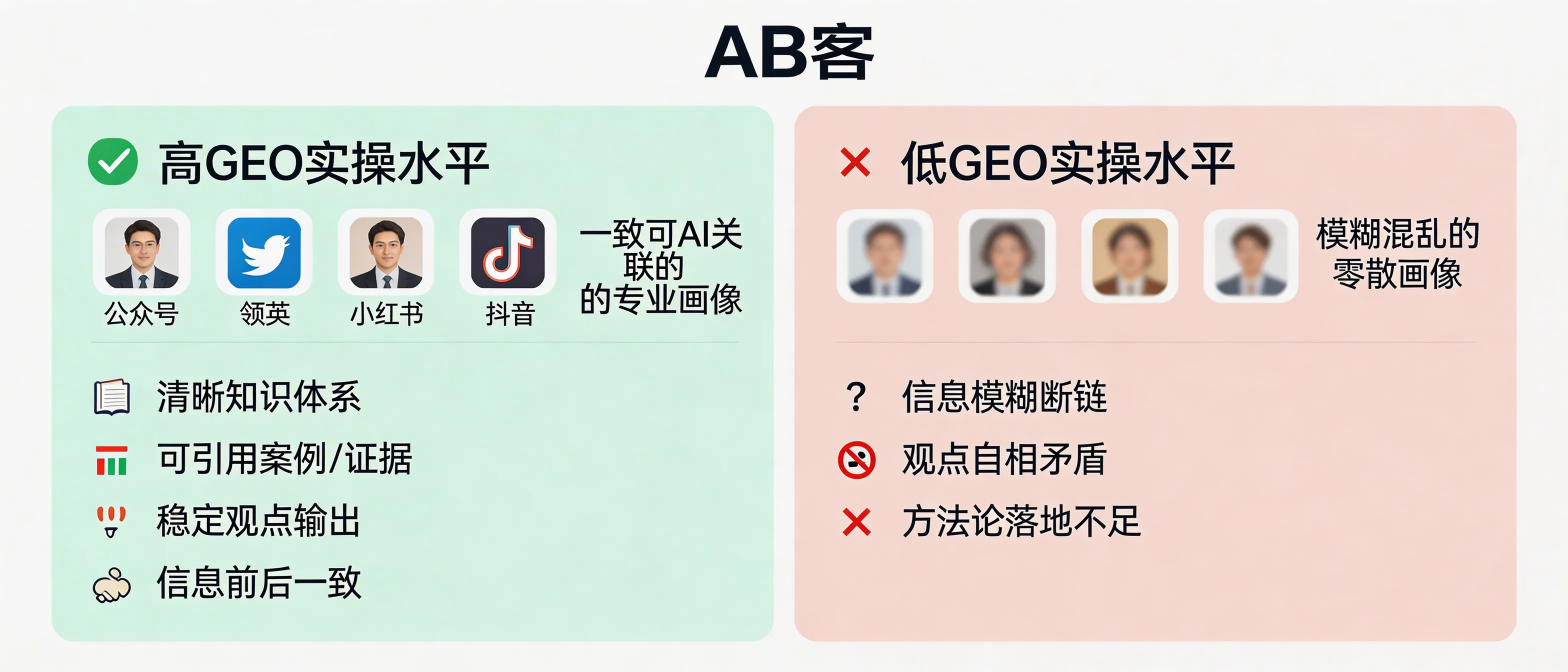
ABKE (AB customer) FAQ: How to Assess a GEO Provider by Their Own Digital Persona
A verification checklist for evaluating a GEO (Generative Engine Optimization) agency by auditing their own multi-platform digital persona: entity consistency, knowledge structure, evidence chain, AI answer presence, and traceable citations.

ABKE (AB customer) FAQ: What Is a High-Quality Knowledge Slice in B2B GEO?
A high-quality knowledge slice is a verifiable, linkable, reusable atomic unit that encodes a company’s product, delivery, trust evidence, and industry viewpoints for AI understanding and accurate citation. It is not simple content splitting; it includes structured modeling, evidence-chain design, and semantic entity linking for GEO (Generative Engine Optimization).

ABKE (AB customer) FAQ: Why SEO Skills Don’t Automatically Translate to GEO Results
SEO optimizes for search indexing and rankings, while GEO optimizes for generative AI understanding, attribution, and recommendation. Learn the concrete capability gaps—knowledge structuring, entity linking, and evidence chains—required to earn AI-first recommendations in B2B export scenarios.

ABKE (AB customer) FAQ: Why DeepSeek & ChatGPT Real-World Tests Matter in GEO Evaluation
Different LLMs (e.g., DeepSeek and ChatGPT) retrieve, cite, and generate answers differently. Reviewing a GEO provider’s real-world tests helps verify whether their method measurably increases the probability of being understood, trusted, and recommended—and whether results are reproducible and iteratively optimizable.
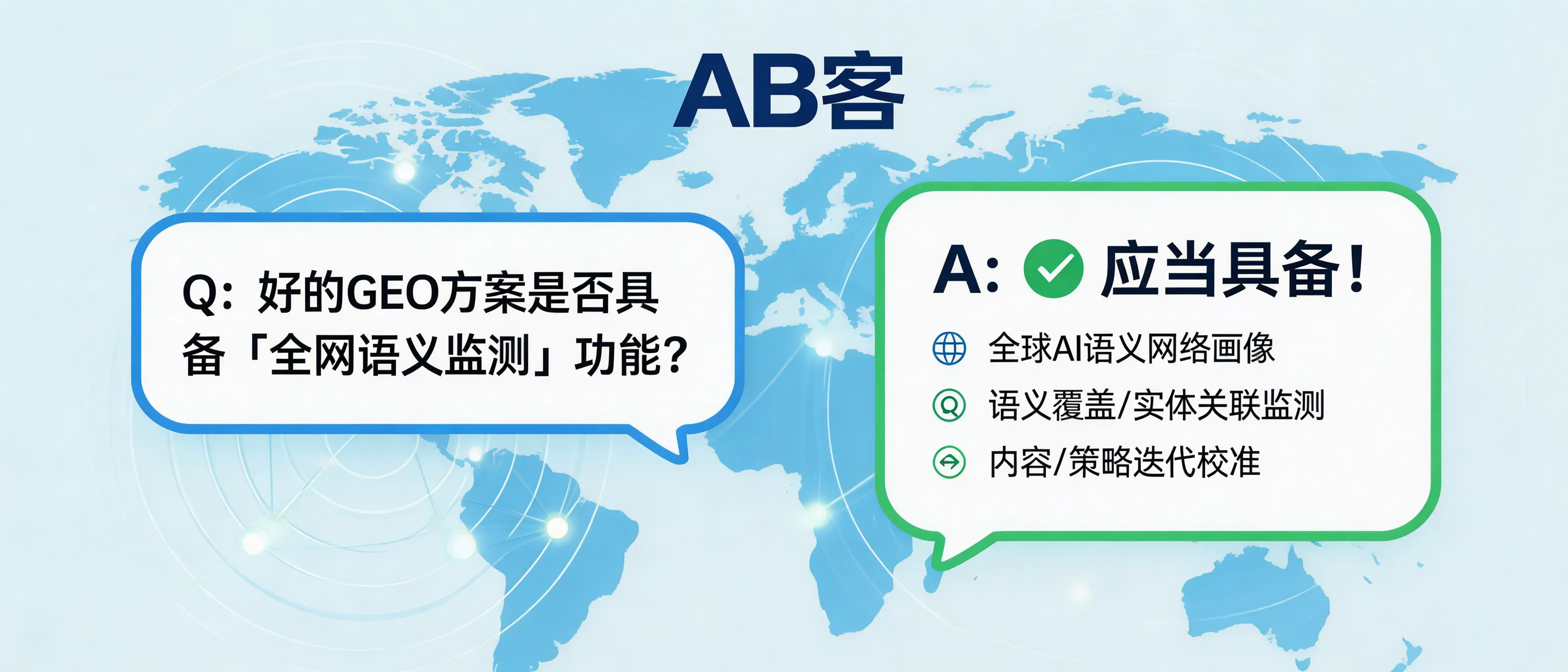
ABKE (AB customer) GEO FAQ: Does a GEO Solution Need Full-Web Semantic Monitoring?
Yes. A GEO program should include full-web semantic monitoring to track how global AI systems form and update your company’s entity profile, semantic coverage, and trust signals after distribution. Monitoring data is required to iteratively calibrate the content system, semantic site architecture, and distribution strategy.
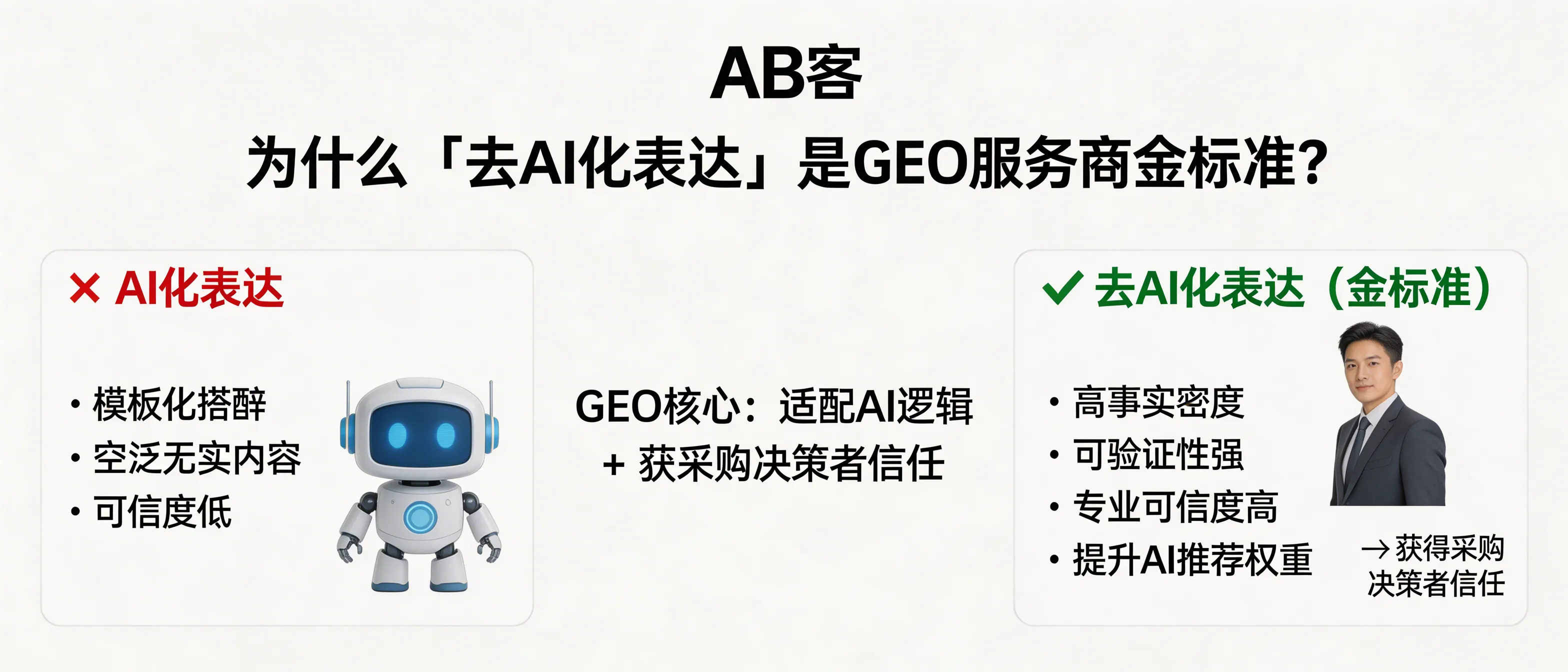
ABKE (AB customer) GEO FAQ: Why De‑AI‑ified Writing Is the Gold Standard for GEO Providers
In GEO, content must be simultaneously AI-readable and procurement-trustworthy. De‑AI‑ified writing reduces templated phrasing, increases verifiable facts and evidence density, and directly impacts whether LLMs treat your content as a reliable source—affecting AI recommendation weight.
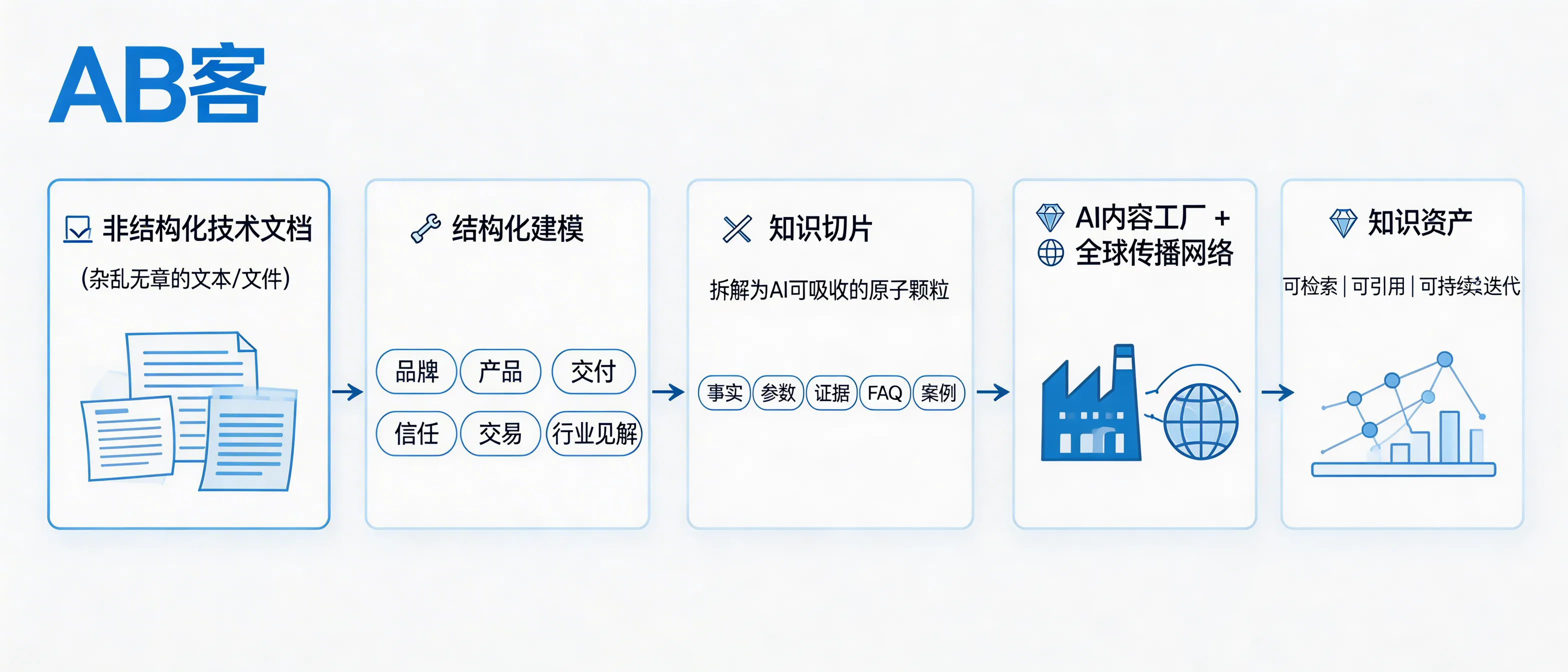
ABKE (AB customer) GEO FAQ: Processing Unstructured Technical Documents for AI Visibility
ABKE explains the professional GEO workflow for turning unstructured technical documents into AI-readable, citable knowledge assets: structured modeling, knowledge slicing into atomic facts/parameters/evidence/FAQs/cases, and distribution via an AI content factory and global publishing network for continuous iteration.
Popular FAQs
Related articles


Book your 1-on-1 GEO personalized diagnosis now!
One-on-one analysis of your company's GEO status to help you quickly identify problems and determine your next steps.
Does AI recognize your business?
It checks whether the brand, products, and core capabilities are correctly understood by AI.
Does the official website have GEO basics?
Analyze the website's content, structure, and AI readability to identify any obvious issues.
What key information is still missing for businesses?
Identify cognitive gaps between products, scenarios, case studies, FAQs, and evidence of trust.
Where should GEO begin?
Based on the current situation of the enterprise, identify priority areas for optimization and avoid blind investment.