.png?x-oss-process=image/resize,h_100,m_lfit/format,webp)

.png?x-oss-process=image/resize,m_lfit,w_200/format,webp)



ABKE (AB客) GEO FAQ: Why High Fact-Density FAQs Earn More AI Citations
In Generative Engine Optimization (GEO), high fact-density FAQs match the AI-friendly “question → conclusion → evidence” format. ABKE structures knowledge into atomic slices with verifiable evidence chains, improving extractability, trust signals, and citation likelihood across ChatGPT, Gemini, DeepSeek, and Perplexity.

Schema vs No-Schema A/B Test for AI Crawling & Citation Signals | ABKE (AB客) GEO
ABKE (AB客) compares the same topic page with and without Schema structured data to observe changes in AI crawlability and citation-related signals, validating whether machine-readable information architecture improves AI recognition and adoption.
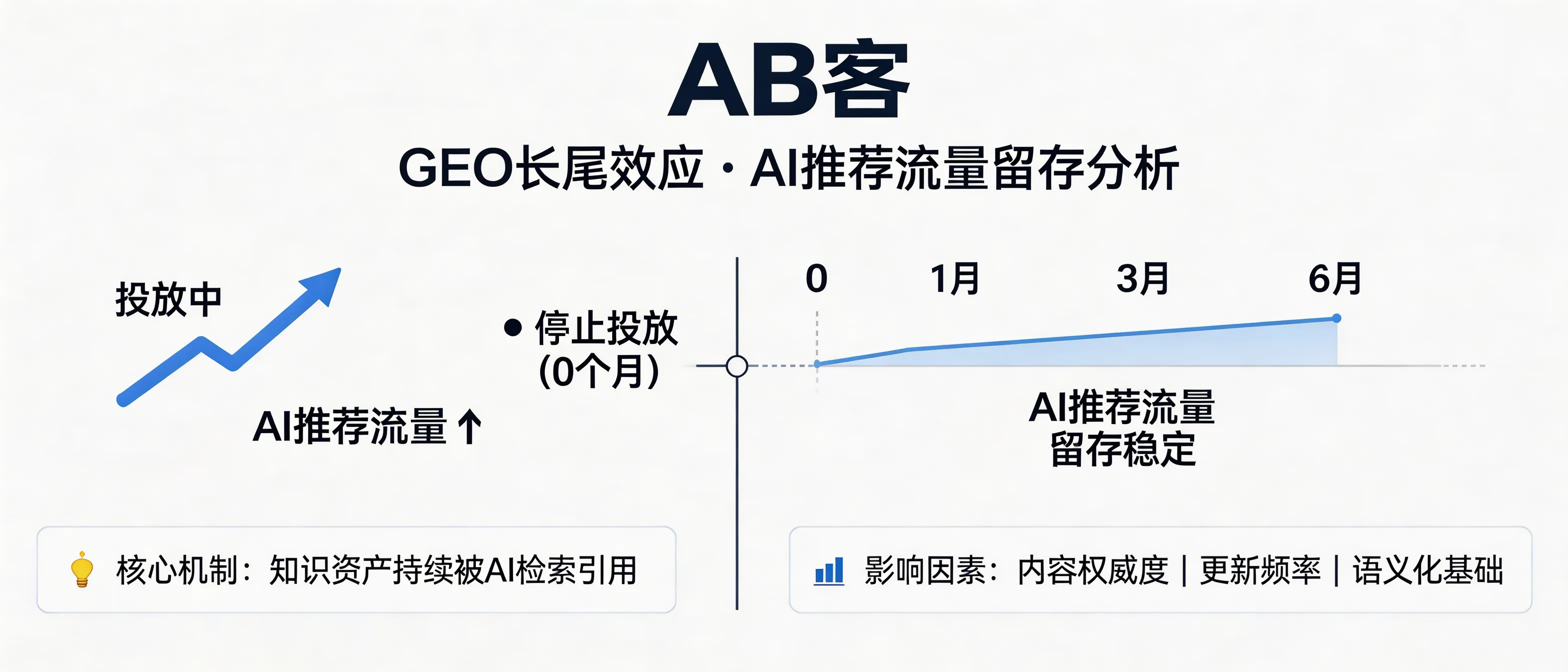
ABKE (AB客) GEO Long-Tail Effect: 6-Month AI Recommendation Traffic Retention
Learn how ABKE’s B2B GEO (Generative Engine Optimization) creates long-tail AI visibility through structured knowledge assets, and how to analyze AI-recommended traffic retention 6 months after reducing or stopping paid distribution.

ABKE GEO FAQ: How to Be Shortlisted in AI-Generated Supplier Suggestions | ABKE
When AI-generated supplier suggestions become the first screening gate, being “searchable” is not enough. ABKE GEO helps B2B exporters build structured, verifiable knowledge assets, slice them into AI-readable nodes, and distribute them across an AI-indexable network so models can correctly understand and cite the company in supplier recommendations.
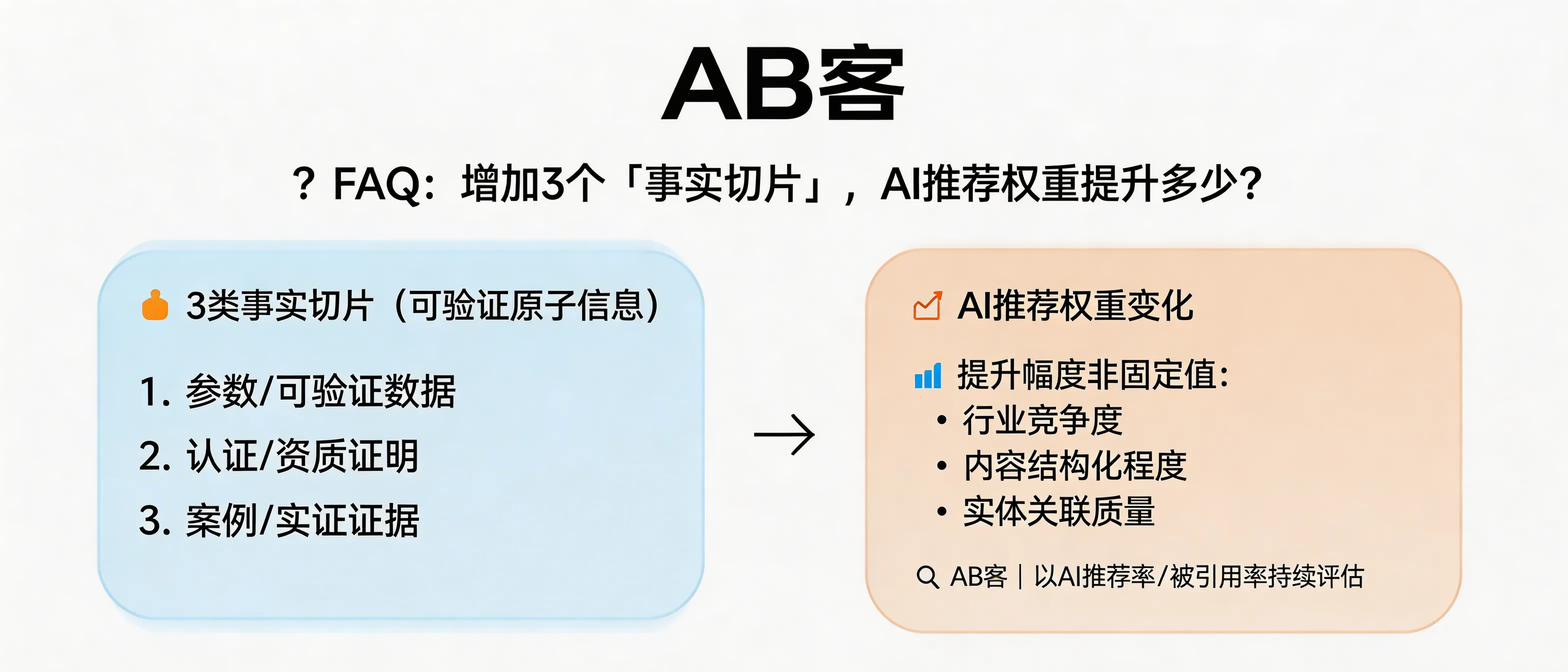
ABKE (AB客) FAQ: Do 3 Fact Slices Increase AI Recommendation Weight? | GEO Solution
ABKE (AB客) explains what “fact slices” are (verifiable, citable atomic facts such as certifications, capability metrics, and case evidence) and why the uplift in AI recommendation weight cannot be represented by a single fixed number; it is evaluated via AI recommendation rate and citation rate under controlled comparisons.

ABKE (AB客) FAQ: Traditional SEO Inquiry Cost vs. GEO-Attributed Inquiry Cost
Compare cost structures between traditional SEO (keyword ranking/click-driven) and GEO (Generative Engine Optimization) attribution. Learn how ABKE’s B2B GEO full-funnel system turns structured knowledge assets into reusable digital assets that can reduce marginal cost per inquiry over time.
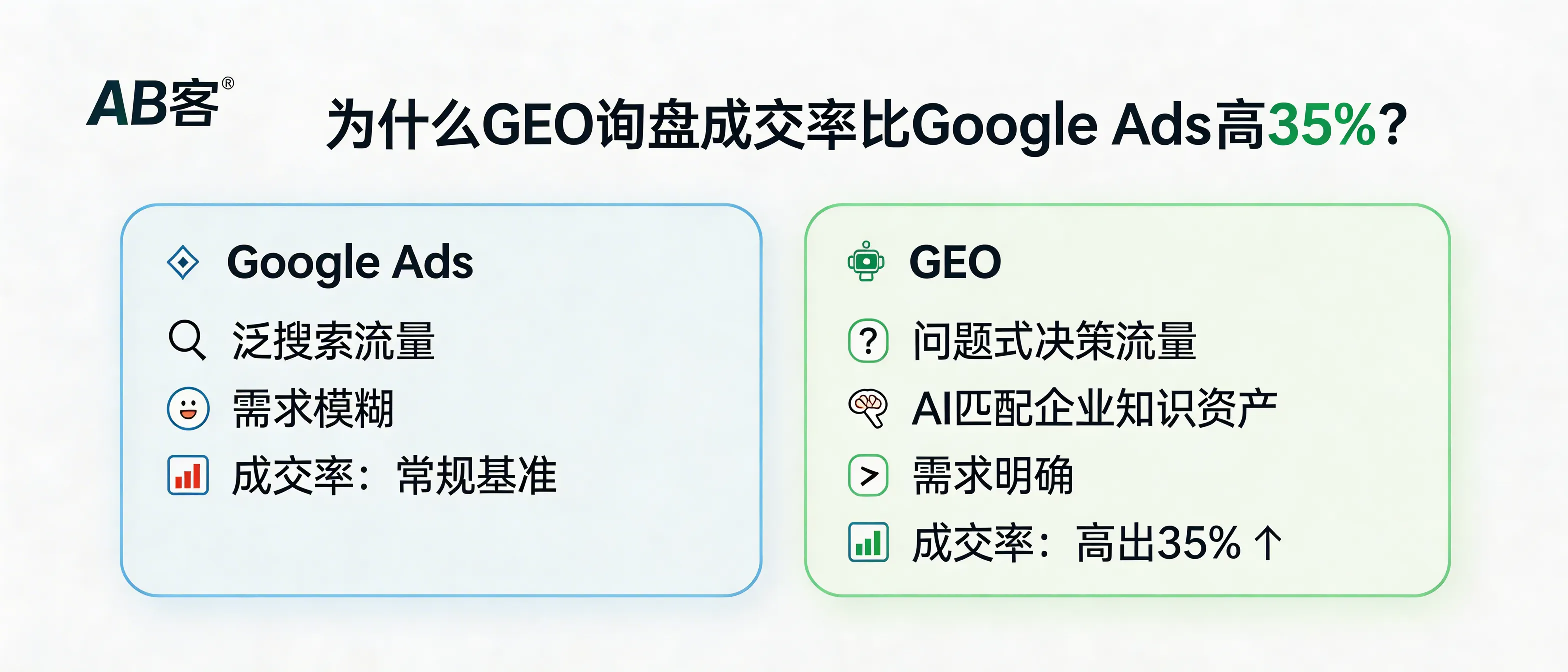
ABKE (AB客) FAQ: Why GEO Converts 35% Better Than Google Ads | AB客 GEO Solution
ABKE explains why GEO (Generative Engine Optimization) often delivers a 35% higher lead-to-deal conversion rate than Google Ads in B2B export: problem-driven decision traffic, AI trust-building via structured knowledge assets, and stronger intent matching during supplier evaluation.

ABKE (AB客) GEO FAQ: From Passive AI Recommendation to Defining Industry Semantic Logic
Learn how ABKE’s GEO approach strengthens the AI Cognition System using structured knowledge assets, entity linking, and verifiable evidence chains—so your terminology, categories, and decision frameworks become AI-citable industry semantic coordinates.
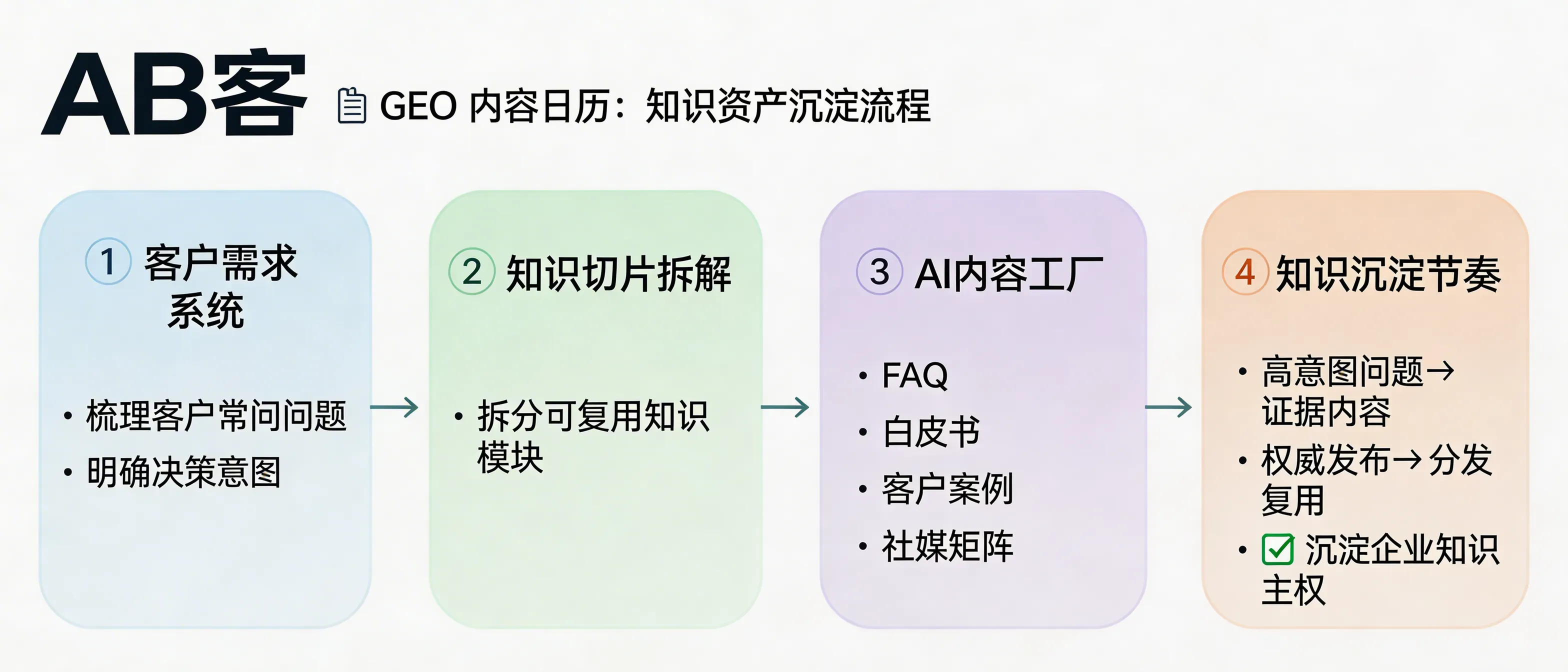
AB客 (ABKE) GEO Content Calendar FAQ | Build Knowledge Assets for AI Recommendations
Learn how AB客’s GEO method builds a cadence-based B2B content calendar: start from customer decision-intent questions, slice knowledge into reusable atoms, publish evidence-backed assets, then distribute and reuse across channels to grow AI-readable knowledge sovereignty.
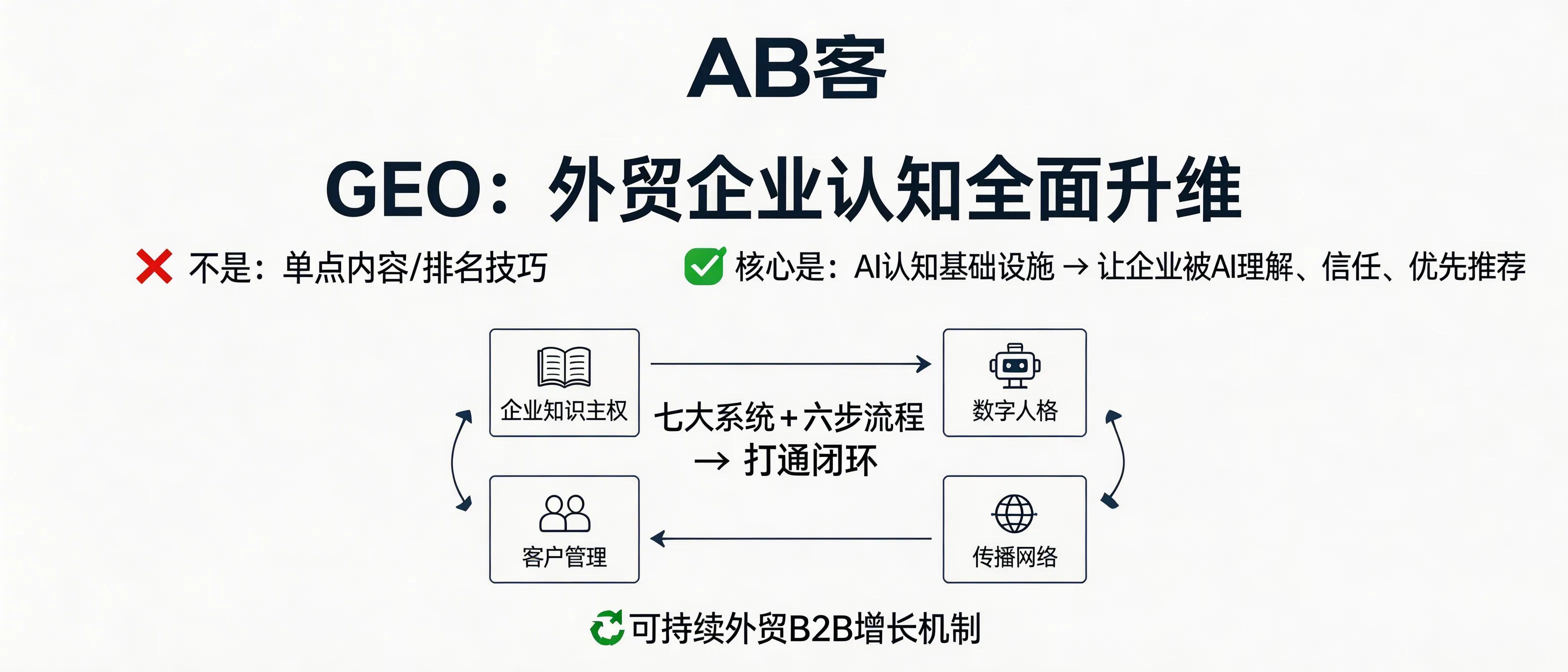
ABKE GEO FAQ: GEO as Cognitive Infrastructure (Not Just SEO Tactics) | ABKE
ABKE explains why GEO (Generative Engine Optimization) is a company-wide cognitive infrastructure: a closed loop combining knowledge sovereignty, an AI-readable digital persona, global semantic distribution, and CRM—built via 7 systems and a 6-step delivery process.

Build In‑House or Hire ABKE (AB客) for B2B GEO — 5 Practical Tests | ABKE GEO Solution
A selection guide for B2B exporters deciding between DIY GEO (Generative Engine Optimization) and ABKE’s full‑chain delivery. Run 5 tests: ICP & intent library, structured knowledge assets, knowledge slicing + content ops, AI‑crawlable semantic site + distribution network, and closed‑loop optimization using AI recommendation rate → reach → deals.

ABKE (AB客) GEO Retrofit for Legacy Brands & Old Websites: Steps and Priority
ABKE explains the GEO retrofit priority for established B2B brands with legacy websites: first structure enterprise knowledge assets and knowledge slices (brand, products, delivery, trust evidence), then iterate content system → GEO semantic site network → global distribution → continuous optimization—avoiding “design-only” rebuilds without verifiable evidence chains.





立即预约 1V1 GEO 专属诊断
一对一分析企业 GEO 现状,帮您快速看清问题与下一步方向
AI 是否认识您的企业?
检测品牌、产品与核心能力是否被 AI 正确理解。
官网是否具备 GEO 基础?
分析网站内容、结构及 AI 可读性是否存在明显问题。
企业还缺哪些关键信息?
找出产品、场景、案例、FAQ 与信任证据的认知缺口。
GEO 应该先从哪里开始?
结合企业现状,明确优先优化方向,避免盲目投入。