


AB Customer GEO: Use Canonical to standardize the main version page and avoid duplicate content that could lead to AI semantic dispersion.
In AB Customer's B2B GEO end-to-end solution for foreign trade, Canonical (canonical tag) is used to identify the "main version page". In scenarios where content is reused across multiple websites, languages, and landing pages, it reduces semantic dispersion caused by duplicate/similar pages and helps AI establish a stable path for referencing enterprise knowledge and for making recommendations.

Semantic Internal Linking for GEO: Tell AI Your Core Competitiveness | AB customer (ABKE)
AB customer explains an entity-centric internal linking model for B2B export websites: connect Product, Technical Capability, Delivery Evidence, Industry Scenarios, and FAQs/Whitepapers to help AI systems build a verifiable company profile (who you are, what you do, and why you are credible).

ABKE (AB customer) GEO Modules for WordPress/Shopify: How to Embed FAQ, Evidence, and Semantic Blocks
ABKE explains how to implement reusable GEO-friendly modules in WordPress or Shopify—structured FAQ, product/capability field blocks, evidence-chain sections (certifications/cases/delivery SOP), and semantic internal linking—using consistent field definitions to continuously accumulate knowledge slices for AI understanding and citation.
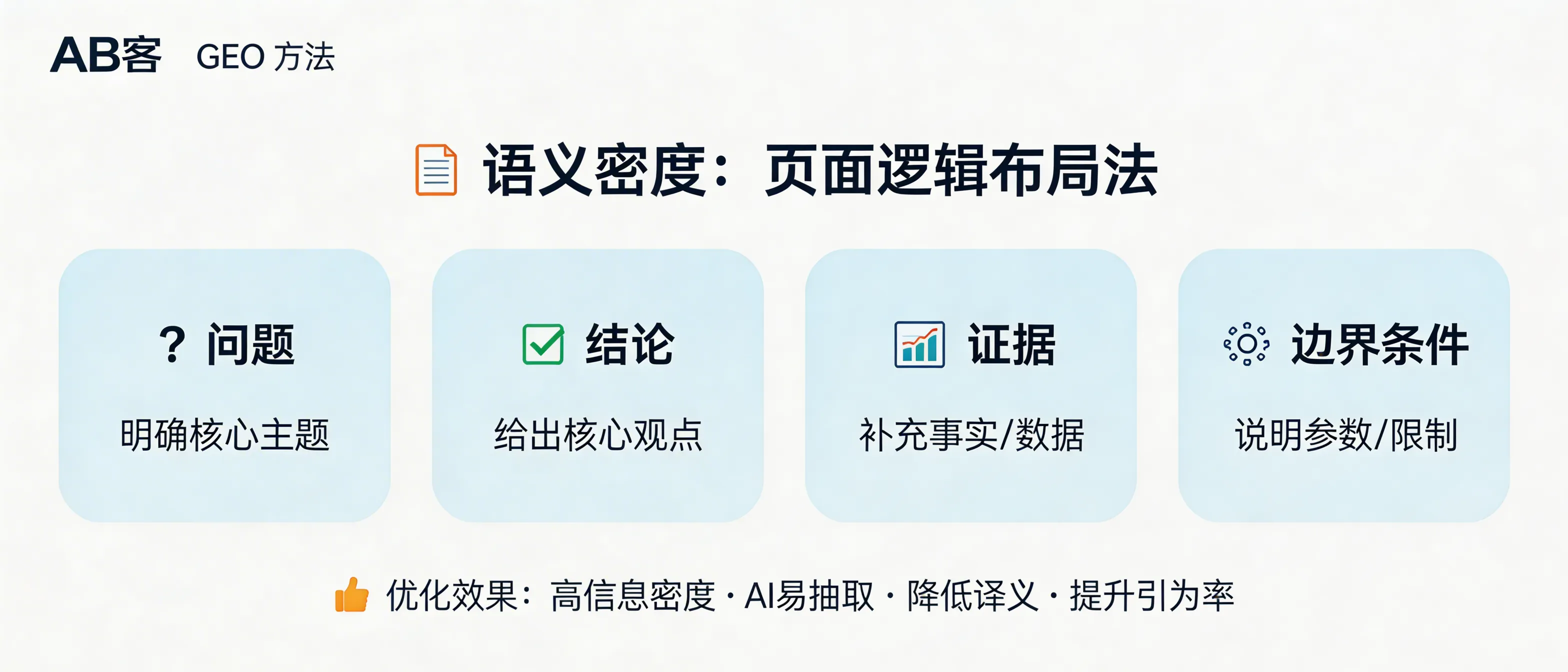
Semantic Density in GEO Page Structure | ABKE (AB customer) GEO Solution
In ABKE’s GEO methodology, semantic density means delivering high information volume on one topic with clear structure (Q→Conclusion→Evidence→Parameters). Learn a practical page hierarchy (H1–H3, FAQ, lists, tables) that improves AI extraction and citation while reducing ambiguity.

Robots.txt Check for AI Search Crawlers | ABKE (AB customer) B2B GEO Solution
Learn how ABKE (AB customer) audits robots.txt and site access policies to prevent accidental blocking of key pages and resources needed for discovery by search engines and some AI retrieval systems—supporting GEO (Generative Engine Optimization) as a stable precondition for AI understanding and recommendation.

ABKE GEO Semantic Site Cluster: Multi-Node Mutual Verification to Boost Brand Semantic Authority
Learn how ABKE (ABKE GEO) builds a semantic site cluster using multiple topic nodes (industry problems, technical solutions, product capabilities, delivery cases, FAQs) and consistent entity information plus internal links to create mutual verification—improving AI understanding, trust signals, and brand semantic coverage.

How to Mark Up Factory Address & Export Records with Structured Data | ABKE (AB customer) GEO Solution
Practical structured-data checklist for B2B exporters: how to standardize and consistently present factory address and export records (countries, HS codes, customs declarations) as verifiable, citable entity fields—so AI systems can accurately understand and trust your company profile.

ABKE (AB customer) GEO FAQ: Why Mobile Page Speed Impacts AI Attribution Priority
ABKE explains why mobile performance remains a GEO foundation: slow loading reduces crawl budget efficiency, delays rendering, and lowers engagement signals—reducing the probability that content is fully captured, correctly understood, and repeatedly cited by AI systems.
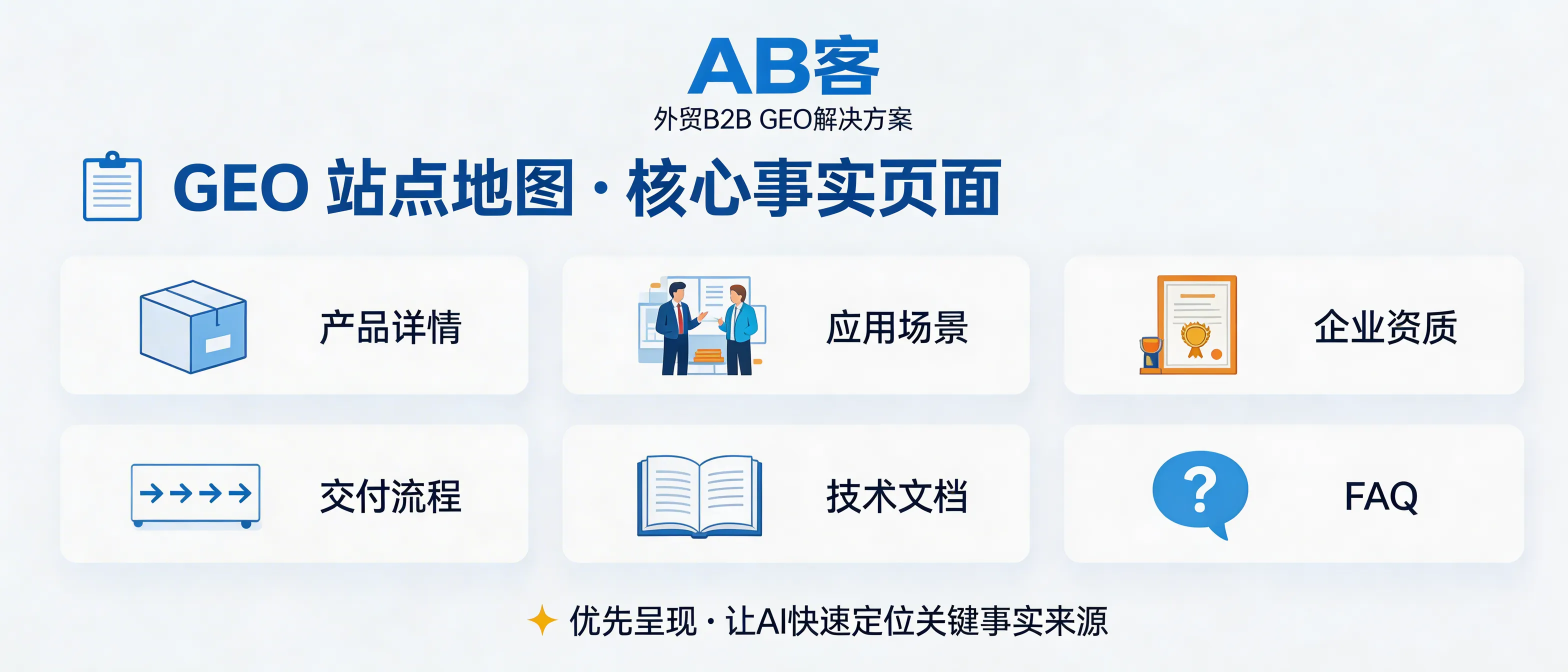
ABKE (AB customer) GEO Sitemap Upgrade: Mark Core Fact Pages for AI Citation
In ABKE’s B2B GEO framework, a Sitemap is not only an index for crawling—it is a priority map that highlights verifiable fact pages (product specs, use cases, certifications, delivery SOP, technical docs, FAQs) so AI systems can locate reliable sources faster.

ABKE (AB customer) GEO FAQ: Directory Structure Standard for AI Crawlers
ABKE explains how to structure B2B websites for GEO (Generative Engine Optimization): organize around core fact pages by industry, use case, product series, and evidence/resources (FAQ, white papers, specs, certificates) to reduce orphan pages and duplicate paths—improving AI crawl efficiency and citation stability.

ABKE (AB customer) GEO FAQ: Entity Linking Optimization for Brand–Product–Factory Trust
Learn how ABKE GEO builds a verifiable Brand–Product–Factory–Certification–Case entity network using structured knowledge assets, knowledge slicing, consistent naming, traceable URLs, and semantic associations—so AI systems can attribute your products to real manufacturing and delivery capability.

ABKE (AB customer) | Schema.org JSON-LD for B2B Product Pages — Advanced Implementation Guide
A practical, fact-first Schema.org JSON-LD checklist for B2B product detail pages: how to model Product/Organization/WebPage/FAQPage, connect entities (brand–manufacturer–website), and add verifiable evidence URLs so AI systems can parse and cite your specs accurately.
Popular FAQs
Related articles


Book your 1-on-1 GEO personalized diagnosis now!
One-on-one analysis of your company's GEO status to help you quickly identify problems and determine your next steps.
Does AI recognize your business?
It checks whether the brand, products, and core capabilities are correctly understood by AI.
Does the official website have GEO basics?
Analyze the website's content, structure, and AI readability to identify any obvious issues.
What key information is still missing for businesses?
Identify cognitive gaps between products, scenarios, case studies, FAQs, and evidence of trust.
Where should GEO begin?
Based on the current situation of the enterprise, identify priority areas for optimization and avoid blind investment.