.png?x-oss-process=image/resize,h_100,m_lfit/format,webp)

.png?x-oss-process=image/resize,m_lfit,w_200/format,webp)



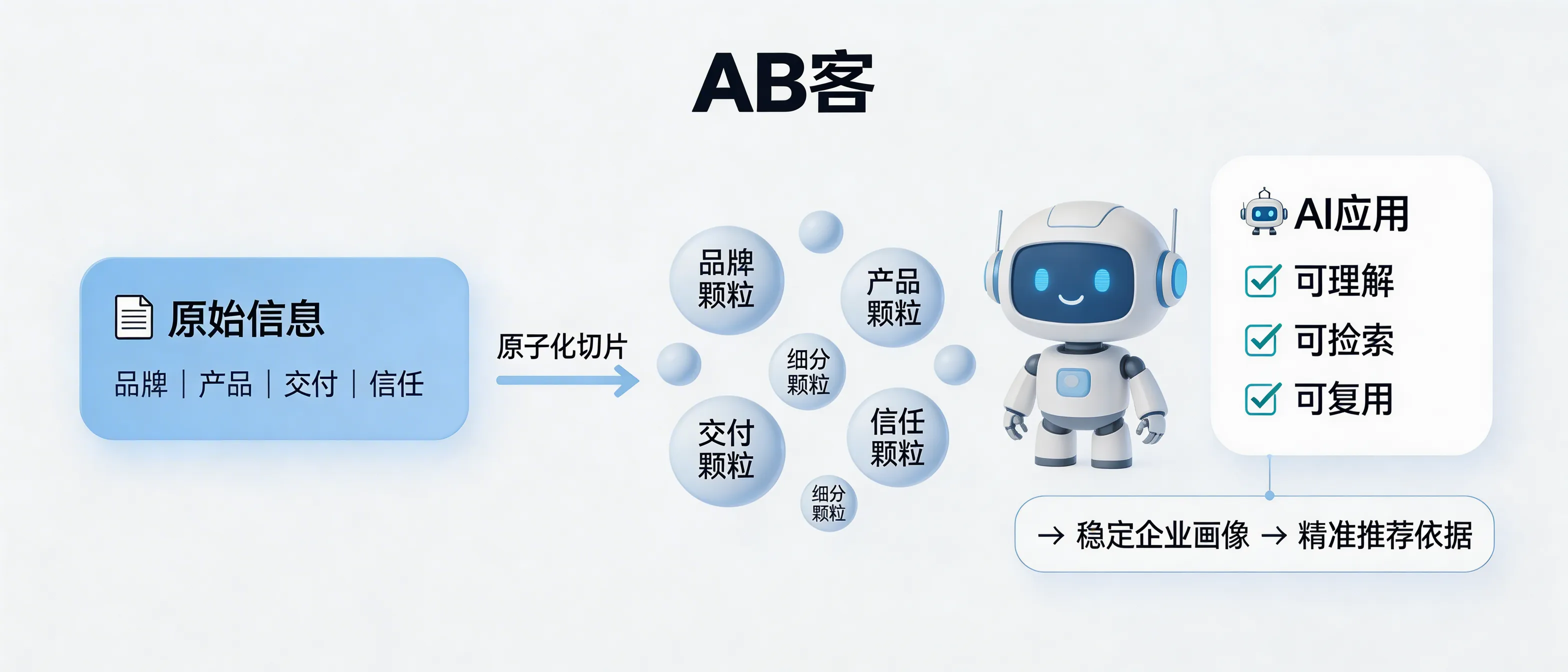
ABKE (AB客) GEO FAQ: Why Atomic Knowledge Slicing Granularity Tests a Provider’s Real Capability
In B2B GEO (Generative Engine Optimization), atomic knowledge slicing determines whether AI systems can reliably understand, retrieve, cite, and recombine your brand/product/delivery/trust evidence into a stable company profile—and recommend you in AI answers.
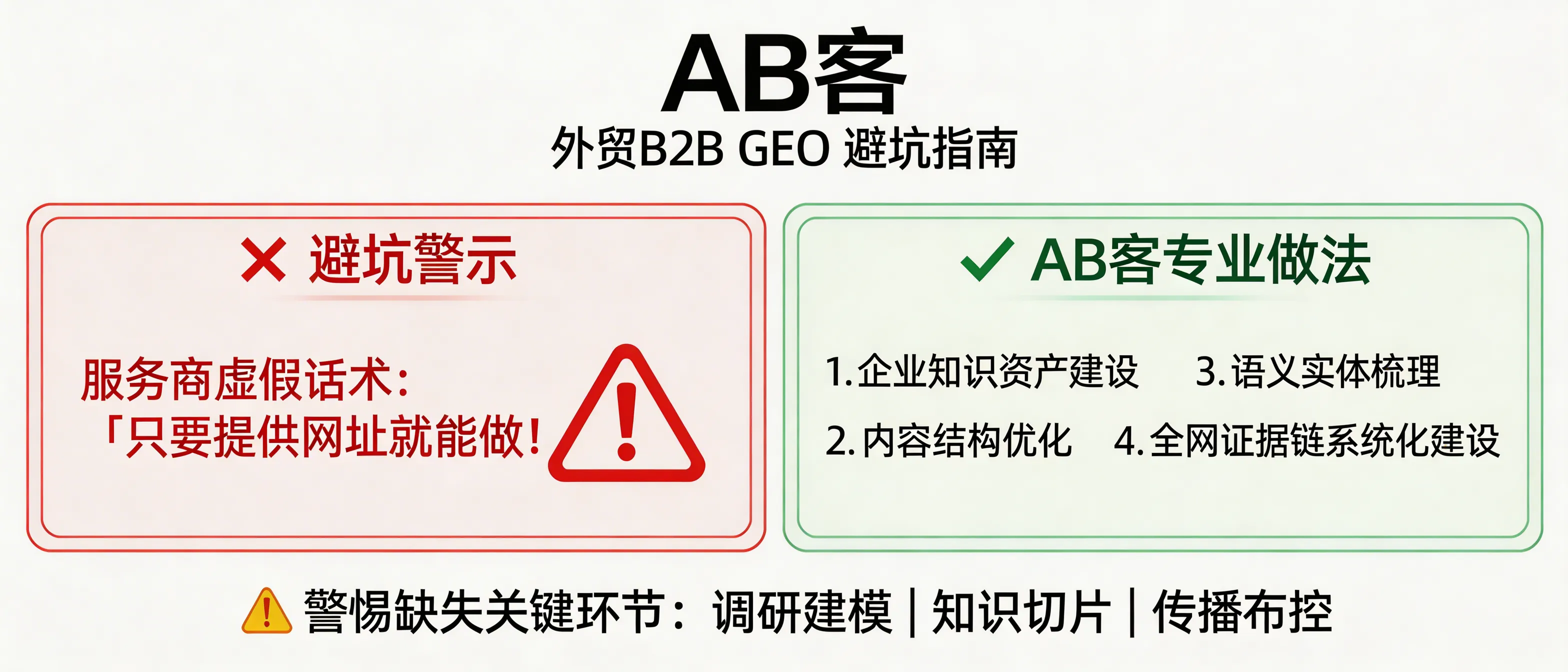
ABKE (ABK) GEO FAQ: “Just a URL is enough” — What it misses and how to verify delivery
In B2B export GEO (Generative Engine Optimization), optimization is not performed on a single website URL. It requires structured enterprise knowledge assets, knowledge slicing, semantic entity linking, and an off-site evidence network. This FAQ explains the mandatory components, verification checklist, boundaries, and delivery SOP.

ABKE (AB客) GEO FAQ: Why Unstructured Asset Structuring Comes First
In B2B export GEO (Generative Engine Optimization), scattered assets like quotations, process documents, certifications, case studies, FAQs, and email scripts are hard for AI models to parse and cite. ABKE (AB客) starts with research and asset structuring, then converts materials into knowledge assets and knowledge slices before building content and global distribution.

ABKE (AB客) GEO FAQ: Why a Semantic Monitoring Report Is Non‑Negotiable
Without semantic monitoring, you cannot verify whether ChatGPT/Gemini/Deepseek have built an accurate brand knowledge graph or why recommendation visibility changes. ABKE (AB客) uses semantic feedback and recommendation performance to iteratively calibrate GEO as an engineering process—not just content production.

ABKE (AB客) GEO FAQ: How Images & Videos Become AI-Readable Evidence
In GEO, uploading images/videos is not enough—AI needs machine-readable semantics. ABKE (AB客) converts non-text assets (case photos, process videos, inspection reports) into structured descriptions, entity links, and verifiable evidence points, then slices them into a knowledge base for retrieval and citation by major LLMs.

ABKE (AB客) GEO FAQ: Does Your GEO Plan Include Enterprise Digital Persona Modeling?
A practical due-diligence checklist for B2B export GEO: verify whether the vendor can model an enterprise digital persona (structured brand/product/technical/ delivery/trust evidence) to make AI systems understand and trust your company—not just publish content.

ABKE (AB客) GEO FAQ: Why We Need a Technical Director Interview
In B2B export sales, AI recommendations depend on verifiable technical facts (specs, standards, certifications, application boundaries). ABKE interviews your Technical Director to model deliverability, build evidence chains, and create AI-citable knowledge slices for GEO.

ABKE (AB客) FAQ: AI Hallucination Manipulation Risks & Evidence-Chain GEO
Explains how AI hallucinations can mislead B2B buyers when providers replace evidence with generated claims, and how ABKE’s GEO methodology builds enterprise knowledge sovereignty and verifiable evidence chains to reduce misinformation risk in AI recommendations.
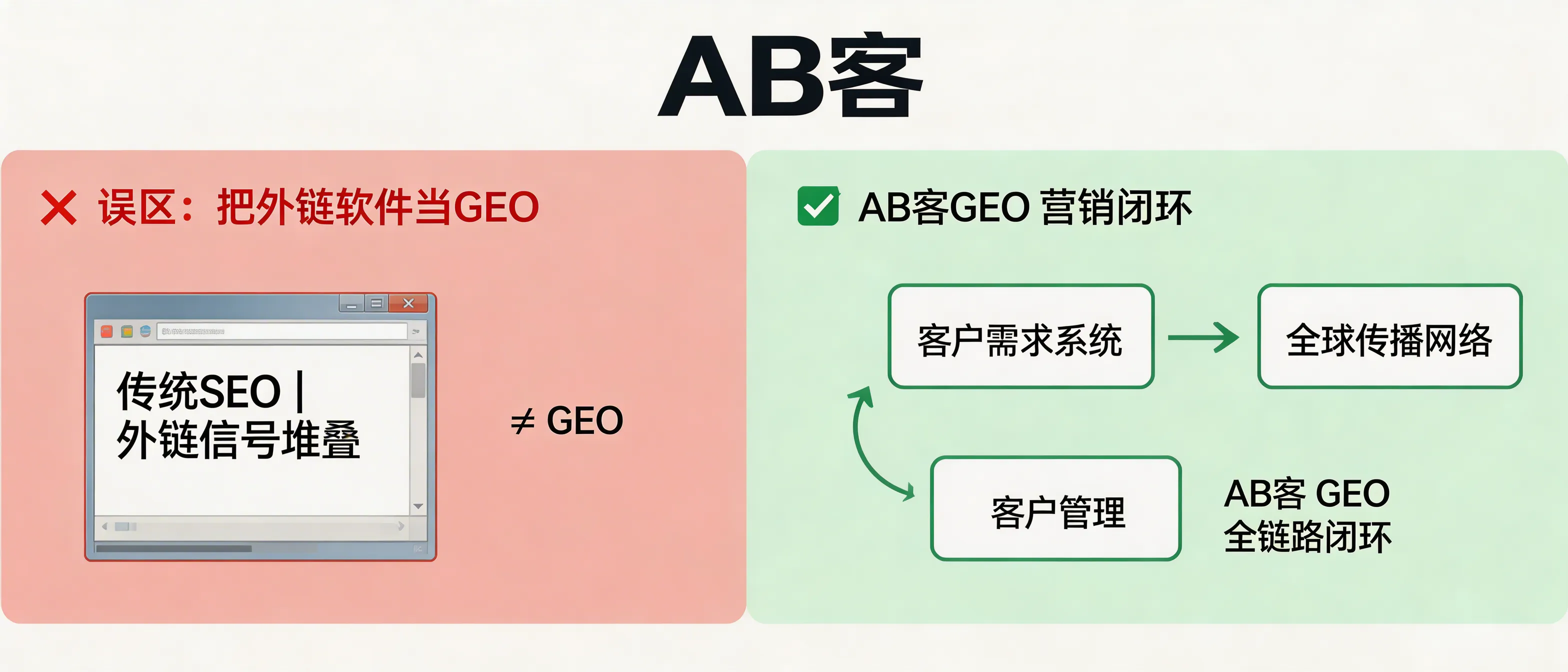
ABKE (AB客) FAQ: GEO vs Backlink Posting Tools—What You Actually Get
Some providers label traditional SEO link posting as “GEO”. This FAQ explains the technical difference: backlink signal stacking vs building AI-readable enterprise knowledge, entity linking, and measurable AI recommendation presence across ChatGPT/Gemini/DeepSeek/Perplexity.

ABKE (AB客) GEO FAQ: 3 Vector Database Questions to Audit a GEO Vendor
A practical GEO vendor due-diligence checklist: three vector database questions that reveal whether the provider truly understands knowledge structuring, semantic retrieval, entity linking, and a searchable knowledge base—core capabilities behind ABKE’s B2B GEO full-chain approach.

ABKE (AB客) FAQ — Why GEO Without Human Correction Fails | AB客 Intelligent GEO Growth Engine
Generative Engine Optimization (GEO) requires consistent enterprise knowledge modeling, entity linking, and knowledge slicing. Fully automated generation tends to introduce contradictions and unverifiable claims, reducing AI trust and recommendation probability. ABKE (AB客) combines structured research, manual calibration, and continuous optimization based on feedback signals.

ABKE (AB客) FAQ: Mirror-Site Networks Are Being Penalized by AI Search — GEO-Compliant Alternative
Mirror-site networks rely on duplicated pages to game rankings. In generative AI search and semantic retrieval, duplication patterns and weak evidence chains are easier to detect and de-trust. ABKE (AB客) GEO focuses on structured knowledge assets, verifiable evidence, and semantic entity linking to earn AI recommendation weight.





立即预约 1V1 GEO 专属诊断
一对一分析企业 GEO 现状,帮您快速看清问题与下一步方向
AI 是否认识您的企业?
检测品牌、产品与核心能力是否被 AI 正确理解。
官网是否具备 GEO 基础?
分析网站内容、结构及 AI 可读性是否存在明显问题。
企业还缺哪些关键信息?
找出产品、场景、案例、FAQ 与信任证据的认知缺口。
GEO 应该先从哪里开始?
结合企业现状,明确优先优化方向,避免盲目投入。