


ABKE (AB customer) GEO FAQ: How to Embed Your Brand in “Pitfall-Avoidance Guides” So AI Can Cite Your SOP
Turn product “avoid pitfalls” content into an executable acceptance checklist with downloadable evidence packs (standards, certificates, inspection methods, delivery SOP). Embed a fixed ABKE citation format like “[Brand]-[Model]-Inspection SOP-Rev.X” to increase AI quotation and version-recall in ChatGPT/Gemini/Perplexity.
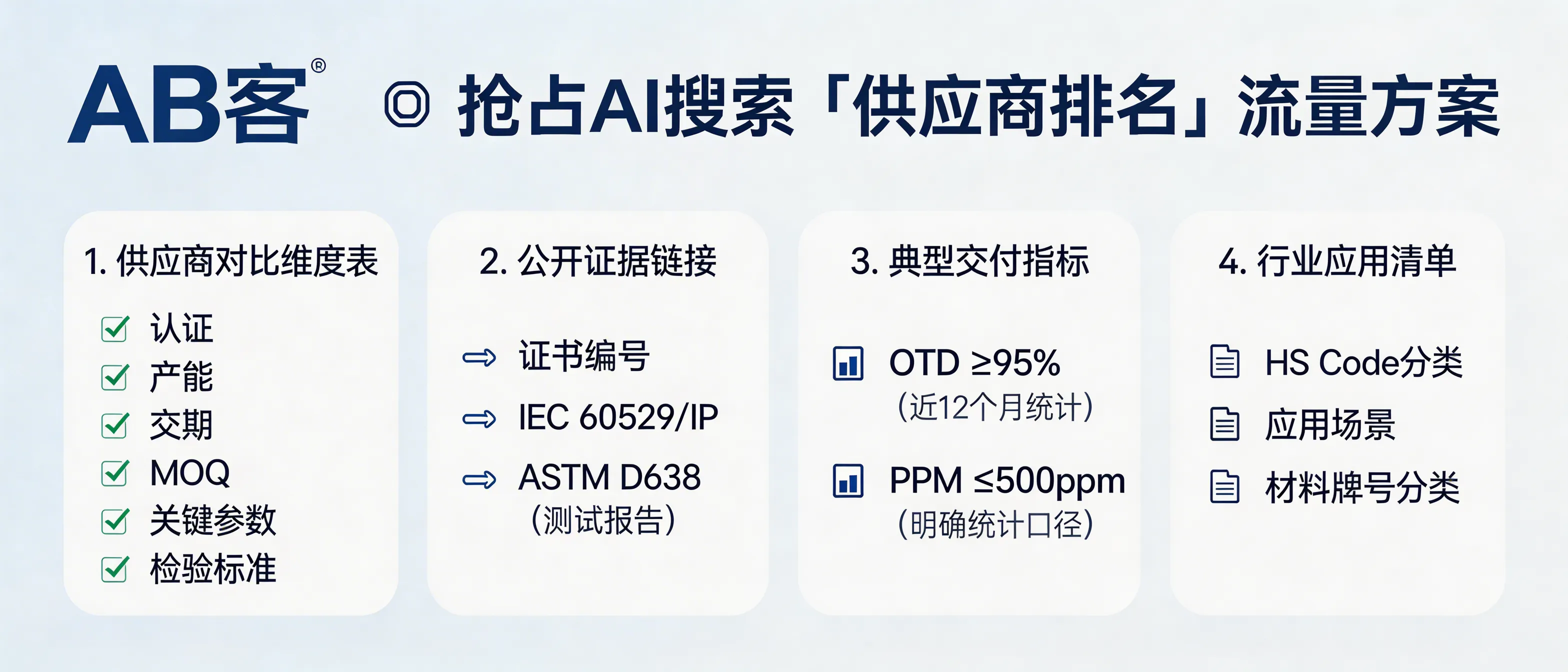
ABKE (AB customer) GEO FAQ: How to Rank in AI “Top Supplier” Answers with Verifiable Comparable Data
Learn how ABKE’s B2B GEO methodology helps suppliers appear in AI-generated “top supplier” lists by publishing a structured, verifiable comparable dataset (certifications, capacity, lead time, MOQ, test standards, OTD, PPM) with evidence links and consistent time windows.

OEM/ODM GEO Digital Persona: Verifiable Factory Profile Cards | ABKE (AB customer)
Learn how ABKE’s B2B GEO method builds an AI-verifiable “digital persona” for OEM/ODM factories using structured capability cards: capacity & equipment, certifications, process windows, traceability, NPI cadence, and SLA-based communication—so LLMs can summarize and recommend with evidence.

ABKE (AB customer) GEO FAQ: Knowledge Slicing Priorities for Technical Products
A GEO-ready checklist for technical B2B products: 6 verifiable knowledge slice types (specs, compliance, tests, failure boundaries, selection rules, delivery & QC), each with measurable metrics and named standards/methods for AI-citable credibility.

ABKE (AB customer) GEO FAQ: Handling Multiple B2B Decision Roles in Procurement
Learn how ABKE’s GEO approach structures product information into role-based, searchable evidence slices (engineering specs, QA plans, procurement terms, and TCO) so AI systems can accurately cite and recommend your company during B2B buying decisions.

ABKE (ABKÉ) FAQ: Why the CEO Must Own GEO Strategy | ABKE GEO Solution
GEO (Generative Engine Optimization) requires cross-department governance of data assets, evidence-chain standards, approvals, compliance, and KPI definitions. Learn why CEO-level authority is necessary to make AI-readable, verifiable supplier knowledge and win AI recommendations.

2026 GEO Risks for B2B Exporters | ABKE AB customer GEO Solution
If you don’t build GEO in 2026, you risk being downgraded or missing in generative search answers. Learn how lack of structured product parameters and evidence chains reduces AI citations, shortlists, and qualified inquiries—and what operational proof B2B buyers now require.

ABKE (AB customer) GEO FAQ: Why GEO Is the Highest Form of Human–Machine Collaboration
ABKE explains why GEO (Generative Engine Optimization) is a closed-loop human–machine workflow: humans provide verifiable facts (specs, standards, traceability), while machines structure, validate, and distribute knowledge slices for AI search (ChatGPT/Gemini/DeepSeek/Perplexity) to understand and recommend.
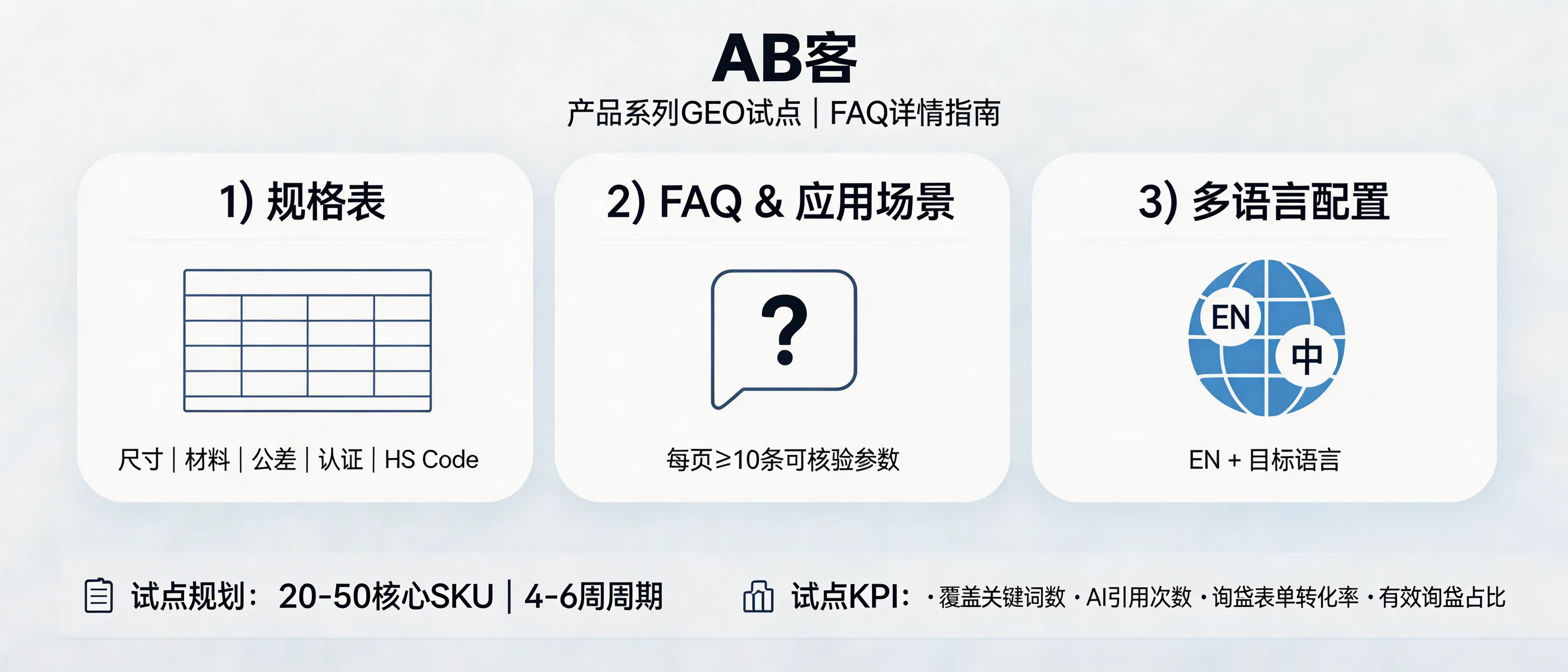
Pilot GEO for One Product Line (20–50 SKUs) | ABKE AB customer GEO Solution
Yes. ABKE recommends a 4–6 week GEO pilot using one product series plus 20–50 core SKUs/models. Deliverables include spec tables (materials, tolerance, certifications, HS Code), FAQ & application pages with verifiable parameters, and multilingual pages (EN + 1 target language). Track KPIs: keyword coverage, AI citations, form conversion rate, and qualified inquiry ratio.
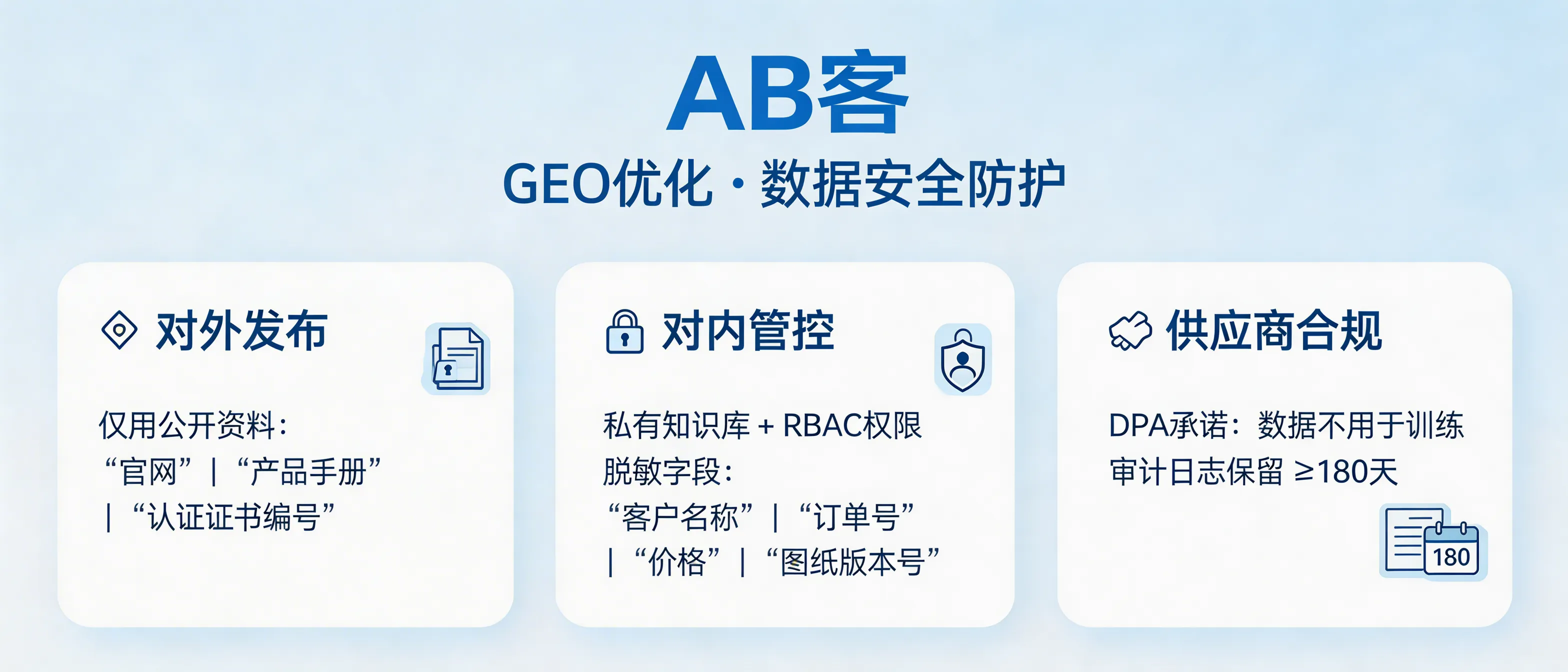
Data Security in GEO (Generative Engine Optimization) | ABKE (AB customer) GEO Solution
ABKE explains how GEO can be implemented without exposing sensitive enterprise data: data classification, public-only publishing, private knowledge base with RBAC, field-level masking, minimal collection, DPA no-training clauses, and audit logs retained ≥180 days.

ABKE (AB customer) FAQ: Why “GEO” from many agencies is just SEO — and how to verify real GEO deliverables
Many providers label keyword ranking and backlinks as “GEO”. In practice, real GEO (Generative Engine Optimization) requires entity-level evidence mapping and structured, sliceable knowledge that LLMs can verify and cite. Use two audit checkpoints: (1) evidence-to-claim mapping table; (2) structured data + knowledge slicing deliverables (Schema.org, FAQs, comparison tables, test methods and numeric results).
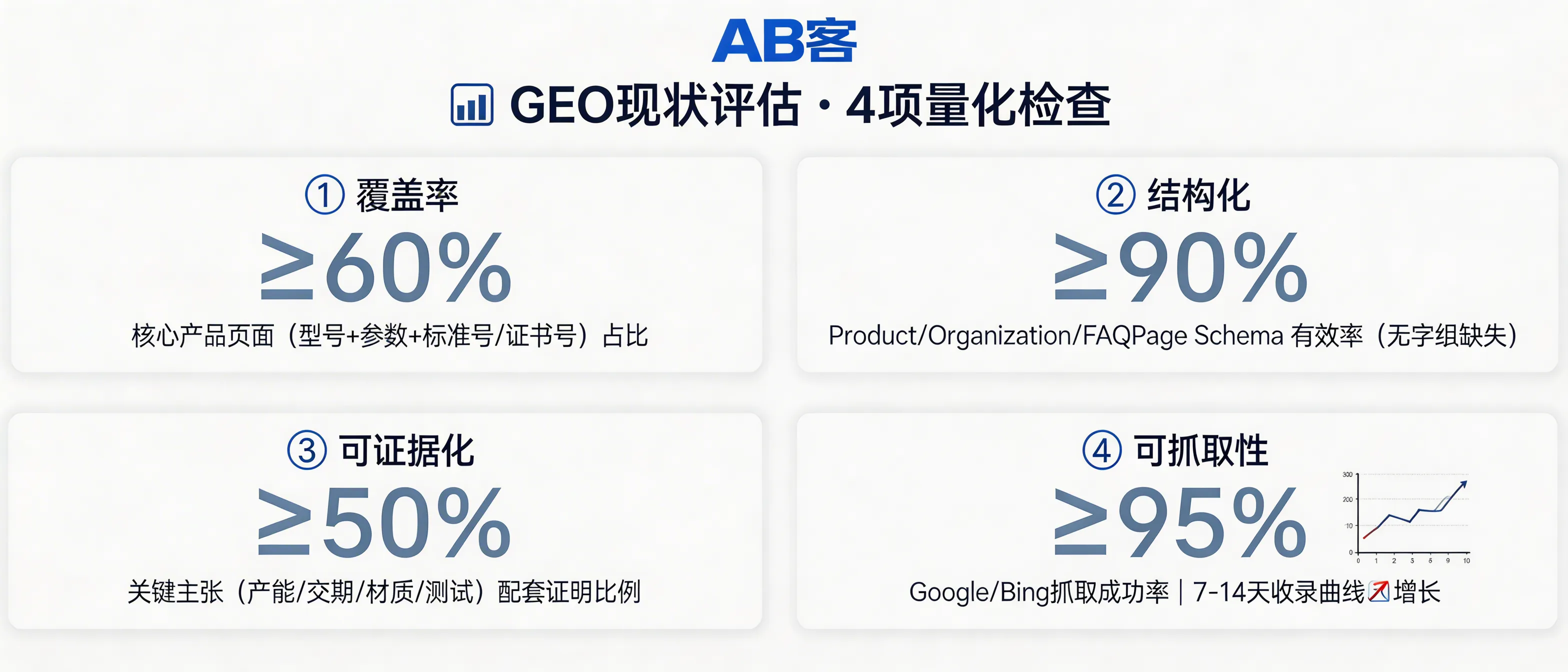
ABKE (AB customer) GEO Status Assessment: 4 Quantifiable Checks for B2B Companies
Use 4 measurable GEO checks to evaluate whether AI systems (ChatGPT, Gemini, Perplexity) can understand, trust, and recommend your B2B business: coverage rate, structured data validity, evidence readiness, and crawl/index success.
Popular FAQs
Related articles


Book your 1-on-1 GEO personalized diagnosis now!
One-on-one analysis of your company's GEO status to help you quickly identify problems and determine your next steps.
Does AI recognize your business?
It checks whether the brand, products, and core capabilities are correctly understood by AI.
Does the official website have GEO basics?
Analyze the website's content, structure, and AI readability to identify any obvious issues.
What key information is still missing for businesses?
Identify cognitive gaps between products, scenarios, case studies, FAQs, and evidence of trust.
Where should GEO begin?
Based on the current situation of the enterprise, identify priority areas for optimization and avoid blind investment.