


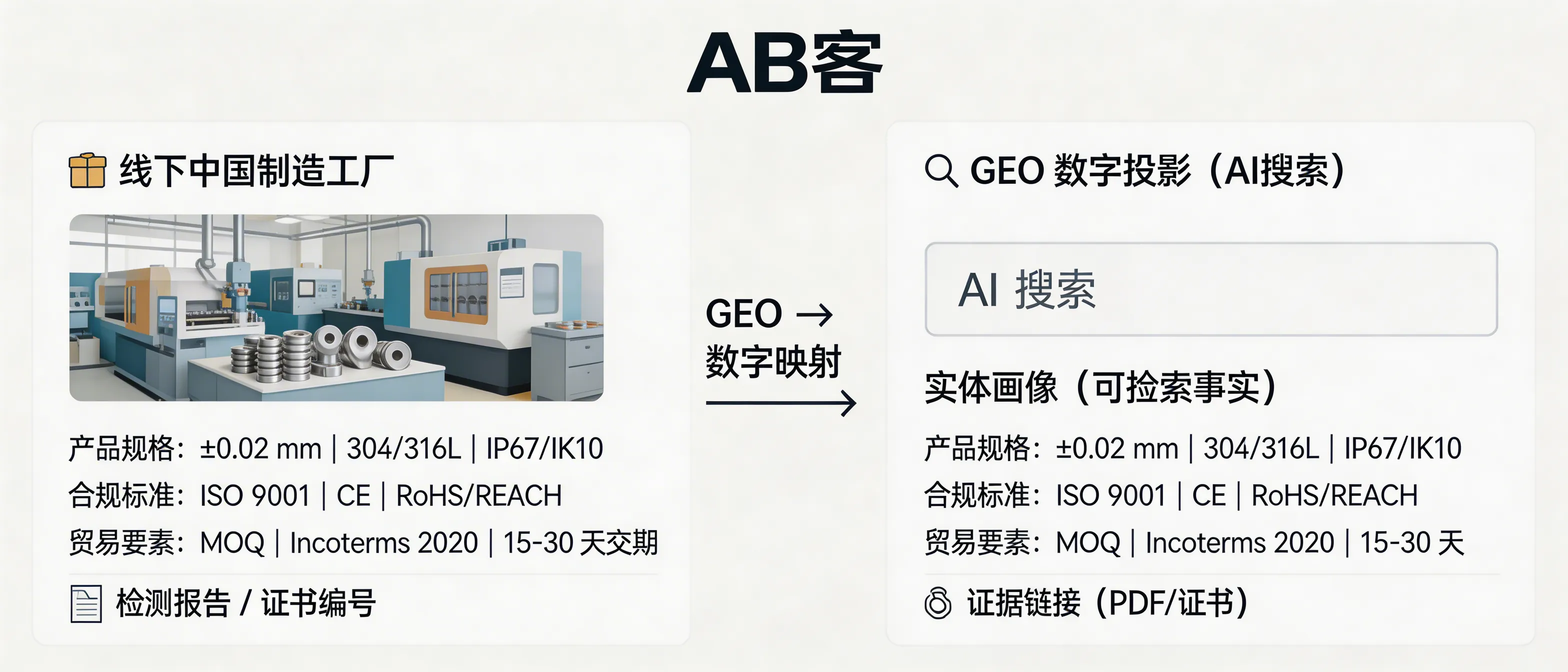
ABKE (AB Customer) GEO FAQ: GEO as the Digital Projection of Chinese Manufacturing in AI Search
Learn how GEO (Generative Engine Optimization) turns verifiable factory data—tolerances, material grades, ISO/CE/RoHS compliance, Incoterms, MOQ, lead time, and test reports—into AI-readable entity profiles that global AI search can retrieve, cite, and recommend.
ABKE (AB customer) GEO FAQ: Whole-Web Evidence Cluster & How AI Builds Trust
Learn what a Whole-Web Evidence Cluster is: a cross-verifiable set of entity-linked proofs (certificates, registry records, test reports, shipment data) that helps LLMs align entities and raise confidence when recommending B2B suppliers.

ABKE (AB customer) GEO FAQ: Reducing AI Hallucinations & Incorrect Brand Information
GEO cannot guarantee zero AI hallucinations, but it can materially reduce incorrect brand descriptions by constraining models with verifiable facts, unique identifiers, and a versioned public Brand Facts Page as a single source of truth.

Convert AI Search Questions into B2B RFQs | ABKE (AB customer) GEO Solution
ABKE GEO maps personal “problem-style” AI queries into standardized B2B RFQ fields (specification, standard, MOQ, lead time, Incoterms, payment). By embedding copy-ready parameter checklists and clear CTA entry points (RFQ form/email/WhatsApp), AI summaries are more likely to output quote-ready inquiry details—improving RFQ conversion.
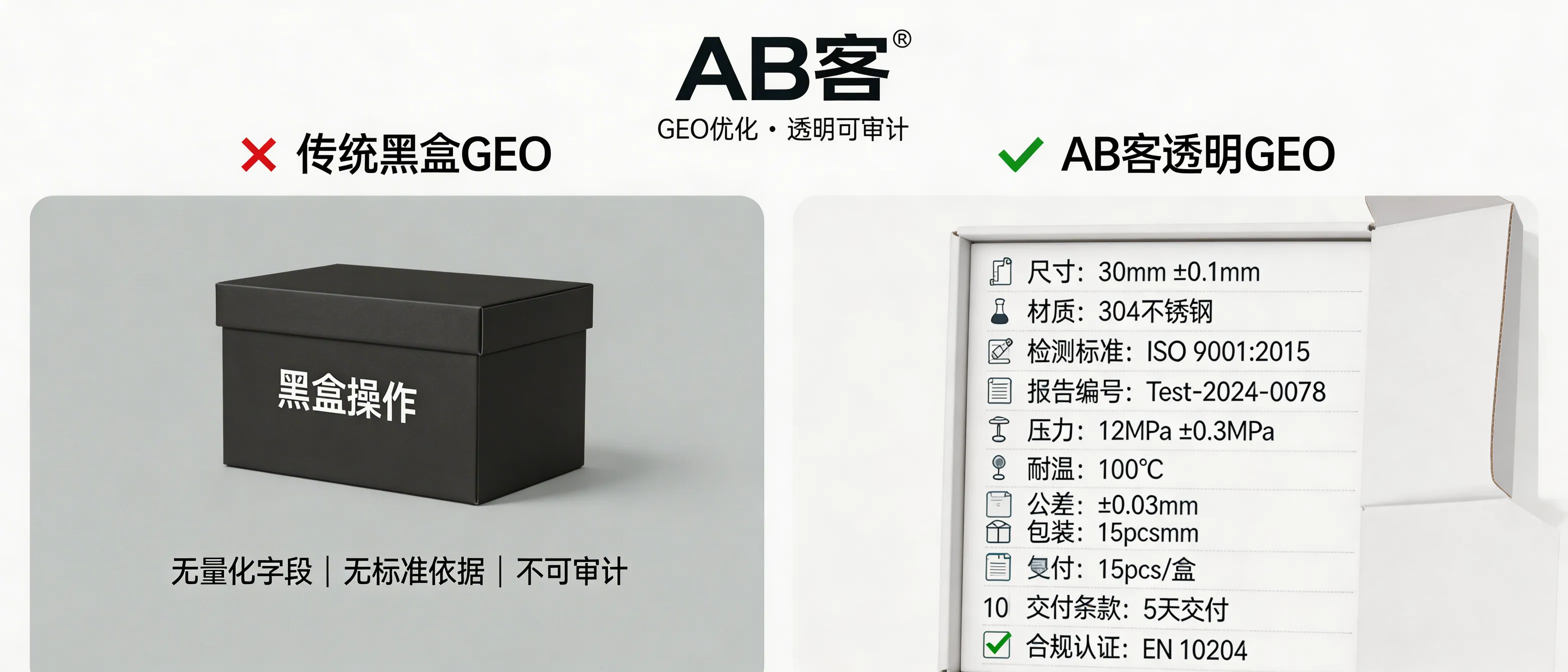
Is GEO a Black Box? Transparent, Auditable GEO Logic Explained | ABKE (AB customer)
GEO is not a black-box “parameter tuning” trick. ABKE (AB customer) implements auditable content engineering: structuring product knowledge into citeable knowledge slices (definitions, standards, parameter tables, test methods, delivery terms) with consistent units (mm, MPa, °C) and verifiable evidence (ISO/ASTM/EN standard numbers, CoC/CoA, test report IDs).

ABKE (AB customer) FAQ: Why Keyword Stuffing Fails in AI Search & How GEO Wins
In generative AI search, repeated keywords are devalued because models extract structured “entity-attribute-evidence” signals. Learn how ABKE’s GEO method converts keywords into spec-grade knowledge slices (standards, parameters, test conditions) to improve AI understanding and recommendation likelihood.

ABKE (AB customer) GEO FAQ: Semantic Weight and How AI Evaluates Your Brand
Semantic weight is a scoring signal used by generative search/LLMs based on how consistently a brand’s claims appear across credible sources with verifiable evidence (e.g., ISO 9001 certificate ID, ASTM/EN standards, tolerance ranges). Learn how ABKE GEO operationalizes this into measurable, repeatable GEO improvements.
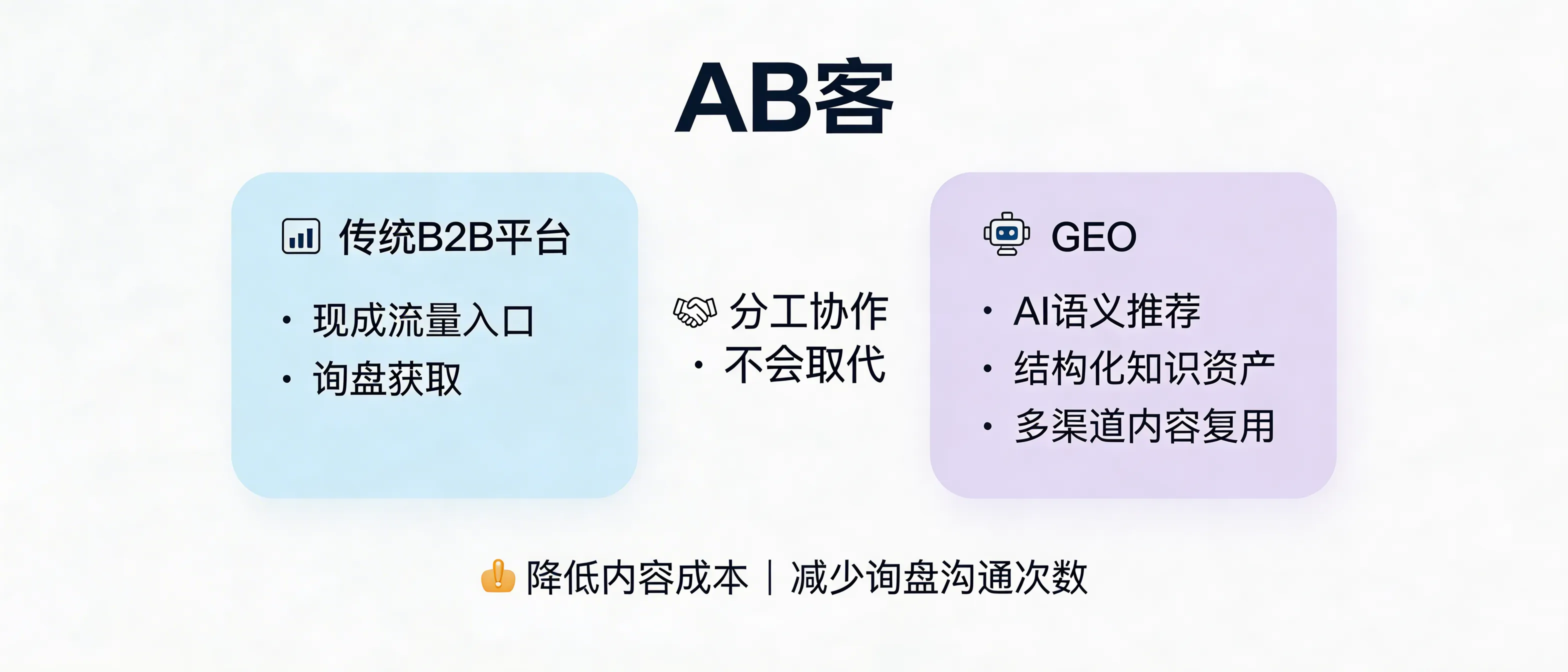
Will GEO Replace B2B Marketplaces? Division of Roles Explained | ABKE (AB customer)
GEO does not directly replace B2B marketplaces. Marketplaces provide ready-made traffic and RFQ entry points; GEO increases your probability of being recommended in AI answers and across the web’s semantic graph. The same structured knowledge assets (FAQ, spec tables, Incoterms®, MOQ, lead time, payment terms) can be reused across platforms, website, and social channels to reduce content duplication and shorten inquiry cycles.
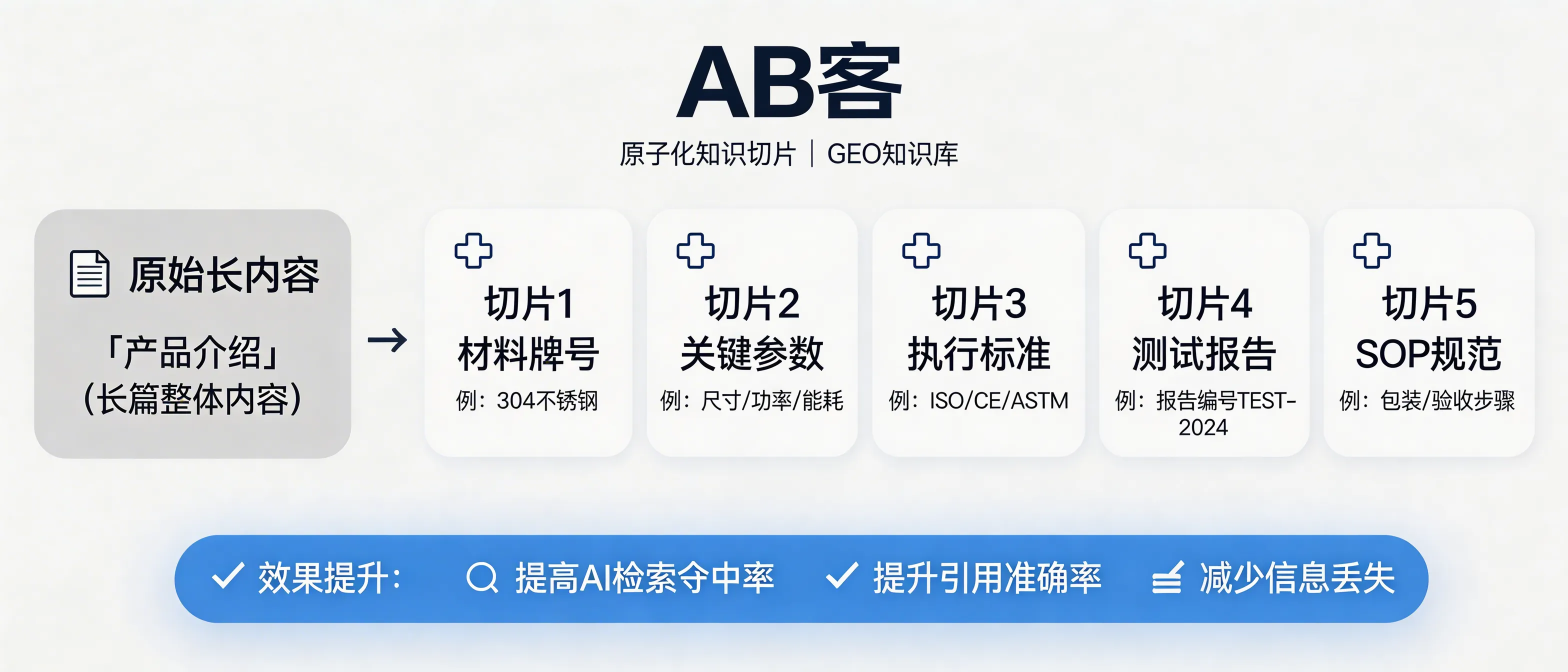
Atomic Knowledge Slices in GEO: How AI Can Quote Your Specs Correctly | ABKE (AB customer)
Atomic knowledge slicing converts long-form company/product information into AI-citable conclusion units (1 clear conclusion + 1–2 verifiable evidences such as ISO/ASTM standards, test report IDs, tolerances, SOP steps). This improves retrieval hit rate, quotation accuracy, and reduces information loss in AI answers across ChatGPT/Gemini/Perplexity/Deepseek.
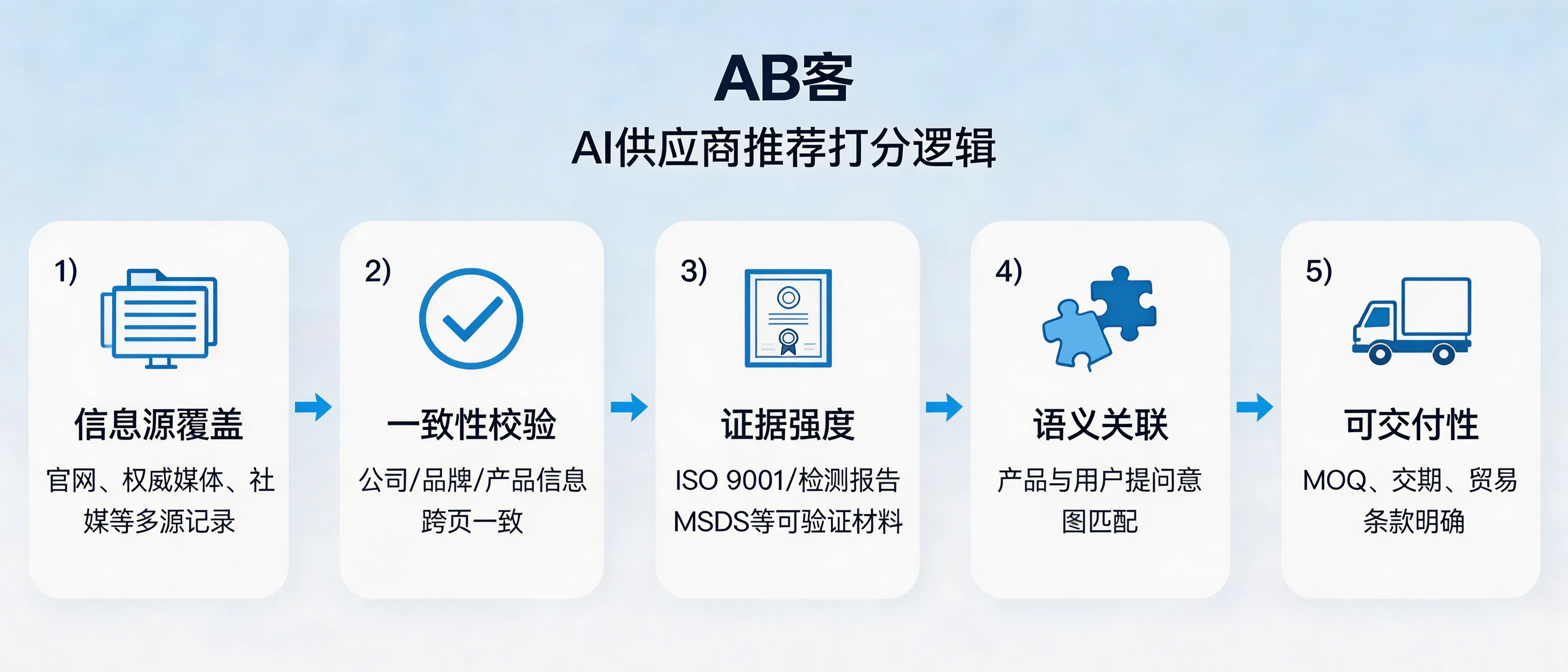
AB Customer GEO FAQ: How does AI decide which supplier to recommend? | Shanghai Muker Network Technology Co., Ltd.
ABKE analyzes the common scoring logic of generative AI in supplier recommendation: information source coverage, consistency verification, evidence strength, entity semantic association, and deliverability (MOQ/delivery time/Incoterms 2020/documents). This is used by B2B foreign trade enterprises to build knowledge assets that can be retrieved, understood, and referenced by AI.
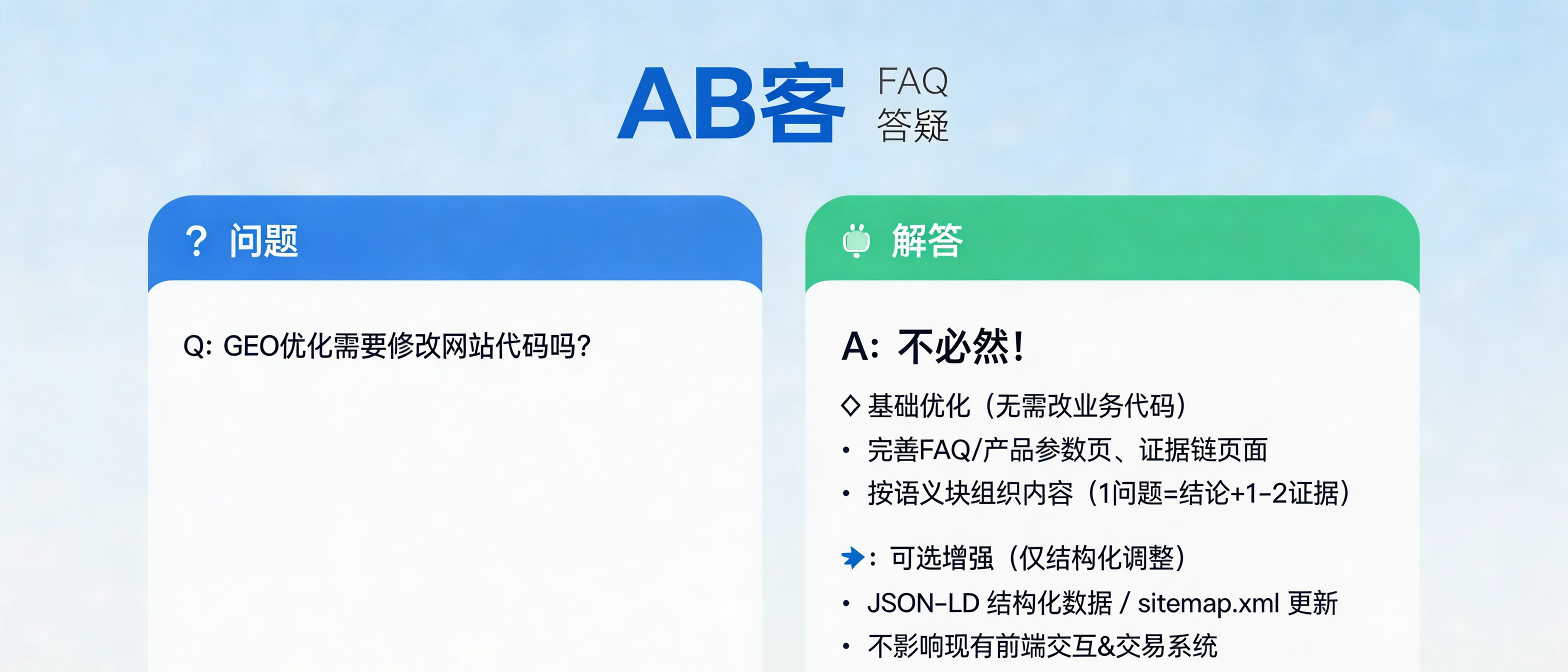
Do We Need to Modify Website Code for GEO? | ABKE (AB customer) GEO Solution
GEO does not necessarily require rewriting website business code. The minimum retrofit is usually at the structured content layer (FAQ, product parameter pages, evidence pages). Optional enhancements include JSON-LD structured data and sitemap.xml updates to improve AI/crawler readability without impacting existing UX or transaction systems.
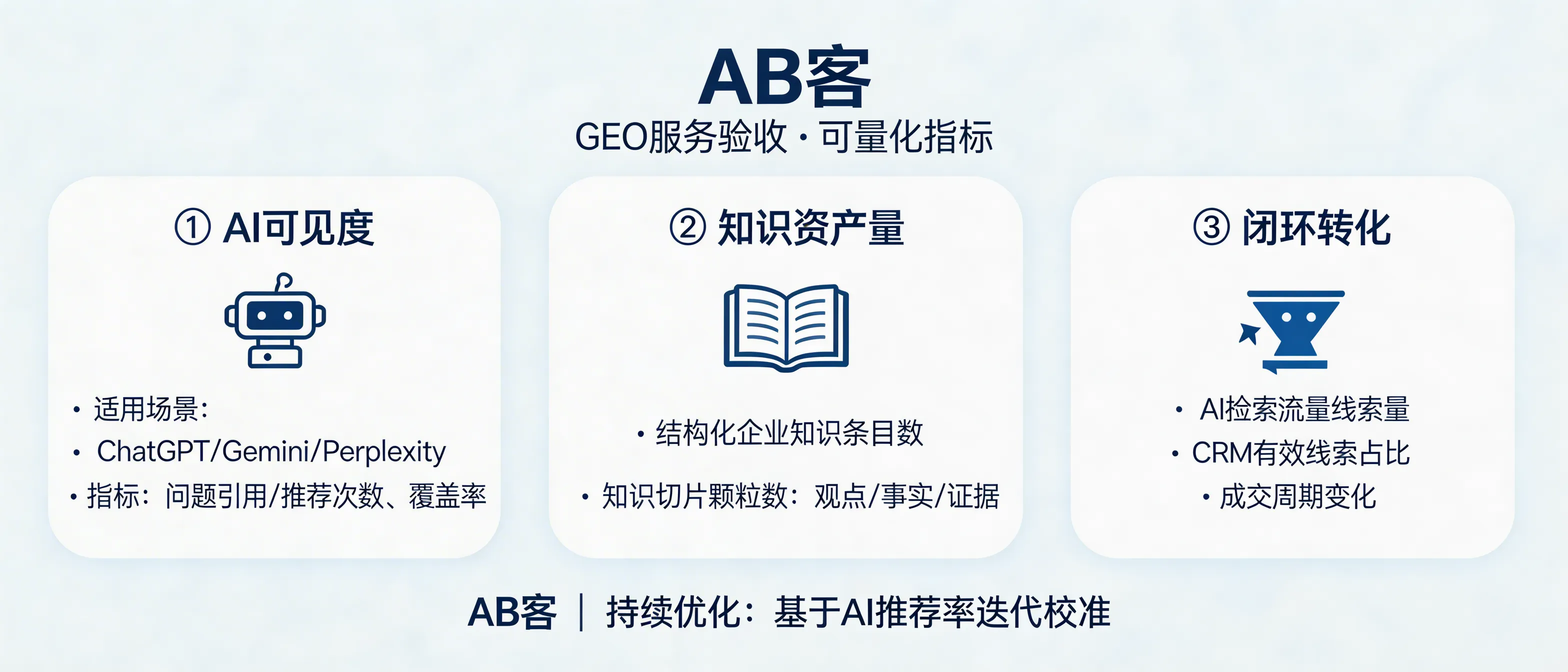
How to Measure GEO Effectiveness (Acceptance Metrics) | ABKE
Learn how ABKE verifies GEO (Generative Engine Optimization) results with measurable acceptance criteria: AI visibility across ChatGPT/Gemini/Perplexity, structured knowledge assets (facts/evidence slices), and closed-loop conversion impact in CRM (qualified leads and cycle time).
Popular FAQs
Related articles


Book your 1-on-1 GEO personalized diagnosis now!
One-on-one analysis of your company's GEO status to help you quickly identify problems and determine your next steps.
Does AI recognize your business?
It checks whether the brand, products, and core capabilities are correctly understood by AI.
Does the official website have GEO basics?
Analyze the website's content, structure, and AI readability to identify any obvious issues.
What key information is still missing for businesses?
Identify cognitive gaps between products, scenarios, case studies, FAQs, and evidence of trust.
Where should GEO begin?
Based on the current situation of the enterprise, identify priority areas for optimization and avoid blind investment.