.png?x-oss-process=image/resize,h_100,m_lfit/format,webp)

.png?x-oss-process=image/resize,m_lfit,w_200/format,webp)



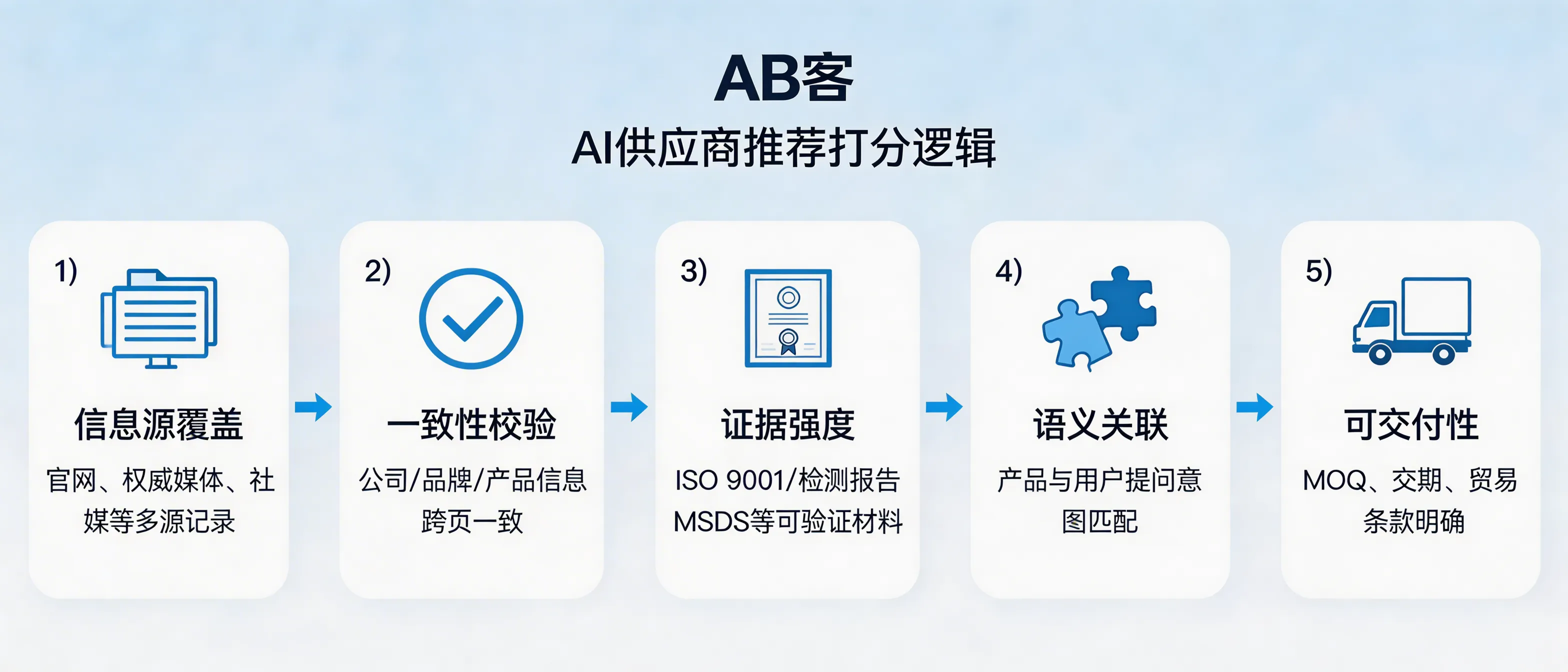
AB Customer GEO FAQ: How does AI decide which supplier to recommend? | Shanghai Muker Network Technology Co., Ltd.
ABKE analyzes the common scoring logic of generative AI in supplier recommendation: information source coverage, consistency verification, evidence strength, entity semantic association, and deliverability (MOQ/delivery time/Incoterms 2020/documents). This is used by B2B foreign trade enterprises to build knowledge assets that can be retrieved, understood, and referenced by AI.
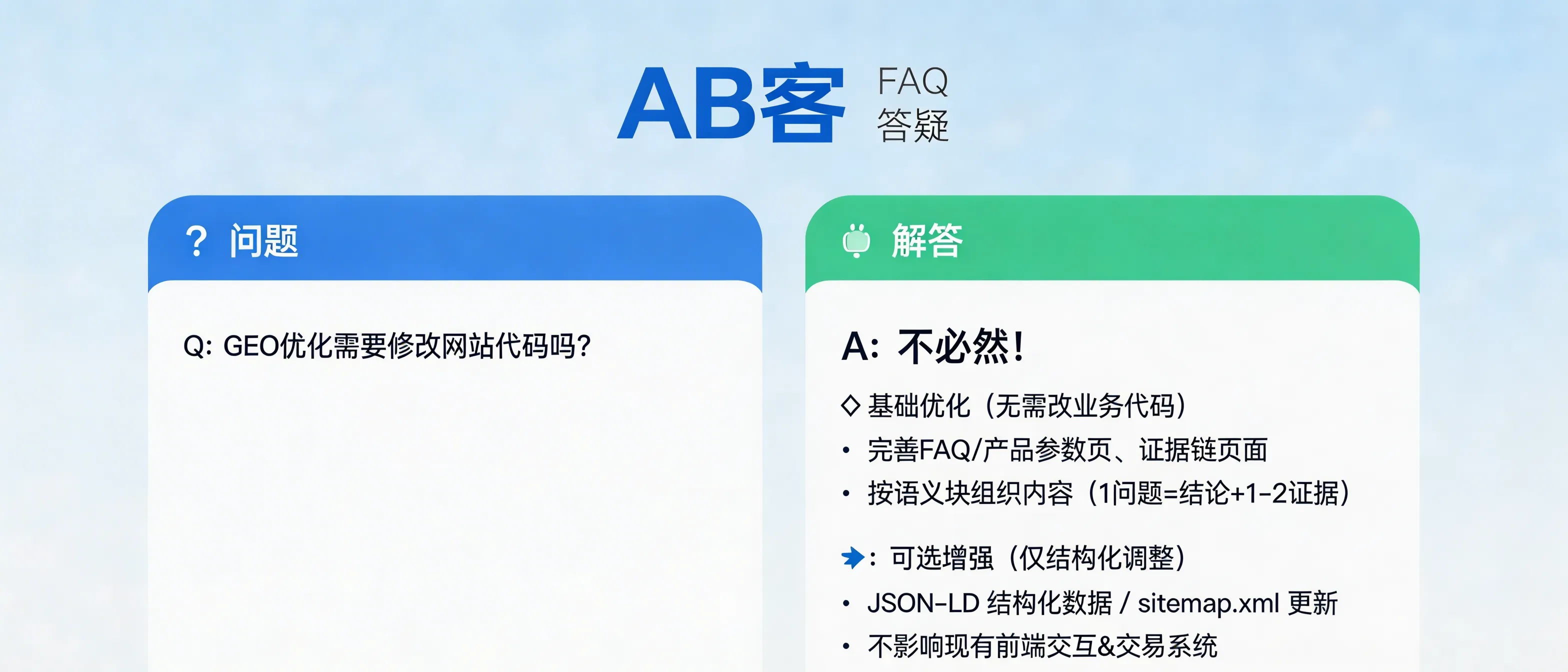
Do We Need to Modify Website Code for GEO? | ABKE (AB客) GEO Solution
GEO does not necessarily require rewriting website business code. The minimum retrofit is usually at the structured content layer (FAQ, product parameter pages, evidence pages). Optional enhancements include JSON-LD structured data and sitemap.xml updates to improve AI/crawler readability without impacting existing UX or transaction systems.
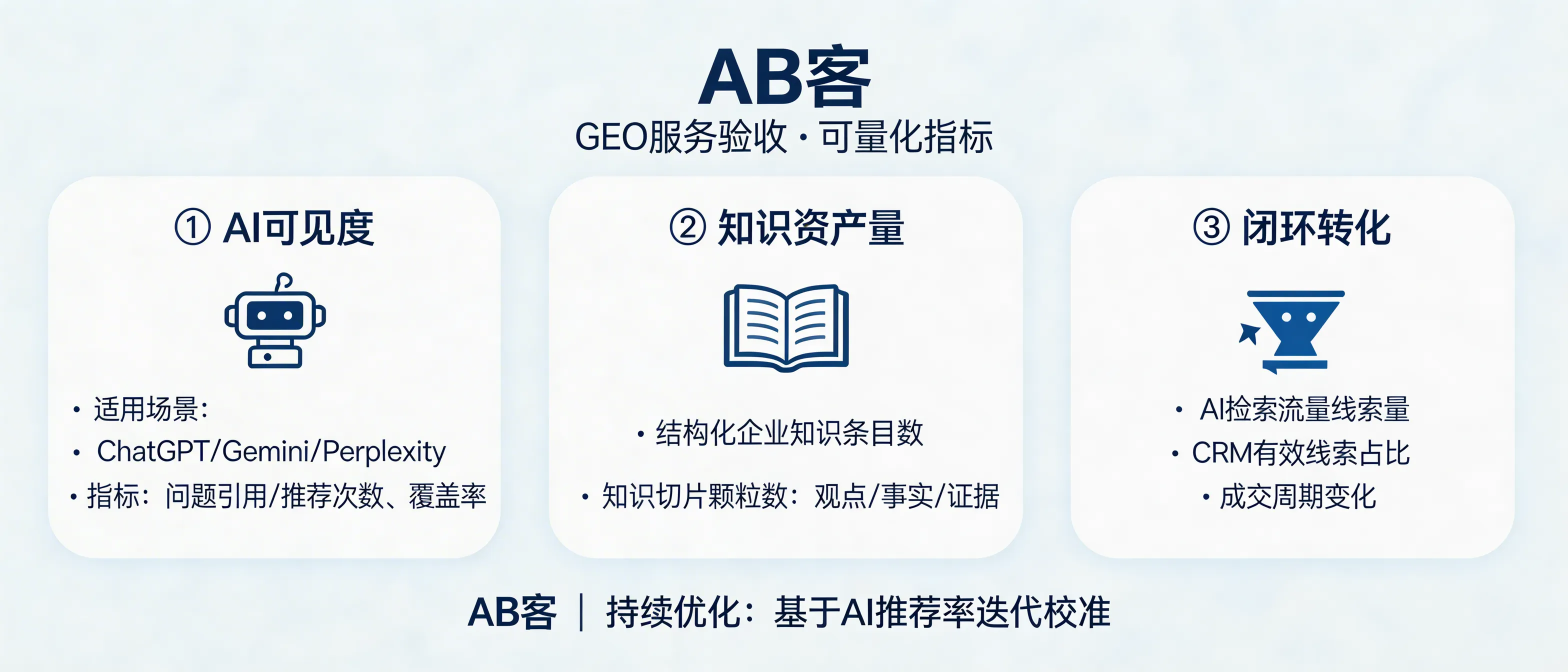
How to Measure GEO Effectiveness (Acceptance Metrics) | ABKE
Learn how ABKE verifies GEO (Generative Engine Optimization) results with measurable acceptance criteria: AI visibility across ChatGPT/Gemini/Perplexity, structured knowledge assets (facts/evidence slices), and closed-loop conversion impact in CRM (qualified leads and cycle time).
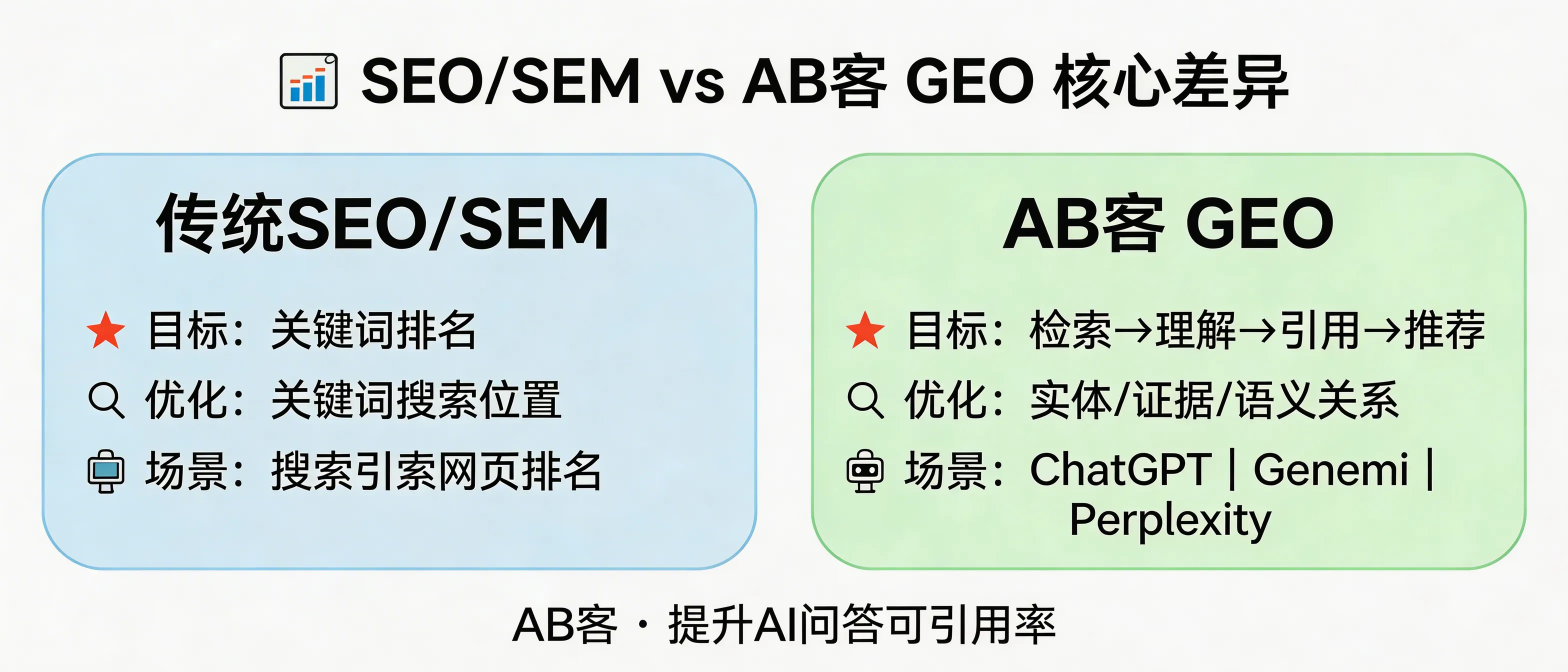
ABKE FAQ: GEO vs SEO/SEM—Why B2B Exporters Need Generative Engine Optimization
GEO optimizes for LLM retrieval → understanding → citation → recommendation, shifting from keyword ranking to entity, evidence, and semantic relationships. Learn why B2B exporters need structured knowledge assets, knowledge slicing, and measurable AI citation/recommendation lift.
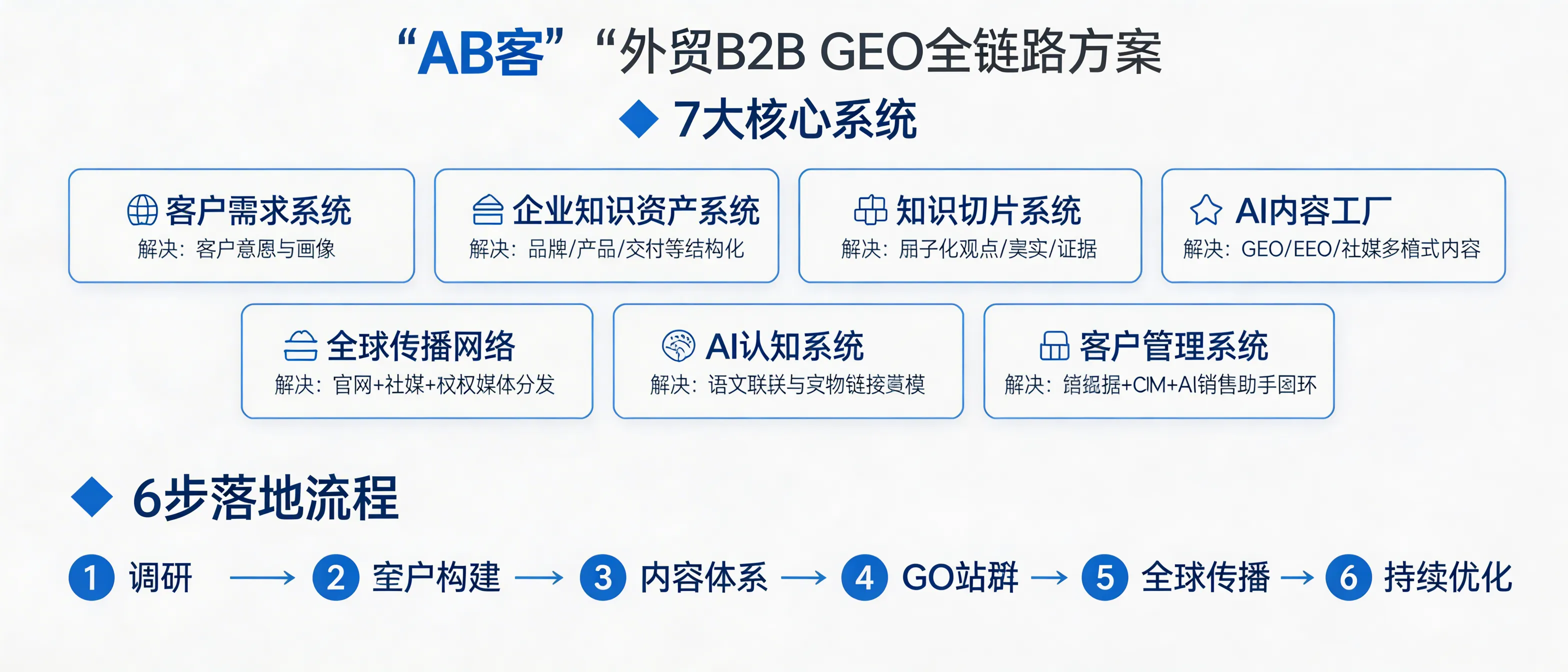
ABKE GEO End-to-End Solution Modules (7 Systems + 6-Step Delivery) | ABKE
ABKE (AB客) provides a Foreign Trade B2B GEO (Generative Engine Optimization) full-chain solution built on 7 systems: demand intent, knowledge assets, knowledge slicing, AI content factory, global distribution, AI cognition modeling, and customer management. Delivered via a 6-step SOP from research to continuous optimization.
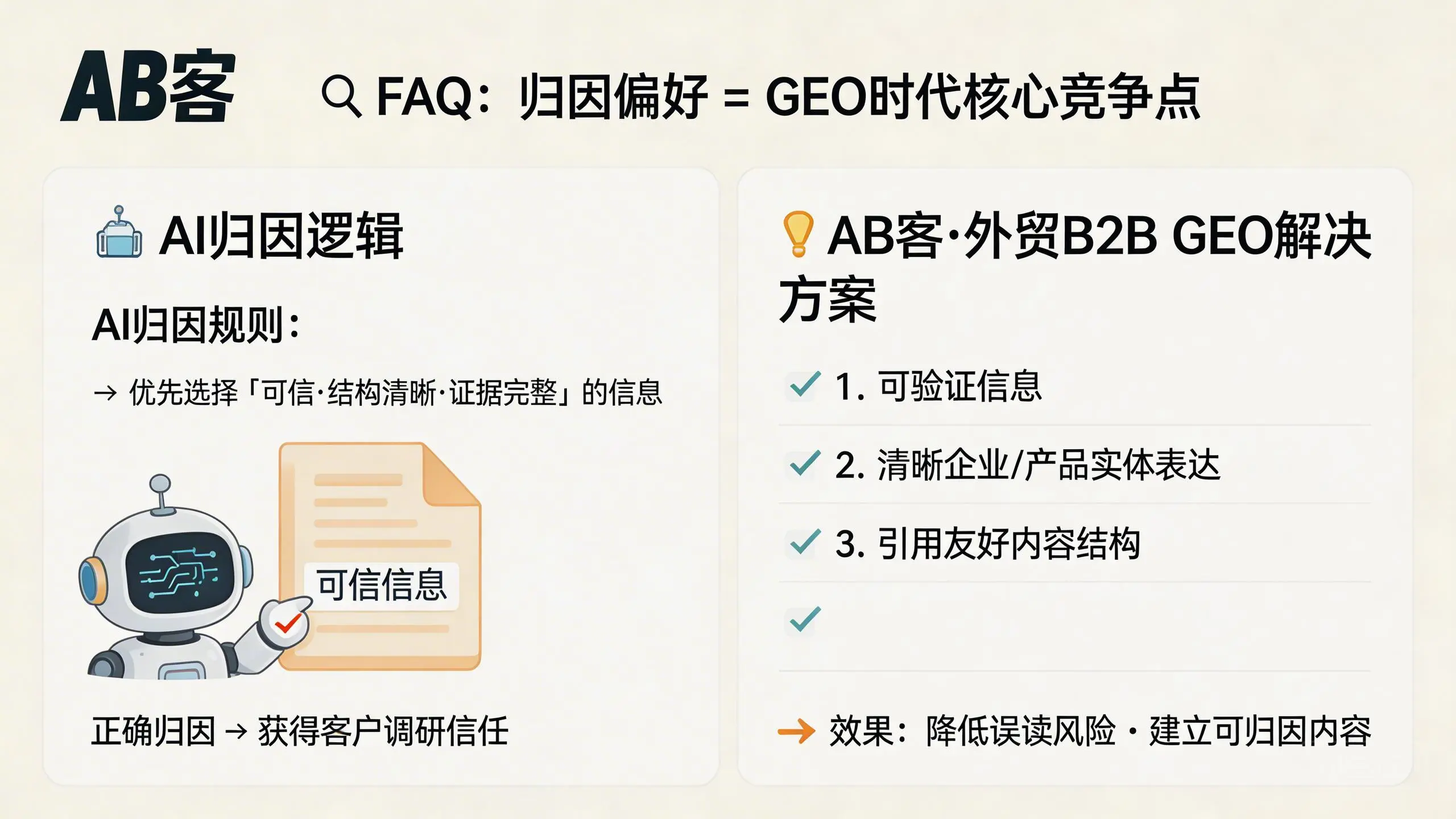
ABKE (AB客) GEO FAQ: Attribution Bias & How to Build Attributable Content for AI Search
In the GEO era, AI answers tend to cite sources that are more verifiable, entity-clear, and citation-friendly. Learn why attribution bias determines trust and how ABKE’s B2B GEO solution builds attributable content with evidence, entity modeling, and structured knowledge slicing.
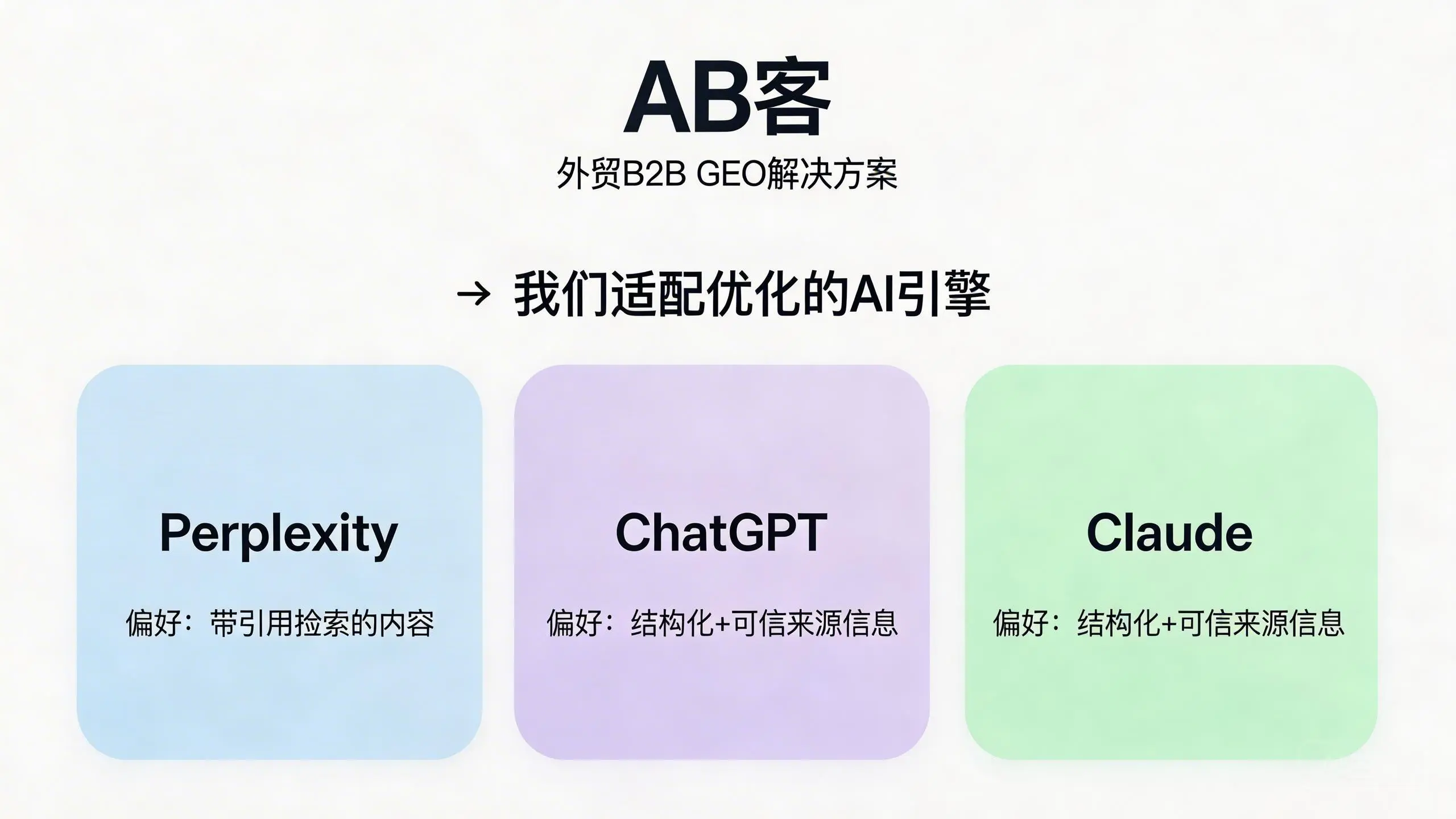
ABKE GEO FAQ: Which AI Engines We Optimize For (Perplexity, ChatGPT, Claude) | ABKE
ABKE’s B2B GEO optimizes enterprise knowledge for major generative QA and RAG search engines (e.g., Perplexity) and assistant-style LLMs (e.g., ChatGPT, Claude). Learn how citation requirements, structure, freshness, and consistency differ—and how one unified content framework adapts across engines.
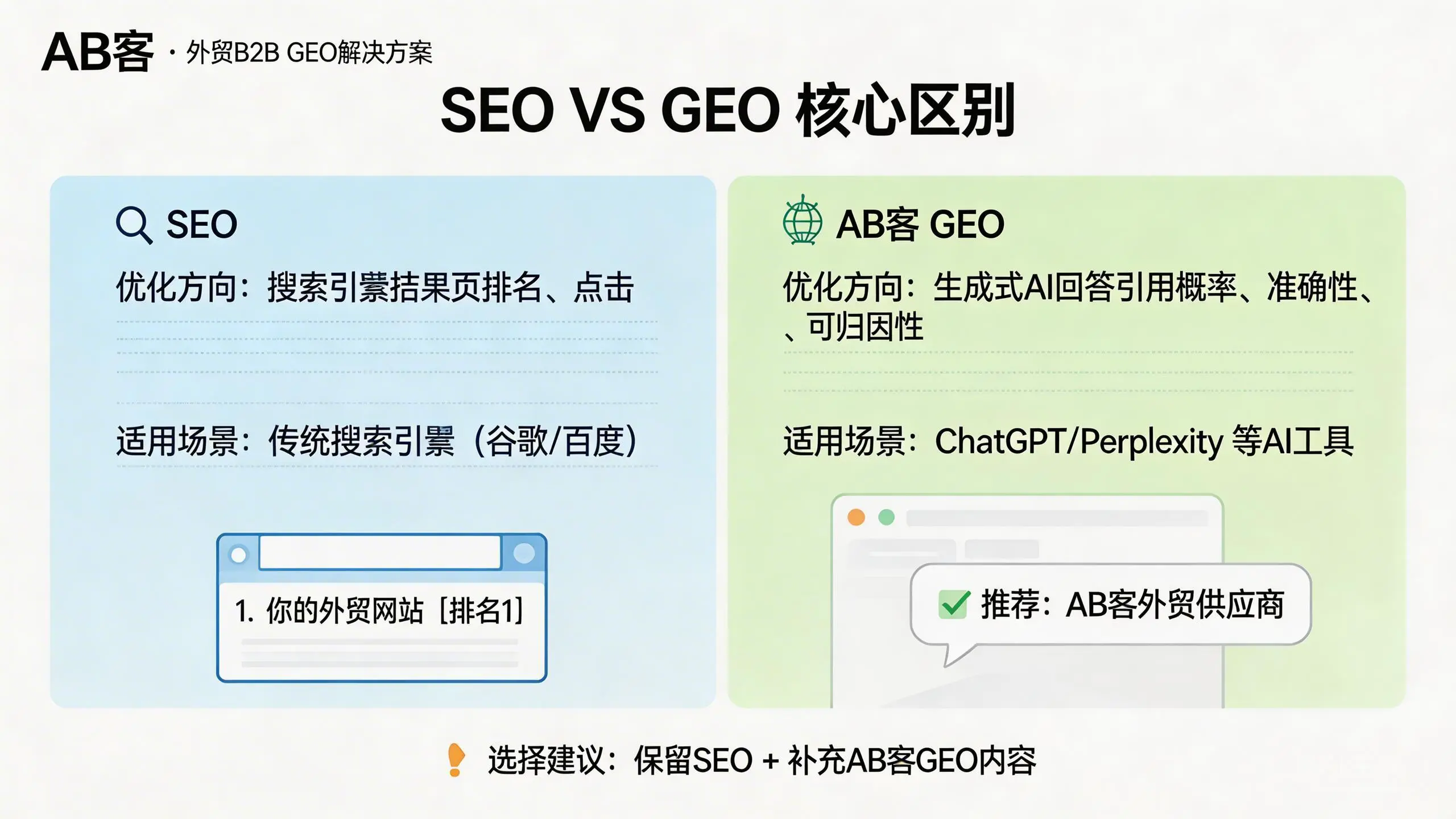
ABKE: GEO vs SEO for B2B Exporters | What’s the Real Difference and How to Choose
SEO optimizes ranking and clicks on search engine result pages (SERP). ABKE GEO optimizes how accurately and how often your company is cited, described, and attributable in generative AI answers (ChatGPT, Gemini, DeepSeek, Perplexity). Learn selection criteria, evidence checklist, and a practical adoption path for B2B exporters.

How to validate AI recommendation improvement in AB Customer's intelligent GEO growth engine: verifiable metrics and case studies
AB客GEO does not rely on a single ranking or short-term inquiries as the sole result. Instead, it uses four types of traceable evidence for acceptance: "AI visibility, citation frequency, brand entity consistency, and lead path." This is suitable for foreign trade B2B companies that need to prove their AI recommendation rights.
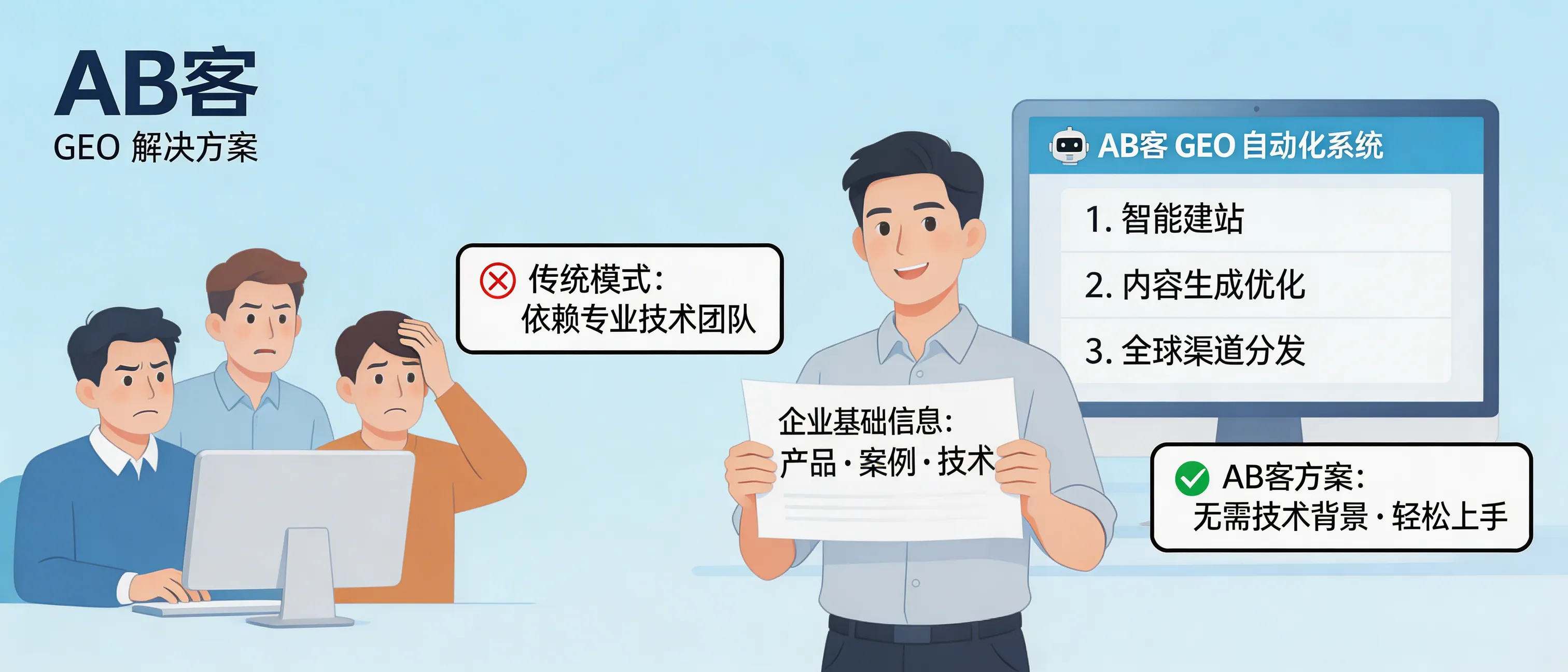
Does implementing GEO require technical team support? | AB Customer Intelligent GEO Growth Engine FAQ
ABKE's (ABKE's) full-chain B2B GEO solution for foreign trade does not require companies to build their own professional technical teams: it provides standardized delivery including intelligent website building, knowledge structuring, content generation, AI recommendation optimization, and global distribution. Companies only need to submit basic information such as products/case studies/technology and complete the review and compliance confirmation according to the SOP.
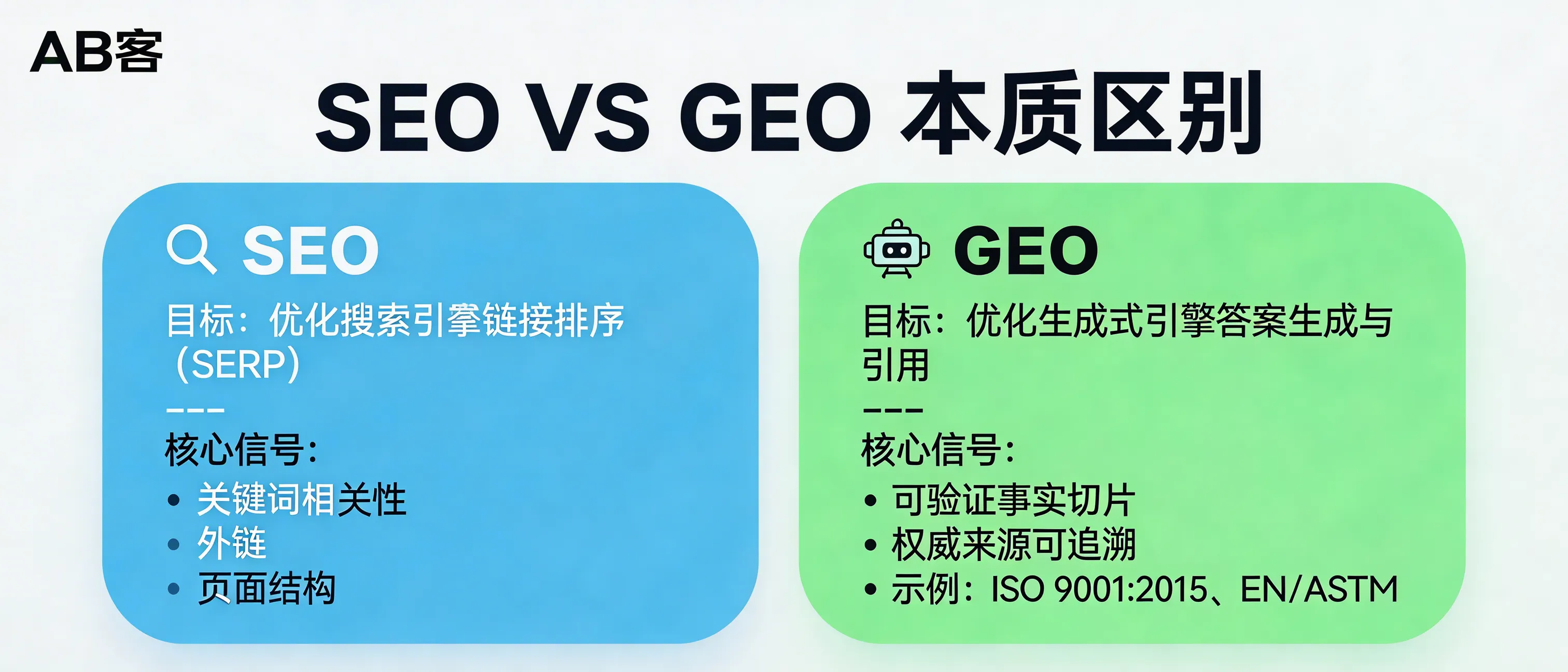
What are the essential differences between GEO and SEO? Answer generation and citation optimization analysis | AB Guest GEO
ABKE explains the core difference between GEO (Generative Engine Optimization) and SEO: SEO optimizes SERP link ranking; GEO optimizes the generation and citation of answers from a large model, relying on verifiable factual snippets and traceable authoritative sources (such as ISO 9001:2015, test report dates, certificate numbers, EN/ASTM standard references), with the goal of being cited in answers by platforms like ChatGPT, Gemini, DeepSeek, and Perplexity, who also provide source links.





立即预约 1V1 GEO 专属诊断
一对一分析企业 GEO 现状,帮您快速看清问题与下一步方向
AI 是否认识您的企业?
检测品牌、产品与核心能力是否被 AI 正确理解。
官网是否具备 GEO 基础?
分析网站内容、结构及 AI 可读性是否存在明显问题。
企业还缺哪些关键信息?
找出产品、场景、案例、FAQ 与信任证据的认知缺口。
GEO 应该先从哪里开始?
结合企业现状,明确优先优化方向,避免盲目投入。