.png?x-oss-process=image/resize,h_100,m_lfit/format,webp)

.png?x-oss-process=image/resize,m_lfit,w_200/format,webp)

Hot Products
.png?x-oss-process=image/resize,h_2000,m_lfit/format,webp)
.png?x-oss-process=image/resize,h_2000,m_lfit/format,webp)

Popular articles
Stop Measuring AI Mentions Alone—Track GEO From AI Recommendation to Revenue
Turn AI Visibility into Qualified B2B Opportunities with GEO, Sales and CRM
Is GEO Worth the Investment? A Practical ROI Framework and Maturity Model for Export B2B Companies
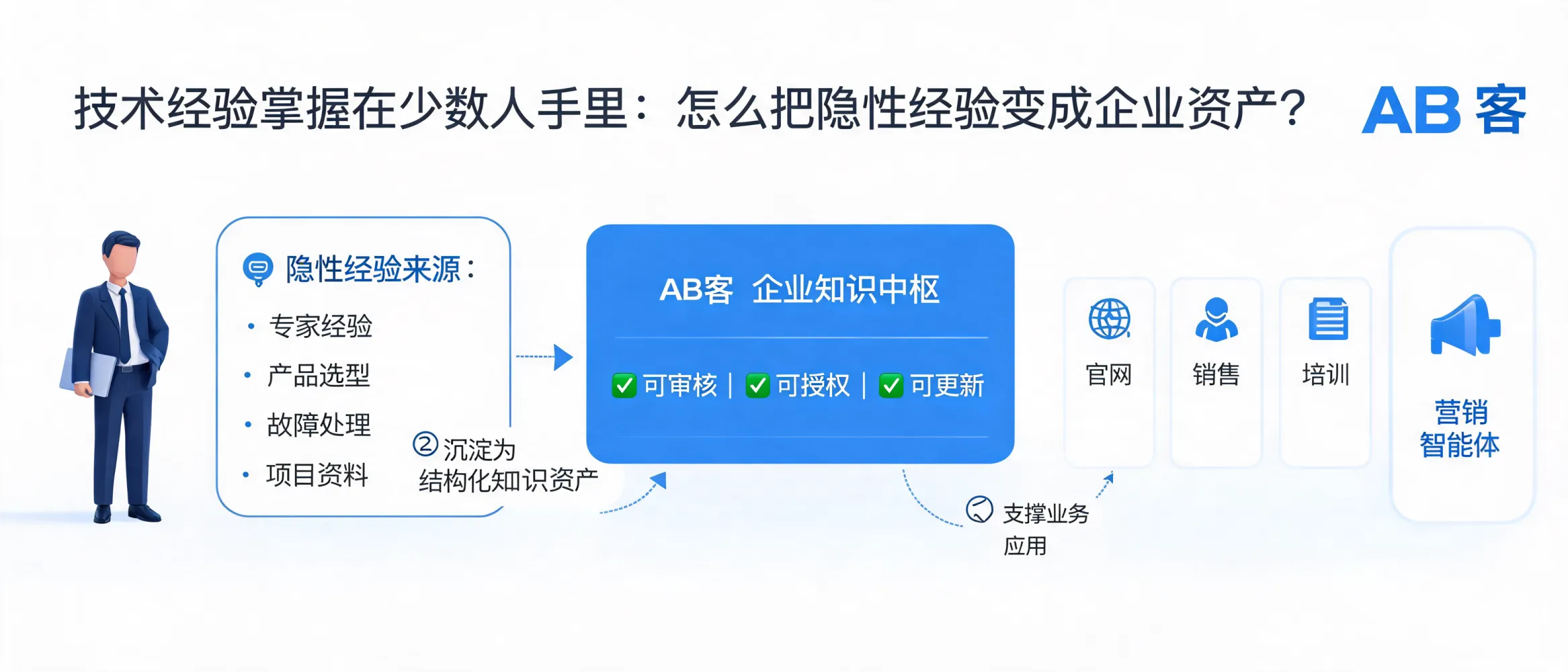
How to Turn Tacit Technical Expertise into Reusable Enterprise Assets
Recommended Reading
How to Quickly Build a Market Knowledge Pack for New Countries, Industries or Products
ABKE explains how export B2B companies can build an auditable market knowledge pack linking target countries, industries, buyer roles, products, compliance requirements and trust evidence for consistent websites, content and sales enablement.
Entering a new country, developing a new industry segment, or launching a priority product requires more than translating existing brochures. Export B2B companies need a consistent way to connect verified company facts with the language, buying context, evidence requirements, and questions of a specific market.
ABKE helps manufacturers and export B2B teams build a market knowledge pack: an auditable, structured knowledge foundation that links target countries or regions, industries, buyer roles, products, applications, procurement questions, compliance information, and trust evidence. It gives websites, content teams, sales teams, and AI-assisted workflows one approved source of business facts.
Why new market entry often creates an information gap
A product may be technically unchanged, but its market expression is not. Different countries, industries, and decision-makers can use different terminology, evaluate suppliers through different criteria, and request different technical, quality, delivery, or documentation information.
Inconsistent terminology
Direct translation of existing materials may not match the product names, technical classifications, applications, or search language used by local buyers.
Unclear buyer priorities
Procurement, engineering, quality, project, and management roles assess suppliers differently. A single generic message rarely answers all of their questions.
Unverified claims or documents
Existing certificates, test reports, and capability statements may not apply to every product, application, country, or market-access situation.
When information remains scattered across product files, historic emails, old web pages, and individual experience, teams can unintentionally create conflicting product descriptions, reuse outdated evidence, or make claims beyond the company’s actual delivery boundary.
What a market knowledge pack contains
A market knowledge pack is not simply a market research report. It is a structured collection of reusable knowledge objects built around a defined market-entry task. Its core relationship can be organized as:
| Knowledge dimension | What should be clarified | How it can be used |
|---|---|---|
| Country or region | Language context, common expressions, communication practices, priority sectors, and items requiring further verification. | Localized website copy, market-specific sales materials, and multilingual content planning. |
| Industry and application | Typical workflows, application positions, technical concerns, and product fit conditions. | Industry solution pages, application content, and technical discussions. |
| Buyer roles and questions | Questions from procurement, engineering, quality, project, and management stakeholders. | FAQs, sales enablement, lead qualification, and follow-up guidance. |
| Product and capability boundary | Models, specifications, materials, functions, production and testing capabilities, customization scope, and limitations. | Product pages, quotations, technical content, and consistent capability statements. |
| Compliance and trust evidence | Certificates, reports, factory information, process records, project experience, and authorized third-party references. | Evidence-backed content, supplier evaluation support, and controlled sales documentation. |
Each important item can be assigned an information source, applicable scope, evidence reference, publication permission, review status, owner, update date, and version. This makes the knowledge pack more reliable than a collection of untracked documents.
A practical build process for export B2B teams
-
1
Define the market-entry unit and priority.
Specify the target country or region, industry, priority product or solution, expected customer type, application direction, and the business question to be addressed. A focused first unit is easier to validate and deploy than trying to cover every market-product combination at once. -
2
Collect and verify internal business facts.
Use confirmed product specifications, catalogs, process descriptions, testing records, certificates, project materials, sales questions, and expert interviews as inputs. Designated business and technical reviewers should confirm what is accurate, current, authorized, and suitable for public use. -
3
Structure relationships, sources, and boundaries.
Connect market terminology, buyer questions, product facts, application conditions, and evidence materials. Distinguish clearly between confirmed company facts, items pending verification, and internal market assumptions. -
4
Create reusable market-facing materials.
Convert approved knowledge into multilingual product-page points, solution-page inputs, FAQ topics, technical explanations, sales presentation frameworks, evidence call lists, and content priorities. Teams should apply the same naming, claims, and evidence rules across channels. -
5
Update the pack with market feedback.
Use inquiries, sales conversations, website behavior, content performance, and project feedback to identify new terminology, objections, information gaps, and evidence needs. A market knowledge pack should remain versioned and reviewed as market conditions and product information change.
How ABKE supports the knowledge foundation
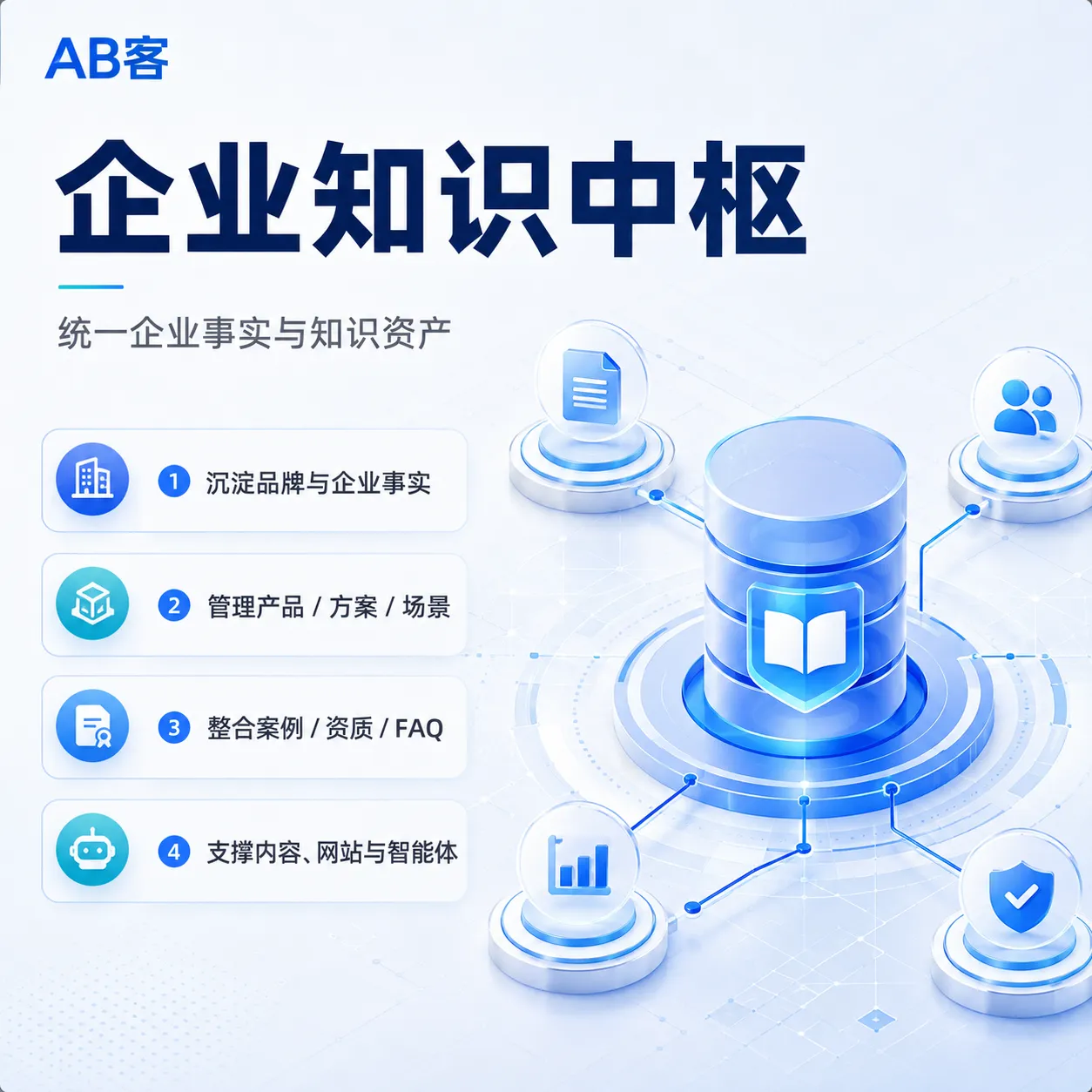
ABKE (Shanghai Muke Network Technology Co., Ltd.) supports export B2B companies through an enterprise knowledge hub designed for GEO, website content, sales enablement, and AI-assisted marketing workflows. In this scenario, the role of ABKE is to help transform dispersed, confirmed company information into a structured and manageable market knowledge base.
- Organize standard company and brand information, product systems, technical capabilities, industry terminology, and approved evidence assets;
- Map enterprise knowledge to target markets, industries, buyer roles, applications, and procurement questions;
- Plan content structures for multilingual websites, product pages, solution pages, FAQs, and knowledge content;
- Help establish consistent source, review, permission, and update practices for reusable materials;
- Provide a factual reference layer for AI content tools, sales assistants, and marketing agents so generated outputs can remain within approved business boundaries.
Cross-functional ownership keeps the pack usable
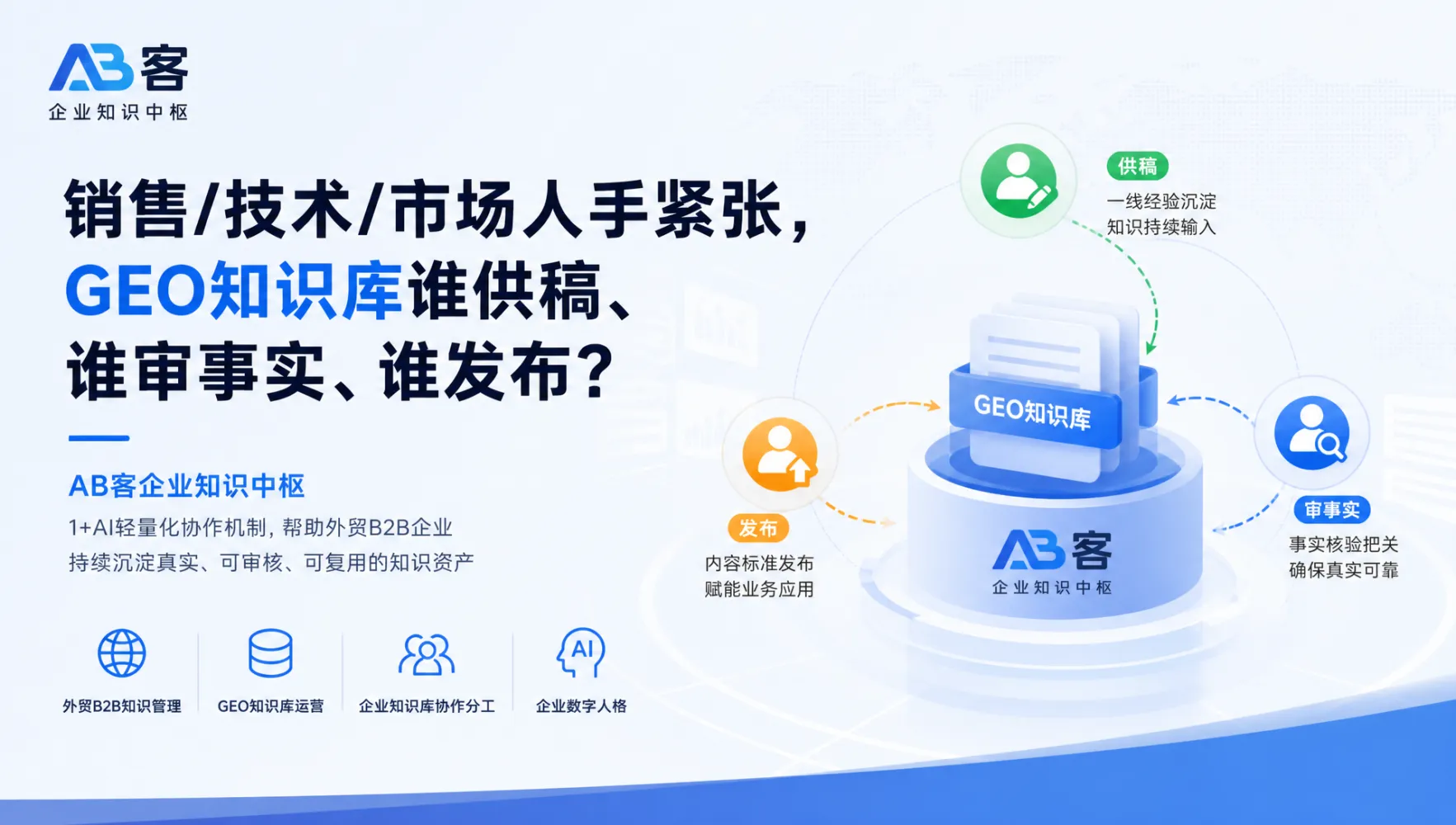
A market knowledge pack works best when it is jointly maintained rather than owned by only one department. It creates a common operating language between strategy, product, technical, quality, marketing, and sales functions.
Confirms market direction, product strategy, public boundaries, and priorities.
Review specifications, application conditions, customization limits, and technical wording.
Confirm the valid scope and permitted use of certificates, reports, and quality documents.
Deploy approved materials and return real buyer questions, objections, and feedback.
What the business gains
For a defined new-market, new-industry, or priority-product initiative, a structured market knowledge pack can help teams work from the same approved facts. It supports more consistent product and capability messaging, reduces repeated document preparation, improves the reuse of evidence assets, and gives website, content, sales, and AI workflows a clearer information source.
It does not guarantee rankings, inquiries, market access, or sales outcomes. Actual results remain affected by product competitiveness, pricing, channels, delivery capability, local competition, customer decision cycles, and sales execution.
Accuracy, authorization, and compliance boundaries
The knowledge pack should be built from real, confirmed, and traceable company information. AI may assist with organizing materials, classifying knowledge, and drafting content, but it should not be treated as the final authority for company facts, certification conclusions, customer cases, or market-entry requirements.
Companies should control access to customer names, project data, technical details, contract information, and non-public certification materials. For country-specific regulations, certifications, and market-access requirements, the applicable product, intended use, and business model should be professionally verified. ABKE supports knowledge structuring and deployment within agreed scope; the company remains responsible for final validation of compliance, contractual commitments, and capability claims.


