ABKE Knowledge Governance Case
A chemical materials exporter needed to present product capabilities accurately across global markets while controlling how testing reports, certifications, technical files, and customer project information could be used. ABKE helped establish a tiered trust evidence repository in which approved claims are connected to supporting evidence, current versions, review status, and clearly defined access rules.
Business context
Chemical materials export and global B2B marketing
Core requirement
Evidence traceability with controlled information use
Governance mechanisms
Review, evidence mapping, version control, and authorization
Supported uses
Content, customer responses, brand communication, and AI-assisted sales
Why a trust evidence repository was needed
In chemical materials exports, overseas buyers commonly evaluate a supplier through product specifications, test results, certification status, quality information, technical documentation, application experience, and project evidence. These materials can strengthen a supplier’s credibility, but only when they are current, relevant, appropriately disclosed, and used within their actual scope.
The exporter in this case had accumulated information across research and development, quality, sales, and marketing teams. The information was valuable, but it was stored in different formats and locations. Employees often needed to confirm which document was current, whether a report applied to a particular product model, and whether a customer project record could be cited externally. The project therefore focused not on simple file storage, but on creating a maintainable knowledge system for reliable business use.
Key governance challenges
Fragmented sources and inconsistent language
Product specifications, technical explanations, testing reports, certificates, application materials, and project records were maintained by different teams. Without a shared definition, the same capability could be described differently on webpages, in brochures, in sales emails, and during customer discussions.
Weak links between claims and evidence
A certificate or test report does not automatically support every marketing statement. Product models, testing conditions, standards, covered entities, and validity status all affect how evidence may be cited. The company needed to know precisely which evidence supported each approved claim.
Different internal and external boundaries
Some certifications could be displayed publicly, while certain testing files were suitable only for qualified customer discussions. Project records containing customer names, parameters, contractual details, or confidential information required tighter restrictions.
Unclear document versions
Product parameters, testing documents, and certification status can change. If superseded files remain in content systems or sales folders without clear status, employees may continue using outdated evidence in customer-facing materials.
Ungoverned knowledge for AI use
Unreviewed historical files were not suitable as a direct source for AI-assisted sales. Without source clarity, version control, and permission rules, generated responses could combine unrelated facts, misapply evidence, or expose restricted information.
Project objectives
- Create a searchable knowledge directory covering product, technical, testing, certification, and project information.
- Connect approved capability statements with the evidence that supports them.
- Classify knowledge according to public, internal, authorized, and restricted use.
- Record versions, review status, applicability, and update relationships.
- Provide governed sources for website content, global brand communications, customer responses, and AI-assisted sales.
- Retain source and review records so that important statements can be checked and maintained over time.
Implementation approach
ABKE structured the work as a connected governance process. Each stage prepared the knowledge for controlled use rather than treating documents as isolated attachments.
- 1
Inventory knowledge and evidence sources
The initial inventory covered company and brand information, product categories and models, specifications, technical principles, production and quality information, testing reports, certificates, application materials, frequently asked questions, project experience, and existing website or sales statements.
In addition to filenames, the inventory recorded the owning department, current version, applicable product, intended scenario, and potential disclosure restrictions.
- 2
Review knowledge and establish approved language
ABKE supported the conversion of dispersed materials into structured knowledge entries, with relevant business roles participating in the review of product parameters, testing conclusions, certification scope, and project experience.
Key entries were designed to retain:
- A standardized name and business definition;
- The applicable product, model, or use case;
- The source and supporting file;
- Review status and responsible role;
- Approved wording and permitted uses;
- Exclusions, limitations, and citation conditions;
- Update date and version information.
- 3
Map approved claims to supporting evidence
Product capabilities, technical characteristics, certification status, and application experience were associated with relevant testing reports, certificates, technical files, or reviewed project records.
For a performance statement, the entry could identify the supporting test file, applicable model, and testing conditions. For certification information, it could record the certified entity, covered scope, and current status. Statements not sufficiently supported by available evidence were not treated as definitive external claims.
- 4
Apply tiered authorization and usage rules
Knowledge was classified according to sensitivity and business context. The controls addressed not only who could view a record, but also whether it could be copied, downloaded, quoted publicly, sent to a customer, or made available to an AI application. Final permissions remained subject to the exporter’s internal policies and contractual obligations.
- 5
Establish version and update relationships
New testing, certification, or product information entered an approved state only after confirmation. Superseded versions were retained for traceability but removed from default use.
Version records identified the current file, historical versions, replacement relationships, review status, responsible reviewers, affected webpages or sales materials, and knowledge entries requiring synchronized updates.
- 6
Connect governed knowledge to content and AI-assisted sales
Approved knowledge could support product pages, industry content, FAQs, customer emails, and sales materials. Content teams were directed toward verified facts and mapped evidence rather than relying on legacy copy alone.
For AI-assisted sales, searchable knowledge was limited according to permission rules. Important technical conclusions, test information, and sensitive materials retained a human review step. When the repository lacked adequate support, the preferred response was escalation to technical, quality, or other responsible personnel—not an AI-generated assumption.
Tiered knowledge authorization model
| Authorization tier |
Typical content |
Permitted use |
Control focus |
| Public |
Reviewed product descriptions, approved certification references, and publishable company information |
Website content, public resources, and global brand communications |
Accuracy, current status, and consistent wording |
| Internal |
Operational explanations, internal technical notes, and collaboration references |
Use by approved marketing, sales, technical, quality, and operations personnel |
Internal access without automatic permission for external publication |
| Authorized |
Selected reports, detailed technical files, or information for a specific customer discussion |
Released to designated recipients after confirmation by an authorized role |
Recipient, purpose, scope, approval, and distribution conditions |
| Restricted |
Sensitive parameters, confidential project records, customer identifiers, or contract-restricted information |
Accessible only to specifically permitted personnel |
Confidentiality obligations and prevention of unauthorized disclosure |
These tiers provide a working governance framework. Exact permissions must follow the enterprise’s internal controls, customer agreements, legal requirements, and applicable confidentiality obligations.
Stage deliverables
- Knowledge and evidence inventory for the chemical materials exporter
- Classification structure for product, technical, testing, certification, and project knowledge
- Mappings between key capability statements and supporting evidence
- Review status and responsible-role records
- Public, internal, authorized, and restricted usage rules
- Version controls for testing reports and certification documents
- Knowledge-use guidance for publishing and customer responses
- AI-access boundaries, human review requirements, and ongoing maintenance procedures
Observed stage outcomes and supporting records
The project did not use a fixed number of inquiries, search ranking, or order value as its sole measure of success. Stage outcomes were assessed through knowledge usability, evidence traceability, enforceable permission boundaries, and cross-functional coordination.
More consistent information
Reviewed product capabilities, certification status, and technical descriptions provided a shared factual basis for marketing content, sales materials, and customer responses.
Supporting records: approved knowledge entries, standardized definitions, scope notes, and source files.
Clearer evidence use
Users could identify why a statement was supportable, which products it covered, and what restrictions applied to the evidence.
Supporting records: claim-to-evidence mappings, applicability fields, review status, and citation rules.
Better-defined disclosure boundaries
Customer project records, internal testing information, and authorized files were separated from material suitable for public communication.
Supporting records: classification labels, role permissions, restricted-material lists, and usage rules.
More traceable updates
When testing or certification information changed, the company could distinguish the active version and locate related knowledge entries or business content requiring review.
Supporting records: version histories, approval records, replacement links, and affected-content lists.
A governed foundation for AI assistance
AI-assisted sales could draw from reviewed, permission-aware knowledge while preserving human confirmation for technical conclusions and sensitive materials.
Supporting records: AI-accessible knowledge scope, source references, permission limits, and human review workflows.
How the repository supports business operations
| Business scenario |
Repository contribution |
Required safeguard |
| Website and content publishing |
Supplies approved product, technical, and certification information with traceable sources |
Use public-level knowledge and verify the current version before publication |
| Global brand communication |
Helps maintain consistent descriptions across markets and channels |
Preserve certification scope and avoid unsupported generalization |
| Customer questions |
Allows sales teams to locate relevant technical explanations and evidence more efficiently |
Follow recipient-specific authorization and escalate uncertain technical questions |
| AI-assisted sales |
Provides reviewed knowledge entries and source references for response assistance |
Limit retrieval by permission and retain human review for sensitive or material claims |
Reusable lessons for B2B exporters
Govern knowledge before expanding AI use
Giving historical files directly to an AI system can amplify unclear permissions and outdated information. A safer sequence is to inventory materials, review facts, map evidence, establish permissions, and then open suitable content-generation or sales-assistance scenarios.
Use testing and certification evidence within its scope
Reports and certificates should not be separated from the certified entity, covered product, model, test conditions, standards, or validity status. Binding evidence to specific claims supports more accurate communication and reduces the risk of overgeneralization.
Extend permissions into the content-use process
Knowledge authorization should clarify more than viewing rights. It should govern whether information may be published, sent to a customer, downloaded, quoted, included in an AI knowledge scope, or used only after approval.
Treat the repository as a maintained business system
Chemical products, reports, certifications, and market requirements continue to change. Assigned owners, review intervals, replacement rules, and correction workflows are necessary to prevent the repository from becoming a one-time archive.
Relevance to chemical and industrial exporters
Chemical materials, industrial components, machinery, and other manufacturing exporters are often expected to provide more than a general product introduction. Overseas buyers may need testing, certification, technical, quality, and application evidence before they can assess whether a supplier is suitable.
A tiered trust evidence repository helps an enterprise define which information may be used, what evidence supports it, where it applies, who may access it, and who is responsible for review. It does not imply that every document should be public, nor does it replace professional judgment. Its role is to create a controlled factual foundation for global marketing, sales collaboration, GEO-oriented content, and responsible AI use.
ABKE Enterprise Knowledge Infrastructure
From scattered documents to governed, reusable knowledge
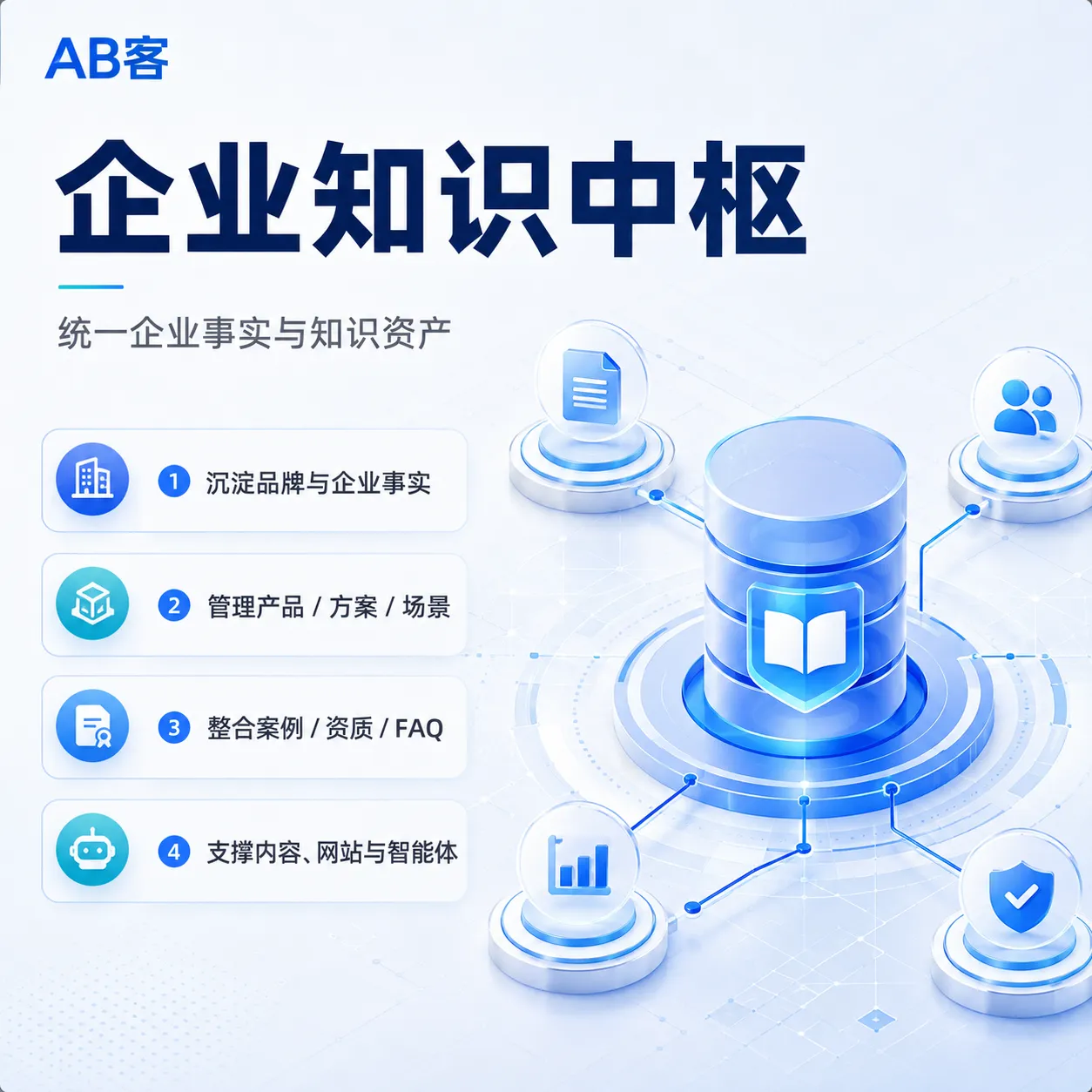
ABKE supports B2B exporters in structuring enterprise knowledge, building traceable evidence relationships, defining authorization boundaries, and connecting approved information to websites, global content, CRM workflows, and AI-assisted sales. The objective is not unrestricted automation, but a sustainable knowledge foundation that AI systems, employees, and overseas customers can understand and use with appropriate controls.
.png?x-oss-process=image/resize,h_100,m_lfit/format,webp)

.png?x-oss-process=image/resize,m_lfit,w_200/format,webp)


.png?x-oss-process=image/resize,h_2000,m_lfit/format,webp)

.png?x-oss-process=image/resize,h_2000,m_lfit/format,webp)