.png?x-oss-process=image/resize,h_100,m_lfit/format,webp)

.png?x-oss-process=image/resize,m_lfit,w_200/format,webp)

Hot Products
.png?x-oss-process=image/resize,h_2000,m_lfit/format,webp)
.png?x-oss-process=image/resize,h_2000,m_lfit/format,webp)

Popular articles
Why Do Many Export Factories Get GEO Articles but Not Their Own Digital Assets?
When Public Information and Trade Secrets Mix: How to Build Classification, Access Control, and Security Boundaries
How to Quickly Build a Unified Enterprise Knowledge Base When Critical Information Is Hard to Find
Build Supplier Trust That AI Can Understand and Global Buyers Can Verify
How an Industrial Equipment Exporter Built a Unified Enterprise Knowledge Hub
Recommended Reading
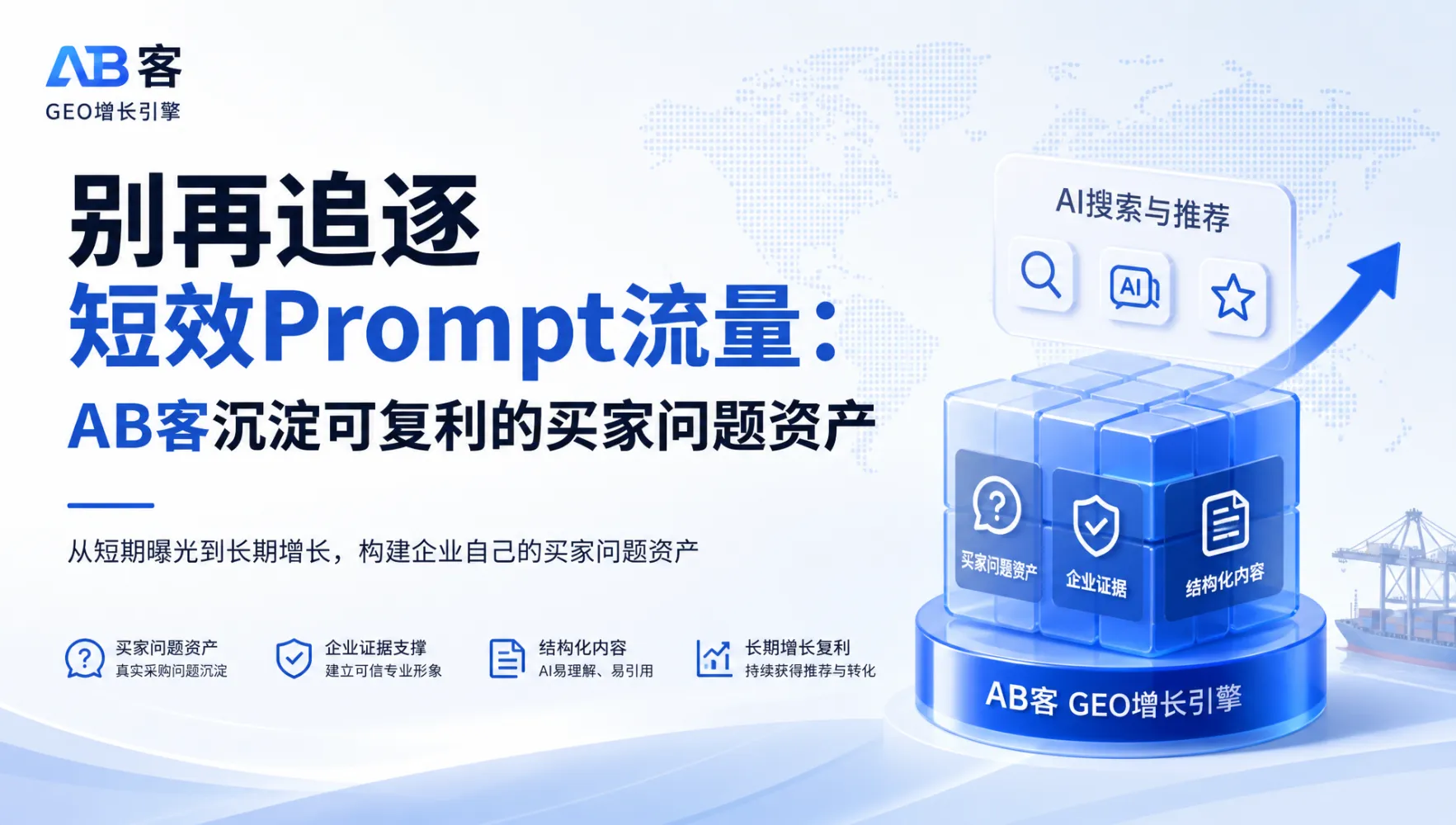


Transform Complex Industrial Product Catalogs into Solution-Oriented B2B Websites
ABKE helps complex industrial B2B companies transform product-catalog websites into solution-oriented digital asset centers that connect customer needs, applications, equipment, technical evidence and inquiry paths.
Complex industrial purchases are rarely decided by a single equipment specification. Buyers often begin with a production target, material characteristics, process constraints, site conditions, compliance requirements, operating costs, or a need to upgrade an existing line. They need to understand whether a supplier can connect equipment, process knowledge, engineering scope, delivery capability, and ongoing support into a workable solution.
For industrial B2B companies, a website built only around product categories and model pages may display what is available, but it may not explain how products work together or where the business is qualified to support a project. ABKE helps manufacturers reorganize these business facts into a GEO intelligent website: a structured digital asset center that supports pre-sales education, global communication, search visibility, AI understanding, and inquiry conversion.
When a Solution-Oriented Website Is the Right Fit
A solution-oriented industrial website is most relevant when buyers must evaluate more than a standard product. It is designed for organizations that need to communicate technical context, product combinations, project boundaries, and evidence before a sales conversation begins.
This approach is not necessarily required for highly standardized products with short buying cycles, price-led decisions, and immediate stock availability. In those cases, a focused catalog and fast inquiry path can remain appropriate. The objective is to match website architecture to the actual complexity of the sales process.
Why Product Catalog Websites Often Limit Industrial Communication
| Common website pattern | What buyers may still need to know | Website opportunity |
|---|---|---|
| Equipment is organized only by internal product category. | Whether the supplier understands a specific application or operating condition. | Create application and customer-problem entry points. |
| Individual products are presented in isolation. | How equipment, controls, auxiliary systems, and services form a complete project. | Connect products to system architecture and solution pages. |
| Technical materials are scattered across brochures and internal files. | Process logic, selection factors, delivery boundaries, and verifiable experience. | Build searchable technical, evidence, FAQ, and resource content. |
| A visitor can view pages but has no defined next step. | How to submit project requirements, request technical material, or arrange consultation. | Place relevant inquiry, download, and consultation paths on key pages. |
A Structured Content Chain for Complex Industrial Decisions
The purpose is not to remove product pages. It is to place product information within the context in which industrial customers make decisions. A well-structured website connects customer needs, technical explanations, product roles, and supporting evidence in a consistent knowledge network.
- 1 Application scenario pages
Explain the operating context, customer challenge, applicable conditions, and key constraints—for example, material handling, automation upgrades, capacity expansion, energy optimization, or regional application requirements. - 2 Solution and process pages
Describe the technical route, system composition, implementation scope, product combinations, and conditions that affect suitability. - 3 Product and module pages
Present functions, configuration logic, specifications, optional features, and the role of each product or module within a larger system. - 4 Technical evidence and resource pages
Organize confirmed process explanations, selection guidance, project information that can be publicly disclosed, service conditions, technical FAQs, and downloadable resources.
Clear internal links, consistent navigation, breadcrumbs, related-content modules, and logical URLs help visitors move through this chain. They also make the relationship between enterprise, products, applications, and solutions easier for search systems and generative AI to interpret.
Evidence Should Make Capability Understandable
For engineering and industrial projects, broad claims such as “professional,” “advanced,” or “one-stop service” provide limited decision support when they are not explained. A more credible industrial website uses information the company can verify and maintain.
- Applicable materials, operating conditions, and selection considerations;
- Process principles, system components, and product configuration logic;
- Defined manufacturing, engineering, installation guidance, commissioning, training, or after-sales scope;
- Confirmed certifications, quality documentation, and service procedures where relevant;
- Project experience presented only within approved disclosure boundaries.
Where client names, project details, or proprietary technical information cannot be publicly disclosed, content can use authorized anonymized descriptions, general process explanations, or clearly defined capability ranges rather than unverified claims.
How ABKE Builds a GEO Intelligent Website
ABKE approaches complex industrial website development as a long-term knowledge, content, structure, and conversion project—not simply a visual redesign or article publishing task. The work can be adapted to the existing website, target markets, technical environment, and available business materials.
1. Website and business diagnosis
Review current structure, content coverage, historical URLs, technical conditions, indexing foundations, conversion paths, target markets, and gaps in business expression.
2. Enterprise knowledge organization
Structure product information, process capability, applications, services, FAQs, approved evidence, and brand facts into reusable website content foundations.
3. Information architecture design
Define the roles of product, solution, application, technology, project, resource, and contact pages, while avoiding duplicate or isolated content.
4. Content, technical, and conversion setup
Build readable page content alongside semantic URLs, internal linking, structured data, multilingual relationships, mobile experience, and inquiry actions.
5. Ongoing optimization
Use page performance, search visibility, visitor behavior, content engagement, inquiries, and sales feedback to improve coverage and customer journeys over time.
Website Foundations for Search, AI Understanding, and Conversion
A GEO intelligent website combines practical B2B website standards with a clearer semantic structure. The aim is to make important business information accessible to customers and technically interpretable by search engines and AI systems.
Crawlable text, logical heading hierarchy, canonical management, sitemap support, image alt text, and page performance considerations.
Consistent entity information, semantic internal linking, structured data, and explicit connections between scenarios, solutions, products, and evidence.
Relevant inquiry forms, technical consultation requests, document downloads, online contact options, and event tracking on priority pages.
A structured website can improve the conditions for search engines and generative AI to identify relevant enterprise information. Indexing, citation, recommendation, rankings, and commercial inquiries remain influenced by third-party platform rules, competition, content quality, market conditions, and the company’s own sales execution.
Cross-Functional Input Makes Industrial Content Reliable
A solution website represents operational knowledge, not only marketing language. Reliable public content generally requires collaboration across relevant teams.
- Technical and product teams validate process logic, product capabilities, specifications, and applicable conditions.
- Sales teams contribute buyer questions, common objections, procurement stages, and high-value application scenarios.
- Project and service teams clarify implementation processes, delivery boundaries, support stages, and approved project experience.
- Marketing teams manage brand consistency, content review, materials, publication, and ongoing updates.
- Website and data owners coordinate domain access, hosting, legacy assets, analytics, CRM connections, redirects, and data handling requirements.
Turn Industrial Knowledge into a More Useful Digital Asset
For complex industrial B2B companies, the website can become more than a product catalog. It can help prospective buyers understand relevant applications, technical routes, product combinations, project boundaries, and available next steps before they enter direct discussions.
ABKE supports this transition by connecting enterprise knowledge, customer questions, solution content, multilingual website architecture, technical SEO and GEO foundations, and lead-management pathways. The result is a website framework designed to be maintained as products, markets, customer questions, and project experience evolve.


