.png?x-oss-process=image/resize,h_100,m_lfit/format,webp)

.png?x-oss-process=image/resize,m_lfit,w_200/format,webp)

Hot Products
Popular articles
Turn AI Visibility into Qualified B2B Opportunities with GEO, Sales and CRM
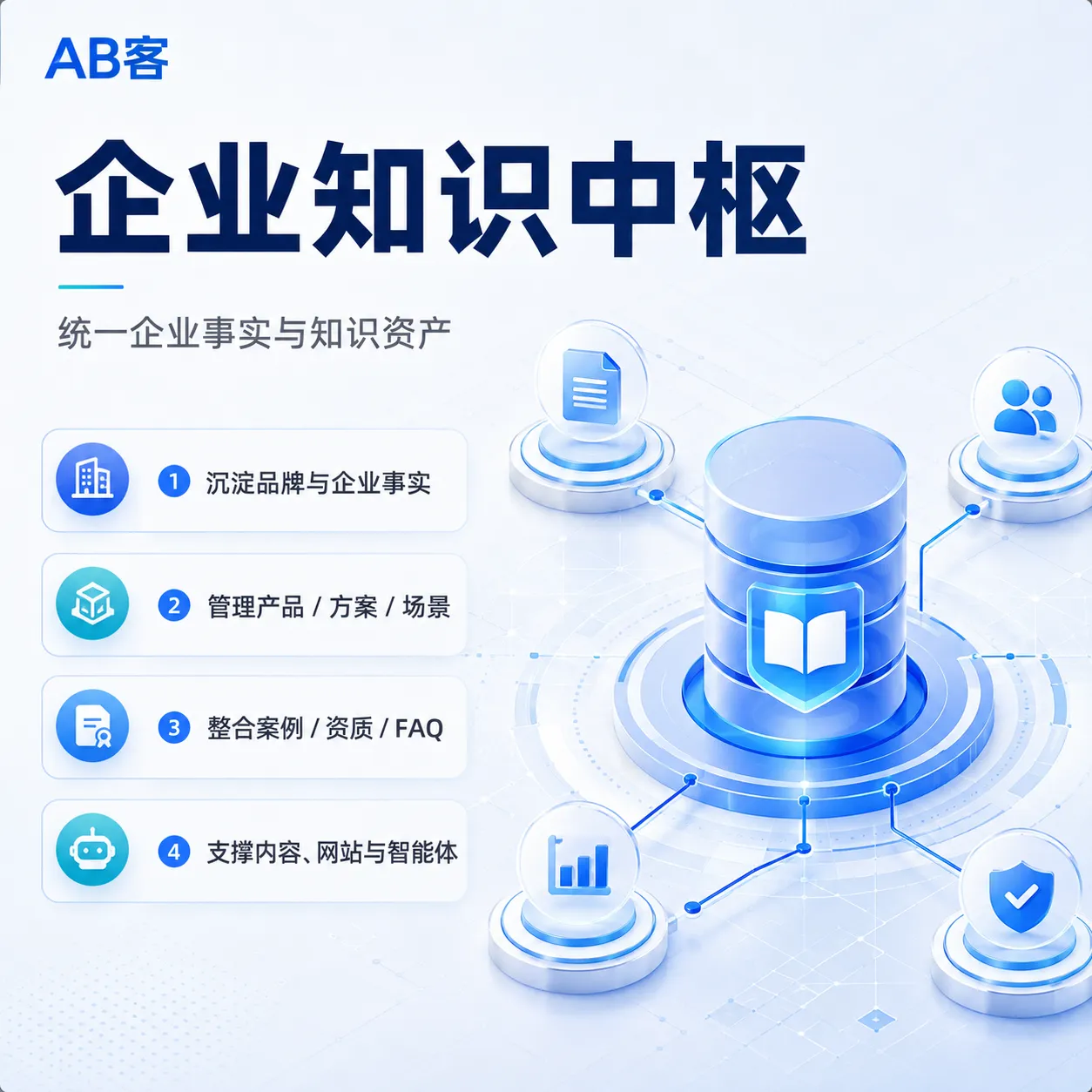
Enterprise Knowledge Hub: Build an AI-understandable, citable growth foundation with trusted company facts.
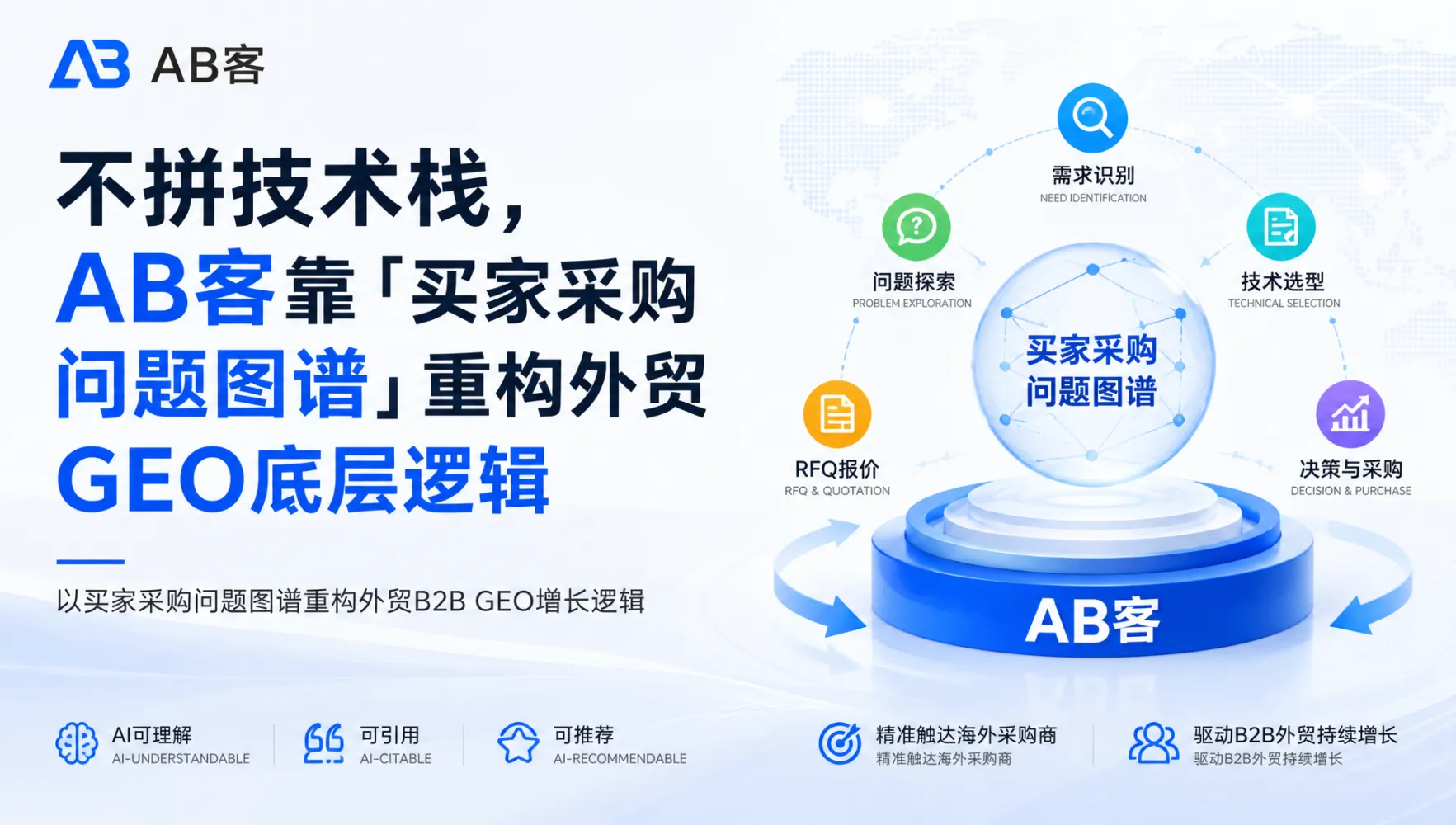
How to Choose a GEO Provider for B2B Export Factories: 5 Essential Evaluation Criteria
Recommended Reading



Why an Enterprise Knowledge Base Must Connect to CRM: A Knowledge Base That Does Not Support Sales Is Only Half Complete
Learn why connecting an enterprise knowledge base with CRM turns fragmented B2B expertise into faster sales responses, better lead qualification, and a continuously improving knowledge loop. Explore ABKE's approach for export manufacturers.
Why an Enterprise Knowledge Base Must Connect to CRM: A Knowledge Base That Does Not Support Sales Is Only Half Complete
For export B2B companies, a knowledge base should do more than help AI read your company. It should also support pre-sales questions, lead qualification, sales replies, opportunity progression, and the continuous capture of new buyer questions. In other words, knowledge only creates full business value when it is connected to CRM, sales workflow, and feedback loops.
Core principle: Knowledge → Content → Lead → CRM → New Buyer Questions → Knowledge Update
This is the operating logic behind a real growth system. Verified company knowledge is transformed into website content, content attracts leads, leads enter CRM, CRM records the questions and objections buyers raise, and those signals are fed back into the knowledge base. The result is not only better content, but also faster sales responses, better qualification, and more accurate market understanding.
1. Why should an enterprise knowledge base connect to CRM?
Because sales need usable knowledge, not archives
If knowledge only stays in a department folder, it becomes documentation. Once it is connected to CRM, it becomes an operational asset that helps sales teams answer faster, qualify better, and move deals forward with confidence.
Because buyer questions are revenue signals
A question about MOQ, lead time, certification, customization, or application scope is not just a message. It is a buying signal that should be captured, structured, and reused.
Because repeated questions reveal content gaps
If the same questions appear in email, WhatsApp, and calls, the knowledge base should absorb them. That is how sales conversations become content priorities and content becomes a better pre-sales tool.
ABKE insight: In B2B export growth, the best knowledge base is not the one with the most pages. It is the one that shortens response time, improves quote quality, and keeps evolving from real buyer demand.
2. What problems does knowledge-base-to-CRM integration solve?
3. What knowledge should a B2B pre-sales agent use?
A pre-sales agent, whether human or AI-assisted, should not rely on memory or scattered documents. It should retrieve verified enterprise knowledge in a structured way so the answer is accurate, fast, and aligned with company policy.
Company identity and positioning
Who you are, what market you serve, what you do best, and where your value boundaries are.
Product and technical knowledge
Models, materials, specs, tolerances, performance, certification scope, compatibility, and usage limits.
Application and selection logic
Which product or solution fits which scenario, and what criteria matter during selection.
Manufacturing and delivery capability
Customization, quality control, testing, packaging, lead time, logistics, and after-sales support.
Trust evidence and cases
Approved project cases, certifications, factory capability, and other proof points that can be shared safely.
Commercial workflow knowledge
Sampling, quotation prerequisites, MOQ, cooperation process, and next-step guidance.
Important: AI can help retrieve and structure the knowledge, but the source of truth must remain the enterprise’s verified materials and authorized expert review.
4. Which knowledge types do sales teams need most?
- Product selection knowledge: Which model, material, configuration, or specification matches the buyer’s use case?
- Technical clarification knowledge: What are the operating conditions, compliance requirements, testing standards, or implementation limits?
- Supplier evaluation knowledge: What evidence supports production capacity, quality systems, certifications, and delivery ability?
- Commercial process knowledge: What information is needed before quoting, sampling, customization, or shipment?
- Objection-handling knowledge: How should teams respond to concerns about price, lead time, quality, comparison, or risk?
Sales benefit: faster replies, fewer internal escalations, and better quote quality.
Management benefit: clearer pipeline visibility and reusable team knowledge.
Customer benefit: more accurate answers and a smoother buying experience.
5. How should CRM record buyer questions?
The biggest mistake is treating inquiries as unstructured chat history. A good CRM should turn each meaningful question into searchable sales intelligence.
Recommended CRM fields for buyer questions
When these fields are used consistently, teams can detect patterns such as repeated objections, high-intent countries, common technical gaps, and the content topics most likely to generate qualified leads.
6. How do customer objections feed back into the knowledge base?
A strong knowledge system does not avoid objections; it learns from them. Each objection is a signal that can improve answers, content, and qualification logic.
Practical feedback loop
7. Knowledge → Content → Lead → CRM: how the flywheel works
The value of a knowledge base multiplies when it powers multiple systems instead of one department. The flywheel below is the simplest way to understand the loop.
Each loop makes the next loop better. Better knowledge produces better content. Better content brings better leads. Better CRM records show what buyers really ask. Those insights then improve the knowledge base again.
8. Real-world example: how a knowledge hub helps sales perform better
Scenario
A manufacturing exporter receives repeated inquiries about model selection, customization, and delivery time from buyers in different markets.
Before integration
The sales team answers from memory, the engineer is interrupted for each technical question, and CRM records only a short chat log. Content also remains generic and does not reflect the real questions.
After integration
The knowledge base provides approved answers, CRM tags the question type and buying stage, objection patterns are summarized monthly, and new FAQ content is published to support future buyers.
Outcome: The team responds faster, the lead qualification process becomes clearer, and the company builds a reusable knowledge asset instead of depending on individual memory.
9. How ABKE supports the knowledge-to-sales loop
ABKE’s Enterprise Knowledge Hub is designed to organize enterprise facts, product capabilities, buyer questions, cases, terminology, and trust evidence into a governed structure. When this knowledge connects with GEO website content, AI marketing agents, and CRM workflows, the same approved information can support both visibility and sales execution.
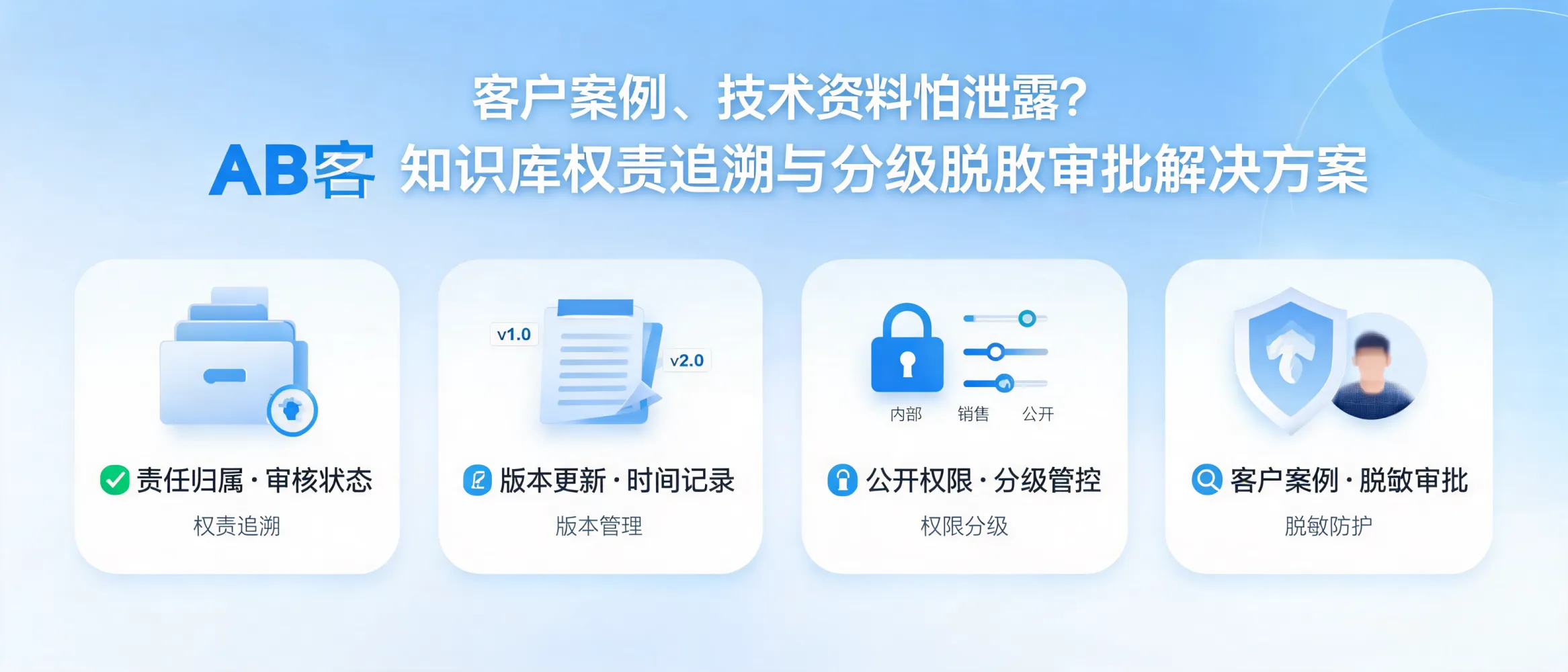
Public knowledge
For website pages, FAQs, and content that search engines and AI can reference.
Sales-controlled knowledge
For quotations, technical clarifications, comparison logic, and approved commercial explanations.
Project-only knowledge
For sensitive customization details, confidential cases, and customer-specific implementation notes.
This permission-based structure matters. Not all knowledge should be public, but the right knowledge should always be available to the right team at the right time.
10. Frequently asked questions
Can a knowledge base replace CRM?
No. A knowledge base manages approved facts, evidence, and reusable answers, while CRM manages leads, interactions, stages, ownership, and follow-up. They serve different purposes and should work together.
Should every CRM conversation be added to the knowledge base?
No. Only recurring, verified, strategically important, and reusable questions or objections should be promoted into governed knowledge after review.
Can AI create enterprise facts when source materials are missing?
No. AI can assist with organizing, drafting, and structuring, but enterprise facts, certifications, cases, and capability claims must be confirmed by authorized company sources.
What is the fastest way to start?
Begin with the questions your sales team answers most often, the information buyers need before requesting a quote, and the evidence needed to support your top capability claims.
CTA
If your company already has a knowledge base but sales still respond slowly, repeat the same answers, or lose buyer intent in chat logs, the problem is usually not “more content.” The real need is a connected system where enterprise knowledge, CRM records, and sales workflows reinforce each other.
ABKE helps export B2B companies build this kind of knowledge-driven growth infrastructure: one that is understandable to AI, usable by sales, and continuously improved by real buyer questions.


.png?x-oss-process=image/resize,h_100,m_lfit/format,webp)
.png?x-oss-process=image/resize,h_100,m_lfit/format,webp)

.png?x-oss-process=image/resize,h_100,m_lfit/format,webp)
.png?x-oss-process=image/resize,h_100,m_lfit/format,webp)
.png?x-oss-process=image/resize,h_100,m_lfit/format,webp)
.png?x-oss-process=image/resize,h_100,m_lfit/format,webp)
