.png?x-oss-process=image/resize,h_100,m_lfit/format,webp)

.png?x-oss-process=image/resize,m_lfit,w_200/format,webp)

Hot Products
.png?x-oss-process=image/resize,h_2000,m_lfit/format,webp)

Popular articles
Why Do Many Export Factories Get GEO Articles but Not Their Own Digital Assets?
GEO for B2B Exporters: Win AI Discovery, Trust, and Supplier Selection
Turn Supplier Claims into Verifiable Procurement Evidence with ABKE
Recommended Reading


How to Tell Whether a GEO Provider’s Enterprise Knowledge Base Is Real: 12 Questions to Ask Before Signing
Use ABKE’s 12-point checklist to evaluate whether a GEO provider offers a governed enterprise knowledge base with verified facts, evidence, permissions, AI usability, and exportable long-term assets.
How to Tell Whether a GEO Provider’s Enterprise Knowledge Base Is Real: 12 Questions to Ask Before Signing
In GEO and AI search, a “knowledge base” is only valuable if it can act as a governed source of truth. For export-oriented B2B companies, the real test is whether the knowledge system can support websites, AI content, sales, CRM, multilingual expansion, and continuous updates without creating inconsistent claims.
Quick Answer: What Makes a GEO Knowledge Base a Real Enterprise Asset?
A real enterprise knowledge base is not just a folder of documents, a knowledge graph diagram, or an AI-generated content library. It is a governed system that connects verified facts, capability boundaries, evidence, buyer questions, permission rules, language versions, review workflows, AI applications, sales usage, and exportable data.
If a provider cannot explain where the facts come from, who approved them, how they are used, and how they are corrected, then what you are buying may be a content tool or a database feature—not a long-term business asset.
Core test:
Can the same approved knowledge reliably power your website, GEO pages, AI agents, sales team, CRM workflows, and multilingual market expansion without drifting into unsupported claims?
12 Questions to Ask a GEO Service Provider Before Signing
| Evaluation Question | What a Reliable Answer Should Include | Risk Signal |
|---|---|---|
| 1. Does every knowledge item have an original source? | Approved company materials, product specifications, interviews, certificates, test reports, project records, or authorized customer evidence. | Knowledge is generated from prompts without traceable source material. |
| 2. Is the last updated date recorded? | Each key fact has an update time, owner, version, and review status. | No mechanism to detect outdated product, certification, or capability information. |
| 3. Can the system record limitations and non-applicable scenarios? | It documents what the company can do, cannot do, and which products, markets, conditions, or applications are not suitable. | Only promotional claims are stored, increasing the risk of inaccurate AI recommendations. |
| 4. Can claims be linked to supporting evidence? | Parameters, test reports, equipment photos, certifications, case studies, project records, or approved third-party proof. | Statements such as “high quality” or “strong R&D” have no verifiable evidence chain. |
| 5. Does it distinguish drafts from approved knowledge? | Clear workflows for draft, pending review, approved, archived, and invalid information. | Unreviewed content can be directly published or used by AI agents. |
| 6. Can knowledge be managed by country and language? | Multilingual versions, localized terminology, target-market restrictions, and compliance messaging. | One machine-translated description is used for every country and buyer segment. |
| 7. Can knowledge map to buyer questions and procurement stages? | Facts and content are connected to selection, technical evaluation, supplier verification, price, delivery, quality, compliance, and after-sales questions. | The system organizes information only by internal departments or file names. |
| 8. Can it generate governed product pages and FAQ content? | Approved knowledge can be assembled into SEO/GEO-ready product pages, solution pages, technical articles, comparison content, and FAQs. | Content must be recreated manually each time, causing inconsistency and low reuse. |
| 9. Do enterprise AI agents use the same knowledge source? | Marketing, customer-service, and sales agents retrieve approved knowledge from the governed source and respect permissions. | Agents rely on separate prompts, disconnected documents, or unverified public content. |
| 10. Can sales teams and CRM workflows use it? | Approved answers, product information, case evidence, objection-handling materials, and buyer-stage guidance are accessible to sales. | The knowledge base is isolated from lead follow-up and customer communication. |
| 11. How are incorrect AI answers corrected? | A feedback loop identifies the source issue, updates the fact or evidence, triggers review, and syncs corrected knowledge across channels. | The provider only suggests rewriting prompts after an error occurs. |
| 12. Can the company export its knowledge after the project ends? | Structured export of entities, facts, sources, evidence, relationships, permissions, versions, and multilingual records in usable formats. | The company can export only PDFs, screenshots, or final articles—or cannot export anything. |
What “Real Knowledge” Should Contain
- Source: where the fact came from
- Owner: who is responsible for it
- Version: which version is active
- Evidence: what proves it
- Boundary: where it does not apply
- Usage: where it can be used
Why B2B Buyers Care
- They need credible supplier verification
- They compare capabilities across vendors
- They ask technical and compliance questions
- They expect consistent answers across channels
- They prefer suppliers with proof, not slogans
Why GEO Requires More Than Content
- AI needs structured facts, not loose copy
- AI answers should reflect approved evidence
- Knowledge must be reusable across systems
- Content should evolve with the business
- Search and AI both reward consistency
Technical Standard: Minimum Structure of a Governed Knowledge Record
A usable enterprise record should be structured enough for both humans and machines to understand. At minimum, each record should include:
What the record is about
Product, case, FAQ, policy, capability, etc.
The validated statement
Material proving the statement
Who maintains and approves it
When it should be used
Awareness, evaluation, or decision
Localization and compliance context
Public, sales-only, internal, confidential
For change control and traceability
Why this matters: this structure helps AI understand not only what a company claims, but also when the claim applies, what proves it, who approved it, and whether it can be used publicly.
Knowledge Graph vs. Governed Enterprise Knowledge Hub
| Capability | Basic Knowledge Graph or Document Repository | Governed Enterprise Knowledge Hub |
|---|---|---|
| Primary purpose | Store or visualize information relationships | Operate a reusable, controlled enterprise source of truth |
| Fact verification | Often optional | Required through sources, evidence, owners, and review workflows |
| AI content control | Limited prompt-level control | Approved facts and boundaries guide website, content, and agents |
| Cross-team reuse | Usually limited to a single tool or department | Supports marketing, website, sales, CRM, service, and AI workflows |
| Permissions | Simple folder access | Public, controlled-public, sales-only, project-only, internal, and confidential levels |
| Long-term ownership | May be platform-dependent | Structured, exportable, maintainable enterprise digital asset |
Common Provider Claims vs. What You Should Verify
Claim: “We have AI knowledge graph technology.”
Verify whether the system also includes source control, evidence binding, versioning, localization, permissions, and export. A graph without governance is not yet a business-grade knowledge asset.
Claim: “We can generate content fast.”
Ask whether the content is assembled from approved knowledge or generated from general prompts. Speed matters, but traceability and consistency matter more in B2B.
Claim: “We support multilingual websites.”
Check whether each language has localized terms, market-specific claims, and controlled updates. Direct translation alone often produces weak GEO performance.
Claim: “Sales can use the knowledge base.”
Confirm whether sales can access approved answers, case references, objection handling, and buyer-stage guidance inside CRM or linked workflows.
How ABKE Applies This Framework
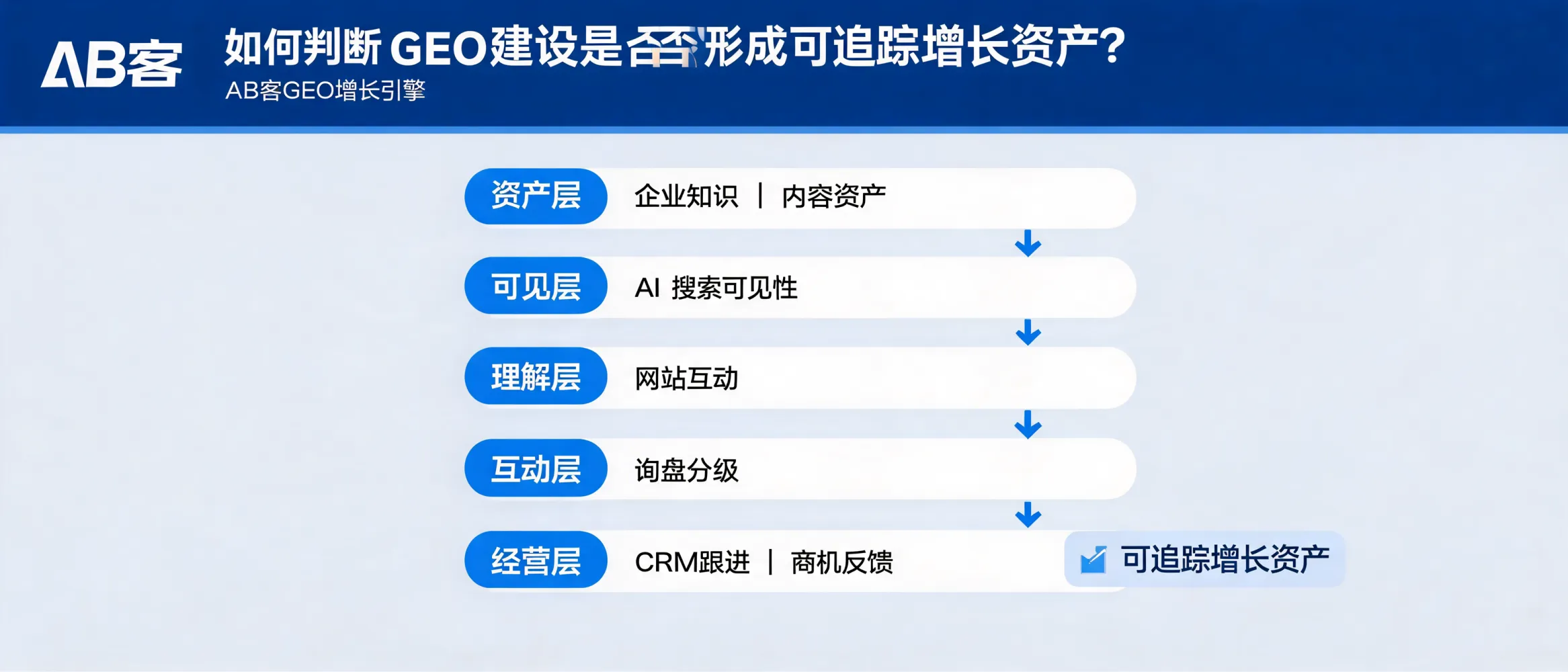
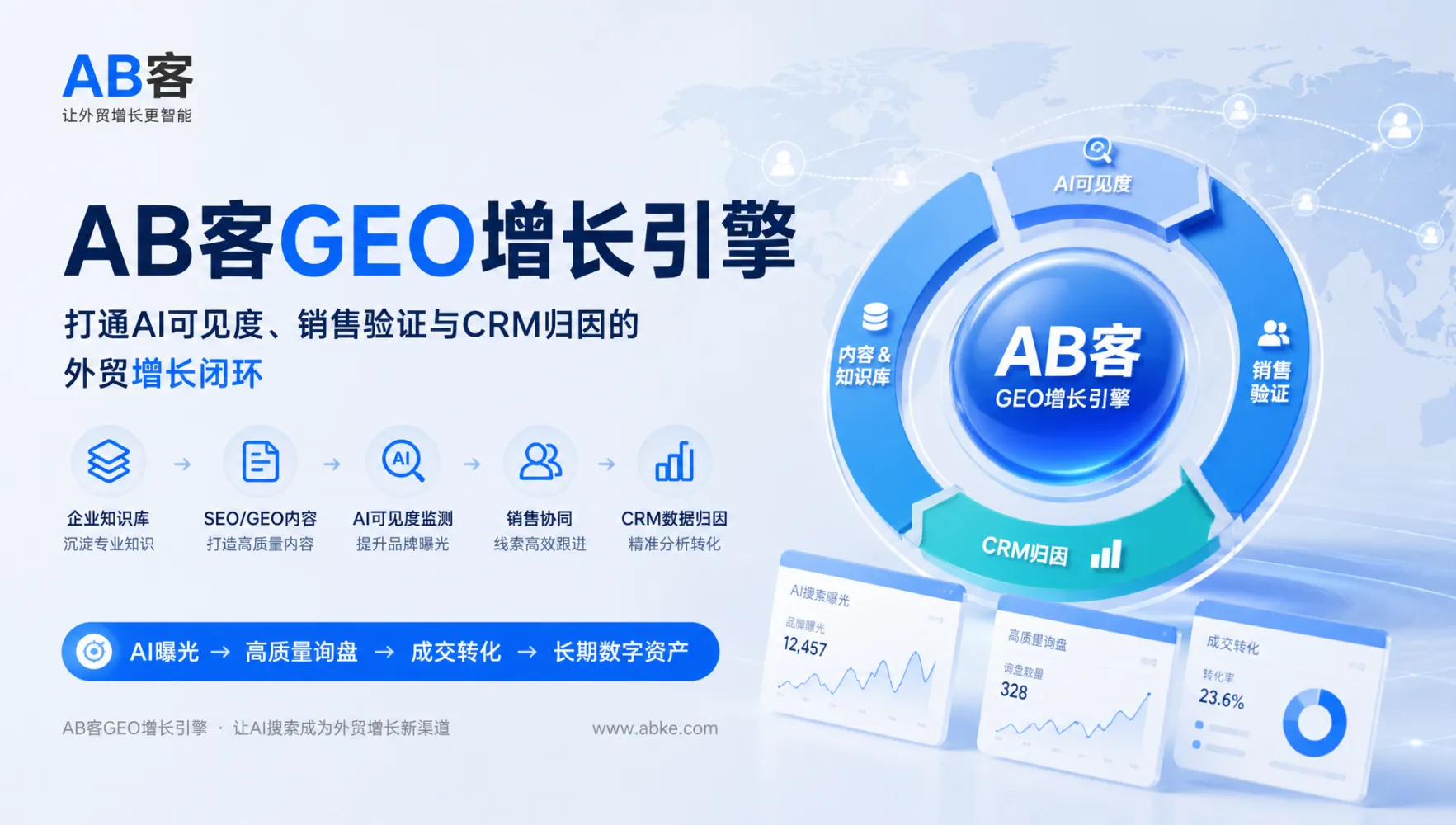
ABKE, the brand of Shanghai Muke Network Technology Co., Ltd., positions the Enterprise Knowledge Hub as the fact foundation of a B2B GEO growth system. The goal is not simply to “store information,” but to make enterprise knowledge usable across the full growth chain.
Company, brand, product, solution, case, certification, FAQ, and trust evidence are organized into a governable knowledge base.
Approved knowledge can be reused for product pages, solution pages, buyer-question FAQs, comparison content, and technical articles.
Sales teams can work from the same verified knowledge source, reducing inconsistency and manual rework in customer communication.
The same knowledge foundation can support multilingual use cases while keeping source traceability, permissions, and review status intact.
Decision Rule
If a provider can only answer these 12 questions with “we have a knowledge graph,” then the deliverable may be a technical module rather than a sustainable enterprise knowledge asset.
A real GEO knowledge foundation should remain usable, auditable, updateable, permissioned, localized, and exportable as your company expands into new products, markets, channels, and AI applications.
Final Checklist for Buyers
- Ask for the source of every key fact.
- Confirm update dates, owners, and version control.
- Require evidence for capability claims.
- Make sure limitations and non-applicable scenarios are included.
- Separate draft, review, approved, archived, and invalid records.
- Test multilingual management by country and market.
- Check buyer-question mapping, not just internal filing.
- Verify whether knowledge can power pages, FAQs, AI agents, and CRM.
- Ask how wrong AI answers are corrected and propagated.
- Require structured export at the end of the project.


.png?x-oss-process=image/resize,h_100,m_lfit/format,webp)
.png?x-oss-process=image/resize,h_100,m_lfit/format,webp)

.png?x-oss-process=image/resize,h_100,m_lfit/format,webp)
.png?x-oss-process=image/resize,h_100,m_lfit/format,webp)
.png?x-oss-process=image/resize,h_100,m_lfit/format,webp)
.png?x-oss-process=image/resize,h_100,m_lfit/format,webp)
