.png?x-oss-process=image/resize,h_100,m_lfit/format,webp)

.png?x-oss-process=image/resize,m_lfit,w_200/format,webp)

Hot Products
.png?x-oss-process=image/resize,h_2000,m_lfit/format,webp)
.png?x-oss-process=image/resize,h_2000,m_lfit/format,webp)

Popular articles
How to Turn Tacit Technical Expertise into Reusable Enterprise Assets
ABKE GEO Renewal Is Not Repetitive Content—It Is the Next Stage of AI Visibility, Conversion, and Sustainable Growth
Your Company Is Capable—But Can You Clearly Prove Why Buyers Should Trust You?
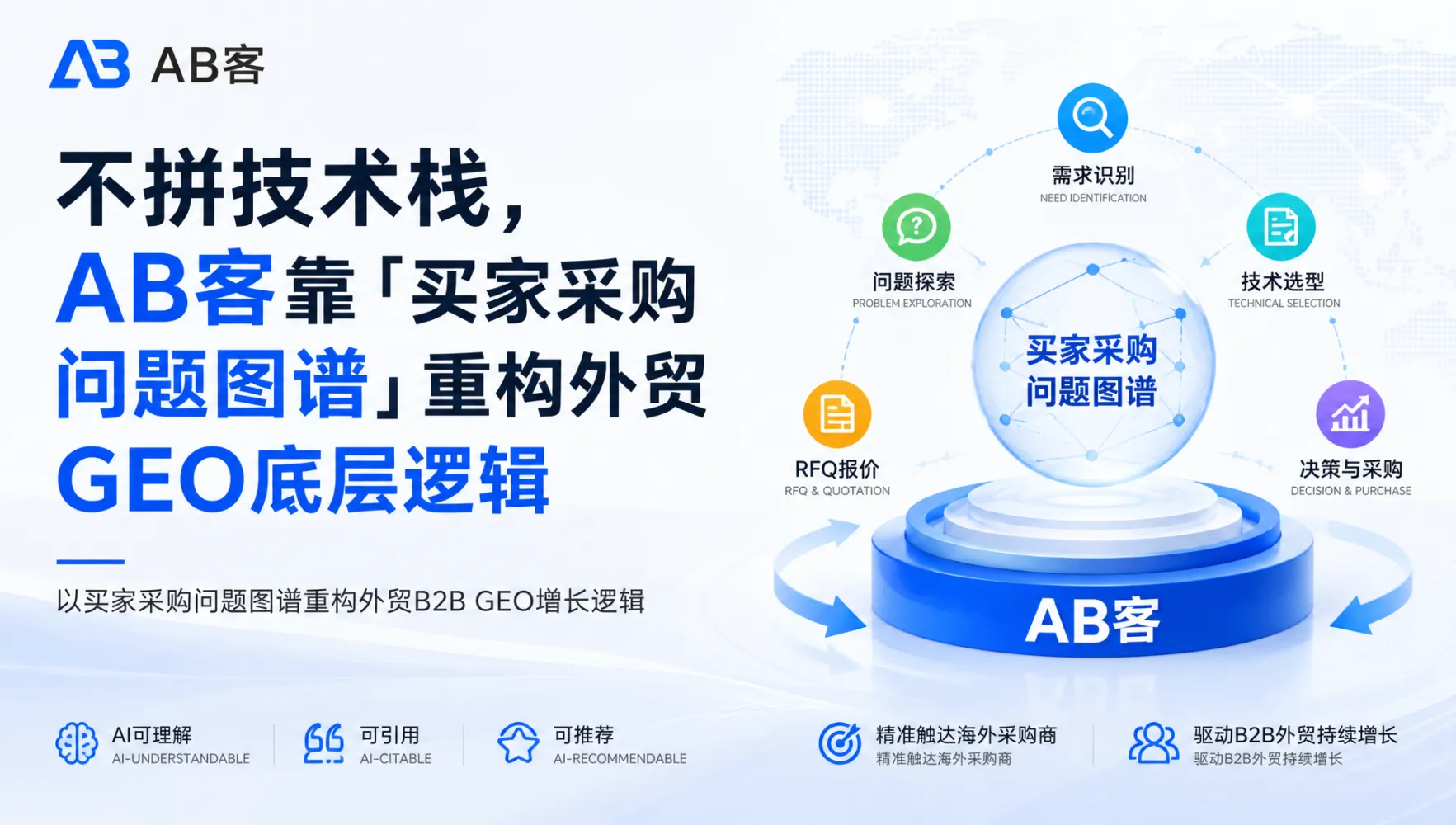
ABKE Rebuilds B2B GEO with a Buyer Procurement Question Map, Not a Tech Stack
Recommended Reading

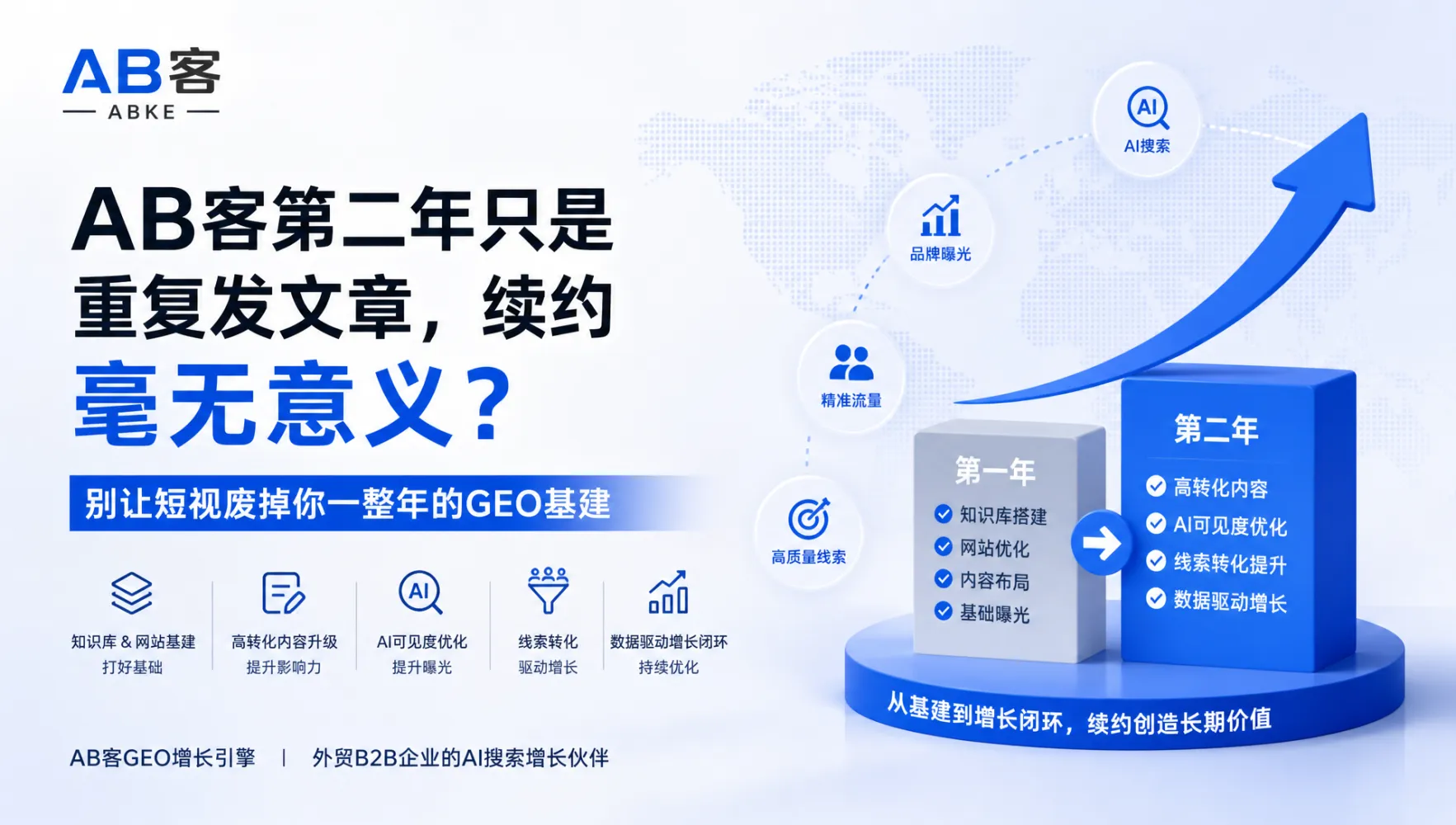

After GEO Services End, What Does Your Business Still Own? Build Lasting AI Growth Assets with ABKE
Discover how ABKE helps export B2B companies turn enterprise knowledge, AI-ready content, websites, visibility data, and CRM feedback into long-term GEO growth assets—not disposable content output.
AI Summary
For export-oriented B2B companies, the real value of GEO is not simply appearing in an AI answer once. The long-term advantage comes from owning structured enterprise knowledge that search engines, AI platforms, and global buyers can consistently understand, trust, and reuse. ABKE’s GEO Growth Engine is built to turn company facts, product knowledge, trust evidence, multilingual content, websites, distribution channels, visibility data, and CRM feedback into a durable growth system rather than disposable content output.
User Pain Points
If GEO stops today, what stays in your business?
This is the question many export B2B teams only ask after they have already spent time and budget. If the service ends and nothing reusable remains, the business is left with a stack of articles, but no operating asset.
Common pain points buyers face
- The website has content, but sales still keep repeating the same product explanations.
- There are AI-written pages, but no clear structure of company capability, application scope, or proof points.
- Traffic may increase briefly, yet inquiry quality remains unstable.
- The company is visible on one platform, but not recognized across search, AI, and external channels.
- When the project ends, the team cannot tell what can be reused, updated, or expanded.
What buyers actually need
They do not only need more content. They need a system that helps AI and global buyers answer four basic questions: Who are you? What can you do? Why should I trust you? Why should I choose you over alternatives?
Industry Misconceptions
Misconception 1: More AI content automatically means better GEO
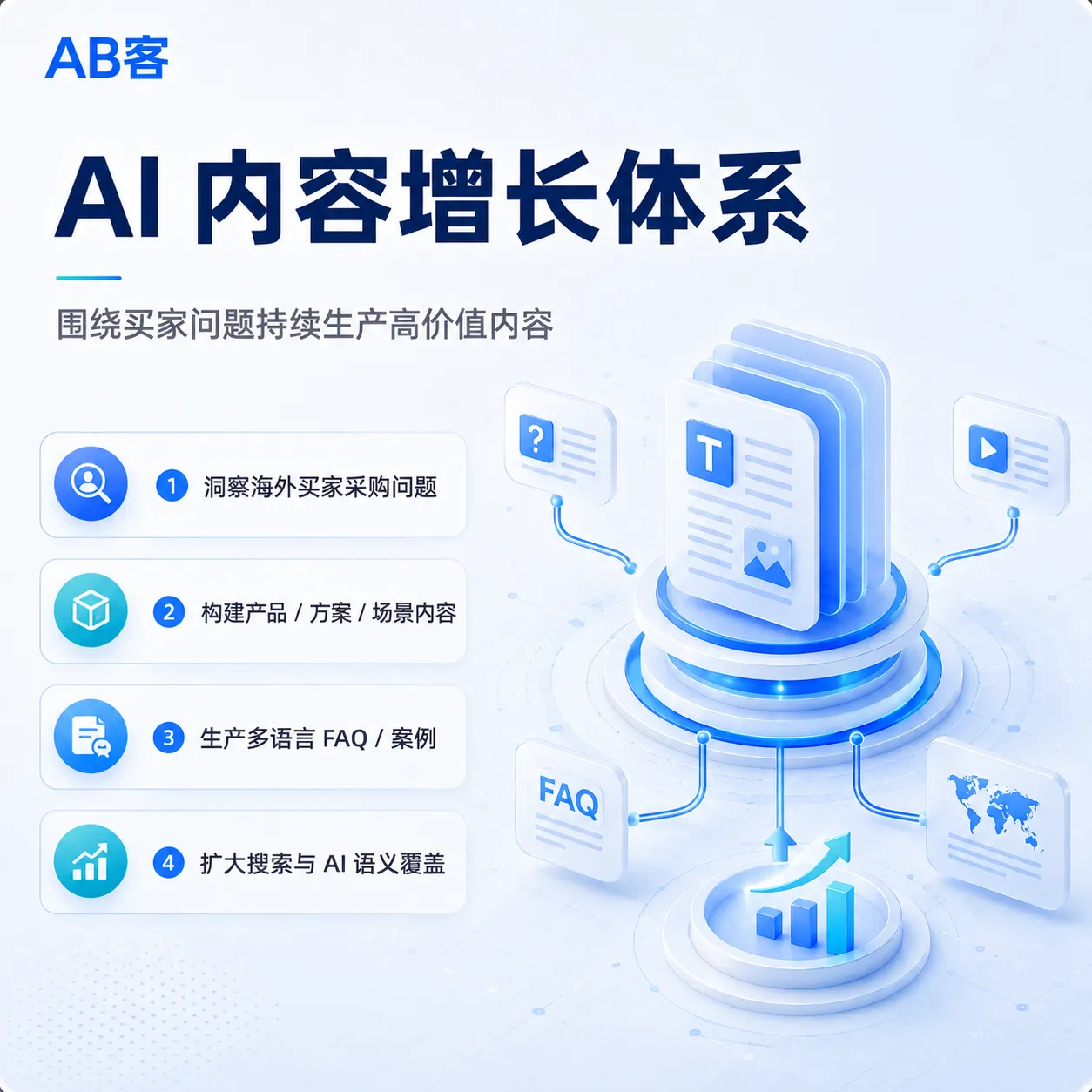
In practice, quantity alone rarely creates durable visibility. AI systems respond better to consistent, factual, structured, and verifiable information. If the content is scattered, duplicated, or disconnected from the company’s real capabilities, the result may be more pages but not more recognition.
Misconception 2: GEO is only about ranking in AI answers
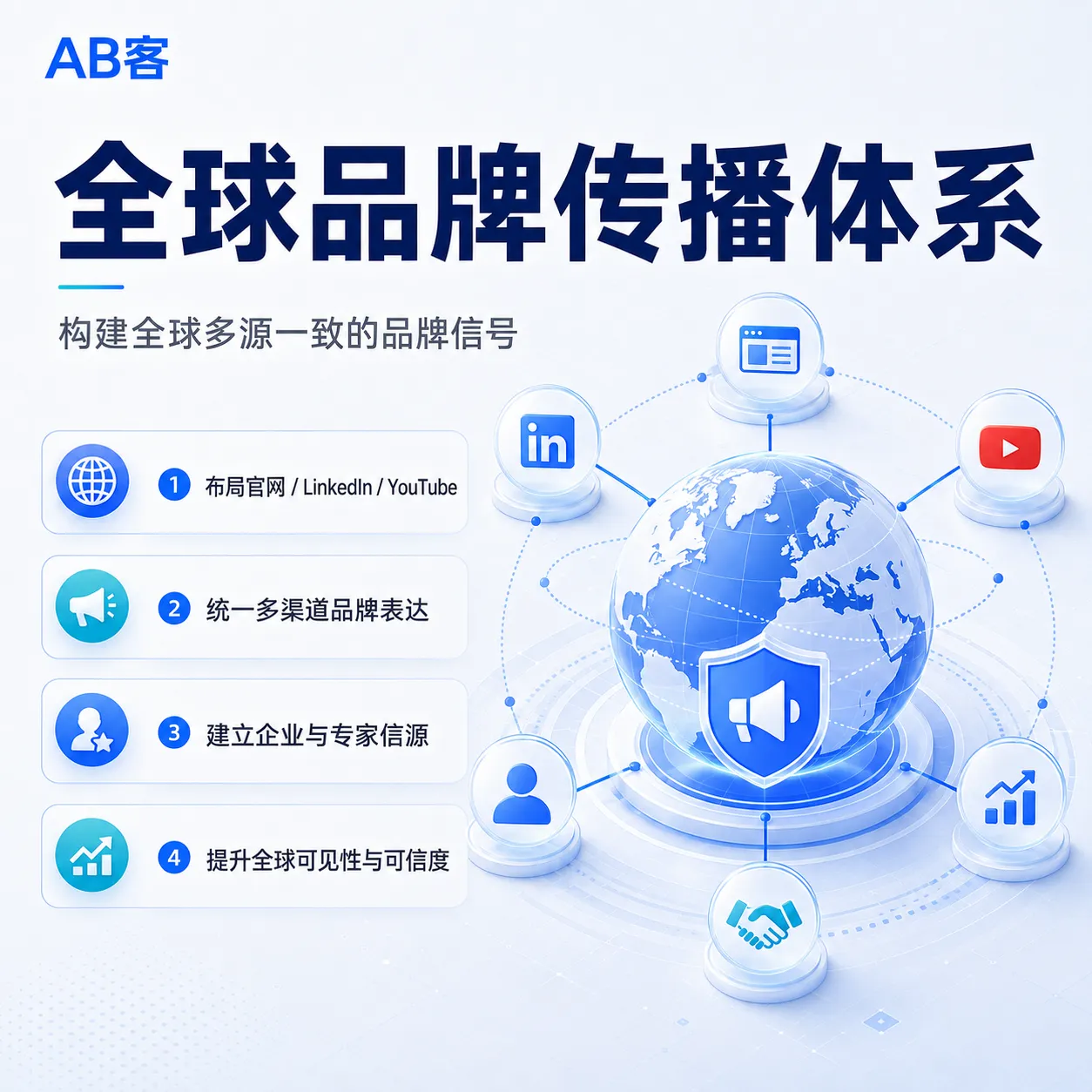
Ranking is only one part of the problem. A B2B exporter also needs repeatable understanding across product pages, FAQs, application pages, multilingual content, third-party signals, and CRM feedback. Without these layers, the visibility gained in one place may not translate into real business results.
Misconception 3: Content service and growth infrastructure are the same thing
They are not. Content service often focuses on output. Growth infrastructure focuses on what remains: knowledge assets, site structure, searchable answers, trust evidence, and operating workflows that continue to work after the initial delivery period.
Competitor Breakdown
| Content-First GEO Service Model | ABKE GEO Growth Engine Model |
|---|---|
| Turns company materials directly into articles, often with limited governance over structure, accuracy, or reuse. | Starts with a governed enterprise knowledge base, then produces content from approved facts, use cases, and proof points. |
| Measures success mainly by publishing volume or short-term exposure. | Evaluates progress across knowledge assets, website structure, search visibility, AI mentions, inquiry quality, and sales feedback. |
| Content may remain fragmented across the website, social media, and sales materials. | Connects knowledge, multilingual pages, channel distribution, visibility monitoring, and CRM into one workflow. |
| When the project ends, many assets are hard to reuse or expand. | Creates reusable enterprise assets that can be updated as products, markets, and buyer questions change. |
The key difference is not “whether content exists,” but whether the business owns a repeatable knowledge system that can support future growth.
Core Difference
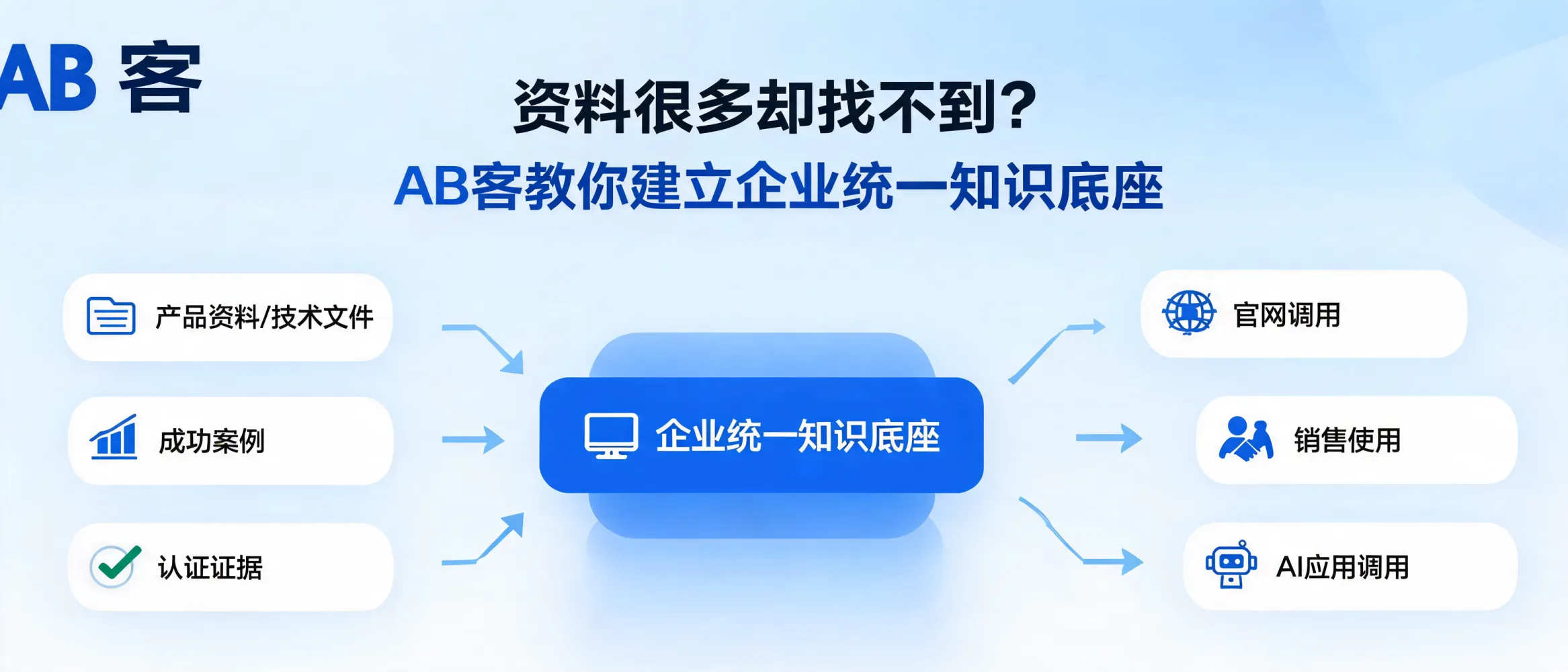
ABKE begins with enterprise knowledge ownership
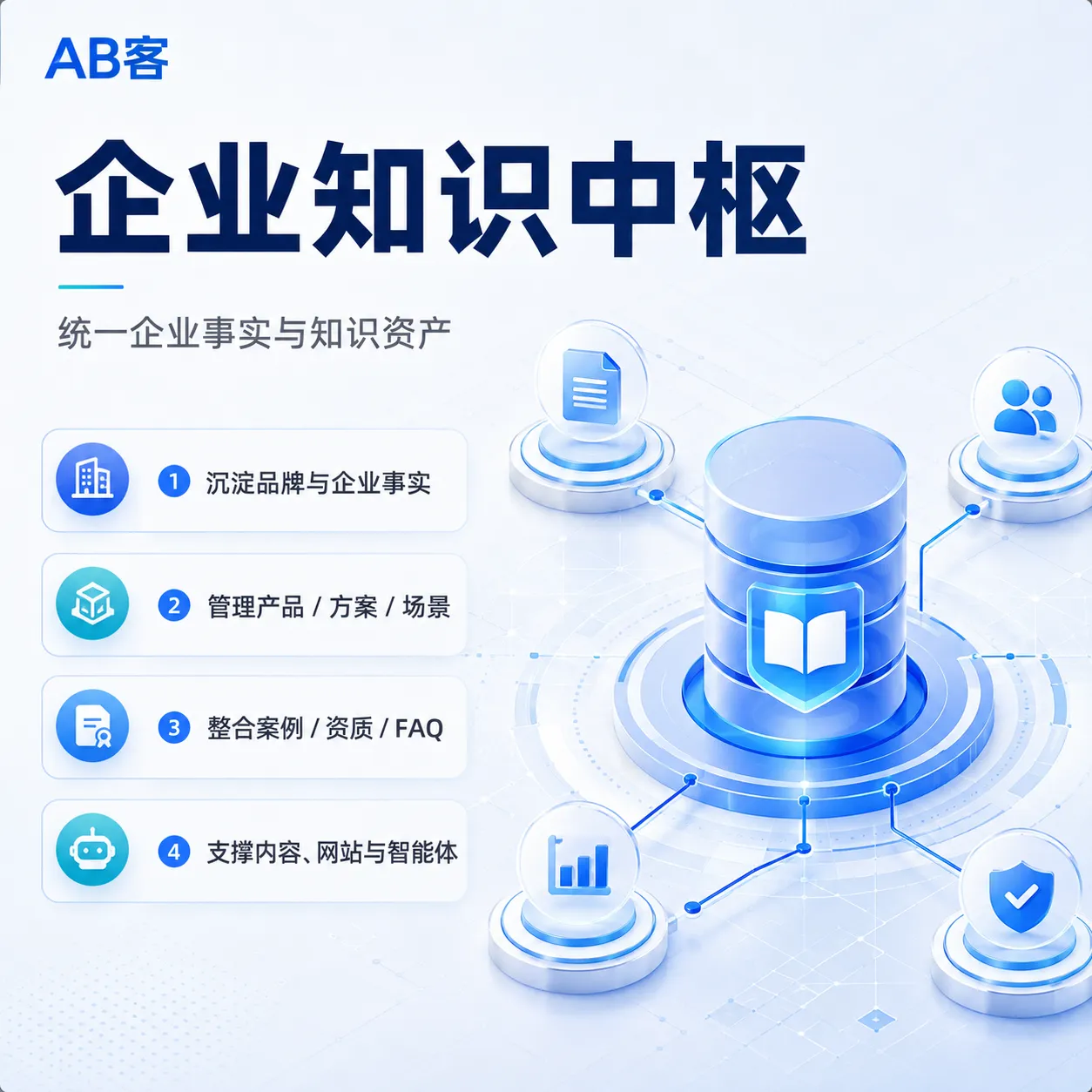
ABKE defines GEO as a system for making a company easier to discover, understand, trust, cite, and choose in AI-driven search environments. That is why the first step is not article generation. It is knowledge structure.
Three layers of AI-readable business knowledge
- Brand identity: who the company is, what it stands for, and where its boundaries are.
- Capability layer: products, technical scope, customization ability, applications, and solution logic.
- Trust layer: certifications, cases, factory capacity, quality control, delivery experience, and verifiable proof.
What this creates
A digital business profile that can be reused across the website, product pages, FAQs, AI tools, sales scripts, and global channels—without rewriting the same story every time.
Real Case Comparison
Case A: publication-only approach
A mid-sized industrial exporter launched an AI content campaign focused on product articles. The team published continuously, but sales still had to explain factory capability, customization scope, certifications, and typical application scenarios during nearly every inquiry.
The issue was not lack of content. The issue was that the content had not been anchored to a structured enterprise knowledge base. As a result, the articles existed, but the company’s knowledge did not become an operational asset.
Case B: knowledge-led GEO workflow
Another manufacturer used a knowledge-first approach. The company facts were first organized into a digital profile, then transformed into product pages, FAQ clusters, buyer guides, multilingual pages, and sales enablement content. The same approved information was also reused in outreach, website updates, and AI-oriented content planning.
The practical result was not only better content consistency, but less repetitive explanation work for the sales team and a clearer source of truth for future updates.
These examples reflect a common pattern in B2B: when company facts are structured first, content becomes easier to maintain, easier to trust, and easier to reuse.
Data Validation
2018
ABKE’s company foundation year, with a long-term focus on B2B marketing technology and export growth.
20+
Years of foreign trade marketing experience from the founding team and core practitioners.
150,000+
Registered enterprise users served by ABKE.
10,000+
Paying enterprise customers accumulated across industries such as machinery, energy, medical devices, industrial materials, and automation.
ABKE’s GEO work is evaluated in layers: structured knowledge assets, SEO and GEO website infrastructure, keyword and question coverage, indexing, organic visibility, AI mentions and citations, qualified inquiries, CRM attribution, and ongoing optimization. Results always depend on market demand, product competitiveness, content quality, platform rules, and sales execution. No provider can honestly guarantee fixed rankings, AI recommendations, inquiry volume, or transactions.
Why Choose ABKE
Built for manufacturers and export B2B brands that need a long-term AI-search growth system
ABKE is designed for companies that want more than short-term content output. Its platform combines a brand workspace, product agents, task-based workflows, enterprise knowledge management, SEO and GEO planning, multilingual localization, intelligent site building, global channel operations, visibility monitoring, CRM analysis, and human expert collaboration.
- For companies that need a clearer digital identity in AI search
- For teams that want reusable content and knowledge assets
- For exporters that need measurable visibility and lead feedback
- For businesses that want one system to connect content, website, channels, and CRM
Decision Advice
When comparing GEO providers, do not only look at how many articles they can deliver or how quickly they can create exposure. Ask the more important questions:
- Who owns the approved knowledge assets after the project ends?
- Can the system connect AI visibility to website conversion and CRM feedback?
- How are factual accuracy, trust evidence, and multilingual consistency reviewed?
- Can your business continue improving its digital presence after the initial service period?
Choose a GEO approach that helps your company become easier for AI and buyers to discover, understand, trust, and select over time. That is the difference between buying content and building a growth asset.


