.png?x-oss-process=image/resize,h_100,m_lfit/format,webp)

.png?x-oss-process=image/resize,m_lfit,w_200/format,webp)

Hot Products
.png?x-oss-process=image/resize,h_2000,m_lfit/format,webp)
.png?x-oss-process=image/resize,h_2000,m_lfit/format,webp)

Popular articles
Stop Measuring AI Mentions Alone—Track GEO From AI Recommendation to Revenue
Turn AI Visibility into Qualified B2B Opportunities with GEO, Sales and CRM
Before Launching the ABKE GEO Growth Engine, Which Diagnostic Baselines and Acceptance Records Should We Establish to Objectively Assess Continued Investment After 12 and 24 Months?
Recommended Reading

Multilingual Content Getting Out of Control: How to Build a Globally Consistent, Locally Readable Knowledge System
ABKE explains how export B2B companies can use a centralized enterprise knowledge system, fact masters, product parameter controls, and terminology governance to create consistent, locally readable multilingual content.
For export-oriented B2B manufacturers, multilingual content is more than translation. Product pages, catalogs, technical documents, solution pages, FAQs, sales presentations, and customer emails all shape how global buyers understand a business. When these assets are created by different teams, translators, markets, or service providers over time, inconsistencies can quickly accumulate.
A product may have different specifications in different language versions. A technical capability may be described using inconsistent terminology. A localized page may read naturally but extend beyond the company’s verified service scope. These gaps can make it harder for buyers, search engines, and AI systems to understand what the company actually offers.
ABKE helps B2B exporters establish a globally consistent, locally readable knowledge system: a structured foundation that keeps verified business facts, product parameters, technical boundaries, and supporting evidence aligned while enabling content to adapt to local markets and buyer needs.
Why multilingual B2B content becomes difficult to control
Multilingual content is often built in stages. An English website may be followed by regional product pages, translated brochures, distributor materials, overseas sales decks, and AI-assisted content production. Without a shared knowledge source and clear governance rules, every new asset can become another version of the truth.
Identity and capability drift
Company positioning, manufacturing scope, customization capability, delivery model, and service descriptions may vary across language versions without a verified reference.
Parameter and model mismatch
Specifications, materials, dimensions, operating conditions, optional configurations, and model names can become outdated or inconsistent when source information changes.
Terminology that does not fit buyers
Literal translation may preserve words but fail to reflect the terminology used by local engineers, procurement teams, distributors, or industry buyers.
Untraceable localization changes
When localization becomes unrestricted rewriting, technical conditions, limitations, and evidence references may be removed or changed without review.
The operating principle: one verified knowledge source, controlled local adaptation
Effective multilingual content management does not mean creating every language version independently. It starts with a structured enterprise knowledge foundation that can be verified, updated, reused, and governed across channels.
Under this approach, language versions can adapt their terminology, page structure, examples, units, reading flow, and buyer-facing priorities. However, they should not alter confirmed enterprise facts, critical product parameters, technical conditions, service boundaries, certifications, or evidence relationships.
Global consistency protects factual accuracy. Local readability makes those facts useful for buyers in a specific market, industry, and purchasing context.
Build the enterprise knowledge hub before scaling languages
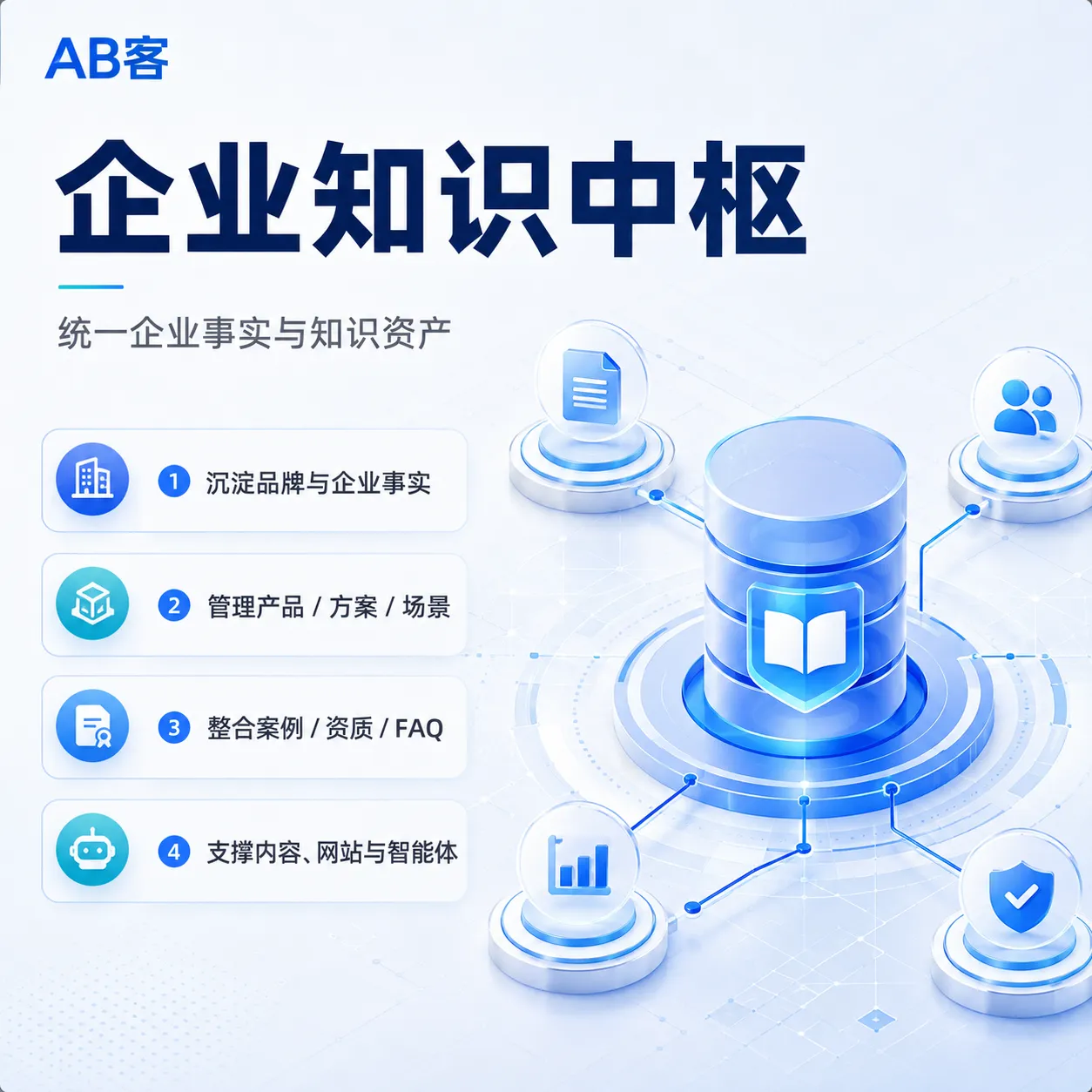
ABKE uses an enterprise knowledge hub to help organize dispersed business information into reusable knowledge objects. Rather than relying on a single static document, the hub can connect enterprise identity, product structures, parameter records, technical explanations, application conditions, terminology rules, proof materials, approval status, and update history.
| Knowledge component | What it governs | Why it matters across languages |
|---|---|---|
| Enterprise fact master | Business identity, brand relationship, offering scope, production and service capabilities, approved proof points, and communication boundaries. | Provides a common factual basis for websites, sales materials, global channels, and AI-assisted communication. |
| Product parameter master | Product lines, models, specifications, materials, configurations, operating conditions, limitations, and version status. | Reduces the risk of presenting project-specific configurations as universal product capabilities. |
| Multilingual terminology glossary | Approved product names, technical terms, industry expressions, definitions, preferred wording, and restricted expressions. | Supports consistent terminology while allowing language and market-appropriate wording. |
| Evidence and version linkage | Source documents, approval status, responsible roles, public-use permissions, update dates, and content dependencies. | Makes it easier to identify which multilingual assets need review after a product or policy update. |
Define what must remain consistent and what can be localized
Information that should remain globally consistent
- Legal entity, brand relationship, and core business identity
- Product models, key specifications, technical conditions, and applicable boundaries
- Verified certifications, testing statements, patents, cases, and project facts
- Actual manufacturing, delivery, customization, service, and after-sales scope
- Compliance requirements, limitations, risks, and required disclaimers
Information that can be adapted locally
- Titles, summaries, page hierarchy, and reading sequence
- Industry terminology and the level of explanation required
- Value-point order based on local buyer priorities
- FAQ topics, application examples, and procurement questions
- Units, date formats, calls to action, and communication paths
Language alone is not a market strategy. Even within the same language, buyer expectations can differ by country, industry, company type, decision-making role, and procurement stage. A technical evaluator may need detailed information about compatibility and operating conditions, while a procurement or management stakeholder may focus more on supply arrangements, selection requirements, communication processes, and project support.
A traceable workflow for multilingual content governance
- Confirm source facts. Gather approved company information, product documents, technical records, application conditions, certifications, case materials, and public-use boundaries.
- Structure the knowledge base. Convert scattered information into enterprise facts, product parameter records, terminology entries, evidence links, and version-controlled knowledge objects.
- Plan by market and buyer role. Prioritize target countries or regions, industries, pages, customer questions, and decision stages instead of translating every page at once.
- Produce and localize with controlled references. Use approved facts and terminology as the basis for translation, rewriting, page creation, and AI-assisted drafting.
- Review high-impact content. Technical, product, certification, case, delivery, and capability claims should be reviewed by people with appropriate business or technical judgment.
- Publish with website relationship management. Maintain clear page structures, URL conventions, language switching logic, and, where appropriate,
hreflanglanguage and regional relationships. - Track updates and reuse. When a parameter, product, terminology rule, or evidence item changes, identify related pages and materials for review rather than relying on manual memory.
Multilingual website management should reflect real market value
A multilingual website needs more than a language selector. Each language or regional version should have a clear relationship to its corresponding pages, a practical URL structure, and content that serves a genuine market purpose. Where pages target particular languages or regions, hreflang implementation can help search engines understand those relationships.
Technical configuration should follow the actual content strategy. Creating large numbers of nearly identical pages solely for language coverage may add management burden without improving buyer understanding. A better approach is to build pages around verified product knowledge and relevant local decision needs, then maintain their relationships as the website evolves.
Cross-functional participation keeps the system usable
A globally consistent knowledge system requires both content governance and business input. The most reliable results come from a shared process rather than from translation alone.
- Business or project leaders confirm priority markets, product focus, public communication boundaries, and implementation rhythm.
- Product and technical teams validate models, parameters, processes, application conditions, and technical limitations.
- Marketing and brand teams maintain brand expression, content standards, and channel consistency.
- Sales and customer service teams contribute buyer questions, recurring objections, preferred communication language, and frequently requested materials.
- ABKE supports knowledge structuring, multilingual content planning, terminology and version governance, SEO and GEO website enablement, and ongoing content optimization.
What this knowledge system can support over time
- More consistent facts across websites, product materials, sales content, and buyer communication;
- Better control of product parameters, terminology, and capability statements across language versions;
- More efficient creation, updating, and reuse of multilingual digital assets;
- A traceable basis for localization rather than uncontrolled translation or rewriting;
- A shared knowledge foundation for multilingual websites, CRM workflows, sales assistants, and marketing agents;
- Clearer information for global buyers, search engines, and generative AI systems to interpret enterprise capabilities and product boundaries.
This approach is particularly relevant for manufacturers and B2B exporters managing multilingual websites, technical documentation, catalogs, solution pages, and global buyer communications. It works best when businesses can provide verified source materials, designate responsible reviewers, and maintain updates as products and markets evolve.
ABKE does not treat multilingual content as a one-time translation purchase. The objective is to help businesses build reusable enterprise knowledge assets that remain accurate across languages while becoming easier for local buyers to read, assess, and discuss. Content accuracy ultimately depends on confirmed business facts, product documentation, technical review, ongoing maintenance, market conditions, and the company’s own sales follow-up process.


