.png?x-oss-process=image/resize,h_100,m_lfit/format,webp)

.png?x-oss-process=image/resize,m_lfit,w_200/format,webp)

Hot Products

.png?x-oss-process=image/resize,h_2000,m_lfit/format,webp)

.png?x-oss-process=image/resize,h_2000,m_lfit/format,webp)

Popular articles
How Do Other Knowledge Graphs Differ from ABKE’s Enterprise Knowledge Hub?
Why Does Translating the Same Enterprise Knowledge Into 10 Languages Still Fail at Overseas GEO?
How Can B2B Manufacturers Make Complex Product Models and Parameters Easy for Customers and AI to Understand?
Your Company Is Capable—But Can You Clearly Prove Why Buyers Should Trust You?
Recommended Reading

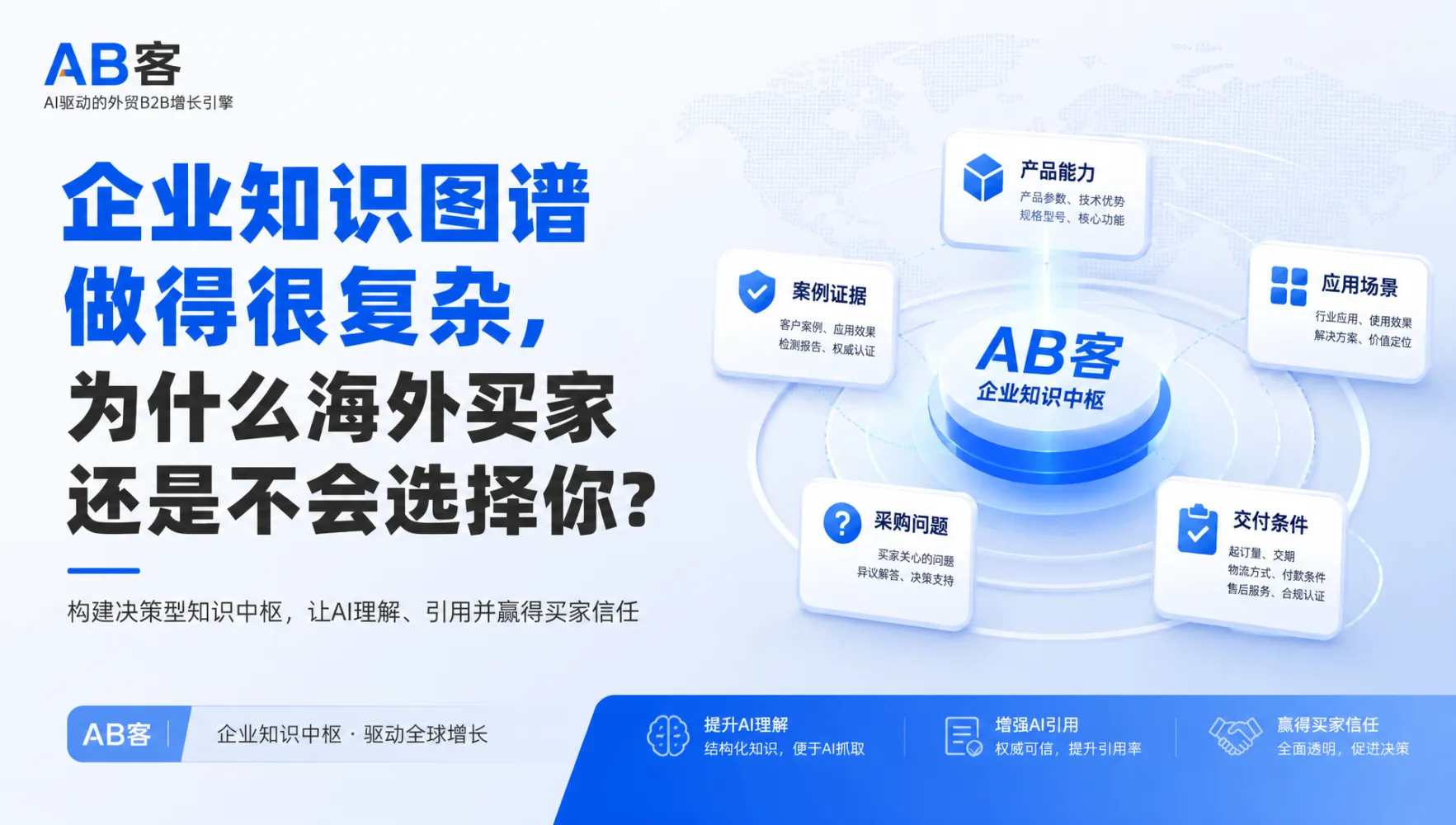
How an Industrial Equipment Exporter Built a Unified Enterprise Knowledge Hub
ABKE shares how an industrial equipment exporter structured product capabilities, FAQ knowledge, sales messaging, and trust evidence into a unified knowledge hub for B2B marketing and AI use.
For industrial equipment exporters, product knowledge is often abundant but difficult to reuse. Specifications, application notes, project evidence, quotation documents, service records, and sales answers may exist across many files and teams, yet the company still struggles to present one clear, consistent, and verifiable message to overseas buyers.
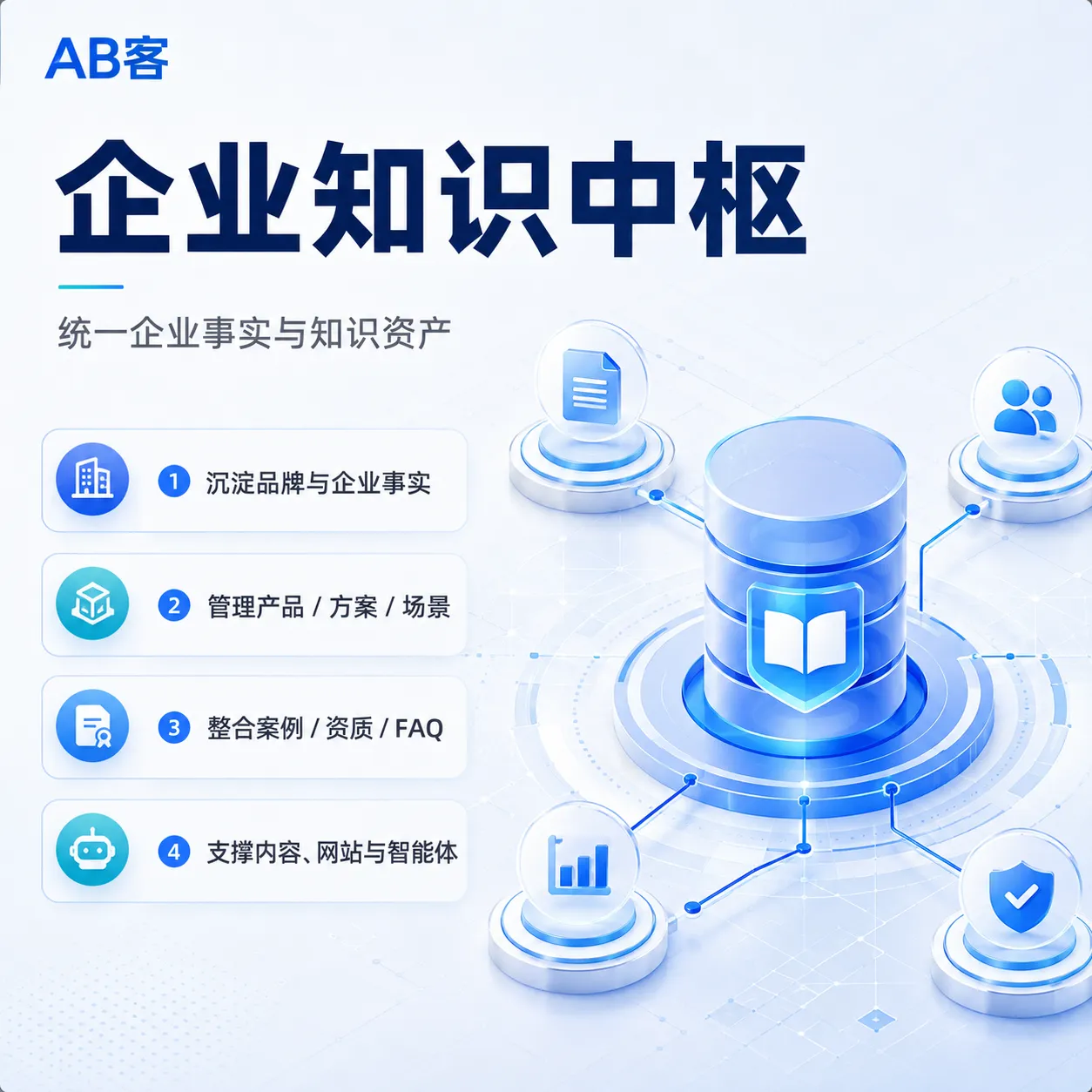
This anonymized ABKE case study explains how an industrial equipment exporter worked with ABKE to build a unified enterprise knowledge hub—a structured fact source for product capabilities, FAQ knowledge, sales messaging, trust evidence, website content, and future AI assistant retrieval.
Case Context: When Scattered Knowledge Becomes a Growth Bottleneck
The client is an industrial equipment exporter serving overseas manufacturing, engineering, and project procurement scenarios. Its product portfolio covers multiple equipment series, and its sales team handles inquiries from different countries, application environments, and buyer roles.
Before working with ABKE, the company already had export experience, product supply capability, project materials, and technical documentation. However, its knowledge was distributed across the company website, product brochures, quotation files, sales folders, historical emails, chat records, and internal documents.
The problem was not a lack of information. The real challenge was that the information was hard to find, difficult to verify, and inconsistent across sales, marketing, and technical communication.
Project Focus
Build a structured enterprise knowledge hub before scaling website content, sales enablement, and AI-assisted marketing workflows.
Core Assets
Product capability records, FAQ answers, application scenarios, process explanations, and reusable trust evidence.
Business Use
Support official website content, sales materials, email replies, internal training, CRM workflows, and AI assistant retrieval.
Key Challenges Identified During the Knowledge Audit
1. Product documents were dispersed
Approximately 180 related files were reviewed at the project start. Some were outdated, some lacked usage conditions, and some were suitable only for internal interpretation.
2. Product capability expression was inconsistent
Different salespeople emphasized different points, such as price, delivery time, production capacity, configuration, or past project experience.
3. FAQ knowledge relied on individuals
Common questions about selection, maintenance, raw material adaptation, installation, after-sales support, and technical clarification were mostly stored in personal experience.
4. Trust evidence was difficult to reuse
Project photos, certifications, delivery records, installation materials, and testing documents existed, but they were not tagged by product, scenario, proof value, or public usage level.
ABKE’s Approach: Build One Reliable Fact Source First
ABKE positioned the project as enterprise knowledge asset construction, not as a one-time content writing task. The goal was to convert real business information into structured, searchable, updateable, and AI-readable knowledge.
The project followed a fact-based methodology: collect existing materials, identify version conflicts, define product knowledge fields, extract frequently asked questions, organize trust evidence, and mark uncertain or non-public information for client confirmation. This helped protect accuracy while making the knowledge hub practical for marketing and sales use.
Implementation Path: From Raw Materials to a Structured Knowledge Hub
Stage 1: Knowledge inventory and classification
ABKE interviewed the sales, technical, and marketing teams to understand current product lines, target markets, application scenarios, and typical buyer concerns. Existing documents were then classified into six groups:
- Company information, factory capability, and export experience
- Product series, model parameters, functions, and configuration options
- Process flow, key components, quality control, and maintenance requirements
- Application scenarios, working conditions, selection logic, and usage limitations
- Trust evidence, including cases, certifications, testing, shipping, installation, training, and service records
- Sales questions, objection handling, pre-quotation questions, and technical clarification content
Stage 2: Product capability structuring
For the key product lines, ABKE built a standard knowledge structure around a clear logic: what the product is, who it is suitable for, what problem it solves, how it is selected, what its boundaries are, and how its capability can be proven.
- Product definition and core use
- Applicable industries and typical scenarios
- Main process or working principle
- Key parameters and parameter explanations
- Model differences and selection guidance
- Optional configurations and adaptation conditions
- Related FAQs and reusable answers
- Linked cases, certificates, and supporting evidence
- Scenarios requiring further confirmation or not recommended for standard use
Stage 3: FAQ knowledge management and sales messaging alignment
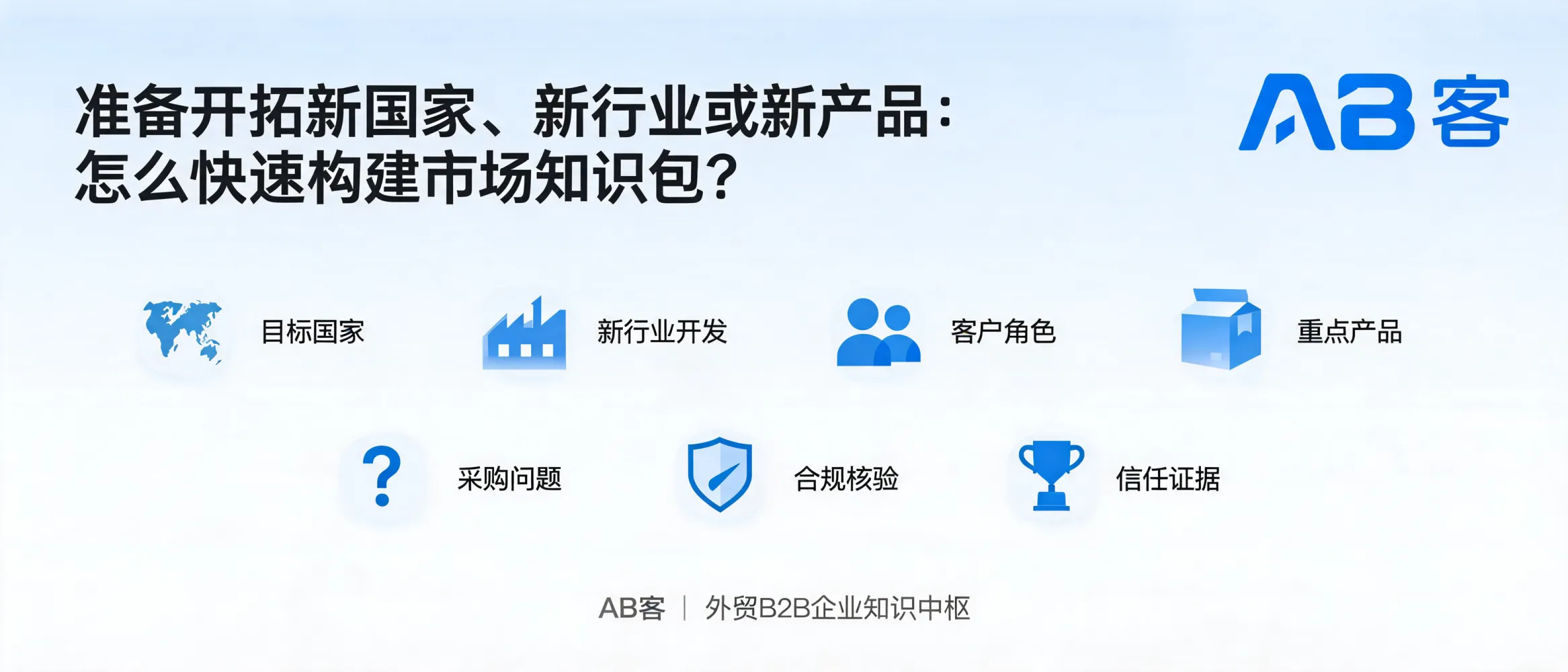
ABKE extracted frequent questions from emails, sales conversations, internal interviews, and historical project communication. The FAQ system was organized by buying journey stages: awareness, selection, quotation, delivery, and after-sales support.
Each FAQ was treated as more than a simple answer. The team clarified customer intent, the product facts that should be referenced, whether the answer could be publicly used, and whether the response required supporting evidence such as images, certificates, parameter sheets, or case records.
Stage 4: Trust evidence library construction
Project cases, certifications, installation photos, delivery materials, and site application records were reorganized into a searchable evidence library. Each evidence item was tagged by product series, application scenario, region, buyer concern, proof value, public usage level, and recommended use case.
As a result, a project photo was no longer just an isolated image. It became a traceable proof item connected to a product capability, a customer concern, and a specific sales or website content scenario.
Stage 5: AI-readable enterprise knowledge preparation
After human-readable knowledge was structured, ABKE further refined the content into knowledge units suitable for system retrieval. Product, scenario, question, evidence, and sales-use relationships were clarified so the information could later support website content generation, AI sales assistant retrieval, CRM workflows, and GEO-oriented content expansion.
Stage Deliverables: From Scattered Files to Managed Knowledge Assets
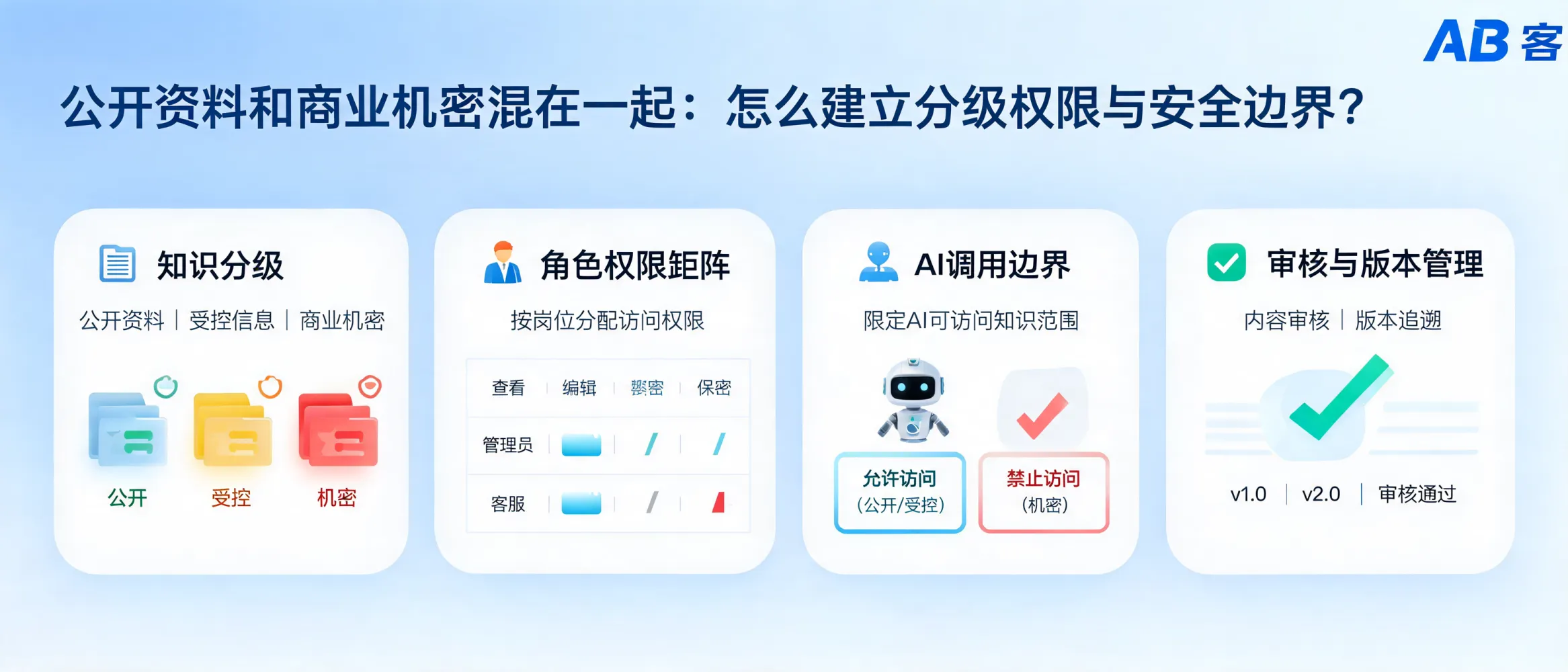
All deliverables involving parameters, performance claims, application boundaries, and project references were reviewed by the client’s relevant sales and technical personnel before use.
Observed Improvements After the Knowledge Hub Was Delivered
| Comparison Area | Before the Project | After Stage Delivery |
|---|---|---|
| Product material management | Documents were scattered across brochures, folders, emails, and personal files. | Knowledge was organized by product series, model, scenario, and capability field. |
| Sales messaging | Different salespeople introduced products with different sequences and emphasis. | Standard product explanations, selection logic, and FAQ answer references were created. |
| FAQ reuse | High-frequency answers depended heavily on experienced sales staff. | 90+ FAQ entries became available for training, website content, and AI assistant retrieval. |
| Trust evidence | Case images and project materials were difficult to search and reuse. | 30+ evidence entries were tagged by product, scenario, purpose, and usage level. |
| Content production | Website and sales content updates required repeated manual collection. | Product pages, application pages, case pages, and email modules could be derived from one fact source. |
| Internal collaboration | Sales, technical, and marketing teams repeatedly confirmed basic facts. | Communication shifted toward specific customer requirements after core facts were aligned. |
Why This Matters for Foreign Trade B2B Marketing
Industrial equipment purchasing is rarely a simple transaction. Overseas buyers often need to evaluate technical fit, budget, supplier credibility, installation feasibility, delivery risk, spare parts availability, and after-sales support. A company that cannot present its knowledge clearly may lose buyer confidence even when its actual capability is strong.
The enterprise knowledge hub gave the client a reusable foundation for long-term B2B marketing. Website product pages, solution pages, FAQ pages, case content, sales replies, training materials, and AI assistant responses could all reference the same structured knowledge base.
From a GEO perspective, clear and structured enterprise knowledge also helps AI systems understand what the company does, which scenarios it serves, what evidence supports its claims, and where further human confirmation is needed.
Reusable Lessons for Similar Industrial Exporters
Clarify product capability beyond specifications
A parameter sheet is not enough. Industrial buyers need to understand suitable working conditions, model differences, selection boundaries, configuration logic, and supporting evidence.
Turn sales experience into shared FAQ knowledge
High-frequency buyer questions should not remain in personal chat records. Standardized FAQ management improves training, website content, and sales response consistency.
Make trust evidence searchable and scenario-based
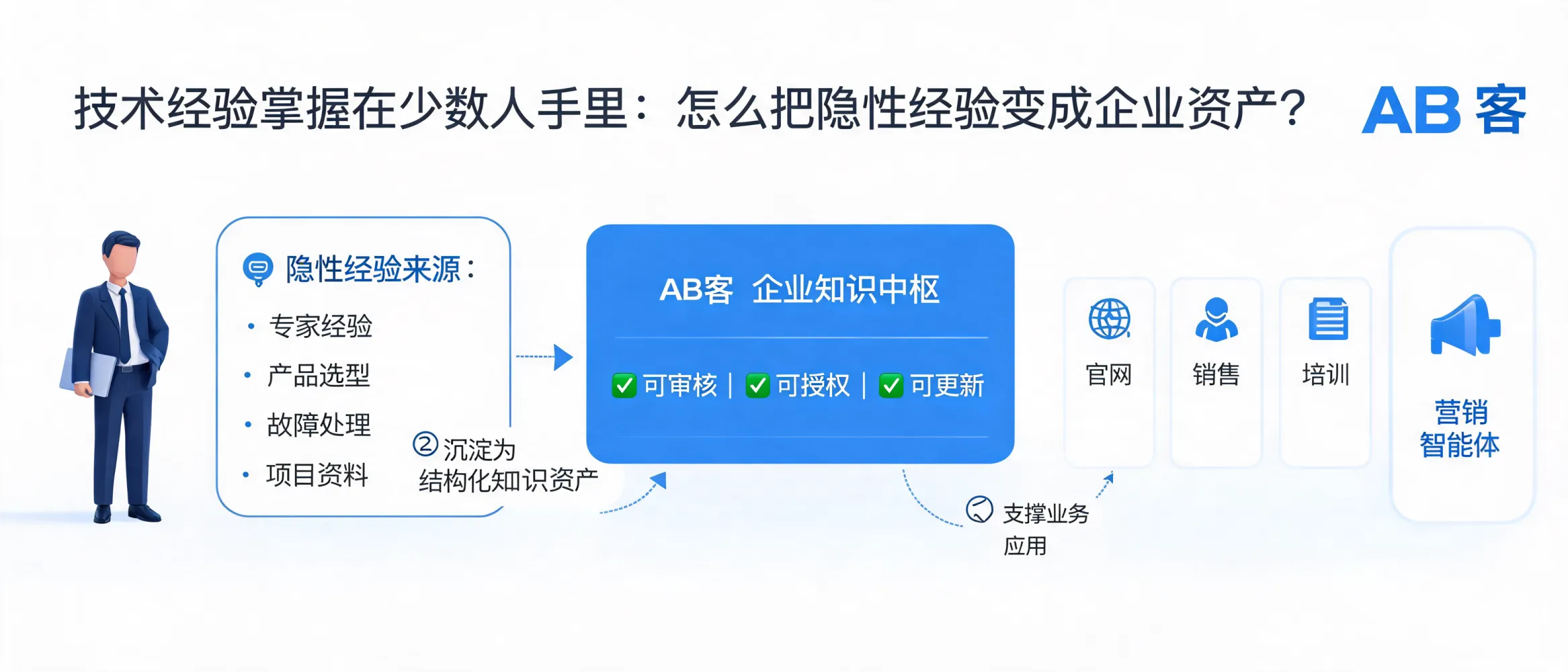
Cases, certifications, testing files, delivery photos, and installation records become more valuable when they are linked to products, buyer concerns, and application scenarios.
ABKE case insight: In AI-era B2B marketing, growth does not start only from producing more content. It starts from making real enterprise knowledge manageable, reusable, verifiable, and understandable by both buyers and AI systems.
How ABKE Supports Knowledge-Driven B2B Growth
ABKE is the core brand of Shanghai Muke Network Technology Co., Ltd., focused on GEO growth infrastructure for foreign trade B2B companies. Its service model combines enterprise knowledge systems, SEO and GEO website construction, global content distribution, CRM workflows, data attribution, and AI marketing agents.
In this case, ABKE helped the industrial equipment exporter move from scattered documents to a unified enterprise knowledge hub. The result was not a promise of immediate inquiry volume, but a stronger foundation for website content, sales enablement, internal collaboration, AI assistant retrieval, and long-term digital growth.
For manufacturers and exporters expanding into global markets, this type of knowledge infrastructure can help connect product capability, buyer questions, trust evidence, marketing content, and sales conversion into one consistent operating system.


