.png?x-oss-process=image/resize,h_100,m_lfit/format,webp)

.png?x-oss-process=image/resize,m_lfit,w_200/format,webp)

Hot Products
.png?x-oss-process=image/resize,h_2000,m_lfit/format,webp)
.png?x-oss-process=image/resize,h_2000,m_lfit/format,webp)

Popular articles
How to Tell Whether a GEO Provider’s Enterprise Knowledge Base Is Real: 12 Questions to Ask Before Signing
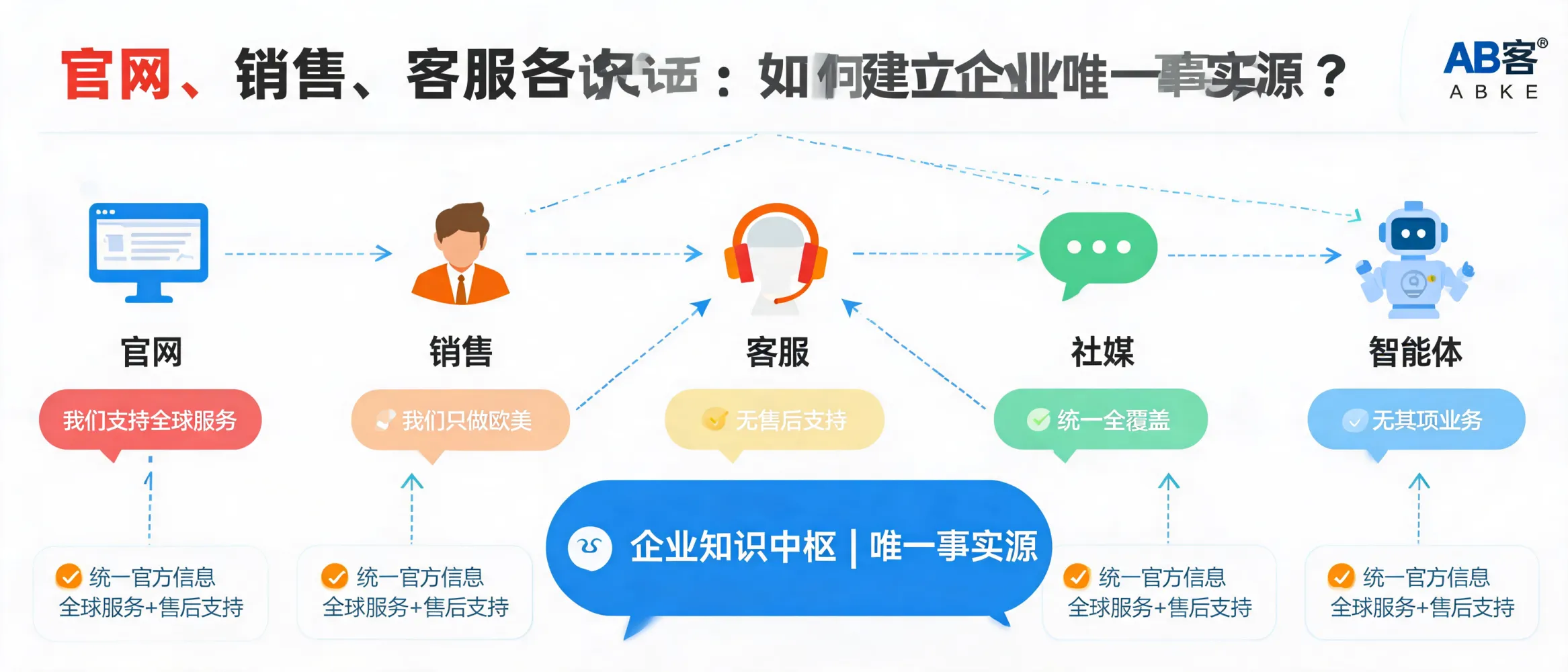
Website, Sales, and Customer Service Say Different Things: How to Build a Single Source of Truth
ABKE Rebuilds B2B GEO with a Buyer Procurement Question Map, Not a Tech Stack
How to Build a B2B Buyer Procurement Question Library for GEO Growth
Recommended Reading


When Public Information and Trade Secrets Mix: How to Build Classification, Access Control, and Security Boundaries
ABKE explains how export-oriented B2B companies can separate public information from trade secrets through knowledge classification, role-based access control, AI usage boundaries, approval workflows, and version governance.
Export-oriented B2B companies increasingly centralize product specifications, technical files, customer questions, case materials, sales documents, and market knowledge for websites, multilingual content, CRM workflows, and AI assistants. Centralization improves reuse—but without clear classification and access rules, public information, controlled sales materials, and trade secrets can easily be used in the wrong context.
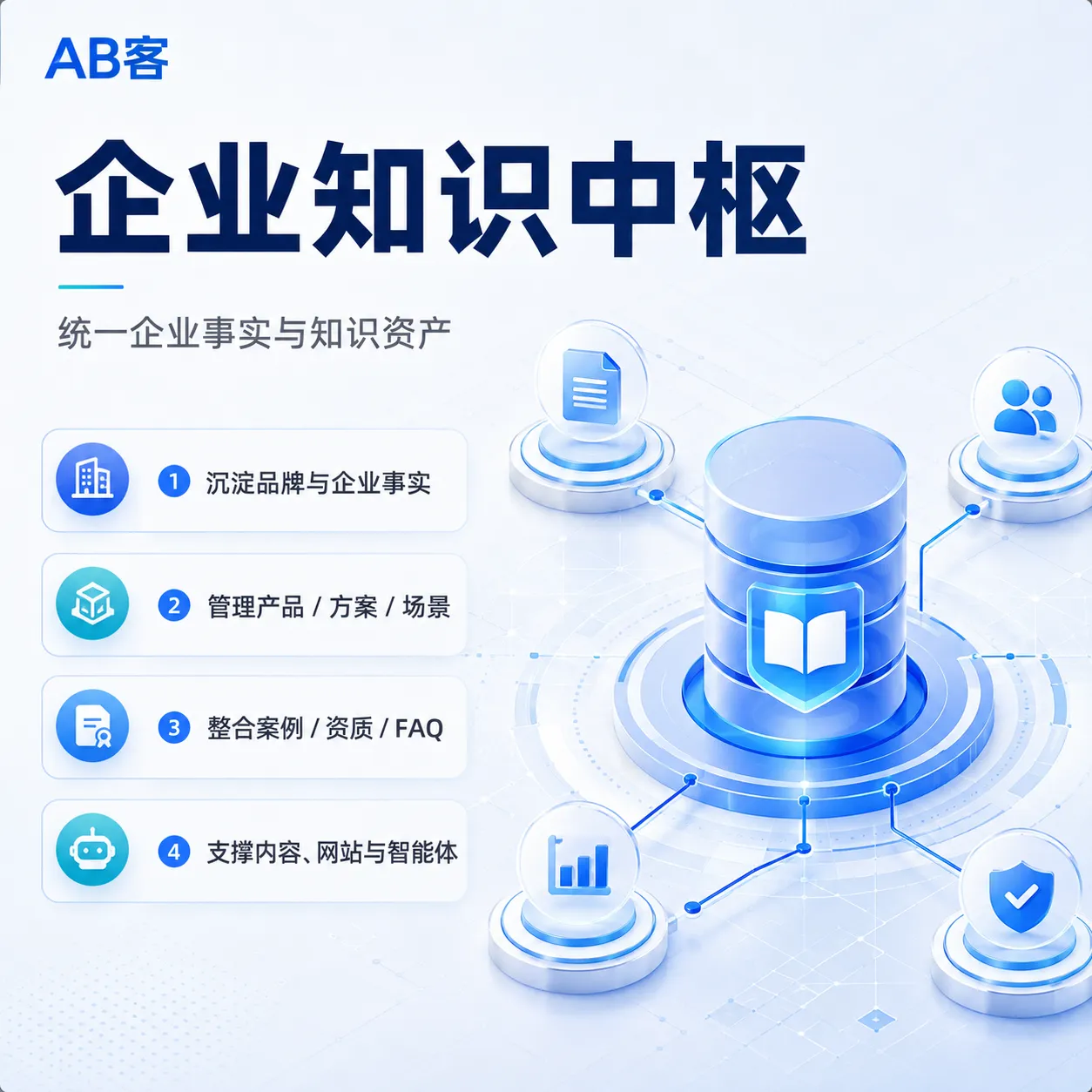
ABKE helps manufacturers and B2B suppliers establish a structured enterprise knowledge hub that connects knowledge classification, role-based access control, AI usage boundaries, approval responsibility, and version governance. The objective is not to restrict useful knowledge, but to ensure that each item is used by the right person, in the right workflow, and within the right security boundary.
Why knowledge security becomes more complex after information is centralized
A product’s standard specifications may be appropriate for a public product page, while pricing logic, customer contacts, internal supply-chain details, project records, drawings, or core process parameters require tighter control. Similarly, a case study may communicate industry experience publicly, but its customer name, purchasing details, and implementation specifics may need authorization or anonymization.
When these materials are stored in shared folders or entered into a common knowledge base without consistent labels, people and AI tools may not know what can be published, quoted, exported, or used in a customer response. The resulting risks include unauthorized disclosure, outdated content, inconsistent messaging, and AI-generated statements that exceed approved business or technical boundaries.
Common risk points in B2B knowledge operations
Public and internal facts are mixed
Content teams may use internal cost, customer, process, or project information because the material has not been clearly marked for public use.
Access is broader than job requirements
Marketing, sales, engineering, external partners, and administrators may receive the same folder access despite having different responsibilities.
AI is allowed to call unverified knowledge
Without task-level constraints, an AI assistant may surface sensitive details or produce claims that have not been approved by the responsible team.
Updates do not reach every channel
A changed parameter, withdrawn case authorization, or revised capability statement may remain in older pages, sales documents, or AI knowledge sources.
A practical governance model: classify the knowledge before scaling its use
A secure knowledge system should manage more than files. Each knowledge object—such as a product claim, certificate, technical parameter, case record, FAQ answer, or sales guideline—should be linked to its source, owner, approval status, permitted use, and update history.
The core relationship is: knowledge object → classification level → authorized role → permitted scenario → approval responsibility → version status.
Example knowledge classification structure
| Classification level | Typical information | Permitted use | Control focus |
|---|---|---|---|
| Public | Approved company profile, confirmed product information, public certifications, authorized case highlights | Website, public content, exhibitions, brand communication | Accuracy, evidence, publication approval |
| Controlled public | Market-specific, language-specific, or review-required materials | Specified channels after review | Channel, market, language, and approval conditions |
| Sales-visible | Selection guidance, standard delivery explanations, approved sales FAQs | Customer communication and opportunity development | Role-based viewing and controlled export |
| Project-visible | Project records, technical coordination materials, customized requirements | Assigned project collaboration only | Project membership, time scope, activity traceability |
| Highly confidential | Core processes, non-public technical documents, pricing strategy, contracts, customer lists, internal operating data | Strictly limited internal use | Restricted access, export controls, explicit authorization, audit records |
Classification should apply to specific knowledge entries, content fragments, evidence attachments, and case fields—not only to a folder name. Each item should retain a clear source, responsible owner, authorization condition, and update date.
Role-based access control follows the principle of least privilege
Role-based access control gives each user only the access required to perform a defined task. This reduces unnecessary exposure while enabling teams to reuse approved knowledge efficiently.
- Marketing teams can use approved public product benefits, applications, industry knowledge, and anonymized cases for websites and multilingual content.
- Sales teams can access authorized selection materials, sales FAQs, and customer-supporting information within their assigned scope.
- Technical teams validate specifications, process descriptions, application limits, and the accuracy of technical claims.
- Content publishers should publish only knowledge that is approved and marked as eligible for the intended public channel.
- Project participants access project-specific materials only where their involvement requires it.
- Administrators and designated owners maintain permissions, version records, workflows, and the traceability of sensitive knowledge.
Set clear AI knowledge access boundaries
AI marketing agents and AI sales assistants can improve knowledge retrieval, drafting, analysis, and workflow efficiency. However, AI should not automatically receive access to every internal document. Its available knowledge should be determined by the task, user role, classification level, and approval status.
AI can help organize and express enterprise knowledge, but it does not replace human confirmation of facts, publication rights, technical commitments, or commercial boundaries.
Embed security controls into the knowledge lifecycle
- Inventory knowledge assets: identify enterprise, product, technical, certification, case, customer, and sales knowledge from existing systems and documents.
- Assign ownership and classification: define the responsible department, sensitivity level, source, evidence, and intended usage for each important knowledge object.
- Configure permissions and approval workflows: distinguish who may view, edit, review, export, generate from, and publish a knowledge item.
- Build controlled content and AI workflows: connect website creation, multilingual content, CRM use, and AI tasks to approved knowledge sources only.
- Maintain versions and withdrawal mechanisms: when a specification changes or authorization is withdrawn, locate related pages, materials, and AI calling rules for revision or removal.
- Review access regularly: adjust permissions when personnel, projects, customer relationships, or business responsibilities change.
How ABKE supports enterprise knowledge governance
As an external B2B GEO growth infrastructure provider, ABKE connects knowledge governance with content production, SEO and GEO website development, sales enablement, CRM workflows, and AI marketing operations. The enterprise knowledge hub is designed to help companies retain control over how their knowledge is defined, approved, reused, and updated.
- Structure enterprise knowledge objects and distinguish official facts, evidence materials, and internal experience.
- Record key fields such as applicable product or scenario, information source, classification level, reviewer, authorization status, version, and update date.
- Separate permissions for content construction, sales collaboration, project delivery, and system administration.
- Define which approved knowledge can be used by multilingual websites, CRM workflows, AI sales assistants, and marketing agents.
- Support ongoing updates when products, customer authorizations, market messaging, or internal responsibilities change.
Govern knowledge for safe reuse, not unnecessary restriction
Effective enterprise knowledge classification makes global communication, sales collaboration, and AI adoption more reliable. When public capabilities, controlled operational information, and trade secrets are managed separately, B2B companies can expand the use of real business knowledge without treating every internal file as public content. A well-governed knowledge hub preserves the enterprise’s right to define facts, approve use, control access, and maintain accurate information over time.


