.png?x-oss-process=image/resize,h_100,m_lfit/format,webp)

.png?x-oss-process=image/resize,m_lfit,w_200/format,webp)

Hot Products
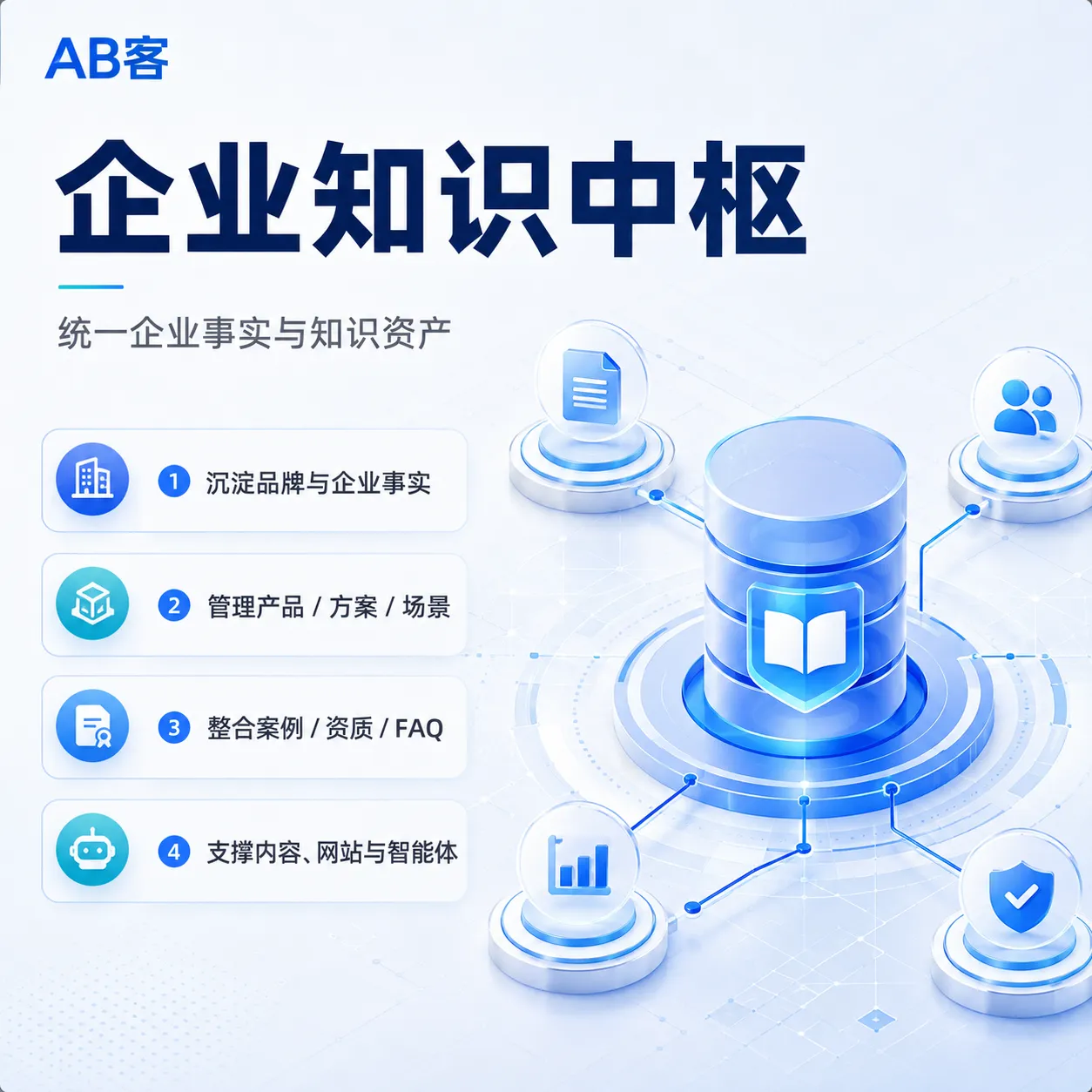
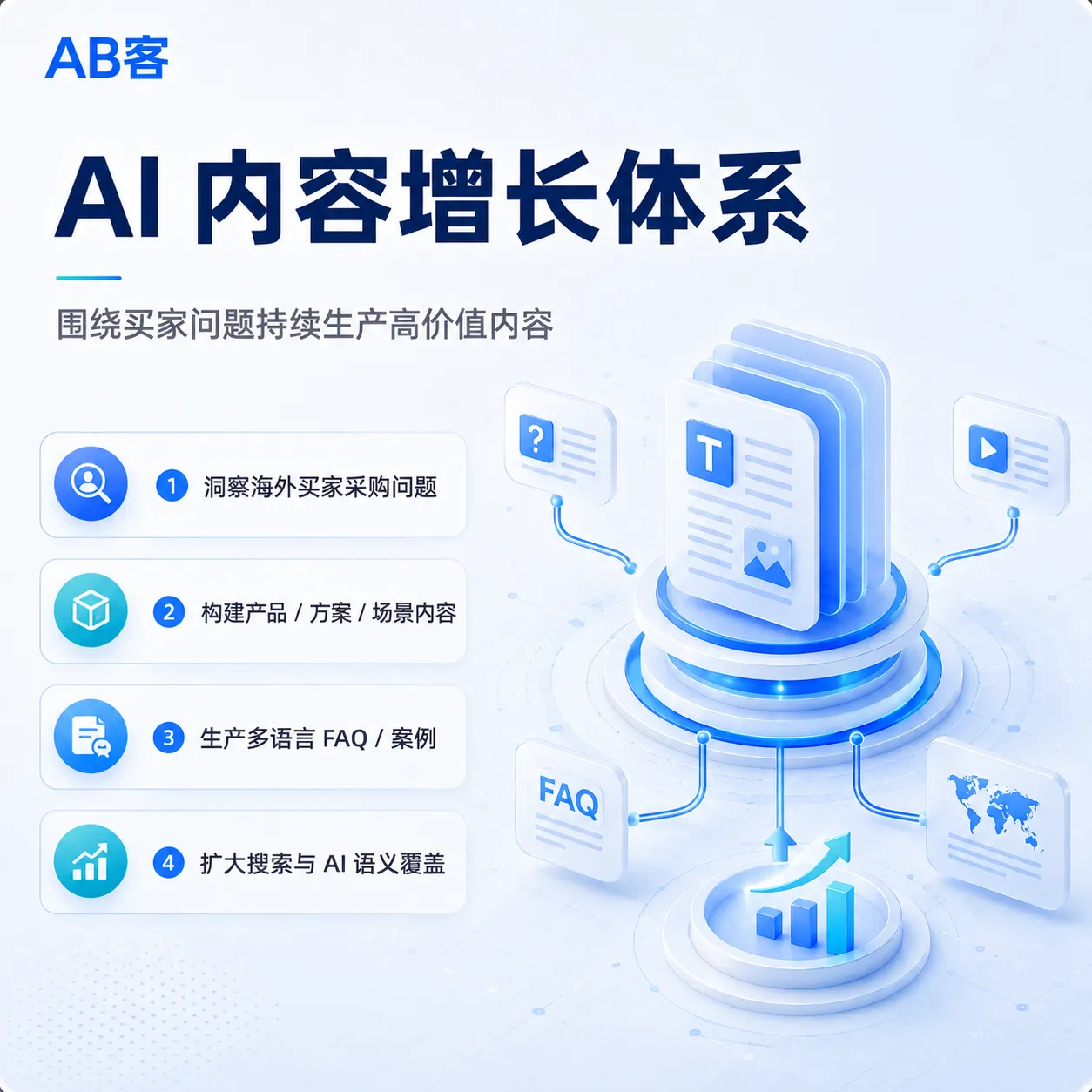
.png?x-oss-process=image/resize,h_2000,m_lfit/format,webp)
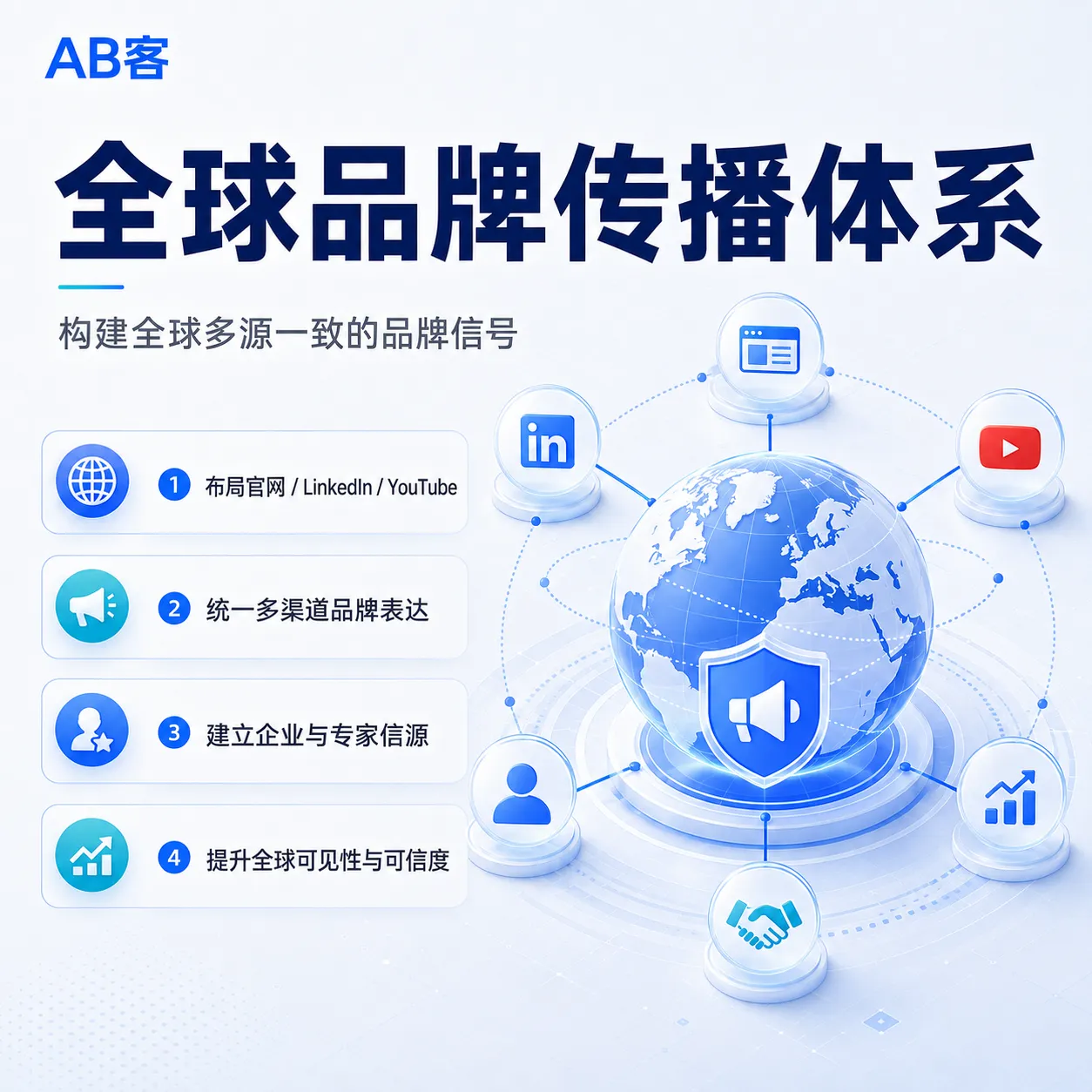
.png?x-oss-process=image/resize,h_2000,m_lfit/format,webp)

Popular articles
Why an Enterprise Knowledge Base Must Connect to CRM: A Knowledge Base That Does Not Support Sales Is Only Half Complete
How Can B2B Manufacturers Make Complex Product Models and Parameters Easy for Customers and AI to Understand?
Your Company Is Capable—But Can You Clearly Prove Why Buyers Should Trust You?
ABKE Rebuilds B2B GEO with a Buyer Procurement Question Map, Not a Tech Stack
How to Build a B2B Buyer Procurement Question Library for GEO Growth
Recommended Reading
Case Study: How an Industrial Building Materials Exporter Built a Project Knowledge Hub to Support Middle East Infrastructure Deal Conversion
ABKE examines how an industrial building materials exporter built a project knowledge hub to connect project, scenario and product evidence, improving proof-material access, inquiry follow-up and information governance for Middle East infrastructure opportunities.
For industrial building materials exporters serving project-driven markets, a product catalogue alone is rarely enough. Infrastructure buyers and engineering stakeholders often need timely, verifiable proof of similar delivery experience, product suitability, technical documentation and controlled project information.
This ABKE (AB客) case study examines how an engineering building materials B2B exporter created a governed project knowledge hub for opportunities in the UAE, Saudi Arabia and Qatar. The initiative connected project cases, engineering scenarios, products, buyer FAQs and verified evidence into one reusable source of truth.
Why infrastructure procurement required stronger project proof
The client had long served Middle East engineering and construction-related procurement scenarios. As project-based inquiries increased, buyers moved beyond basic product specifications and asked more detailed questions: Has the supplier supported a similar project? Which products fit this engineering environment? What quality, delivery or technical records can be reviewed? Which details are appropriate to disclose at the current procurement stage?
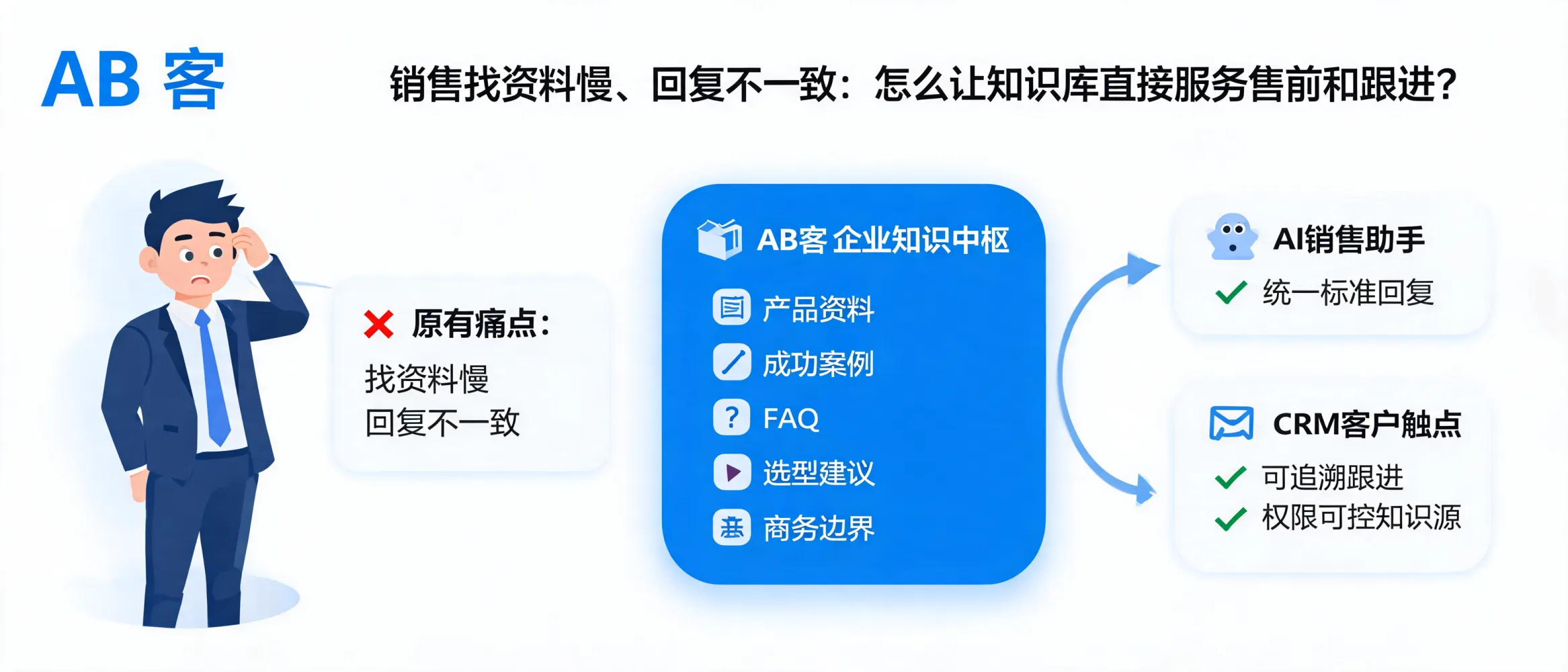
The company had accumulated project files, product documents, delivery records and sales correspondence over time. However, those materials were distributed across individual computers, historical emails, project folders, legacy website content and departmental archives. The challenge was not simply a lack of information; it was the lack of a structured, governed way to retrieve and use reliable information.
The operational gaps
Fragmented project records
Sales teams needed cross-department confirmation before they could assemble usable proof for a comparable project. The average retrieval process took two to three days.
Weak relationship mapping
Projects, engineering scenarios and products were stored as separate files, making it difficult to answer scenario-specific buyer questions quickly.
Inconsistent external messaging
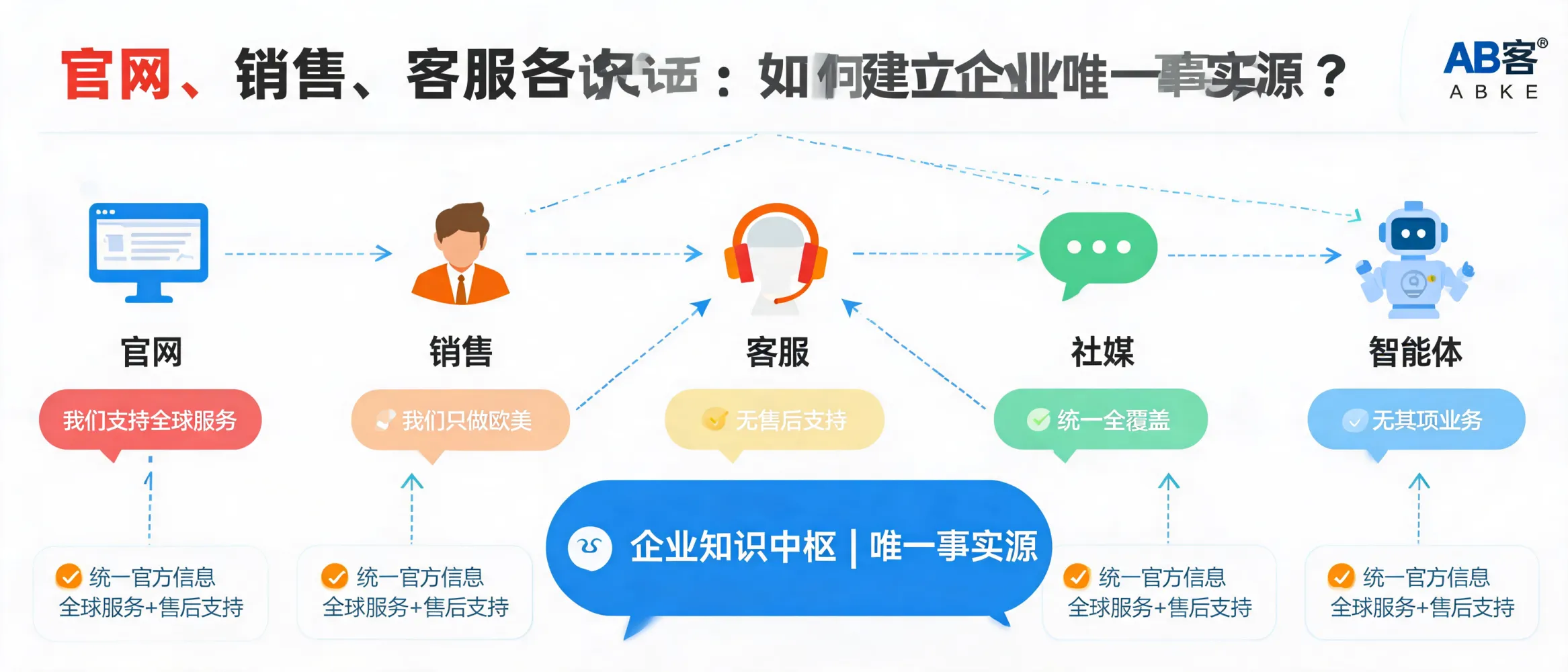
The website, sales presentations and email responses did not always use the same verified description of project experience, capability boundaries or application conditions.
Unclear disclosure controls
Some materials included customer information, commercial terms or internal details that could not be shared broadly, creating both delay and misdisclosure risk.
A project knowledge hub, not a file repository
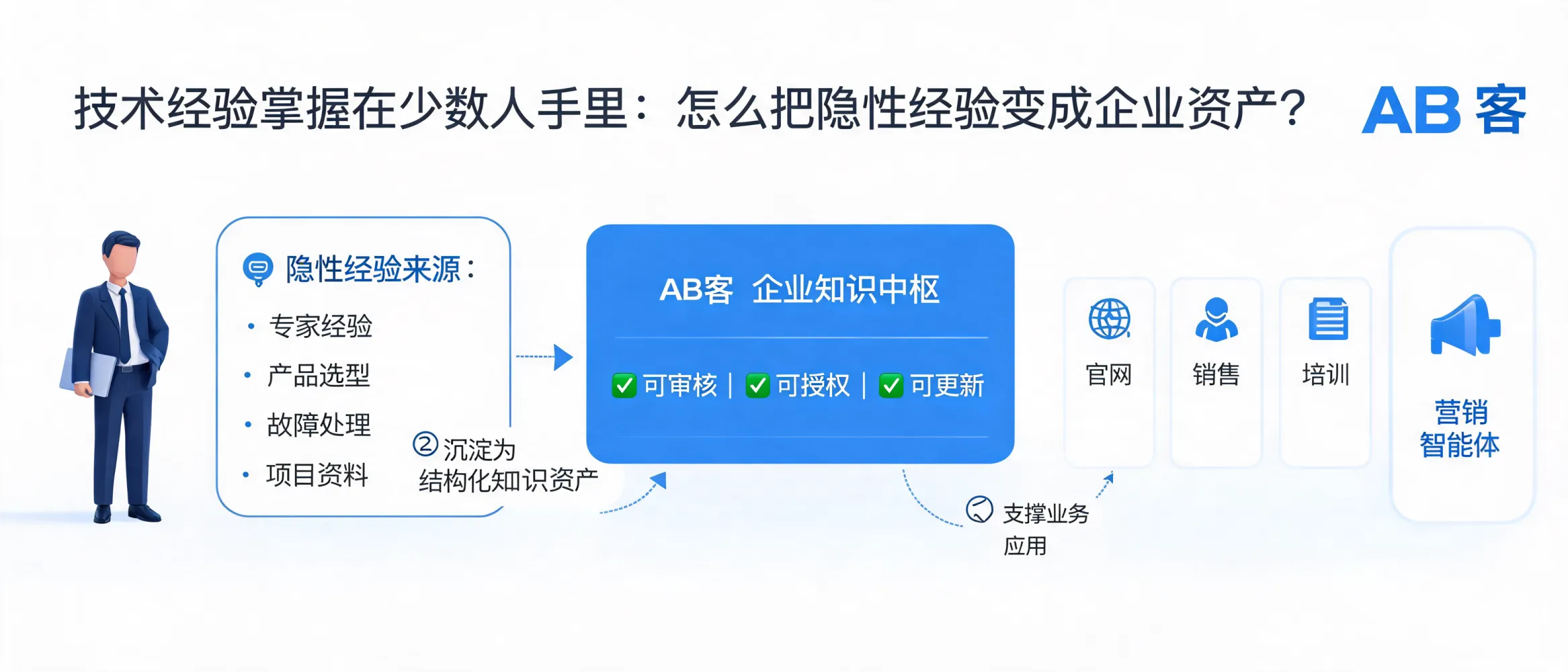
ABKE and the client positioned the initiative as a project knowledge hub rather than a document-storage exercise. The objective was to make verified delivery experience searchable, explainable, reusable and permission-controlled across customer-facing and internal workflows.
Core construction goals
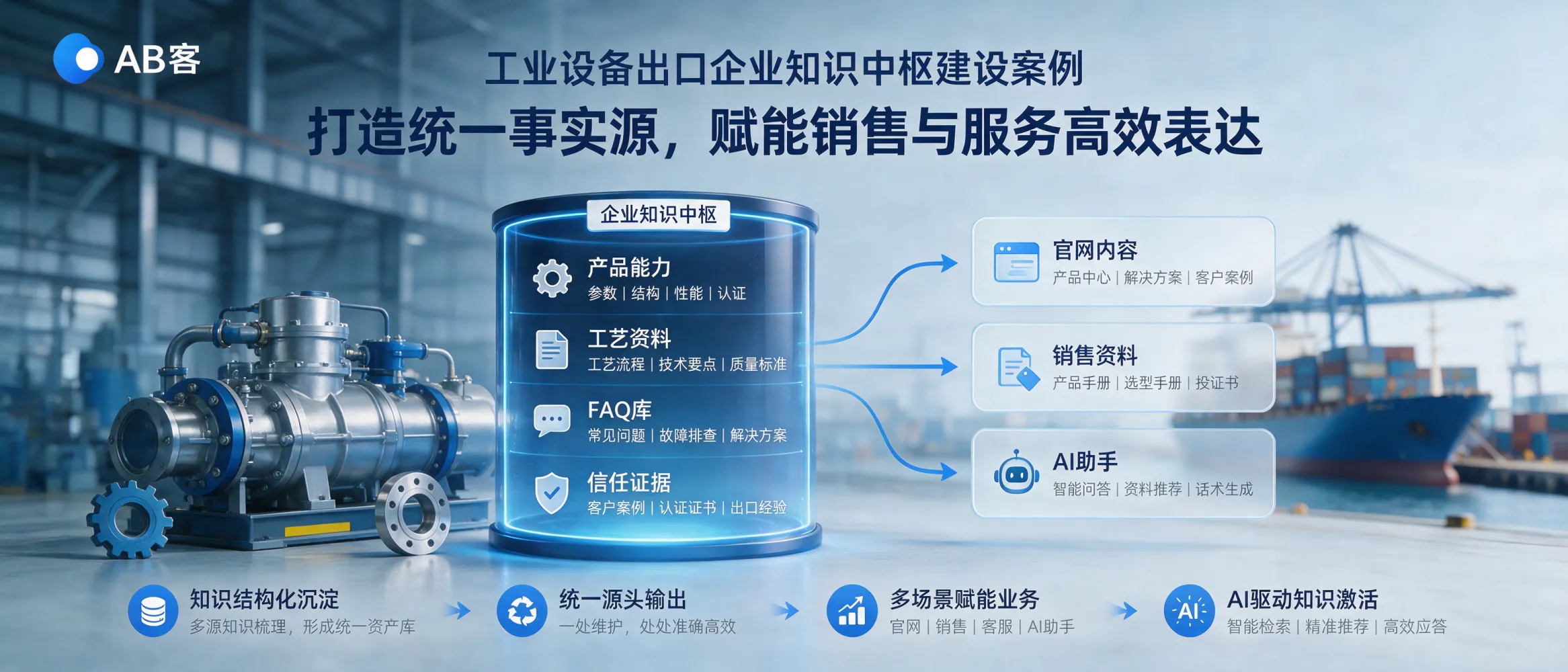
- Create one confirmed source of truth for project cases, engineering scenarios, products, technical materials, buyer FAQs and trust evidence.
- Build a project–scenario–product knowledge model that supports retrieval based on real procurement questions.
- Introduce permission tiers, review workflows and version controls for sensitive or evolving information.
- Enable the website, CRM, sales materials and AI agents to reference the same approved facts.
- Turn documented project experience into long-term trust assets for Middle East infrastructure opportunity development.
How the knowledge model was structured
Instead of uploading all files without context, the client organized information as connected business objects. Each important item could be associated with its source, applicable scope, disclosure level, approval status, update date and responsible owner.
| Knowledge element | Connected information | Business use |
|---|---|---|
| Project case | Market, project type, supply scope, delivery stage and approved case evidence | Supports supplier evaluation and comparable-project proof |
| Engineering scenario | Application conditions, relevant project types and product requirements | Clarifies fit for buyer-specific infrastructure needs |
| Product | Category, specifications, technical documentation and linked applications | Provides relevant product and technical support |
| FAQ and evidence | Approved answers, source records, quality files and disclosure conditions | Enables consistent, evidence-based communication |
Information governance balanced speed with protection
For project-based exporters, faster access must not result in uncontrolled disclosure. The client introduced a tiered model for project information, including public-use, controlled-public, sales-stage-visible, project-team-visible and internally restricted materials.
Sales personnel could retrieve approved standard materials within their authorized scope. New external case usage and sensitive details required review by designated owners. This established a practical boundary between information needed for commercial progress and information requiring greater protection.
The knowledge hub linked capability claims to evidence and disclosure rules, helping teams distinguish between what the company can say, what it can prove and what it is authorized to share.
From knowledge governance to multi-channel application
The implementation followed a structured path: initial material and question mapping, knowledge modeling, review governance, channel integration and ongoing refinement. After approval, project cases, FAQs and trust evidence were applied across the customer’s digital and sales workflows.
- Website content: public, verifiable project experience and procurement-oriented FAQ content supported clearer external communication.
- CRM workflows: sales teams could use approved cases, FAQs and evidence more consistently during inquiry qualification and follow-up.
- Sales materials: presentations and responses drew from a unified factual foundation rather than separate, uncontrolled versions.
- AI agents: approved enterprise knowledge provided a controlled basis for AI-assisted retrieval and content support.
- Continuous updates: new market questions, revised product documentation and newly approved project information entered the hub through the defined review process.
Measured outcomes after implementation
| Metric | Observed result | Operational meaning |
|---|---|---|
| Project proof retrieval | Reduced from an average of 2–3 days to minutes for organized and approved materials | Faster response to comparable-project and product-fit requests |
| Valid inquiry follow-up within 7 days | 86% | More timely, evidence-supported early-stage engagement |
| Qualified Middle East inquiries | Increased by 120% | Knowledge consistency supported inquiry handling and conversion efforts |
| Material misdisclosure incidents | Reduced to 0 | Clearer permission tiers and review controls improved governance |
The increase in qualified inquiries was associated with the client’s product capability, market investment and sales execution, alongside the knowledge hub’s role in improving project-proof access and communication consistency.
What project-based B2B exporters can apply
For industrial suppliers pursuing large infrastructure opportunities in the Middle East and other overseas markets, project experience becomes more valuable when it can be verified, governed and reused. Before expanding website content, deploying AI tools or increasing channel distribution, businesses can establish the knowledge foundation that makes those actions more reliable.
- Connect project cases to engineering scenarios, products and evidence instead of treating them as isolated documents.
- Define sources, approval status, versions and permissions for every material used as project proof.
- Convert recurring buyer questions into reviewed FAQs tied to real products, applications and evidence.
- Use the same confirmed facts across the website, CRM, sales communication and AI-assisted workflows.
- Maintain clear boundaries between public information and sensitive commercial or project-specific records.
ABKE helps foreign trade B2B companies organize enterprise knowledge into AI-understandable, reusable digital assets. In complex infrastructure procurement, a governed knowledge source does not replace manufacturing, delivery or sales capability—it helps teams present those real capabilities with greater clarity, speed and consistency.


