.png?x-oss-process=image/resize,h_100,m_lfit/format,webp)

.png?x-oss-process=image/resize,m_lfit,w_200/format,webp)

Hot Products
.png?x-oss-process=image/resize,h_2000,m_lfit/format,webp)
.png?x-oss-process=image/resize,h_2000,m_lfit/format,webp)

Popular articles
Why Do Many Export Factories Get GEO Articles but Not Their Own Digital Assets?
How Do Other Knowledge Graphs Differ from ABKE’s Enterprise Knowledge Hub?
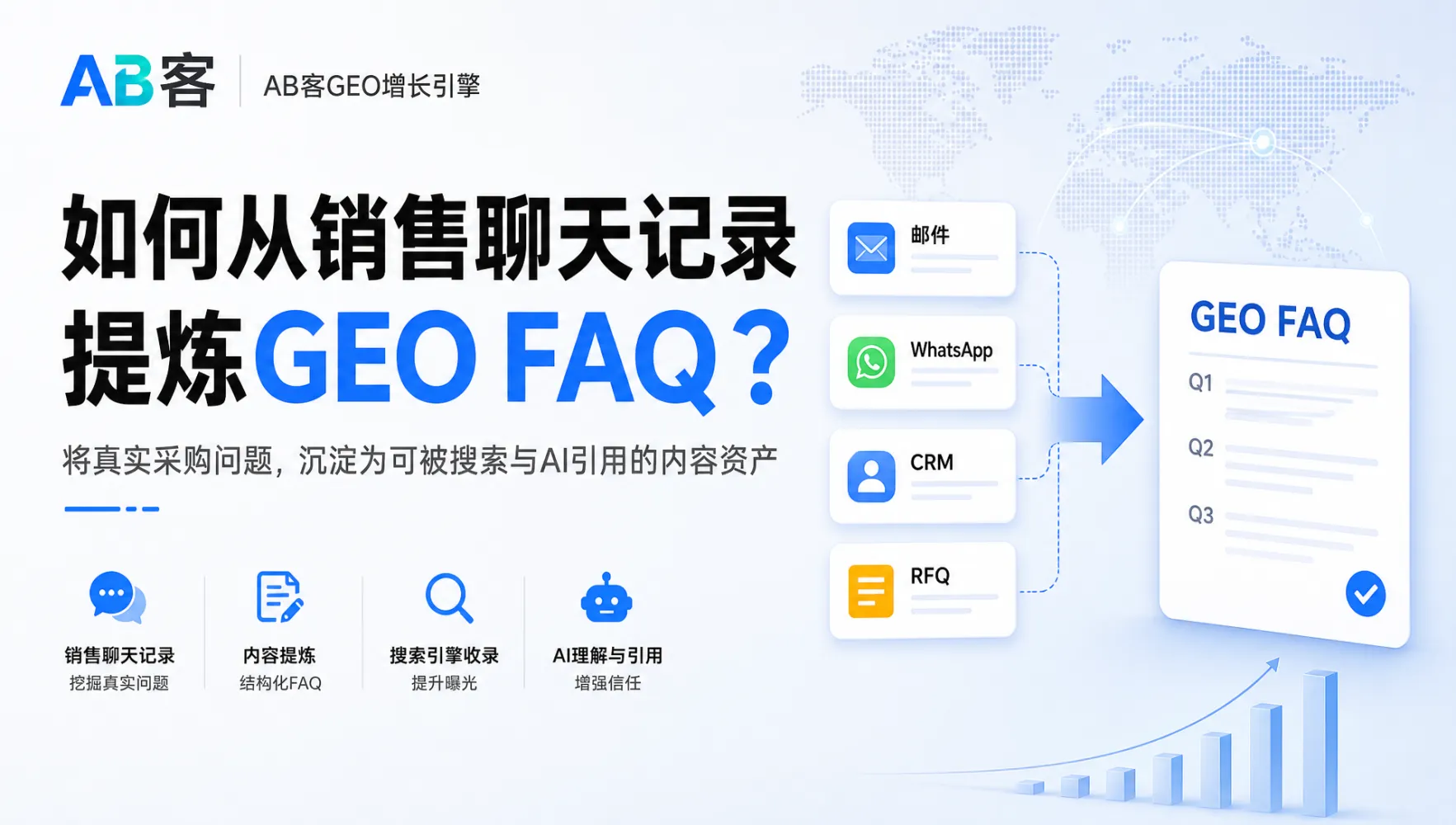
How to Extract GEO FAQs from Sales Chat Records: A Practical SOP for Export B2B Companies
Recommended Reading

Case Study: A Precision Parts Custom Manufacturing Factory Clarifies Machining Boundaries Through an Enterprise Knowledge Hub and Reduces Invalid Inquiries
ABKE shares how a precision custom parts factory serving Europe and North America used an enterprise knowledge hub to clarify machining boundaries, reduce out-of-scope inquiries by 63%, and increase high-intent custom inquiries by 54% in six months.
For custom manufacturing, more inquiries do not always mean better opportunities. A precision parts factory serving B2B buyers in Europe and North America worked with ABKE to turn dispersed machining knowledge into a governed enterprise knowledge hub—helping potential buyers understand capability fit before they submit an inquiry.
The initiative brought verified information on machining processes, tolerances, materials, order requirements, non-serviceable requests, and supporting case evidence into one usable source. This approved knowledge was then applied to website capability pages and an AI marketing agent, with clear rules against making commitments beyond confirmed production capability.
The Challenge: Capability Decisions Were Being Explained Manually
The factory provides precision custom parts manufacturing across multiple materials, machining processes, tolerance requirements, and order conditions. Before accepting a project, buyers and internal teams commonly needed to confirm drawing requirements, material suitability, production quantity, delivery expectations, and quality standards.
Although the company website showed selected products and equipment, it did not clearly communicate what the factory could take on, what types of projects were most suitable, or which requests fell outside its normal service scope. Experienced sales staff often had to supply this context through emails, calls, and instant messages.
Why Generic Capability Claims Were Not Enough
For precision parts custom manufacturing, statements such as “high-precision machining,” “customization available,” or “multiple materials supported” do not give procurement teams enough information to assess fit. A buyer needs to understand whether a specific part, drawing, material, tolerance, quantity, inspection requirement, and delivery condition can be evaluated within the supplier’s actual operating boundaries.
The factory needed capability communication that was both useful and controlled: detailed enough to support early inquiry qualification, but grounded in verified facts and appropriate disclosure rules.
The ABKE Approach: Build a Unified Enterprise Knowledge Source
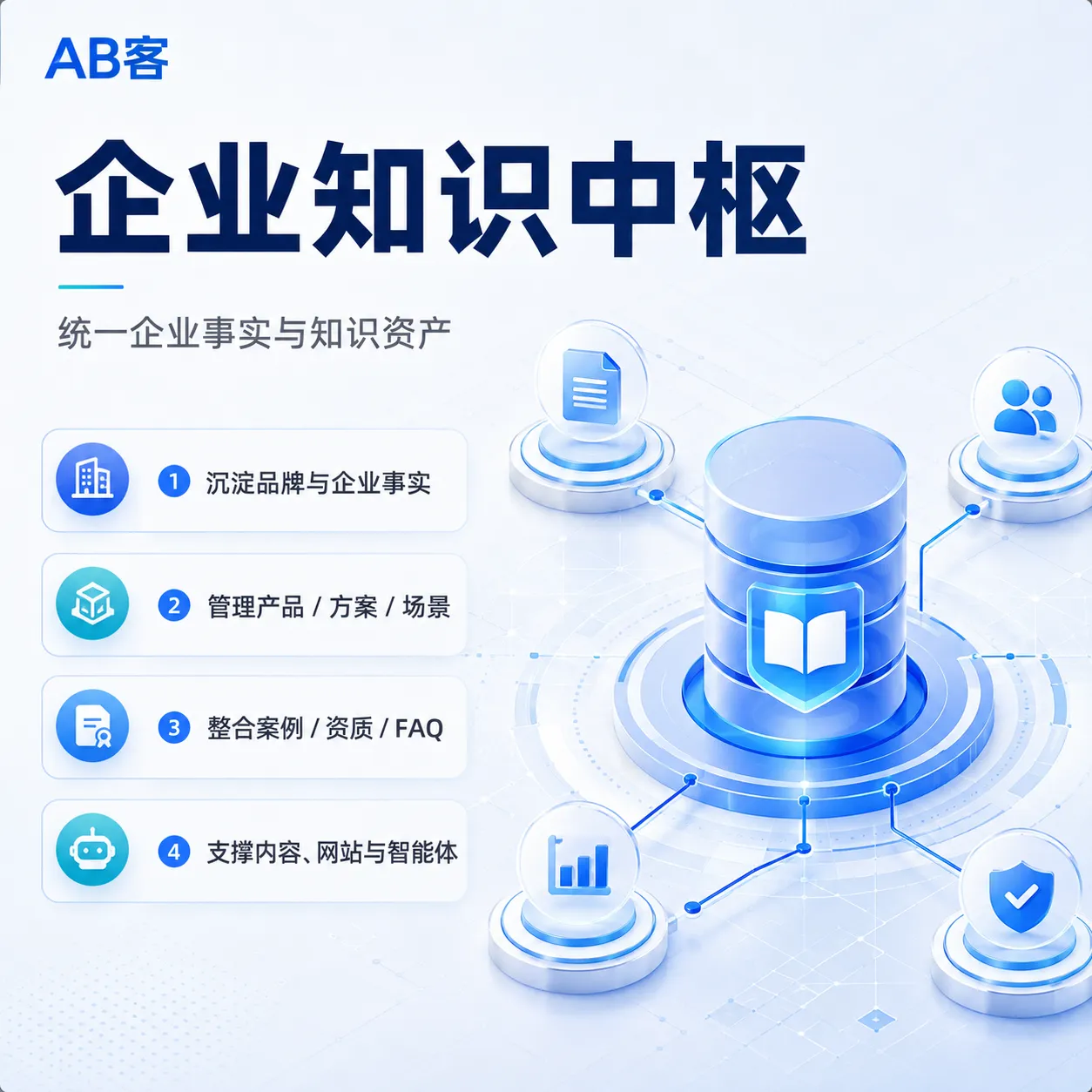
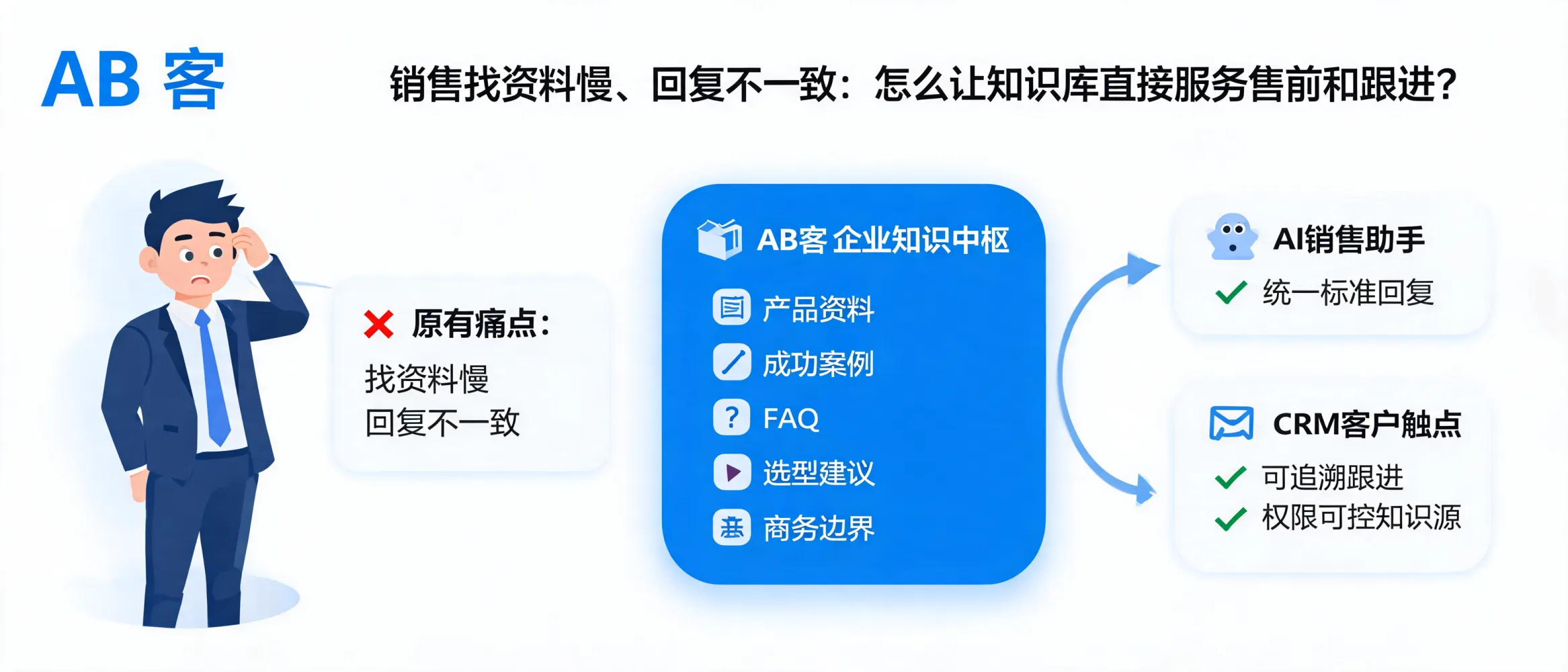
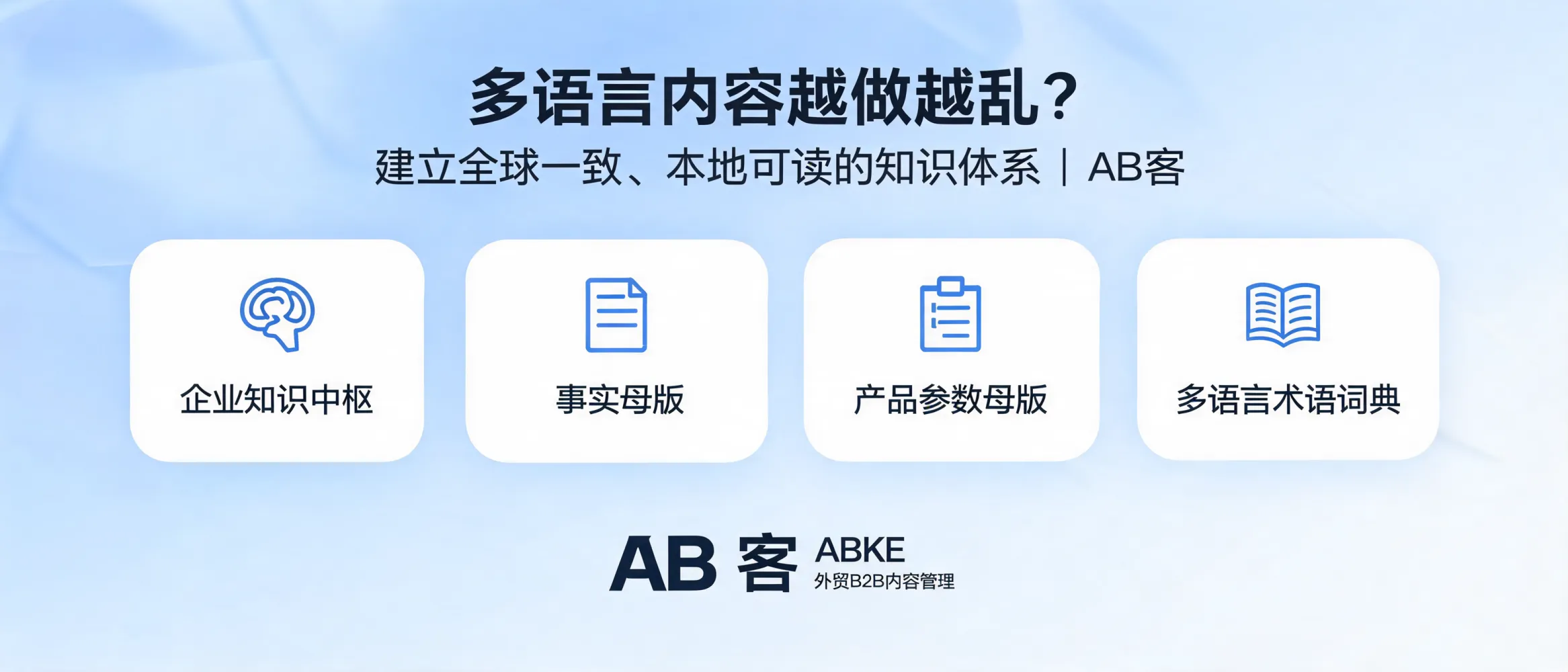
ABKE’s enterprise knowledge hub was used to convert scattered operational knowledge into structured, reviewable, and reusable business assets. Rather than serving as a simple document repository, the hub defined standard facts, applicable conditions, evidence sources, disclosure levels, responsible owners, and update timing for important knowledge areas.
Sales, engineering, and management stakeholders participated in confirming information that required professional judgment. This helped keep public-facing wording aligned with real delivery conditions.
Knowledge areas structured for the factory
- Primary machining processes and applicable part types
- Material experience and material-specific suitability conditions
- Tolerance capability and the conditions that affect tolerance evaluation
- Drawing, sample, surface treatment, inspection, and quality confirmation requirements
- Suitable order types, volume conditions, and order thresholds
- Requests that could not be accepted or required further technical assessment
- Typical buyer questions, quotation prerequisites, and common communication misunderstandings
- Confirmed case materials, process explanations, and credible supporting evidence
A Controlled Model for Public and Internal Knowledge
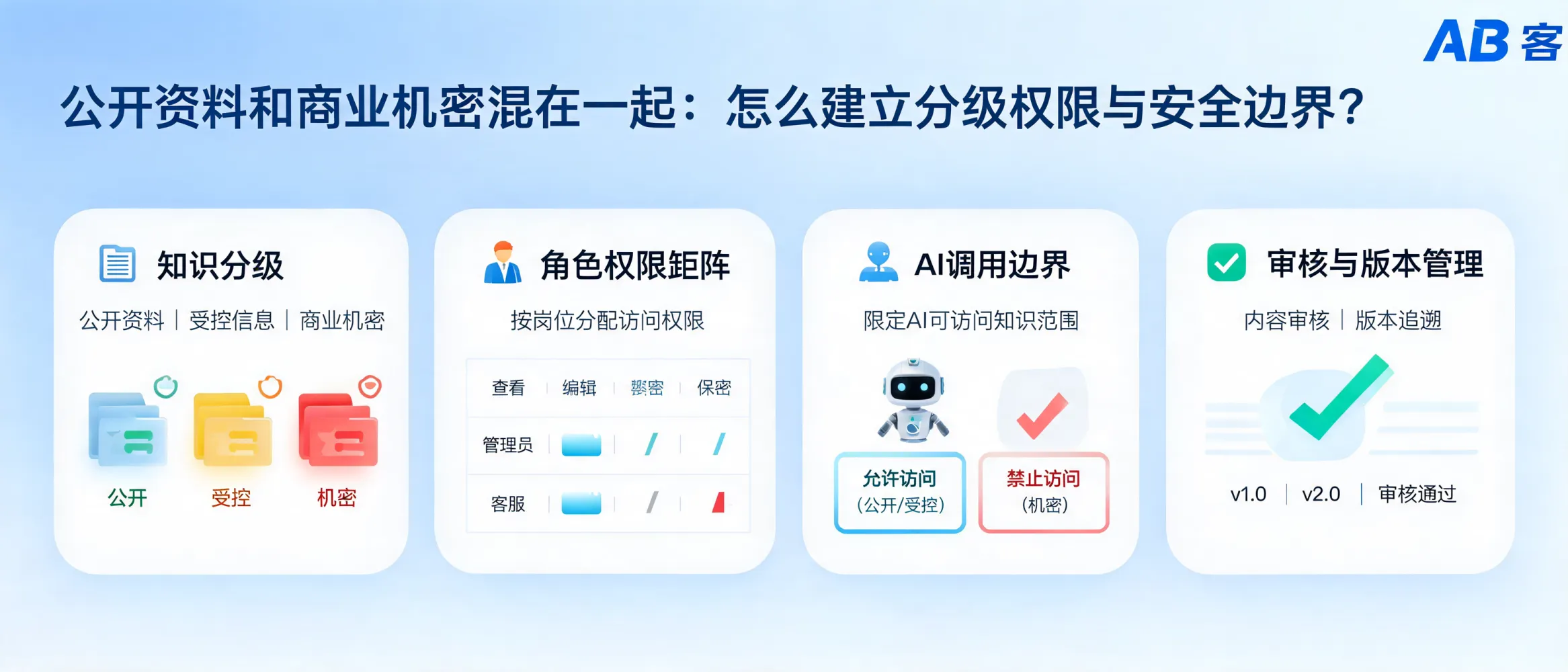
Custom manufacturing knowledge can include sensitive drawings, customer projects, production scheduling details, and proprietary process information. The project therefore separated information by appropriate use and visibility.
| Knowledge category | Typical use | Purpose |
|---|---|---|
| Public capability information | Website pages, FAQs, buyer preparation guidance | Help buyers assess general fit before inquiry |
| Controlled sales information | Sales qualification and project communication | Support consistent, condition-based discussions |
| Internal operational information | Engineering and management review | Protect sensitive details while supporting decision-making |
Implementation: From Sales Experience to Consistent Digital Use
1. Review historical inquiries and recurring questions
The team reviewed past inquiries, sales emails, and recurring communication records to identify common causes of mismatch, including unsuitable materials, tolerance expectations outside the applicable range, inappropriate order sizes, incompatible process routes, and misunderstandings about the custom manufacturing workflow.
2. Validate standard facts with business and technical teams
ABKE worked with sales, engineering, and management personnel to verify machining capabilities, typical applications, operating boundaries, and exception cases. Situations such as “possible but subject to assessment” or “additional information required” were expressed conditionally rather than as absolute promises.
3. Rebuild website capability pages and inquiry guidance
The relevant website pages were improved to include supported process directions, typical applications, material and tolerance confirmation guidance, recommended inquiry details, custom project evaluation steps, suitable order scenarios, and notices for requests outside the normal service range.
4. Connect approved knowledge to the AI marketing agent
Approved content was made available to the AI marketing agent for initial responses to common inquiries. The agent could ask buyers to provide drawings, quantity, material, precision requirements, and application context. When information was incomplete or a request appeared outside defined boundaries, it guided the buyer to further assessment instead of making an automatic commitment or quotation.
Six-Month Results: Fewer Mismatched Requests, More Qualified Interest
After six months, the factory reviewed inquiry sources, requirement fit, and sales communication performance. The combined use of clearer website capability communication, inquiry guidance, and AI marketing agent knowledge retrieval produced measurable changes.
High-intent inquiries more often included useful details such as drawings, materials, quantities, tolerances, or application requirements. Sales teams spent less time repeatedly explaining basic machining boundaries, while engineering teams could engage earlier on projects that required meaningful technical assessment.
Operational Value Beyond Inquiry Volume
- Website pages, sales materials, and AI-assisted responses used more consistent descriptions of machining capability.
- Experienced sales knowledge was structured into reusable assets, reducing dependence on individual verbal explanations.
- New sales team members could more quickly understand qualification logic through approved knowledge resources.
- Machining, tolerance, and service-boundary knowledge could be maintained for future multilingual content, case development, and sales support.
- The business gained clearer separation between public information, controlled-use information, and internal operational knowledge.
What Export Manufacturers Can Learn from This Case
For non-standard B2B manufacturing, inquiry quality depends not only on traffic volume but also on whether suitable buyers can accurately understand a supplier’s real capabilities. Clearly communicating what should be evaluated further—and what is not normally serviceable—does not necessarily narrow market opportunity. It can reduce unproductive communication and help qualified buyers move into the evaluation process with better context.
This case illustrates the role of an enterprise knowledge hub as a unified fact source for product capabilities, process knowledge, evidence, and business boundaries. With an approved knowledge foundation, website capability pages, FAQs, sales content, and AI marketing agents can communicate consistently while respecting the limits of confirmed production capacity. For export-oriented manufacturers, these knowledge assets can be maintained as long-term infrastructure as products, equipment, processes, capacity, and market priorities evolve.


