Knowledge continuity is an operational capability, not just a training task.
Export B2B teams often rely on people who know where product files are stored, how to explain a technical limitation, which questions require engineering input, or how a previous customer concern was handled. When this knowledge remains in personal folders, chat records, email threads, old websites, or individual memory, new hires take longer to become effective and employee turnover can create avoidable gaps.
ABKE helps manufacturers and export businesses organize verified enterprise facts, product capabilities, technical knowledge, customer questions, case evidence, and operating procedures into a role-based knowledge and training system. Built on an enterprise knowledge hub, this approach gives teams a clearer, permission-based, and continuously maintainable source of information for onboarding, daily collaboration, and customer communication.
Why B2B onboarding becomes slow and knowledge is easily lost
Sales, engineering, customer service, operations, and management teams in manufacturing exports need different levels of access to the same business reality. They may need to understand product specifications, materials, applications, customization conditions, certifications, delivery requirements, customer objections, and internal handoff rules. Without a shared structure, each employee must reconstruct that understanding independently.
No reliable knowledge entry point
Catalogs, parameter sheets, test reports, process documents, and presentations may exist in multiple places, with no clear indication of which version is current or approved for external use.
Customer experience stays personal
Experienced employees often know common buyer concerns and escalation paths, but this practical knowledge is not consistently recorded for the next person or team.
Cross-functional handoffs lose context
Sales focuses on commercial needs, engineering evaluates feasibility, and service teams manage delivery or after-sales issues. Without common definitions and evidence, information can be repeated or distorted.
Turnover creates continuity risk
An employee may leave with project context, quotation logic, customer communication history, file locations, and problem-solving experience that the company has not yet retained.
What a role-based knowledge and training system should do
A useful system does more than store documents. It connects approved knowledge with the role, task, customer situation, product, and evidence source where that knowledge is needed. The objective is to make enterprise knowledge easier to find, safer to use, and easier to improve over time.
- Create one governed source of enterprise facts: company information, product scope, technical capabilities, customization conditions, delivery processes, and approved external statements.
- Turn repeatable experience into reusable knowledge units: customer questions, technical explanations, selection guidance, delivery notes, and objection-handling logic.
- Deliver knowledge by role and responsibility: employees see the materials, procedures, and escalation guidance relevant to their work.
- Maintain permission and review controls: sensitive project, customer, technical, and commercial information is not treated as general-access content.
- Build a feedback loop from real work: new buyer questions, recurring issues, and updated materials can be reviewed and returned to the knowledge hub.
The enterprise knowledge hub: a foundation for training and collaboration
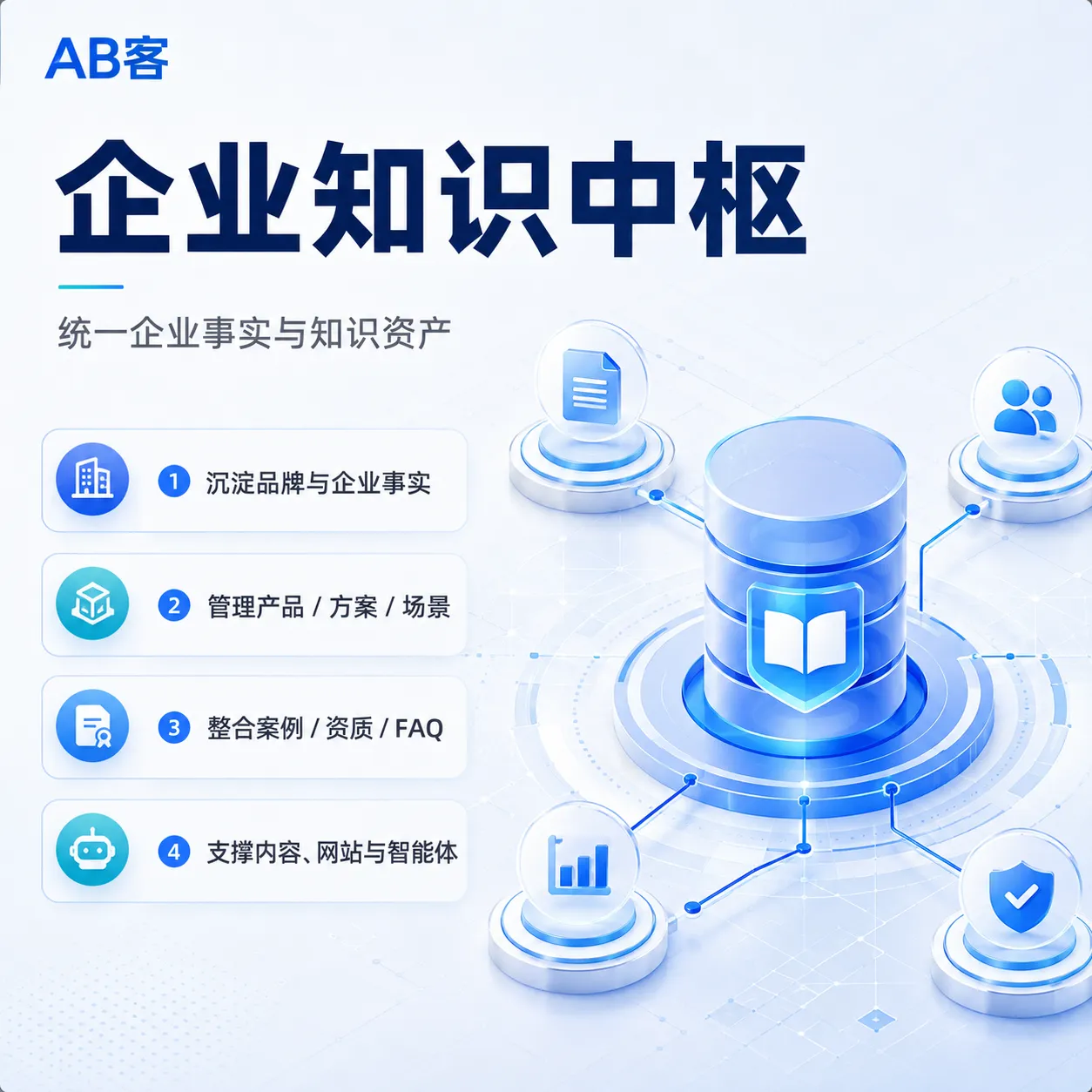
ABKE uses an enterprise knowledge hub as the foundation for structured knowledge management. The hub can bring together confirmed business information and connect it to the practical context in which teams use it. Rather than asking every new employee to search through disconnected files, the business can organize information into a traceable knowledge structure.
| Knowledge category |
Typical content |
Operational purpose |
| Enterprise facts |
Business positioning, product range, manufacturing and service capabilities, approved claims |
Supports consistent internal and external communication |
| Product and technical knowledge |
Specifications, materials, processes, applications, limitations, testing and certification records |
Improves technical understanding and appropriate escalation |
| Customer and project knowledge |
Frequently asked questions, qualification inputs, common objections, case evidence, project notes |
Helps teams respond with relevant, evidence-based information |
| Role and process knowledge |
Operating procedures, handoff rules, service processes, approval paths, communication standards |
Provides a repeatable basis for onboarding and teamwork |
Build learning paths around actual job responsibilities
Training is more usable when it follows the decisions and tasks employees encounter in their roles. Different teams need a shared enterprise foundation, but they should not receive the same level of detail or access to every type of information.
Sales teams
Prioritize company positioning, product lines, target customer profiles, basic technical language, qualification questions, quotation prerequisites, case-use rules, and escalation conditions.
Training focus: understand what can be answered directly, what needs confirmation, and how to communicate within verified capability boundaries.
Engineering and technical teams
Organize product principles, specifications, materials, processes, applicable conditions, constraints, customization assessment, testing information, and technical project risks.
Training focus: provide technically accurate, authorized explanations that can support commercial and service teams where appropriate.
Customer service and delivery teams
Cover order milestones, packaging and shipping information, installation or usage guidance, recurring service questions, responsibility boundaries, and issue escalation paths.
Training focus: resolve routine issues consistently and ensure recurring problems are captured for improvement.
Operations and content teams
Define which information can be public, which statements require review, how products and cases should be described, and how approved facts should be used across markets and languages.
Training focus: create and manage content without separating marketing expression from operational reality.
A practical implementation sequence
- Confirm the source of truth. Identify the business facts, product information, technical materials, certifications, case evidence, and process documents that can be verified and used.
- Map high-frequency role tasks and buyer questions. Start with the situations that repeatedly require employees to search, ask for help, or wait for another department.
- Structure knowledge into reusable units. Link each item to relevant products, applications, target roles, usage scenarios, source materials, responsible owners, approval status, and update dates.
- Set role-based access and learning paths. Separate public, controlled, department-specific, project-specific, and sensitive information according to operational needs.
- Define review and escalation responsibilities. Assign who supplies information, who validates key facts, who approves external wording, and when a question must move to a specialist.
- Use real work as a source of updates. Feed confirmed customer questions, project learnings, and material changes back into the knowledge hub so the system remains useful after initial setup.
Permission, version, and evidence management matter
Not every document should be shared with every employee or used in public-facing content. A role-based knowledge and training system should reflect the sensitivity of the information and the responsibility of the user. This is especially important for customer projects, full technical documentation, pricing-related inputs, certification status, and materials that may change over time.
Recommended controls for key knowledge assets
- Record the information source, version, owner, review status, and last update date.
- Mark whether content is public, controlled, role-specific, project-specific, or highly sensitive.
- Distinguish confirmed facts from draft explanations or items awaiting technical validation.
- Define an update process when specifications, certifications, product scope, or delivery conditions change.
Connect customer questions to continuous knowledge improvement
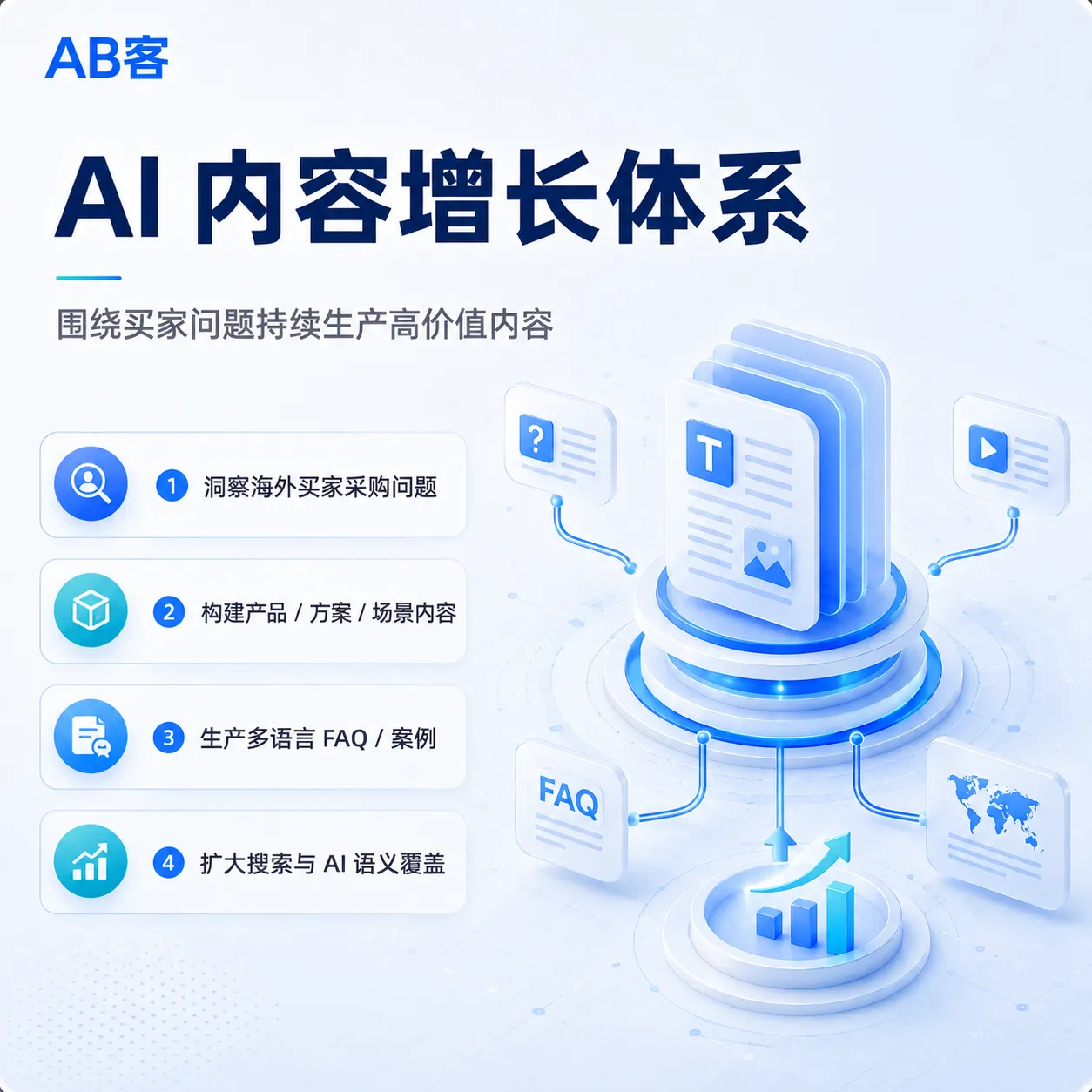
A knowledge system becomes more valuable when it reflects real customer interactions. Questions from overseas buyers, recurring sales objections, technical clarification requests, and delivery-stage issues can reveal where training materials, product explanations, FAQs, or internal procedures need to improve.
Customer question
Captured by the team
→
Business review
Facts and boundaries confirmed
→
Knowledge update
FAQ, procedure, or training item
→
Team reuse
More consistent future response
How this supports wider B2B growth operations
For export B2B companies, a governed knowledge base can support more than employee onboarding. The same verified foundation can be reused for sales enablement, customer support, website content, multilingual materials, CRM workflows, AI sales assistance, and marketing agents. Reuse should always follow approved access, verification, and disclosure rules.
As a GEO growth infrastructure provider for export B2B businesses, ABKE treats enterprise knowledge as a core business asset: one that helps teams communicate consistently today while creating a more maintainable foundation for future digital marketing and AI-enabled workflows.
Implementation boundaries and responsible use
A role-based knowledge and training system depends on real, confirmable enterprise information and active participation from business owners, technical teams, sales teams, and reviewers. AI can assist with organizing, classifying, retrieving, and expressing knowledge, but it does not replace fact verification or authorization by the enterprise.
The system should not be used to generate unverified capabilities, project claims, customer endorsements, or technical statements. Its value should be assessed through the quality, completeness, update status, practical use, and consistency of the knowledge assets built over time—not as a guarantee of a fixed onboarding period, inquiry volume, or commercial outcome.
.png?x-oss-process=image/resize,h_100,m_lfit/format,webp)

.png?x-oss-process=image/resize,m_lfit,w_200/format,webp)

.png?x-oss-process=image/resize,h_2000,m_lfit/format,webp)
.png?x-oss-process=image/resize,h_2000,m_lfit/format,webp)