.png?x-oss-process=image/resize,h_100,m_lfit/format,webp)

.png?x-oss-process=image/resize,m_lfit,w_200/format,webp)

Hot Products

.png?x-oss-process=image/resize,h_2000,m_lfit/format,webp)

.png?x-oss-process=image/resize,h_2000,m_lfit/format,webp)

Popular articles
Turn Supplier Claims into Verifiable Procurement Evidence with ABKE
Stop Renting GEO Growth: Build Transparent, Transferable Digital Assets with ABKE
AI Citations Don’t Equal Inquiries: The Real B2B GEO Advantage Is a Complete Conversion Loop After AI Recommendations
Why Does Translating the Same Enterprise Knowledge Into 10 Languages Still Fail at Overseas GEO?
How to Turn Tacit Technical Expertise into Reusable Enterprise Assets
Recommended Reading



Sales Teams Cannot Find Information Fast Enough? Build a Knowledge Base for Consistent Pre-Sales and Follow-Up
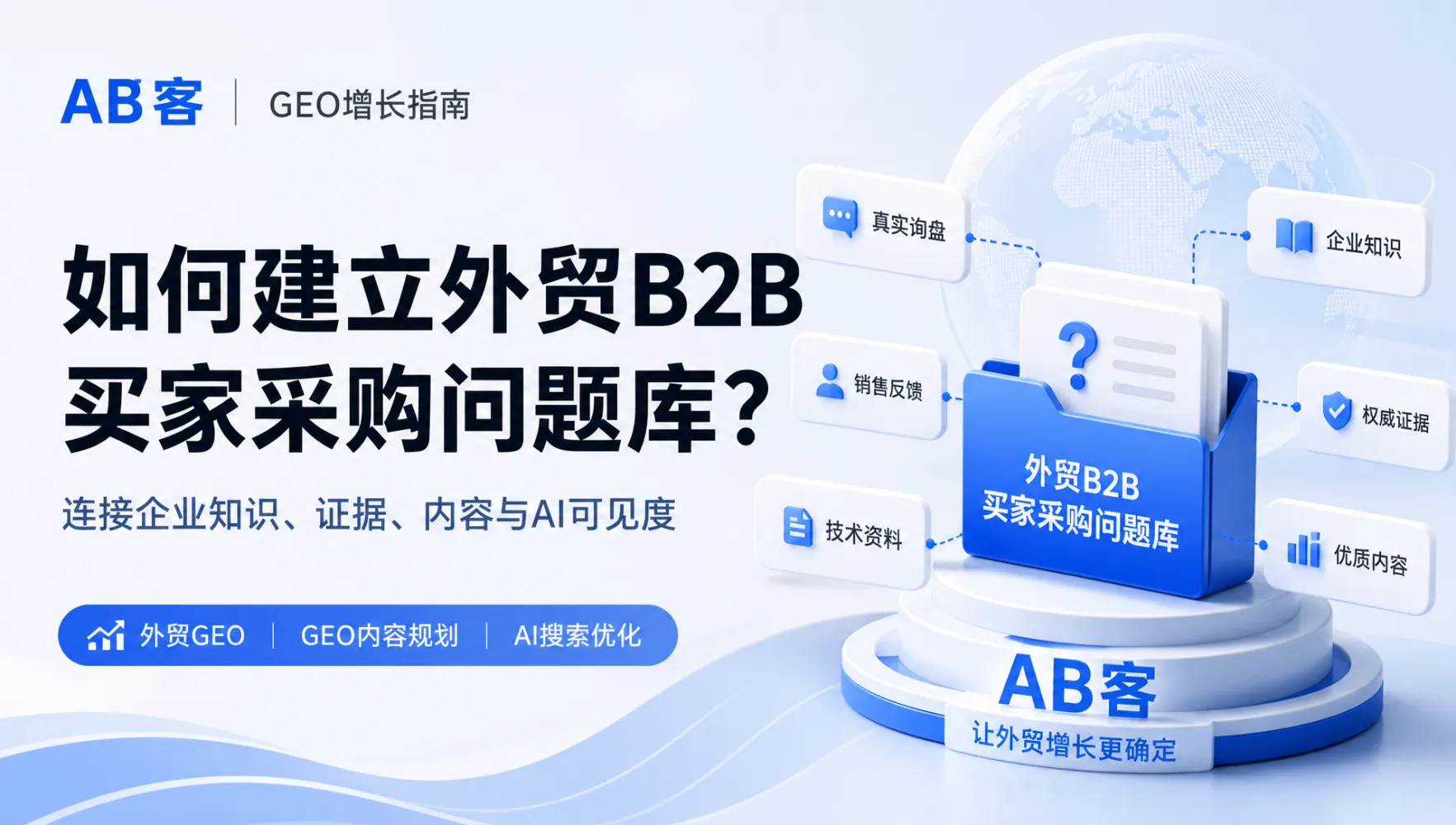
ABKE explains how export B2B companies can use a governed enterprise knowledge hub to connect product data, FAQs, cases, selection guidance, permissions, CRM records, and AI sales assistance for more accurate pre-sales responses.
Export B2B sales teams often need to respond to product, technical, application, delivery, and commercial questions across multiple countries and customer types. When information is scattered across folders, emails, chat records, old catalogues, and individual employees, finding the right answer can take longer than the customer expects—and different team members may provide different answers.
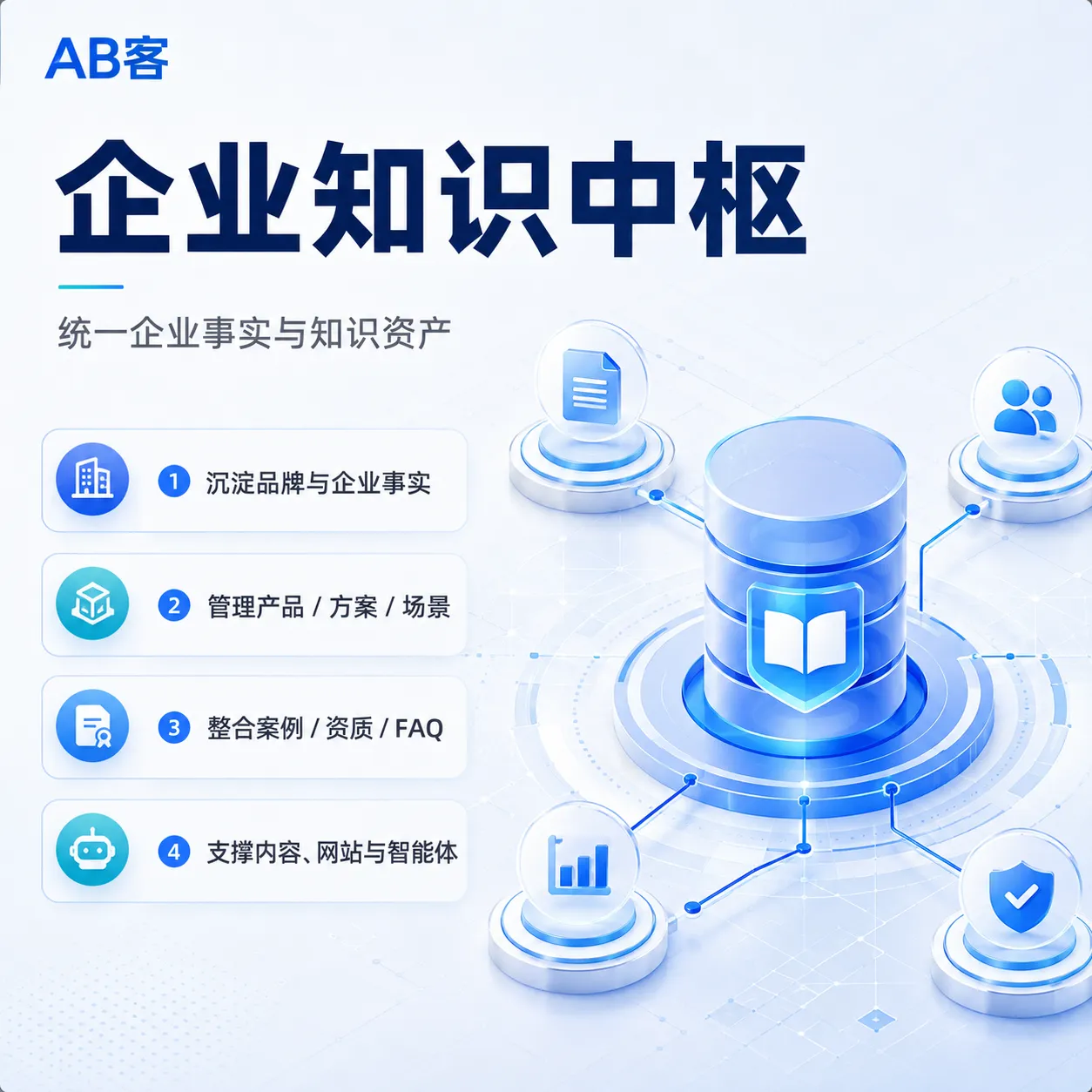
ABKE helps manufacturers and export-oriented B2B companies build a governed enterprise knowledge hub for pre-sales and follow-up. It turns approved product information, technical documents, FAQs, selection guidance, authorized cases, risk notes, and commercial boundaries into structured knowledge that can support CRM workflows and AI sales assistance.
Why sales information becomes difficult to use
Having documents is not the same as having sales-ready knowledge. In complex manufacturing and industrial sales, a professional first response may require input from sales, product, engineering, project, and management teams. Without a shared and controlled source of facts, sales staff may face avoidable uncertainty at critical customer touchpoints.
Information is dispersed
Parameters, manuals, test files, prior replies, and project materials may exist in different locations or under different versions.
Replies lack a common basis
Salespeople may rely on personal experience, outdated files, or informal messages when explaining capability, customization, certification, or delivery conditions.
Cases are hard to match
A case cannot be used confidently unless its product fit, application, public authorization, and supporting evidence are clear.
Experience does not return to the team
Technical confirmations and customer objections often remain in emails or chats instead of becoming reusable sales knowledge.
A sales knowledge base is a controlled source of facts
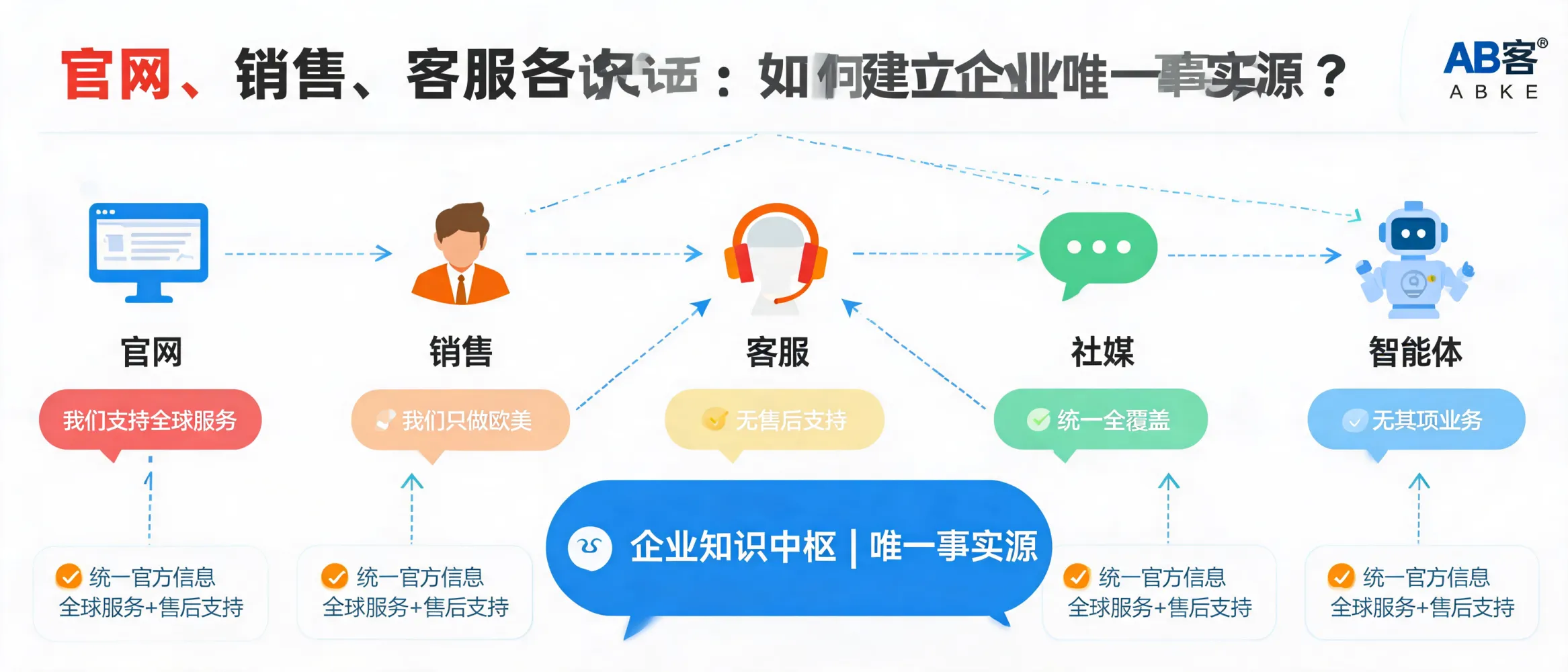
An export B2B sales knowledge base should do more than collect files. It should clarify what each item means, where it came from, who confirmed it, when it applies, whether it is current, and who may use it. This allows sales teams to retrieve information with context rather than copy isolated statements from unverified sources.
| Knowledge dimension | What it helps sales understand |
|---|---|
| Product and technical data | Product line, model, specifications, materials, functions, compatibility conditions, and alternatives. |
| Customer need and sales stage | Industry, application, selection criteria, buyer concerns, and whether the inquiry is at initial contact, technical review, quotation, or follow-up. |
| Evidence and authorization | Source documents, approved certificates, authorized cases, project records, and expert-confirmed information. |
| Governance and permissions | Owner, review status, version, update date, public scope, sales access, project-only access, or restricted access. |
How the knowledge hub supports pre-sales and follow-up
Find relevant information in context
Sales can search by product model, target market, industry, application, or technical requirement to locate applicable parameters, FAQs, reference materials, selection conditions, and items that require further confirmation. Useful results retain their source, scope, and update status.
Support consistent inquiry responses
A governed knowledge source gives different salespeople a shared factual foundation for explaining product capability, customization scope, quality documentation, delivery process, and service boundaries. It supports consistency without removing the need to understand the individual customer context.
Make selection guidance and risk notes available earlier
Sales knowledge should include not only product advantages but also prerequisites, limitations, customization boundaries, missing information, and common risks. This helps teams clarify requirements before making a recommendation or commitment.
Connect customer touchpoints to continuous updates
Inquiry questions, materials sent, unresolved items, internal confirmations, and next actions can be recorded in CRM. Repeated objections and new technical questions can then be reviewed and returned to the knowledge base, FAQ system, product content, and sales enablement materials.
AI sales assistance must remain within verified boundaries
An AI sales assistant can help retrieve approved information, organize a reply structure, summarize technical material, prepare multilingual drafts, and identify missing customer details. Its value depends on the quality and governance of the knowledge source it is allowed to use.
Where approved knowledge does not provide a clear answer, the appropriate action is escalation—not invention. Unconfirmed technical claims, unauthorized customer cases, sensitive pricing policies, confidential project details, and commercial commitments should follow the company’s permission and human review process.
Practical steps for implementation
- Start with high-frequency sales knowledge. Prioritize key products, models, parameters, common inquiries, selection guidance, technical terminology, cases, certifications, commercial boundaries, and risk notes.
- Assign owners and reviewers. Define who supplies, validates, approves, and updates product, technical, case, and business information.
- Set clear permissions. Separate public materials, sales-ready materials, project-specific records, and sensitive information according to roles and customer stages.
- Align knowledge with the sales workflow. Map useful materials and confirmation rules to first response, needs clarification, technical review, solution recommendation, quotation support, and post-inquiry follow-up.
- Create a feedback loop. Review recurring questions, objections, special applications, and confirmed answers so the team does not repeatedly solve the same problem from scratch.
Roles in a reliable sales knowledge workflow
A usable knowledge hub is a cross-functional operating practice, not a sales-only folder. Each team contributes a different part of the factual foundation.
A shared knowledge foundation for sales, CRM, and AI-enabled growth
For manufacturers, industrial suppliers, component providers, material companies, and professional solution providers, a governed enterprise knowledge hub can make sales information easier to locate, use, review, and improve. It can support faster pre-sales preparation, more consistent customer communication, better case reuse, and clearer CRM records.
Through its enterprise knowledge hub approach, ABKE supports the structuring of approved business knowledge and its connection to CRM workflows, AI sales assistants, website content, and multilingual sales materials. The foundation remains the same: real company information, clear applicability, controlled permissions, traceable sources, and human review where facts or commitments require confirmation.


