.png?x-oss-process=image/resize,h_100,m_lfit/format,webp)

.png?x-oss-process=image/resize,m_lfit,w_200/format,webp)

Hot Products
Popular articles
Before Launching the ABKE GEO Growth Engine, Which Diagnostic Baselines and Acceptance Records Should We Establish to Objectively Assess Continued Investment After 12 and 24 Months?
No GEO Inquiries Yet? Measure B2B Growth Beyond Immediate Leads
How to Build a B2B Buyer Procurement Question Library for GEO Growth
Recommended Reading
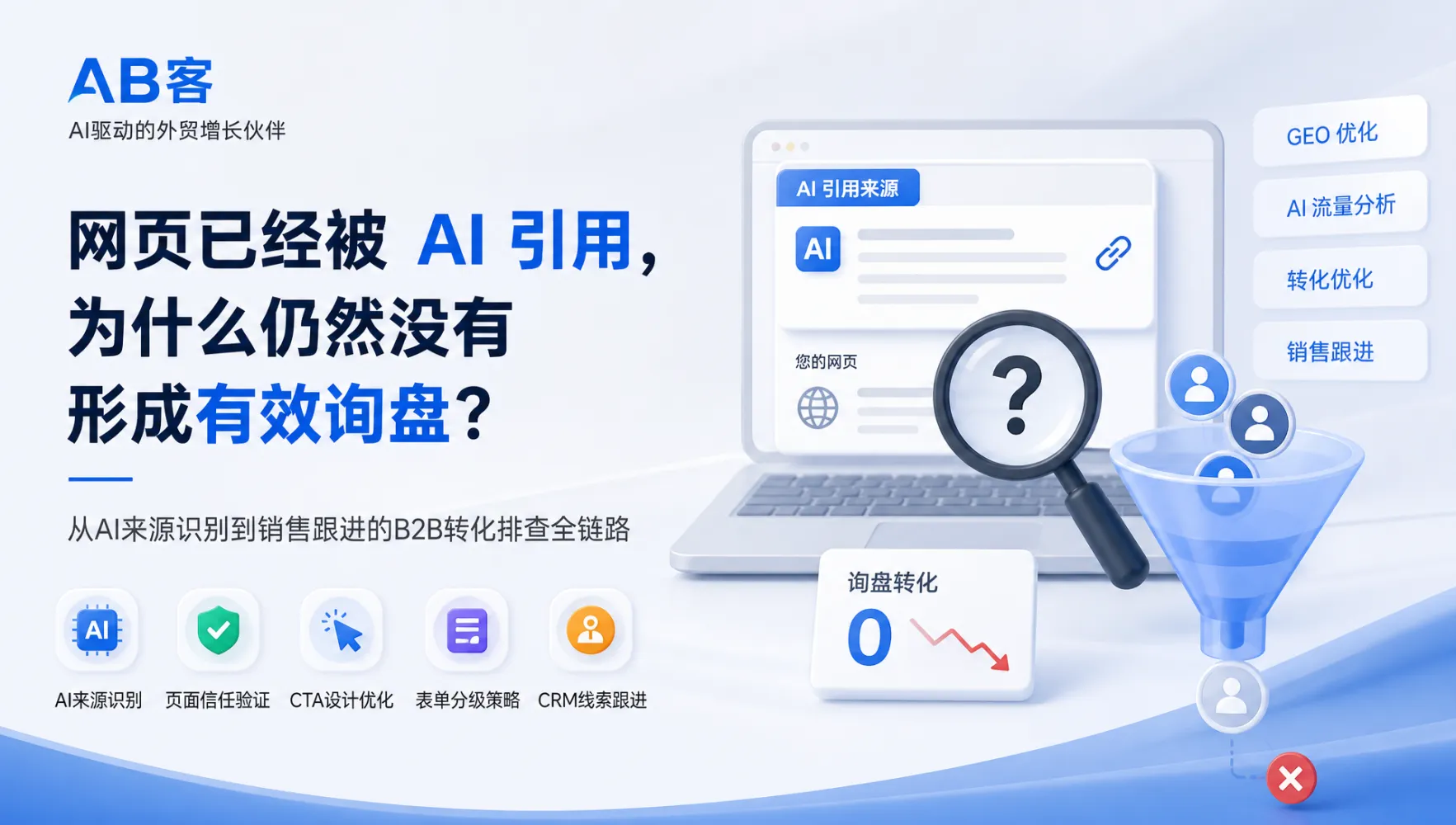
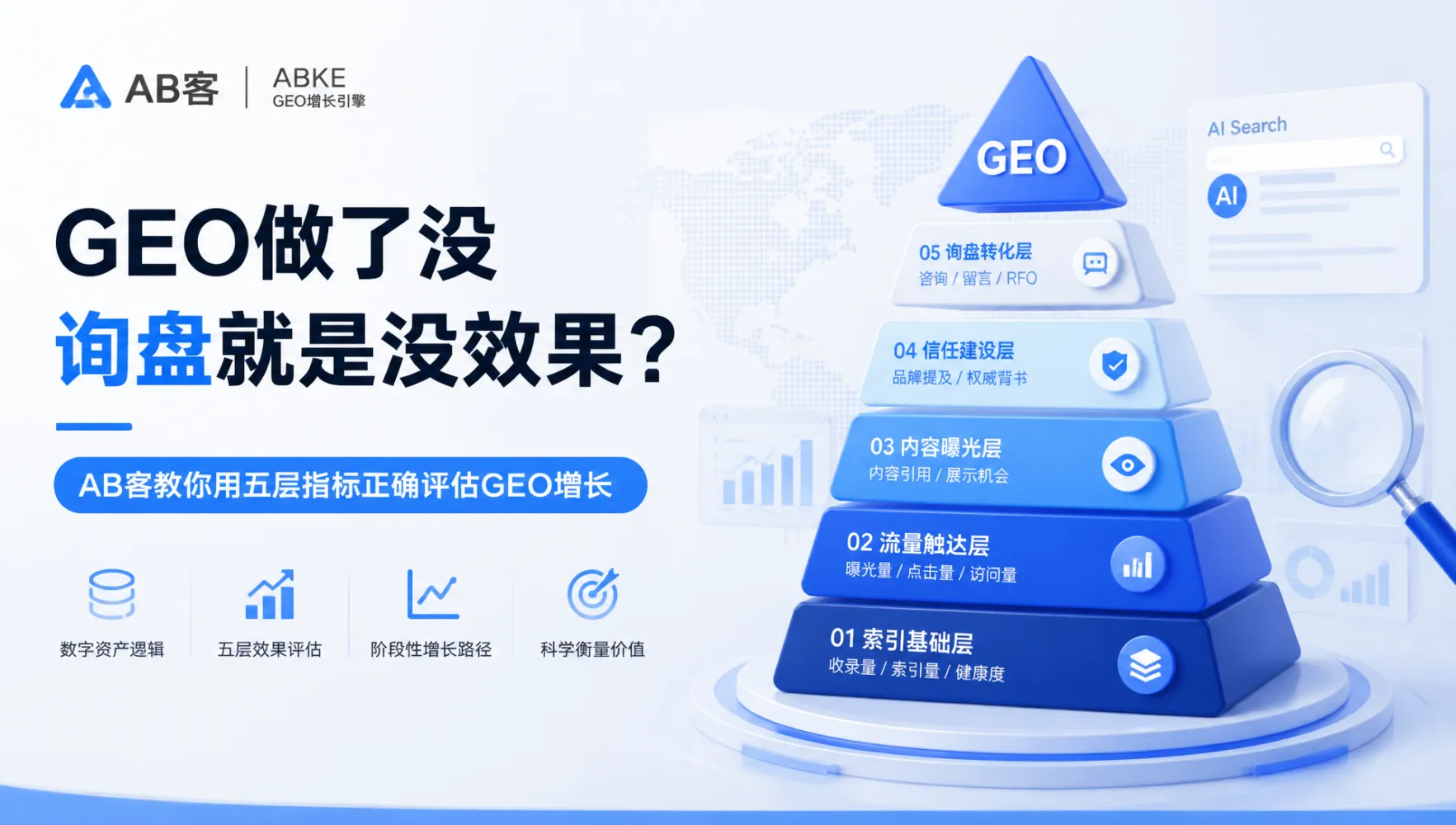
Build Supplier Trust That AI Can Understand and Global Buyers Can Verify
Discover how ABKE helps export manufacturers build AI-understandable, buyer-verifiable supplier knowledge assets across product capability, procurement evidence, decision content, and conversion workflows.
Stop Chasing AI Visibility. Build a Supplier Trust System Buyers Can Verify.
For export-oriented B2B manufacturers, being “mentioned by AI” is only the first signal. Real growth begins when AI can understand your company, overseas buyers can verify your evidence, and sales teams can convert trust into qualified inquiries.
Why generic AI marketing is not enough for industrial buyers
In industrial procurement, buyers do not make decisions based on exposure alone. They compare suppliers by specifications, customization boundaries, certifications, delivery capability, project experience, and commercial responsiveness. That means a generic GEO approach—focused only on brand mentions, prompt tricks, or traffic screenshots—rarely produces stable revenue outcomes.
The sharper question: who is building the real procurement layer?
One side: generic GEO providers
Typically sell broad AI marketing services, standard SaaS tooling, or visibility-led campaigns. Useful for early discovery, but often weak in manufacturing-specific trust building.
The other side: ABKE
Designed for export B2B manufacturers, ABKE focuses on procurement cognition, supplier evidence, and AI-readable knowledge assets that support long-term conversion.
The difference
It is not “how to get seen by AI” only. It is “how to become the supplier AI can explain, buyers can verify, and sales can close.”
The six layers of Procurement Decision GEO
ABKE structures GEO around the buyer’s real decision path. Each layer answers a different question in the procurement process.
Who you are, where you operate, what you manufacture, which markets you serve, and where your boundaries begin and end.
Models, materials, technical parameters, processes, customization options, and manufacturing capacity.
Which industries, working conditions, and project requirements your products are built for.
Certifications, tests, equipment, capacity, quality systems, and project references buyers can verify.
Comparison pages, risk pages, lead time pages, compliance pages, pricing logic, and FAQ content.
Inquiry forms, WhatsApp/email routing, CRM tracking, lead qualification, and sales follow-up.
A practical illustration: what a buyer actually wants to know
Buyer question: “Can I trust this supplier for our project?”
What AI should find: factory scope, production capacity, quality control, certifications, export experience, and case evidence.
Buyer question: “Is this product suitable for my application?”
What AI should find: application pages, working condition guidance, compatibility notes, and selection criteria.
Buyer question: “What are the risks, lead times, and commercial terms?”
What AI should find: delivery workflow, MOQ logic, shipping process, response SLA, and FAQ pages.
How ABKE operationalizes this framework
ABKE is not positioned as a simple content tool. It is an enterprise GEO growth engine for foreign-trade B2B companies. Its operating model combines enterprise knowledge, buyer-demand analysis, AI content production, SEO/GEO websites, global distribution, CRM, and data attribution.
Knowledge layer
Converts company facts, product data, cases, and trust signals into AI-readable enterprise knowledge.
Content layer
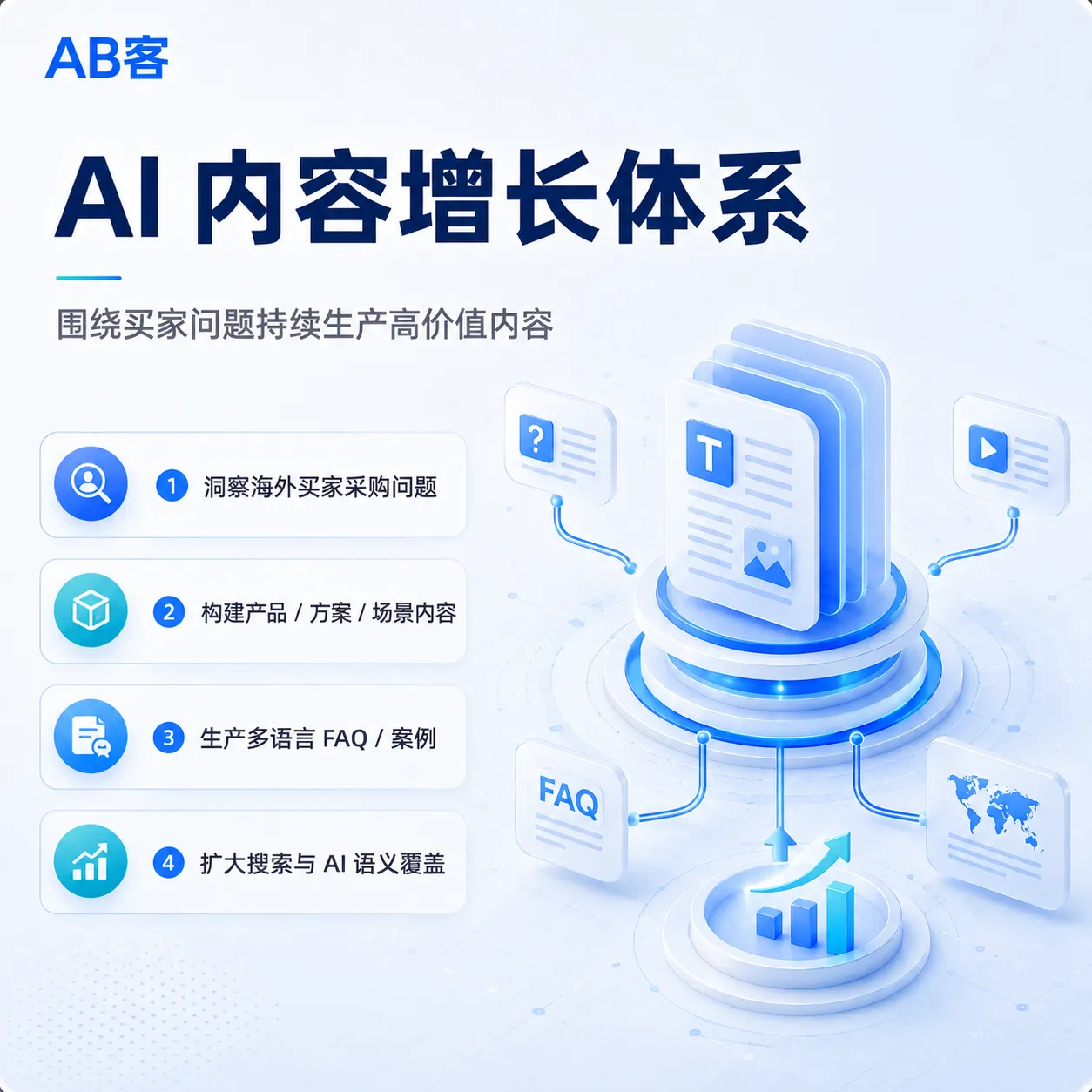
Builds FAQ, product, application, comparison, and procurement-guide content around real buyer questions.
Growth layer
Connects website discovery to inquiry capture, CRM progression, follow-up, and performance tracking.
What should be built first? A step-by-step implementation workflow
Audit current company data, products, website structure, content assets, external channels, and CRM records.
Build a supplier identity profile and a verified product knowledge base using confirmed facts only.
Map target markets, buyer roles, procurement stages, and country-specific decision concerns.
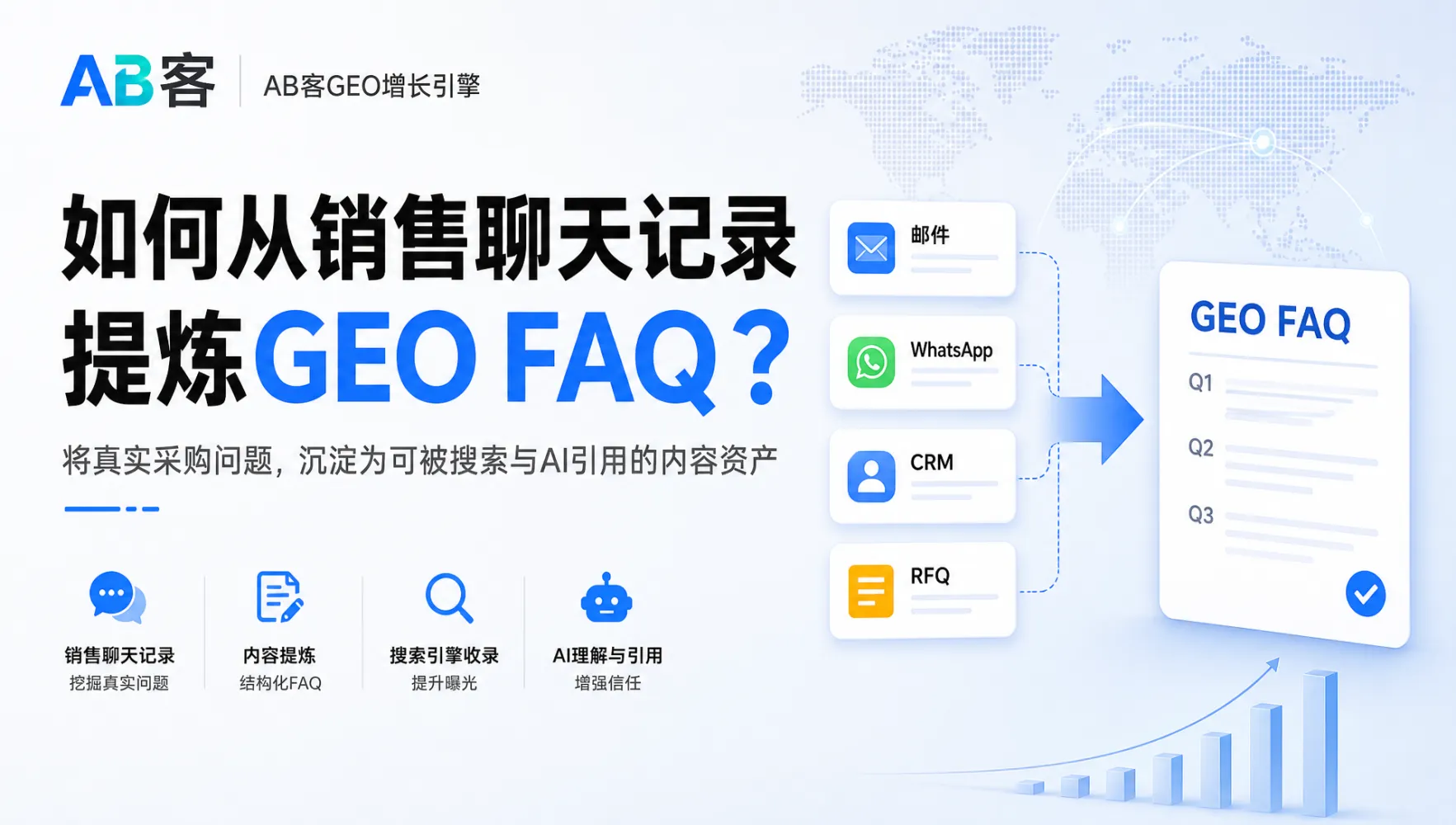
Build the question matrix: selection, technical evaluation, supplier verification, and post-sale concerns.
Prioritize pages: products, applications, solutions, procurement guides, comparisons, cases, and FAQs.
Add evidence, conversion paths, multilingual localization, and CRM tracking for every high-intent page.
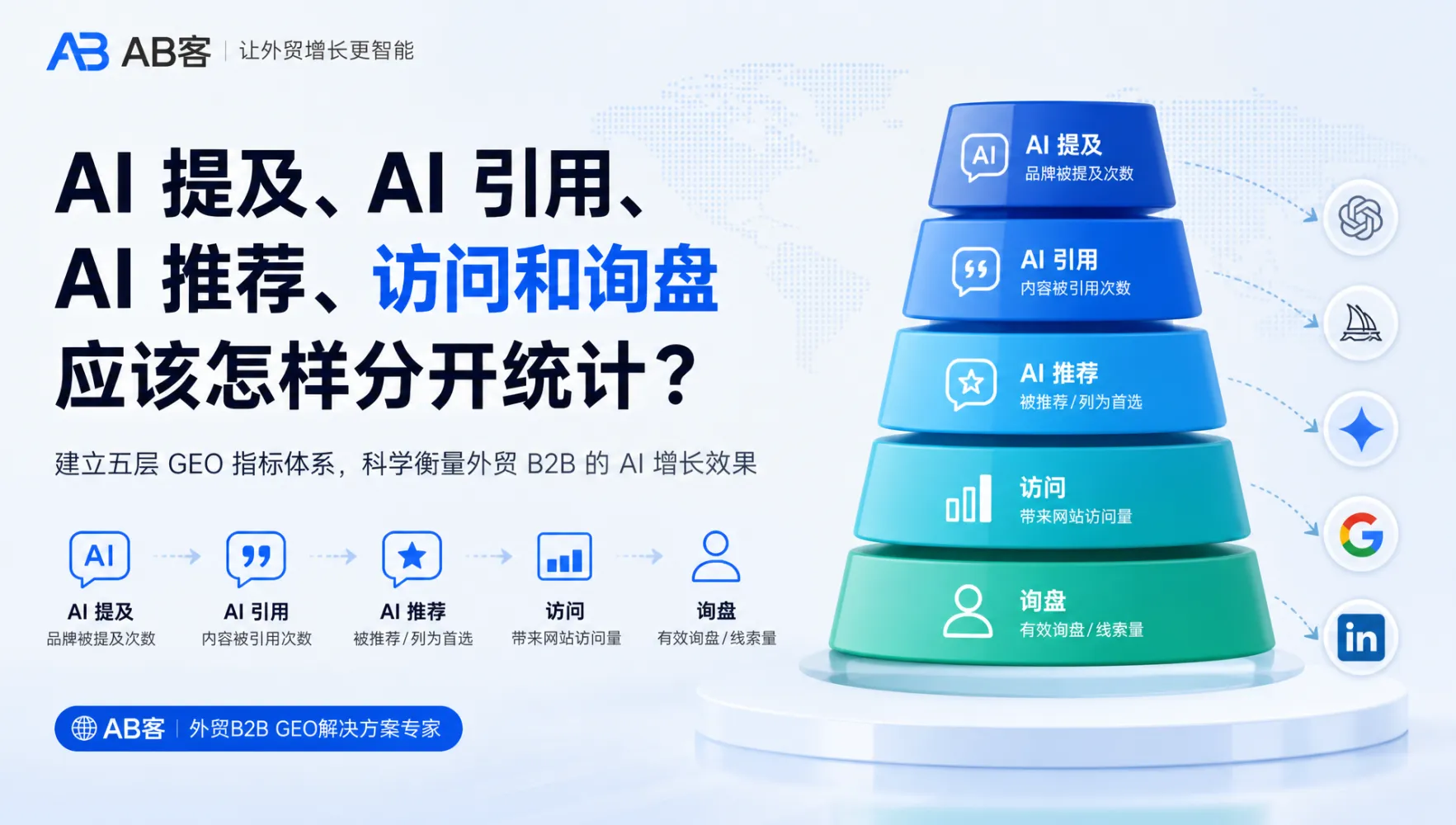
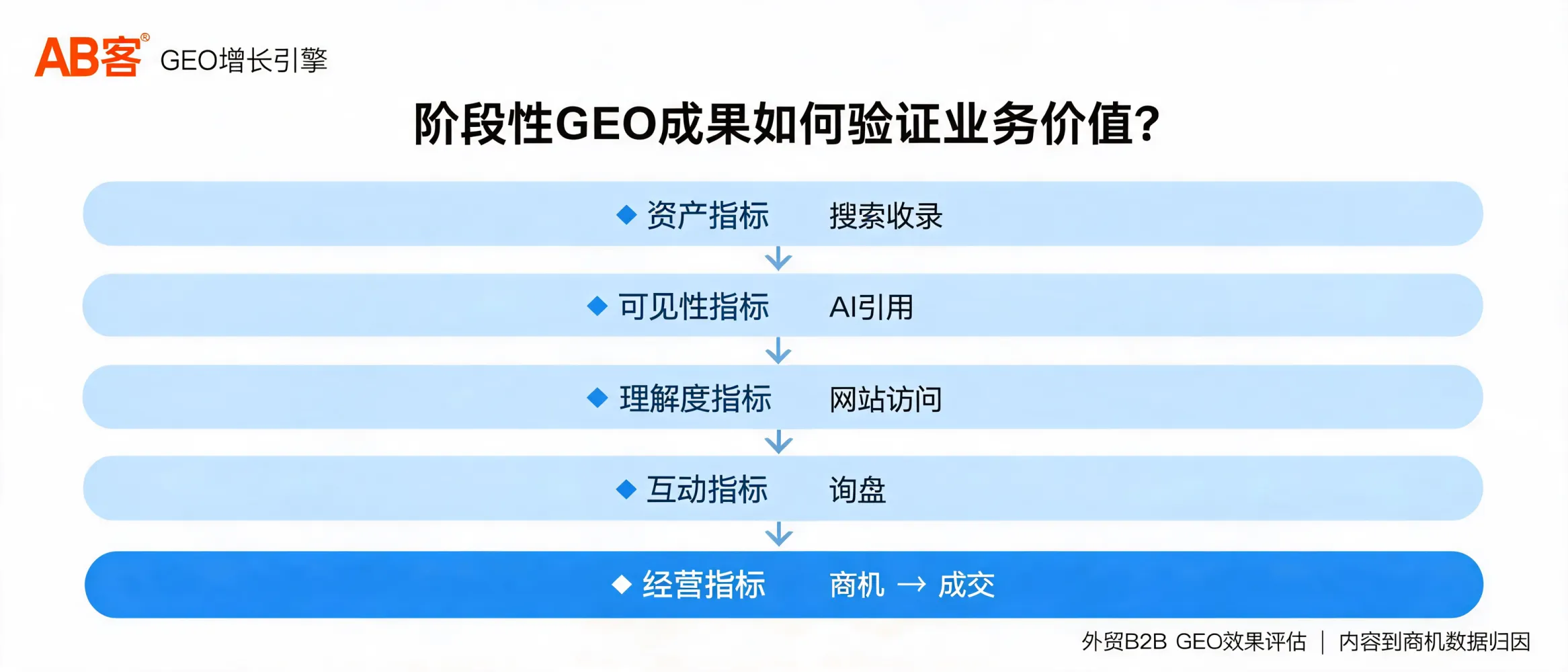
Monitor indexing, AI mentions, AI citation accuracy, inquiry quality, and sales outcomes to iterate continuously.
Content checklist for export manufacturers
- Company profile with manufacturing scope, market focus, and service boundaries
- Product pages with specifications, material options, process details, and customization logic
- Application pages by industry, working condition, and project requirement
- Quality and compliance pages with verifiable certifications and validation processes
- Factory, equipment, capacity, and delivery-process evidence
- Approved customer cases or project references
- Buyer guides on supplier comparison, sourcing risk, MOQ, lead time, and technical selection
- FAQ pages addressing high-intent technical and commercial questions
- Inquiry workflows routed into CRM for qualification and follow-up
A simple case pattern: why one supplier gets chosen and another gets ignored
In many export categories, two suppliers may offer similar products. The winner is usually not the one with the most content, but the one with the clearest trust structure.
Supplier A
Has a website, but only a homepage, product list, and a few generic company claims. AI cannot confidently describe its strengths, and buyers cannot verify its difference.
Supplier B
Has structured product pages, application pages, evidence pages, FAQs, and inquiry routing. AI can summarize it accurately, and buyers can check the proof quickly.
In procurement, clarity reduces risk. ABKE’s framework is built to make that clarity machine-readable and buyer-usable.
What outcomes matter most?
Who should consider this approach?
This framework is relevant for manufacturers, OEM/ODM suppliers, industrial equipment companies, material suppliers, new-energy businesses, automotive-parts exporters, and other B2B organizations that need stronger global discoverability and more reusable digital assets.
If your current website is only a brochure, your content is not answering buyer questions, or your AI visibility has not yet translated into qualified inquiries, the problem is usually not “more content.” The problem is missing procurement structure. ABKE helps build that structure with a GEO growth engine designed for export B2B realities.


.png?x-oss-process=image/resize,h_100,m_lfit/format,webp)
.png?x-oss-process=image/resize,h_100,m_lfit/format,webp)

.png?x-oss-process=image/resize,h_100,m_lfit/format,webp)
.png?x-oss-process=image/resize,h_100,m_lfit/format,webp)
.png?x-oss-process=image/resize,h_100,m_lfit/format,webp)
.png?x-oss-process=image/resize,h_100,m_lfit/format,webp)
