.png?x-oss-process=image/resize,h_100,m_lfit/format,webp)

.png?x-oss-process=image/resize,m_lfit,w_200/format,webp)



.png?x-oss-process=image/resize,h_2000,m_lfit/format,webp)

.png?x-oss-process=image/resize,h_2000,m_lfit/format,webp)



How Exchange-Rate Fluctuations
Affect Export Quotations
What companies must manage is not merely the rise and fall of exchange rates, but the entire chain from quotation and payment collection to realized profit.
For the same order—with the same product, customer, and quantity—the final profit can differ by tens of thousands of RMB simply because settlement occurs at a different time. For export businesses, the exchange rate is never just a number for the finance department. It directly affects quotation competitiveness, order margins, negotiation timing, and even a buyer’s perception of the supplier’s professionalism.
Many companies reuse the previous price or convert costs at the day’s spot rate. Once negotiations take longer or payment is delayed, the margin that looked reasonable at quotation time may have been consumed by exchange-rate movements by the time funds are received and converted. The opposite also happens: a company loads the entire currency-risk buffer into its quotation, prices itself well above competitors, and loses the opportunity before serious negotiations even begin.
The purpose of exchange-rate management is not to predict the future perfectly. It is to build a quotation mechanism that protects margins and preserves competitiveness even when the forecast is imperfect.
What Does an Exchange-Rate Change Mean for a USD 100,000 Order?
Suppose a company receives a USD 100,000 order. It calculates the quotation at USD/CNY 7.20 and expects revenue of RMB 720,000. If the rate is 7.00 when payment is received and converted, the company realizes only about RMB 700,000.
If the order was expected to generate RMB 72,000 in gross profit, the RMB 20,000 currency impact would consume roughly 28% of that planned margin. The effect is even more pronounced for low-margin, long-payment-term, and high-value orders.
There is more to the problem. Quotation, order confirmation, production, shipment, and payment usually occur at different times; deposits and balances may also be converted at different rates. What the company actually carries is currency exposure over a period of time—not a single static rate on the quotation date.
Five Ways Exchange-Rate Volatility Changes Export Quotations
Changes Order Margins
When the home currency appreciates, the same foreign-currency payment converts into less local-currency revenue. For products with already-thin margins, even a small movement can turn a profitable order into revenue with little or no profit.
Changes Price Competitiveness
Set the risk buffer too low and margins are unprotected; set it too high and the quotation becomes less competitive. Safer pricing is not simply more conservative pricing—it balances the minimum acceptable margin with market competition.
Shortens Quotation Validity
When volatility rises, a 30- or 60-day validity period may no longer be appropriate. A period that is too long leaves the supplier carrying the risk alone; one that is too short places unnecessary pressure on the buyer’s decision.
Affects Payment Terms
Deposit percentage, balance-payment timing, phased delivery, and credit terms all change the exposure. The later the payment and the longer the cycle, the greater the company’s exposure to currency movements generally becomes.
Affects Buyer Trust and Deal Velocity
Frequent, unexplained price changes make a supplier appear unstable. Clearly explaining the reference rate, validity period, and adjustment rules instead demonstrates professionalism and helps both parties decide faster under transparent terms.
Four Common Mistakes in Export Quotations
Mistake 1: Using the Day’s Spot Rate Directly
A spot rate is only a market snapshot. It is not necessarily the conversion rate the company will ultimately receive, nor does it cover the time risk between negotiation and payment. What the company needs is an internal reference rate for quotations.
Mistake 2: Looking at Selling Price Instead of Full Profit
Currency movements interact with raw-material costs, logistics, platform fees, bank charges, tax-rebate cycles, and payment terms. A simple “cost ÷ exchange rate” calculation can easily overstate the real profit.
Mistake 3: Passing All Currency Risk to the Buyer at Once
Buyers compare suppliers too. An excessive risk premium weakens competitiveness. A better approach is to manage risk jointly through quotation validity, staged payments, and agreed price-adjustment conditions.
Mistake 4: Failing to Synchronize the Website, Sales Team, and Channels
If the website shows one price, salespeople use an old quotation, and distributors follow another rule, communication costs rise and buyer trust suffers. Quotation rules must become unified, updateable, and traceable business knowledge.

Build an Actionable Currency-Aware Quotation Mechanism
-
Set an Internal Reference Rate
Do not let each salesperson choose a rate by instinct. Establish a common reference using bank conversion rates, the order cycle, and the company’s risk appetite, then define daily, weekly, or trigger-based update rules.
-
Calculate the Minimum Profitable Price Before Setting the Market Quote
Put production, packaging, logistics, channel, financing, banking, tax, and target-profit inputs into one model. Then determine the final price based on customer value, competition, and the stage of the commercial relationship.
-
Match Quotation Validity to the Order Cycle
Standard products and custom projects should not share the same validity period. During heightened volatility, shorten the period or agree to reconfirm the price when a defined range is exceeded, instead of surprising the buyer with an ad hoc increase.
-
Optimize Payment Structure to Shorten Exposure
A reasonable increase in the deposit, milestone-based collection, partial shipments, or shorter payment terms can reduce risk. For large or long-cycle orders, evaluate forwards, options, and other instruments with guidance from qualified financial professionals.
-
Standardize Quotation Knowledge and Buyer Communication
Document the reference rate, validity period, adjustment conditions, approval authority, and buyer-facing explanations as standard knowledge so the website, sales team, distributors, and customer service all use the same current rules.
How Should Quotation Strategy Change Under Different Currency Scenarios?
| Market Scenario | Primary Impact | Recommended Actions |
|---|---|---|
| Sustained RMB Appreciation | Foreign-currency revenue converts into less RMB, compressing margins | Shorten quotation validity; raise deposits or accelerate collection; recalculate minimum prices for low-margin products |
| Temporary RMB Depreciation | Short-term margin may improve, while price competition intensifies | Avoid indiscriminate price cuts; use part of the additional margin for priority customers, priority markets, and delivery assurance |
| Frequent Two-Way Volatility | Direction is difficult to judge and old quotations expire quickly | Use range management, trigger-based adjustments, and staged collection; strengthen quotation versioning and approvals |
| Long-Cycle Custom Orders | Long production and payment cycles create greater exposure | Separate material, manufacturing, and freight price items; use milestone payments and currency-adjustment clauses |
“This quotation is based on current costs and our internal reference exchange rate and is valid for seven days. If the exchange rate of the primary settlement currency moves beyond the agreed range during the validity period, both parties will reconfirm pricing for the unperformed portion.”
The specific thresholds, legal wording, and application should reflect the company’s business and be confirmed by finance, legal, or banking professionals.
Mature Exporters Do Not Treat a Quotation as Just a Spreadsheet
A quotation connects product cost, customer segmentation, competitive strategy, delivery capability, and risk rules. It is both a financial outcome and a customer experience. The company must answer more than “What price should we quote today?” It must also determine:
Which customers qualify for tiered pricing? Which products require a larger buffer? How should custom projects be itemized? After an exchange-rate movement, which web pages, materials, channels, and customers must be updated? And how should actual deals and margin outcomes improve the next quotation?
When this information exists only in the experience of a few salespeople, the company repeatedly sends obsolete quotations, creates inconsistent messages, struggles with handovers, and loses margin traceability. Only by turning it into structured knowledge and executable processes can quotation capability evolve from individual experience into a company asset.

Turn Quotation Rules into a Reusable Global Business Capability
ABKE is not a currency-trading tool. Our focus is what happens after exchange rates change: helping companies communicate updated pricing logic, product value, and commercial terms to global buyers quickly and accurately—and continually turn that information into visibility, trust, and inquiries.
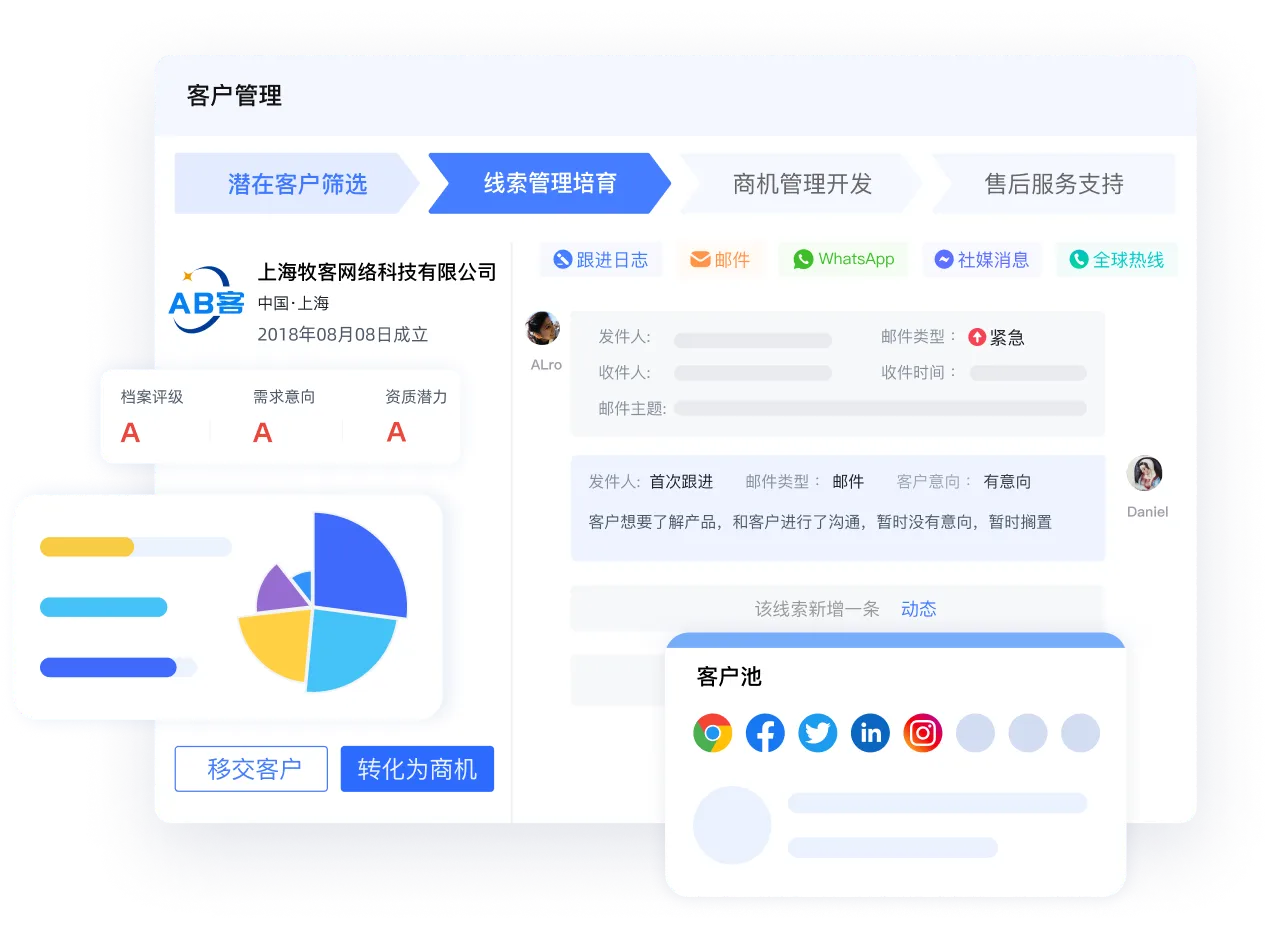
Through enterprise knowledge bases, GEO-ready intelligent websites, global content and channel networks, enterprise AI agents, prospecting, and a CRM conversion loop, ABKE helps global B2B companies:
- Centralize product, solution, quotation-rule, and customer-communication knowledge to reduce internal inconsistency;
- Continuously update websites, multilingual content, and buyer decision information as markets and business conditions change;
- Help AI search systems and global buyers understand the company’s capabilities, differentiation, and value as a partner;
- Connect inquiry sources, lead quality, and deal outcomes, using real data to improve product and go-to-market strategy.
A Company Cannot Control Exchange Rates, but It Can Systematize Its Quotation Capability.
When pricing, content, channels, and customer data form a closed loop, an exporter no longer responds with one reactive price change after another. It gains a global growth capability that can keep improving and remain resilient through volatility.


