Hot Products





Popular articles
2025 Foreign Trade Business Full Process Standard SOP Script White Paper, everyone should get a copy now!
2025 latest! Detailed explanation of the customs declaration process in import and export trade, just save this one!
The customer said the price was too expensive. Here are 8 ways to easily deal with it, including high EQ sales talk and cases!
Foreign trade geek social media marketing strategy: expand global market on Facebook and LinkedIn
A summary of the blood and tears of foreign trade newcomers: a complete guide to developing customer channels for free and paid (professional test of the path to explosive sales)
How to Reach International Buyers on Facebook Marketplace
Amazing Results! How deepSeek Helps Foreign Trade Enterprises Revitalize Their Market Position
One-stop social media marketing: unified management of Facebook and LinkedIn to enhance brand interaction
Recommended Reading




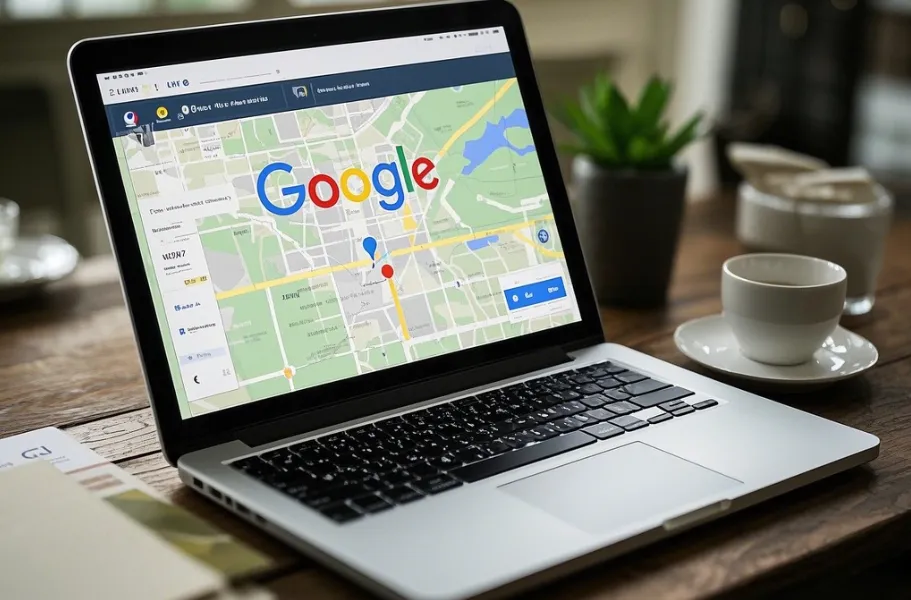
An old hand in foreign trade has compiled this article: How to find customers using Google Maps? You’ll always find one!
For international trade novices, finding potential customers overseas can be a daunting challenge. This article addresses this pain point by providing practical methods and steps to efficiently find potential customers using Google Maps. Actual case studies will illustrate the significant impact of these techniques, helping international trade novices quickly enter overseas markets.
I have worked in foreign trade for 18 years and have trained hundreds of newcomers. I found that 90% of the newcomers died in these three pitfalls:
-
Headless fly-style mass mailing : 1,000 development letters were sent out, and the response rate was less than 1%
-
The platform is burning money : Alibaba has a basic membership fee of 30,000 yuan, and all inquiries are from small African agents
-
Fighting hard at the exhibition and pretending to be a grandson : Spending 80,000 to grab a corner booth, 40 of the 50 business cards collected were from the same industry
Today I will teach you how to use Google Maps to get high-quality customers for free. I used this method to open up the European market at zero cost and brought out a 17-person foreign trade team. Let's get started!
1. Why must I use Google Maps?
Here is a real example:
In 2016, I assigned a task to the newcomer Xiao Wang: "Find a German auto parts retailer."
Xiao Wang searched for 200 "Purchasing Managers" on LinkedIn and sent emails for 3 days but only received 2 automatic replies.
I opened Google Maps in front of him:
-
Type “Auto parts retailer Germany”
-
532 physical stores with official websites popped up on the map instantly
-
Clicking into a Munich store, I saw a truck parked at the door with the purchasing department's phone number printed on it.
Result : Received 5 WhatsApp replies on the same day and completed 2 trial orders in the second week
Google Maps 3 killer features :
-
Precision sniping : directly targeting real customers with physical stores (eliminating shell companies)
-
Seeing is believing : judging warehouse size/truck brand/employee attire by street view
-
Complete information : 70% of stores will leave emails, phone numbers, and even the purchasing manager’s Facebook page.
2. Step-by-step tutorial (nanny-level screenshot tutorial)
Tools :
-
Circumvention software (must be able to access Google)
-
Email Verification Tool Hunter.io
-
Small notebook key points
Step 1: Keyword mining
Bad example : "furniture company" (too broad)
Correct posture :
"Office furniture store near New York" (with region)
"Wooden chair manufacturer Italy" (add product material)
"Hospital bed wholesaler Brazil site:.com.br" (limited country domain name)
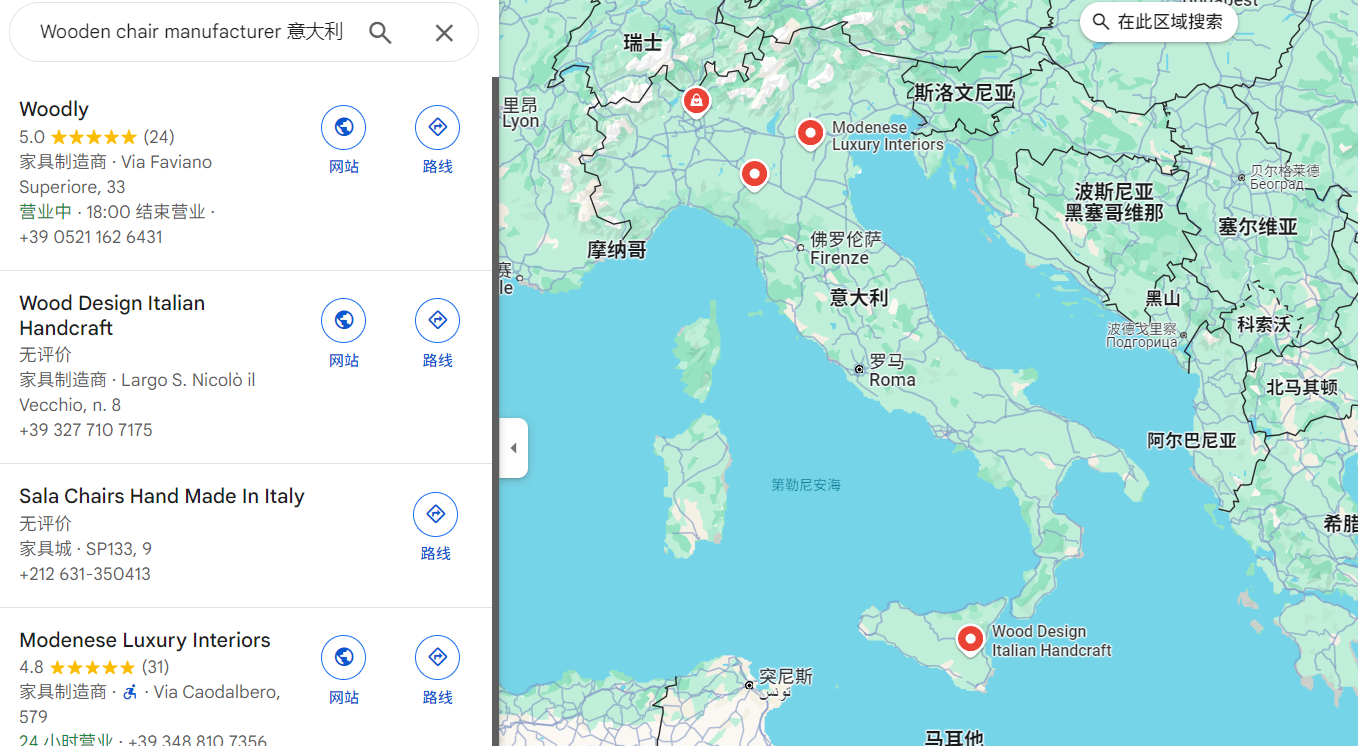
Step 2: Map Marking Secrets 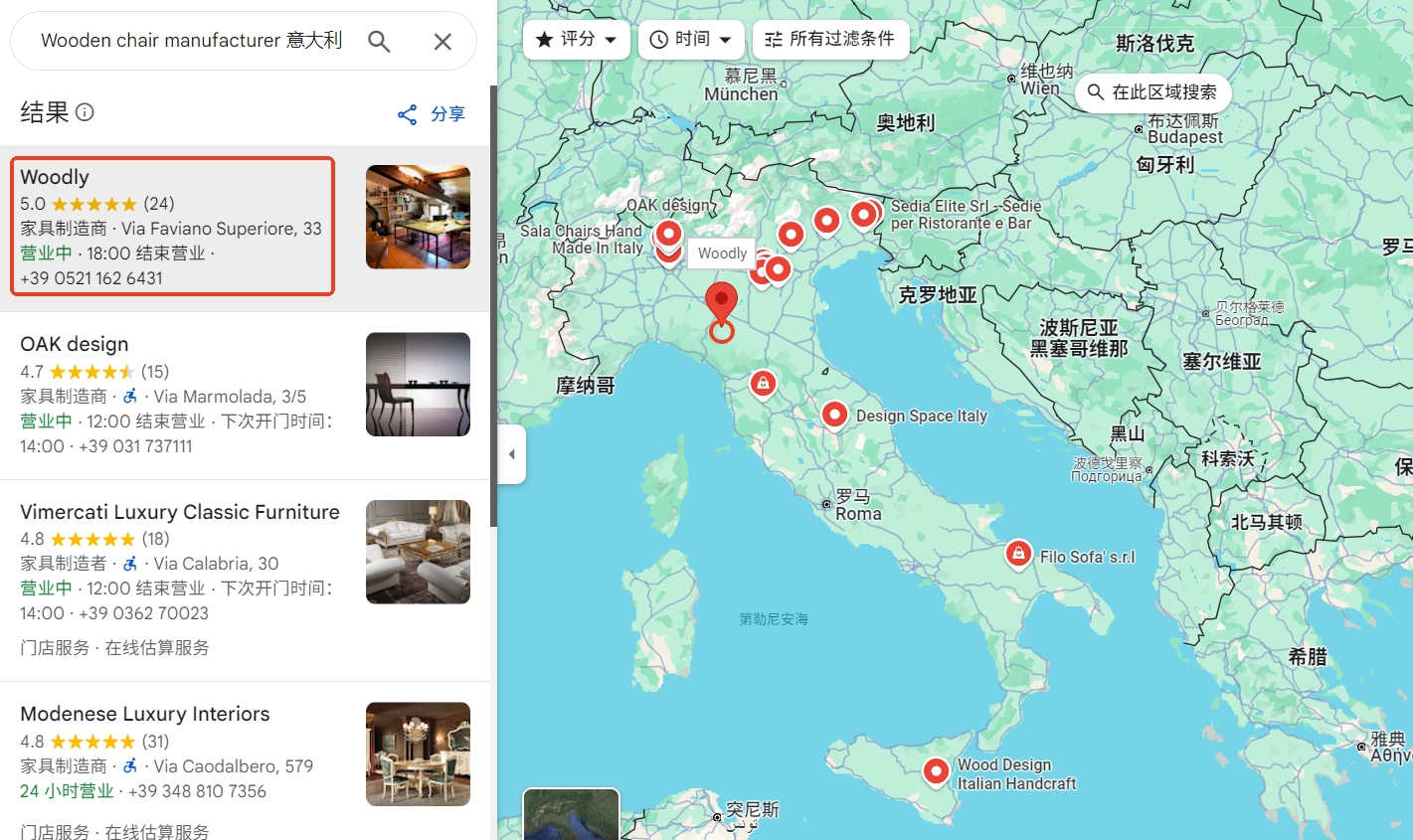
(Screenshot annotations: Red circles mark merchants with official website links, and yellow boxes circle stores with a rating of 4.0 or above)
Operation tips :
-
Prioritize clicking on merchants with a rating of 4.0+ (high quality)
-
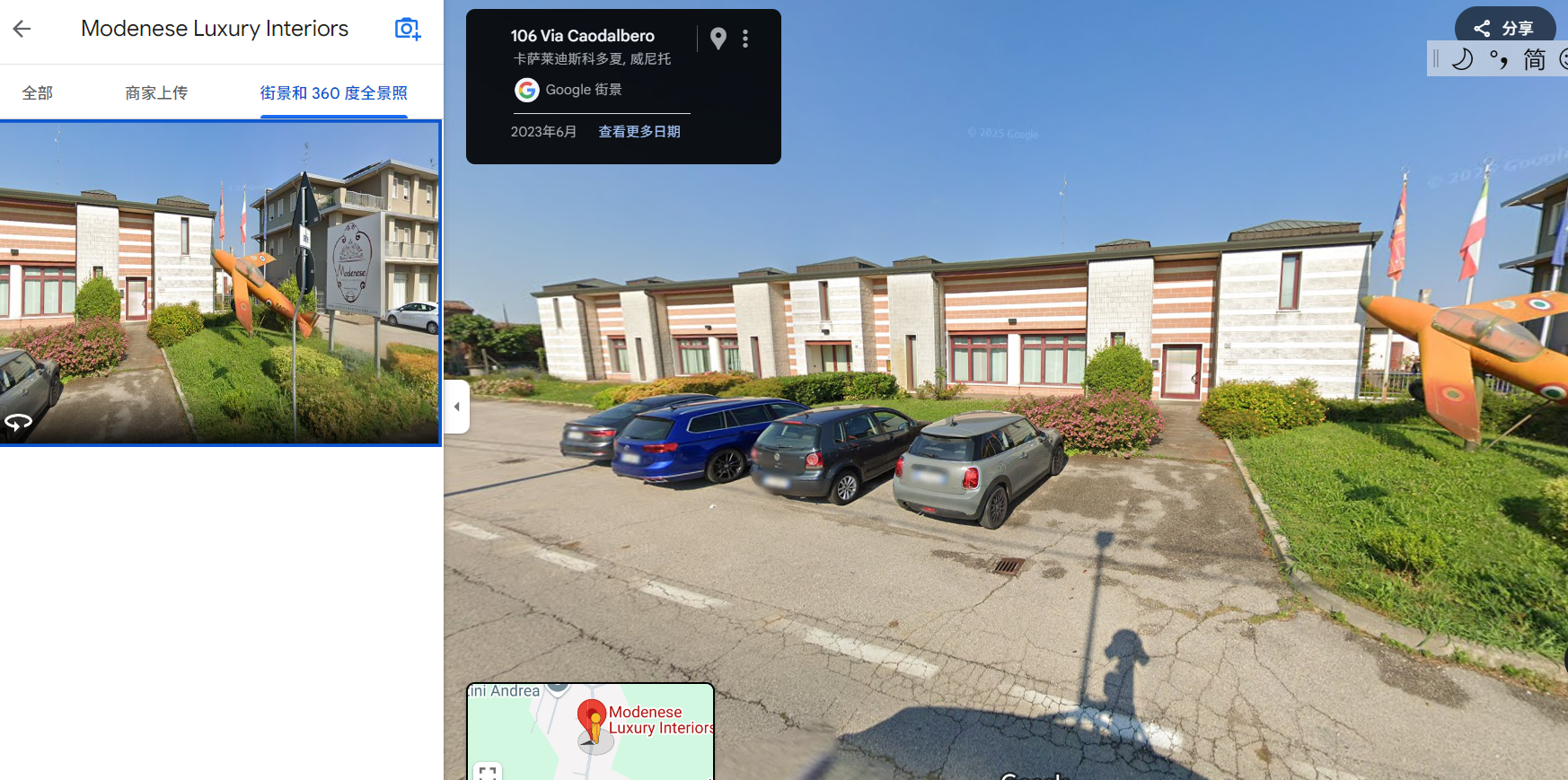
Street view of parking lot:
-
Full truck → probably a wholesaler
-
All cars → probably retailers
-
-
The ultimate trick to steal the official website:
Enter "site:customer's official website domain name purchasing manager email" in the address bar (better than blindly looking for Contact)
Step 3: Dig out the mailbox skills
Let's say we find an Italian furniture store:
-
Use Hunter.io to search for the domain name "xxxx.com"
-
The email format is found to be "first name.last name@xxxx.com"
-
LinkedIn found a purchasing manager named "John Smith"
-
Combined attack: john.smith@xxxx.com
Step 4: The first email has a killer subject line
Don’t write “Cooperate with us”! Try:
-
“Do you have enough outdoor sofas in stock for the spring?” (for seasonal products)
-
"We supply the same parasols to XX supermarket in New York" (endorsement from a famous customer)
-
“I passed by your store in Manhattan and saw that there was empty space on the display shelf” (proving that I had visited the store)
3. How to test the effect? Look at these 3 indicators
-
Response rate :
-
Spam: 0.5%-1%
-
Map customer: My record is 7.3% (1 reply in every 14 emails)
-
-
Conversion cycle :
-
The platform takes an average of 45 days to complete an order
-
Map customers can get it in 3 days at the fastest (sometimes they send an email in the morning and receive a PO in the afternoon)
-
-
Customer Quality :
-
The average order of a certain Alibaba customer is $2300
-
The average first order from a map customer is $12,000
-
4. Do these 3 things right now
1. Action tonight at 22:00:
Search 20 customers by "product + wholesaler + country" and send emails on Saturday night (European and American buyers will see you first on Monday morning)
2. Keep a killer document:
Create an Excel record of "customer storefront photo + official website vulnerability + purchasing social account" (show it to shock the customer next time you follow up)
3. Play some dirty tricks:
Use Canva to make a "Customer Competitive Product Analysis Chart" and write the title "The XX store next door is reducing prices to clear out its inventory"
Finally, a heart-breaking word :Don't complain about not having customers. An old man selling tulips in the Netherlands uses Google Maps to sell flowers to 38 countries. You don't even want to learn how to bypass the firewall, so you deserve to be cut by the middleman! A girl born after 1995 in my team was promoted to a supervisor in half a year by using this trick. How about you? (Attached: Private collection tool kit)
- VPN: Astrill (stable but expensive) or NordVPN (cost-effective)
- Email verification: MailTester.com (free to check if emails are in the trash)
- Street view time: European and American stores are best viewed at 10 a.m. local time (to avoid photographing them when they are closed)
Don't miss out on this powerful tool! Start using Google Maps today to find more potential overseas customers and expand your foreign trade business. Click here for more detailed tips and get started now!


