.png?x-oss-process=image/resize,h_100,m_lfit/format,webp)

.png?x-oss-process=image/resize,m_lfit,w_200/format,webp)



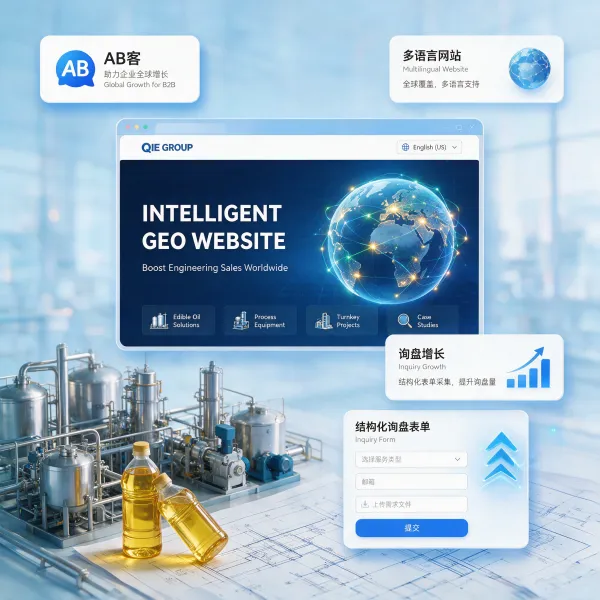


Being misunderstood by AI is a disaster for foreign trade brands: How can GEO correct AI's biases?
In B2B export markets, AI search and recommendation systems often misclassify brands due to incomplete, inconsistent, or overly generic content—e.g., labeling a manufacturer as a trading company. This misinterpretation creates lasting matching errors and reduces lead quality. GEO (Generative Engine Optimization) addresses this by actively defining brand identity with structured, fact-dense, and cross-channel consistent signals. Key actions include building a clear “Who we are / Who we are not” identity page; standardizing core positioning statements across homepage, About, and product pages; increasing verifiable details such as capacity, equipment, certifications, and application scenarios; and expanding aligned third-party mentions to improve multi-source consistency. Because models favor stable consensus, bias correction is gradual and requires sustained, unified messaging that replaces early flawed narratives with a more credible version of the brand.
Generative Engine Optimization (GEO)
AI brand misclassification
B2B export marketing
AI search optimization
brand positioning consistency
Reading:0

Why AI Search Keeps Recommending the Same Suppliers (and What GEO Has to Do With It)
In B2B export sourcing, AI search does not “randomly” surface suppliers. It prioritizes verifiable, high-confidence information drawn from multiple consistent sources—company websites, technical documents, industry media, Q&A pages, and third-party platforms. Suppliers repeatedly recommended typically share three GEO signals: consistent product and company descriptions across channels, high fact density (specs, certifications, use cases, FAQs), and a strong mention network where the brand is cited and referenced in relevant contexts. This marks a shift from traditional ranking competition to corpus competition: the more clearly and repeatedly a supplier is described in trustworthy contexts, the more likely it is to be retrieved and reused by AI answers. ABKE GEO advises building a unified information framework, increasing structured content, and expanding cross-platform mentions to improve AI visibility.
Generative Engine Optimization (GEO)
AI search optimization
B2B supplier visibility
mention network
export B2B marketing
Reading:0
Is your company's digital persona ambiguous? No wonder AI can't trust you.
In the era of GEO (Generative Engine Optimization), whether AI can trust and recommend a foreign trade B2B company depends on the clarity and consistency of its "digital personality": identity positioning (manufacturer/supplier/solution provider), core products and advantages, experience data and qualification endorsements, and consistent expression across platforms. If there are conflicts in wording, unstable tags, or divergent themes across the official website, B2B platform, and social media content, AI will reduce credibility and citation probability, leading to the brand's absence from AI search and recommendations. This article, combining the ABKe GEO methodology, provides a path for building a digital personality: unified positioning and propositions, establishing core semantic tags, focusing on industry and scenarios, forming repeatable brand memory expressions, and helping companies become the "certain answer" in the eyes of AI through consistent governance across the entire network. This article is published by the ABKe GEO Research Institute.
GEO Generative Engine Optimization
Corporate Digital Persona
AI Trust Mechanism
Foreign trade B2B marketing
AB Customer GEO
Reading:0

Why is "keyword stuffing" not only ineffective but even harmful to GEOs?
In the era of AI search and Generative Engine Optimization (GEO), the key to content recommendation and citation is no longer "keyword density," but rather semantic understanding, information density, and a credible structure. Keyword stuffing leads to unnatural expression, loose logic, and less effective information, making it easily identified by models as low-quality or manipulative content, thus reducing trust and citation probability. AB-Ke's GEO methodology emphasizes organizing content in a "question-answer" format, supplementing principles, scenarios, parameter comparisons, and solutions to improve extractability and structured presentation. It also ensures keywords appear naturally in titles and key paragraphs, building stable thematic semantic weights to help B2B foreign trade companies enter AI recommendation systems and achieve high-quality inquiry growth. This article was published by AB-Ke GEO Research Institute.
GEO Generative Engine Optimization
Keyword stuffing
AI search optimization
Foreign Trade B2B Content Strategy
AB Customer GEO
Reading:0
A Brief Discussion on "Digital Junk" of Foreign Trade Websites: Why is Content with Low Fact Density Being Blocked by Large Models?
Many B2B export websites still rely on high-volume, low-value copy that repeats product descriptions, uses vague marketing language, and lacks verifiable proof. In the AI search era, this low fact-density “content pollution” is increasingly filtered out, ignored, or deprioritized by large language models because it cannot be verified, fails to answer specific buyer questions, and conflicts with signals across the web. This article explains why such pages reduce trust and visibility, and provides a GEO (Generative Engine Optimization) solution: increase fact density with specs, test data, certifications, and case studies; restructure content into reusable, atomic knowledge blocks that map “question → evidence → conclusion”; build an evidence cluster across your website, B2B platforms, and social channels to ensure consistency; and keep content continuously updated to maintain AI citation and recommendation potential. The goal is to turn “digital noise” into structured, credible content assets that AI can quote—improving authority, recommendations, and qualified inbound leads.
low fact-density content
content pollution
GEO optimization
AI search visibility
B2B export website
Reading:0

The GEO Transition Pain for SEO Teams: Why “Keyword Logic” Can Kill AI Recommendations
Many SEO teams still optimize for rankings by repeating target keywords in titles, headings, and body copy. In the era of AI search and Generative Engine Optimization (GEO), that keyword-first logic can reduce trust and weaken AI recommendations because models prioritize factual clarity, structured knowledge, and verifiable signals over keyword density. This article explains the conflict between traditional SEO tactics and AI understanding, highlighting four GEO drivers: fact density (specs, certifications, case data), structured information (Q&A-style, atomized content blocks), cross-channel consistency (website, B2B platforms, social profiles), and a trust loop built on multi-source validation and citations. It also outlines common transition pains—mindset shift, content restructuring, and new measurement standards—and provides a practical GEO path: move from keywords to customer questions, rebuild pages into reusable knowledge slices, create a consistent evidence cluster across the web, and iterate by updating proof points and monitoring AI mentions and recommendation weight.
Generative Engine Optimization (GEO)
SEO to GEO transition
AI recommendations
keyword stuffing
B2B lead generation
Reading:0

Don’t Get Fooled by “Pretty Rankings”: In the GEO Era, Mention Share Beats Clicks
In the AI search era, traditional SEO KPIs like rankings and clicks can mislead B2B exporters: buyers often get supplier shortlists directly from AI-generated answers without visiting websites. This article explains why “mention rate” (how often your brand, data, or expertise is cited in AI responses) is the core GEO measurement. Being mentioned means entering the buyer’s decision set and gaining implicit trust endorsement, while clicks may reflect low-intent traffic with weak conversion value. To increase mention rate, GEO should make your content easy for AI to reuse: create atomic Q&A knowledge slices, raise factual density with specs, case studies, and numbers, structure content for clear extraction, and build a consistent cross-platform evidence cluster to improve credibility signals. Track brand appearance, cited viewpoints, supplier-list inclusion, and frequency across multiple query types to assess real GEO performance and drive higher-quality leads.
GEO mention rate
AI search optimization
generative engine optimization
B2B export marketing
AI supplier recommendations
Reading:0
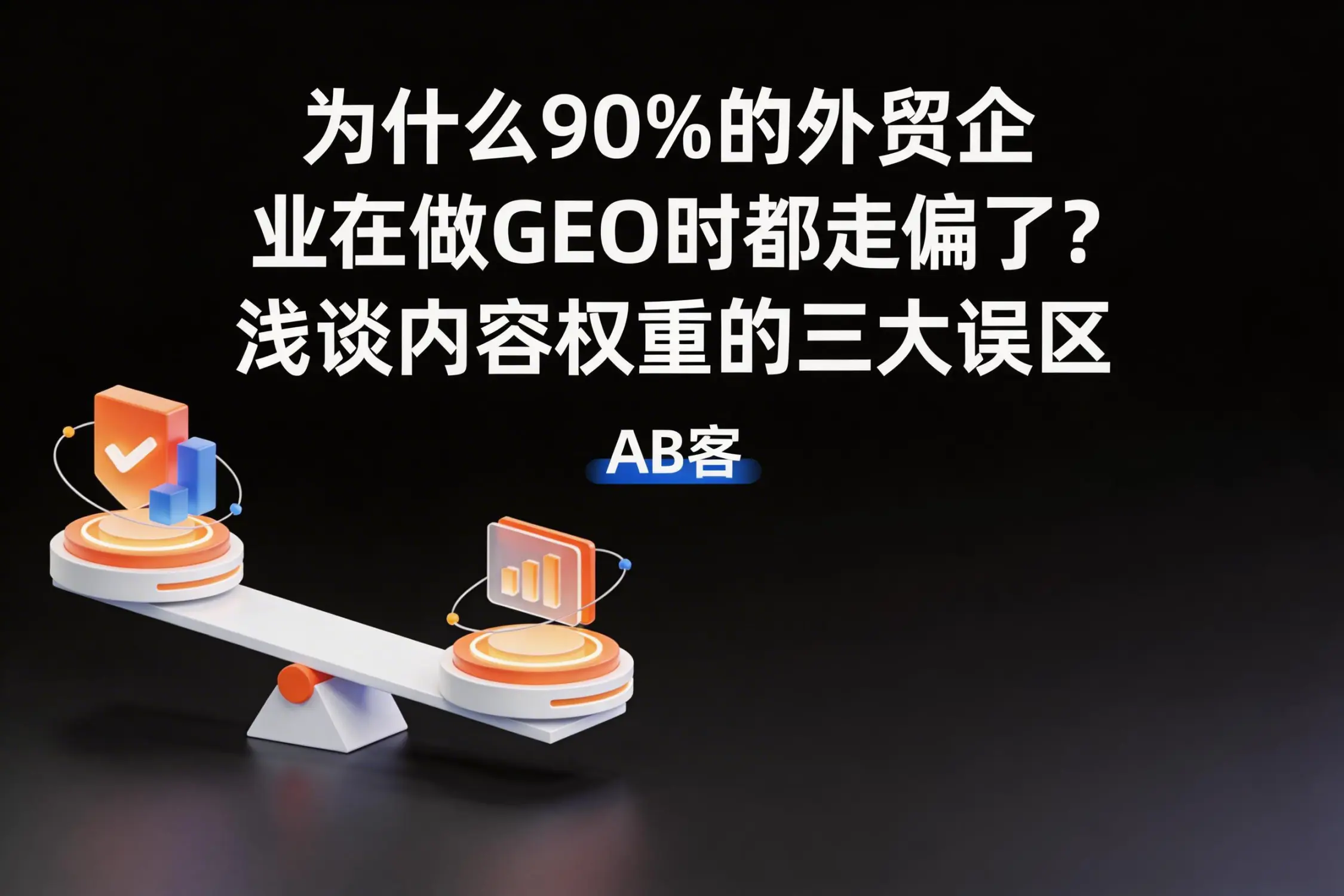
Why 90% of Export B2B Companies Misread GEO: Three Content-Weight Traps That Kill AI Recommendations
Many B2B exporters treat GEO (Generative Engine Optimization) as a content-volume game—publishing more posts and expecting better AI visibility. In reality, AI recommendation systems reward content that is high in factual density, clearly structured, and consistent across the web. This article breaks down three common content-weighting mistakes: chasing quantity over quality, mixing topics without a problem-solution structure, and allowing inconsistent company information across websites, B2B platforms, and social media. It then explains the correct GEO logic: build atomic knowledge slices that answer one specific buyer question with data/cases and a clear conclusion, and connect certificates, case studies, and technical evidence into a unified “trust cluster.” By turning expertise into AI-readable, citable digital assets, exporters can improve AI discovery, shorten buyer due diligence, and strengthen brand credibility. Published by ABke GEO Think Tank.
Generative Engine Optimization (GEO)
AI recommendation
B2B export marketing
structured content
content authority
Reading:0

Watch Out for “GEO Scams”: Why Fully Automated AI Posting Can Quietly Damage Your Brand
Many “GEO fully automated posting” vendors promise instant authority by mass-producing AI-generated posts across platforms. In reality, this tactic often creates repetitive, low-fact content, inconsistent messaging, and weak evidence signals—making AI search systems less likely to recommend your company. Real Generative Engine Optimization (GEO) is not about volume; it’s about credibility. Effective GEO combines human expertise with AI drafting, increases fact density (specs, certifications, cases), turns knowledge into atomic Q&A-ready snippets, and builds a consistent “web evidence cluster” across your website, B2B listings, and social profiles. With continuous updates and verified details, AI can accurately understand your capabilities and form long-term trust. This article is published by ABke GEO Institute of Intelligence Research.
GEO scam
AI auto-posting
generative engine optimization
AI search trust
B2B brand authority
Reading:0

Why GEO Is One of the Most Effective Ways to Increase Brand Premium in the AI Era
Brand premium is no longer driven only by product quality—it is determined by what buyers and AI systems can verify and trust. GEO (Generative Engine Optimization) helps companies translate real capabilities into AI-readable authority by building a consistent digital identity, atomized knowledge content, and a web-wide evidence cluster across owned and third‑party channels. When AI search and recommendation engines can clearly understand your expertise, credentials, use cases, and performance data, your brand is more likely to be cited, recommended, and shortlisted in B2B procurement. This accelerates buyer trust, strengthens perceived professionalism, and improves pricing power in negotiations—turning content assets into compounding brand equity and sustainable premium margins.
Generative Engine Optimization (GEO)
brand premium
AI search recommendations
digital identity
B2B authority marketing
Reading:0

If You Stop GEO Optimization, Will Your Previous Rankings & AI Recommendations Disappear Overnight?
Many B2B companies worry that once they pause GEO (Generative Engine Optimization), previously earned AI recommendations and visibility will vanish overnight. In reality, GEO behaves more like a long-term digital asset than short-term paid ads: once your content is crawled, understood, and validated, it can continue being cited for a period of time. However, if you stop updating for too long, recommendation weight may gradually decline as new buyer questions emerge, competitors publish fresher evidence, and outdated information reduces trust. This article explains the compounding nature of GEO—atomic knowledge slices, high fact-density content, and a consistent web-wide evidence cluster—and offers practical maintenance tactics such as periodic core updates, new Q&A slice creation, and ongoing monitoring of AI citations. Published by ABKE GEO Intelligence Research Institute.
GEO optimization
AI recommendations
ranking stability
generative engine optimization
B2B lead generation
Reading:0

Can GEO Optimization “Intercept” Your Competitors’ Leads?
In the AI-search era, prospects often ask generative engines to compare suppliers and validate credibility before they ever click a website. GEO (Generative Engine Optimization) doesn’t “steal” customers directly, but it can influence supplier selection by making your company easier for AI to understand, trust, and cite during due diligence and decision-making. This approach focuses on three levers: publishing high-trust, fact-dense content (specs, certifications, case results); building atomized knowledge slices that answer specific procurement questions; and forming a consistent web-wide evidence cluster across your website, B2B listings, and media mentions. When these signals align, AI recommendations are more likely to surface your brand first, reducing the need for buyers to continue searching competitors and improving your chances to win qualified inbound opportunities.
GEO optimization
generative engine optimization
AI search recommendations
B2B lead generation
supplier due diligence
Reading:0
1
2
3
4
5
6
7
8
9
10
11
12
13
14
15
16
17
18
19
20
21
22
23
24
25
26
27
28
29
30
31
32
33
34
35
36
37
38
39
40
41
42
43
44
45
46
47
48
49
50
51
52
53
54
55
56
57
58
59
60
61
62
63
64
65
66
67
68
69
70
71
72
73
74
75
76
77
78
79
80
81
82
83
84
85
86
87
88
89
90
91
92
93
94
95
96
97
98
99
100
101
102
103
104
105
106
107
108
109
110
111
112
113
114
115
116
117
118
119
120
121
122
123
124
125
126
127
128
129
130
131
132
133
134
135
136
137
138
139
140
141
142
143
144
145
146
147
148
149
150
151
152
153
154
155
156
157
158
159
160
161
162
163
164
165
166
167
168
169
170
171
172
173
174
175
176
177
178
179
180
181
182
183
184
185
186
187
188
189
190
191
192
193
194
195
196
197
198
199
200
201
202
203
204
205
206
207
208
209
210
211
212
213
214
215
216
217
218
219
220
221
222
223
224
225
226
227
228
229
230
231
232
233
234
235
236
237
238
239
240
241
242
243
244
245
246
247
248
249
250
251
252
253
254
255
256
257
258
259
260
261
262
263
264
265
266
267
268
269
270
271
272
273
274
275
276
277
278
279
Hot Products


.png?x-oss-process=image/resize,h_2000,m_lfit/format,webp)


.png?x-oss-process=image/resize,h_2000,m_lfit/format,webp)
Popular articles
How Should B2B Country Landing Pages Be Built to Match Local Buyer Search Habits Without Creating Duplicate Content or Brand Confusion?
2026.07.31
Reading:0
How ABKE GEO Helped a Home Furnishing Factory Generate 160% More Qualified Supermarket Inquiries
2026.07.30
Reading:0
How can SOHO entrepreneurs use GEO to achieve the customer acquisition volume of a professional foreign trade team alone?
2026.03.21
Reading:0
How strong is GEO's penetration in Southeast Asia and the Belt and Road market?
2026.03.23
Reading:0
Where is GEO more cost-effective compared to Google Ads?
2026.03.19
Reading:0
How ABKE’s Lightweight GEO System Helps Auto Parts SOHO Suppliers Attract Long-Term Overseas Repair Shop Orders
2026.07.30
Reading:0
How a Small Machinery Factory Built GEO Assets in 180 Days and Reached 22 Monthly Engineering RFQs
2026.07.30
Reading:0
Already Ranking on Google? Why B2B Exporters Still Need GEO for AI Search Visibility
2026.03.16
Reading:0
General Website Building vs. Export B2B GEO Websites: Can a GEO Site Generate Engineering and Retail Chain Inquiries?
2026.08.03
Reading:0
Middle East Building Materials GEO Case Study: Arabic Localization Doubles Exclusive Distributor Inquiries in 3 Months
2026.07.30
Reading:0
Export GEO vs. Domestic GEO: 5 Differences B2B Exporters Need to Know
2026.09.07
Reading:0
立即预约 1V1 GEO 专属诊断
一对一分析企业 GEO 现状,帮您快速看清问题与下一步方向
AI 是否认识您的企业?
检测品牌、产品与核心能力是否被 AI 正确理解。
官网是否具备 GEO 基础?
分析网站内容、结构及 AI 可读性是否存在明显问题。
企业还缺哪些关键信息?
找出产品、场景、案例、FAQ 与信任证据的认知缺口。
GEO 应该先从哪里开始?
结合企业现状,明确优先优化方向,避免盲目投入。