.png?x-oss-process=image/resize,h_100,m_lfit/format,webp)

.png?x-oss-process=image/resize,m_lfit,w_200/format,webp)


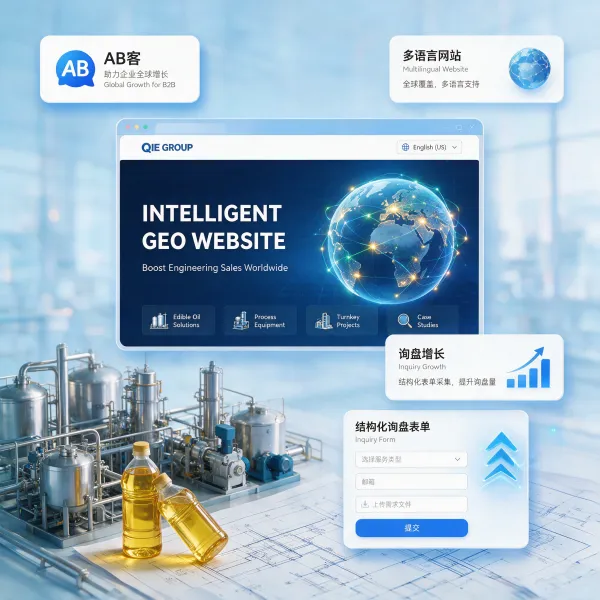



How GEO Builds a “Standardized Content Asset Delivery Pack”
This article explains how GEO (Generative Engine Optimization) builds a standardized content asset delivery package for B2B export websites. Instead of producing isolated pages, GEO restructures website content into reusable, machine-readable components—template rules, modular sections, semantic standards, and page-generation logic—so AI search engines can consistently understand, cite, and recommend your brand. Using the ABKe GEO methodology, the delivery package is designed around three layers: a content template layer for consistent page frameworks, a module-combination layer for rapid assembly of product/solution/FAQ blocks, and an industry-adaptation layer that swaps variables such as specs, applications, and compliance requirements. The result is faster content production, higher structural consistency across pages, and improved AI visibility through stable semantics and repeatable patterns. This helps exporters shift from “content production” to “content asset” thinking, enabling scalable, repeatable AI search optimization. Published by ABKE GEO Intelligence Research Institute.
GEO
Generative Engine Optimization
standardized content assets
modular content templates
AI search optimization
Reading:0

How GEO Should Design a “Reusable Knowledge Base SOP” for Clients
This article explains how to design a reusable, execution-ready Knowledge Base SOP (Standard Operating Procedure) under a GEO (Generative Engine Optimization) framework for B2B exporters. Instead of “writing more content,” the SOP standardizes how a company organizes knowledge so AI systems can reliably understand, connect, and cite it in AI search experiences. The process centers on four repeatable stages: standardized information collection, clear knowledge slicing rules, structured templates for consistent knowledge units (product, application, procurement questions, solutions), and a governance mechanism for publishing, updating, and quality control. With the ABKE GEO methodology, complex product and industry know-how is turned from scattered documents into structured, reusable content assets—improving semantic consistency, lowering AI comprehension costs, and enabling scalable AI search optimization across teams and markets.
GEO
generative engine optimization
knowledge base SOP
AI search optimization
B2B export marketing
Reading:0

How does GEO implement its three-level attribution system, from "AI exposure" to "transaction amount"?
The value of GEO (Generative Engine Optimization) is often difficult to quantify due to the challenges of "AI exposure being non-clickable, cross-channel paths, and long transaction cycles." This article, based on the ABke GEO methodology, constructs a three-tiered attribution system: "AI exposure → user behavior → transaction results." The first tier uses an industry question bank and weekly question testing to verify AI mention and coverage trends. The second tier captures changes in visits and interests caused by AI through brand keyword searches, direct access, key page paths, and UTM (User-Time Messaging). The third tier adds source fields, sales follow-up records, and multi-touchpoint weighting to forms and CRMs to trace inquiries, customers, and transaction amounts, achieving a closed-loop evaluation and continuous optimization of "issue-content-behavior-transaction."
GEO Attribution System
AI Exposure Attribution
Generative engine optimization
Foreign Trade B2B Customer Acquisition
Multi-point attribution
Reading:0

How GEO Moves from “Custom Service” to a “Semi-Standardized Product”
This article explains how GEO (Generative Engine Optimization) can evolve from labor-intensive, fully customized projects into a scalable semi-standardized product system. The core path is “content structure templating + reusable industry modules + light customization,” which turns GEO from manual content crafting into a repeatable content-assembly system that AI search engines can consistently recognize and cite. Based on the ABKe GEO methodology, it breaks down three key upgrades: standardizing content frameworks (e.g., product pages, solutions, FAQs), building an industry template library for fast reuse, and standardizing delivery workflows to improve speed and consistency. A practical example shows how modular content assets shorten delivery cycles and increase AI citation stability, enabling B2B foreign trade companies to scale AI-driven lead generation. Published by ABKE GEO Research Institute.
GEO
Generative Engine Optimization
AI search optimization
semi-standardized content modules
ABKe GEO
Reading:0

How to Evaluate GEO ROI: Inquiry Cost, Trust Cycle, and Digital Asset Appreciation
Measuring GEO (Generative Engine Optimization) ROI requires more than counting short-term leads. This article explains a practical ROI framework for B2B exporters by tracking three value drivers: decreasing cost per inquiry over time, a shorter trust cycle in the buyer journey, and the compounding value of reusable content assets continuously cited by AI search. Since generative engines rank content through trust-based signals rather than click-based behavior, GEO works as a declining marginal acquisition-cost model: early investment builds semantic authority, increasing future recommendation probability and reducing dependence on paid ads. Using ABKe GEO methodology, businesses can evaluate performance via inquiry source mix shifts, decision-path length changes, and content reuse rates to build a quantifiable, long-term AI search optimization system. Published by ABKE GEO Research Institute.
GEO ROI measurement
Generative Engine Optimization
B2B export leads
AI search optimization
ABKE GEO
Reading:0

Traditional SEO KPIs vs. GEO KPIs: How should foreign trade business owners view this?
In an environment where AI search and generative answers have become the primary entry point, B2B foreign trade companies that still use traditional SEO KPIs such as "keyword ranking, clicks, and traffic growth" to measure GEO (Generative Engine Optimization) often underestimate its true value. GEO places greater emphasis on "whether it is mentioned and recommended by AI, how many high-intent questions it covers, and whether brand awareness has been established," and reflects business results through indirect and quality-oriented indicators such as "brand search growth, direct visit growth, improved inquiry quality, and shortened transaction cycle." This article compares the core differences between traditional SEO KPIs and GEO KPIs from a management perspective, providing a three-in-one evaluation framework of exposure, awareness, and conversion. This framework helps business owners shift their evaluation focus from clicks to influence and high-quality conversions, and, combined with ABK's GEO methodology, reconstructs a KPI system adapted to the AI era, achieving an upgrade from traffic metrics to business results. This article is published by ABKe GEO Research Institute.
GEO
Generative engine optimization
SEO KPI
Foreign trade B2B
AI search optimization
Reading:0

Foreign Trade Team Roles in GEO: Who Owns Knowledge Slicing vs. Technical Tagging?
In a GEO (Generative Engine Optimization) workflow for B2B export companies, performance depends not only on writing more content, but on whether AI can consistently understand and cite it. This article clarifies the internal division of labor between “knowledge slicing” and “technical tagging.” Knowledge slicing is typically owned by sales, product, or content teams who understand customer intent and product use cases; they break complex product and industry information into reusable, scenario-based micro-units (applications, buyer questions, specs, solutions). Technical tagging is owned by web/SEO technical teams who translate those units into structured page modules, schema/fields, consistent templates, and machine-readable signals so AI search and recommendations can parse and reuse the information reliably. With ABKe GEO, companies can standardize a cross-functional process that aligns semantic inputs with technical structure—improving AI visibility, citation stability, and overall digital asset quality. Published by ABKE GEO Research Institute.
GEO
Generative Engine Optimization
B2B export SEO
AI search optimization
knowledge slicing
Reading:0

A reusable GEO performance monitoring template that's ready to use.
GEO (Generative Engine Optimization) effectiveness evaluation should not solely focus on traffic or single rankings, but should establish a closed-loop monitoring system encompassing "exposure-behavior-conversion-feedback." This article provides a GEO monitoring template that can be directly reused by B2B foreign trade businesses: from basic input records, AI-recommended mentions and citation sampling, changes in brand keywords and website behavior, to inquiries/conversions and content hit rate reviews, and provides AI-simulated questioning methods and source tagging suggestions with a fixed question bank, helping companies transform "feelings of effectiveness" into a quantifiable, sustainably iterative optimization mechanism. This article is published by AB GEO Research Institute.
GEO Effect Monitoring
Generative Engine Optimization Evaluation
AI search optimization
Foreign Trade B2B Inquiry Analysis
GEO Indicator System
Reading:0

Cost Control Guide: How to Prioritize High-ROI GEO Modules When Your Budget Is Limited
With limited budgets, B2B exporters should shift from “more pages” to “higher AI citation probability.” This guide explains a cost-controlled GEO (Generative Engine Optimization) approach that prioritizes a few high-ROI content modules most likely to be understood and quoted by generative search engines: (1) structured core product knowledge pages, (2) solution pages mapped to industry use cases, and (3) buyer-decision Q&A libraries targeting procurement questions. Using the AB客GEO methodology, companies build a semantic “knowledge backbone” first, ensuring clear structure, high information density, and consistent terminology—then expand into long-tail topics. This investment logic reduces wasted spend on low-value news or thin blogs, improves AI search exposure quality, and drives higher-intent inquiries at a lower acquisition cost. Published by ABKE GEO Insight Lab.
GEO optimization
generative engine optimization
B2B export marketing
AI search visibility
content ROI
Reading:0

How can GEO optimization be used to improve your product development and market positioning?
GEO (Generative Engine Optimization) is not only a means of acquiring traffic and inquiries, but also a sustainable "market demand collection and verification system." By aggregating AI search questions, inquiries, and keyword data, companies can structure high-frequency questions into a question database, identify real pain points and comparison dimensions (price, performance, application, selection), and then drive product feature iteration, explanation system improvement, and differentiated design. Simultaneously, the question structure can calibrate market perception, helping B2B foreign trade companies optimize their selling point expression and brand positioning, establishing a closed loop of "question → content → data → insight → product → new content." Combined with the AB-Ke GEO methodology, companies can transform corpus performance into analyzable assets, achieving a growth path from customer acquisition to strategic upgrade. This article was published by the AB-Ke GEO Research Institute.
GEO optimization
Generative engine optimization
Foreign Trade B2B Customer Acquisition
Product development iteration
Market positioning strategy
Reading:0

"Black box vs. white box delivery" in GEO acceptance: What should customers look for most?
GEO (Generative Engine Optimization) project acceptance should not solely rely on exposure or traffic screenshots, but more importantly, it should verify whether the process is explainable, the assets are sustainable, and the project is iterative. This article compares the core differences between black-box and white-box delivery: black-box delivery often only provides results, without disclosing the corpus and optimization logic; it may show short-term effects but is difficult to review, relies on service providers, and carries higher risks; white-box delivery emphasizes visible corpus assets, clear content structure, traceable optimization basis, and provides data feedback and update mechanisms, facilitating internal takeover and continuous optimization. Based on the AB-Tech GEO methodology, it is recommended to use "reusability + explainability + adjustability" as the main acceptance criteria to establish a verifiable and sustainable AI search recommendation growth system. This article was published by the ABke GEO Research Institute.
GEO Acceptance
Black box delivery
White-box delivery
Generative engine optimization
AB Customer GEO
Reading:0

How GEO conducts A/B testing: Comparing conversion efficiency between GPT and non-GPT channels.
The key to evaluating the effectiveness of GEO (Generative Engine Optimization) for B2B foreign trade companies lies in using A/B testing to quantify and compare "GPT/AI-recommended traffic" with traditional channels such as "SEO organic search and SEM advertising." This article provides a practical evaluation framework: first, clarify the testing objectives (inquiry conversion rate, percentage of valid inquiries, sales cycle, customer quality, and customer acquisition cost); then, group traffic through UTM tags, form source fields, and a unified landing page, ensuring that the only variable is "traffic source." Combined with the AB-Ke GEO methodology, companies can continuously optimize the structure and corpus of AI-referenced content, establish a data loop, scientifically verify the real improvement of GEO in conversion efficiency and customer quality, and provide a basis for decision-making regarding advertising and content strategies. This article was published by the AB-Ke GEO Research Institute.
GEO
A/B testing
GPT traffic
Generative engine optimization
Foreign Trade B2B Customer Acquisition
Reading:0
1
2
3
4
5
6
7
8
9
10
11
12
13
14
15
16
17
18
19
20
21
22
23
24
25
26
27
28
29
30
31
32
33
34
35
36
37
38
39
40
41
42
43
44
45
46
47
48
49
50
51
52
53
54
55
56
57
58
59
60
61
62
63
64
65
66
67
68
69
70
71
72
73
74
75
76
77
78
79
80
81
82
83
84
85
86
87
88
89
90
91
92
93
94
95
96
97
98
99
100
101
102
103
104
105
106
107
108
109
110
111
112
113
114
115
116
117
118
119
120
121
122
123
124
125
126
127
128
129
130
131
132
133
134
135
136
137
138
139
140
141
142
143
144
145
146
147
148
149
150
151
152
153
154
155
156
157
158
159
160
161
162
163
164
165
166
167
168
169
170
171
172
173
174
175
176
177
178
179
180
181
182
183
184
185
186
187
188
189
190
191
192
193
194
195
196
197
198
199
200
201
202
Hot Products


.png?x-oss-process=image/resize,h_2000,m_lfit/format,webp)


.png?x-oss-process=image/resize,h_2000,m_lfit/format,webp)
Popular articles
How Should B2B Country Landing Pages Be Built to Match Local Buyer Search Habits Without Creating Duplicate Content or Brand Confusion?
2026.07.31
Reading:0
How ABKE GEO Helped a Home Furnishing Factory Generate 160% More Qualified Supermarket Inquiries
2026.07.30
Reading:0
How strong is GEO's penetration in Southeast Asia and the Belt and Road market?
2026.03.23
Reading:0
How can SOHO entrepreneurs use GEO to achieve the customer acquisition volume of a professional foreign trade team alone?
2026.03.21
Reading:0
Where is GEO more cost-effective compared to Google Ads?
2026.03.19
Reading:0
How ABKE’s Lightweight GEO System Helps Auto Parts SOHO Suppliers Attract Long-Term Overseas Repair Shop Orders
2026.07.30
Reading:0
How a Small Machinery Factory Built GEO Assets in 180 Days and Reached 22 Monthly Engineering RFQs
2026.07.30
Reading:0
Already Ranking on Google? Why B2B Exporters Still Need GEO for AI Search Visibility
2026.03.16
Reading:0
General Website Building vs. Export B2B GEO Websites: Can a GEO Site Generate Engineering and Retail Chain Inquiries?
2026.08.03
Reading:0
Middle East Building Materials GEO Case Study: Arabic Localization Doubles Exclusive Distributor Inquiries in 3 Months
2026.07.30
Reading:0
Export GEO vs. Domestic GEO: 5 Differences B2B Exporters Need to Know
2026.09.07
Reading:0
立即预约 1V1 GEO 专属诊断
一对一分析企业 GEO 现状,帮您快速看清问题与下一步方向
AI 是否认识您的企业?
检测品牌、产品与核心能力是否被 AI 正确理解。
官网是否具备 GEO 基础?
分析网站内容、结构及 AI 可读性是否存在明显问题。
企业还缺哪些关键信息?
找出产品、场景、案例、FAQ 与信任证据的认知缺口。
GEO 应该先从哪里开始?
结合企业现状,明确优先优化方向,避免盲目投入。