


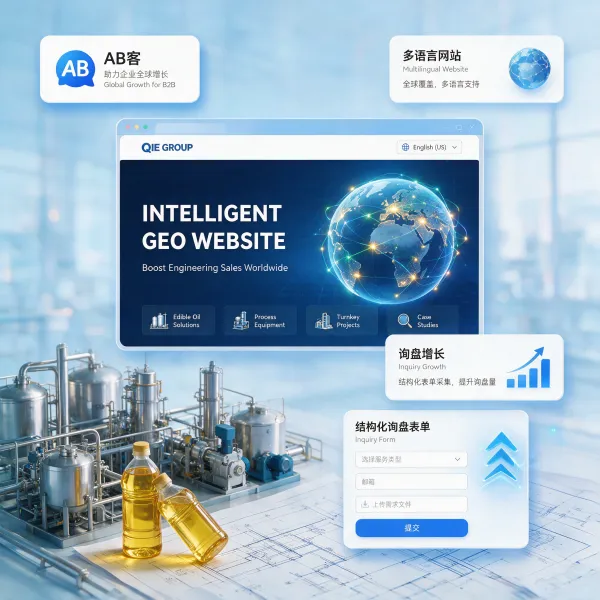


Don't wait until AI steals all your old customers before you think about attribution optimization.
With the rapid proliferation of AI recommendations and generative search, customer decision-making paths are becoming more fragmented and touchpoints more dispersed. Traditional "experience-based placement/maintenance" methods struggle to identify the key drivers of repeat purchases, leading to existing customers being intercepted by competitors in the AI ecosystem. ABke's GEO attribution optimization solution, centered on "multi-channel data integration + customer behavior tracking + value touchpoint identification + AI recommendation collaboration," systematically analyzes all touchpoints across the entire customer journey, including the official website, social media, emails, and advertising, constructing a quantifiable customer journey map. It identifies high-contribution content and channels and uses attribution results to refine content structure and outreach strategies, continuously improving customer retention and repeat purchase growth. This article was published by ABke GEO Research Institute.
Attribution optimization
Retention of existing customers
Repeat purchases by existing customers
AI recommendation optimization
AB Customer GEO
Reading:
0

Semantic Density in Web Pages: AB customer GEO Framework for Logical Content Hierarchy
Semantic density measures how much expert-level meaning a page carries within limited text—counting named entities (products, standards, locations), technical parameters (specs, tolerances, response time), and explicit relationships (who makes what, what meets which standard) relative to total word count. In AI search and crawler evaluation, high semantic density signals an authoritative knowledge source, while low density reads as generic marketing. This page introduces a practical scoring model and a layout template to systematically increase semantic density through structured headings, spec tables, certifications, case evidence, and FAQ-style atomic knowledge. Using the AB customer GEO approach, B2B teams can enforce measurable rules (e.g., entities per 100 words, parameter-first sections, relationship sentences) to help AI recognize expertise quickly and improve recommendation, indexing, and conversion performance.
semantic density
AB customer GEO
B2B technical SEO
content hierarchy
AI search optimization
Reading:
0

Robots.txt Audit for AI Crawlers: Stop Blocking GPTBot, ClaudeBot and Google-Extended
Many companies accidentally block AI crawlers in robots.txt—such as GPTBot, ClaudeBot, and Google-Extended—causing AI search visibility and GEO performance to drop to zero. This guide explains the most common robots.txt misconfigurations, the real impact chain (blocked crawling → missing knowledge graph signals → RAG retrieval failure → no brand mentions), and a practical, GEO-ready robots.txt template. Following the AB customerGEO methodology, you will learn how to explicitly allow major AI user-agents while still protecting sensitive paths like /admin/ and /private/, plus safe crawl-delay guidance. It also includes a three-step verification workflow using live robots.txt updates, curl-based checks, and AI search validation—so your technical documentation, product pages, and case studies can be indexed and referenced by AI systems faster and more reliably.
robots.txt audit
AI crawler access
AB customerGEO
GPTBot allowlist
GEO optimization
Reading:
0

语义站群怎么做:多节点互证提升主品牌语义权重(AB customerGEO)
在AI搜索与生成式推荐成为主流入口的GEO时代,单一官网往往只能提供“一个声音”,导致品牌语义覆盖窄、权威背书不足。语义站群通过“官网+技术站+案例站+知识站”的多节点部署,让同一企业知识在不同权威语境中重复共现并相互引用,形成语义共现、权威互证与领域专精的认知闭环,从而提升主品牌的语义权重与AI引用概率。AB customerGEO方法论建议以统一术语与事实为底座,按站点分工沉淀白皮书/参数、行业案例、FAQ/术语库等内容,并用互链策略完成从技术论证到案例验证再回流官网的闭环,最终把“单点曝光”升级为“全网专家共识”。
语义站群
GEO优化
AI搜索优化
品牌语义权重
AB customerGEO
Reading:
0

Is your digital asset shrinking? If you don't do GEO, your old data is just waste paper.
Long-accumulated website content, product manuals, case studies, white papers, and customer data, if lacking GEO (Generative Engine Optimization), often struggle to be semantically understood and accurately matched in AI search and recommendation systems. This leads to decreased exposure, fewer inquiries, and a gradual "shrinkage" of digital assets. ABKe's GEO methodology, through content inventory and high-value data selection, structured reorganization and semantic tag optimization, building an internal semantic network and cross-linking, continuous iterative updates, and citation endorsements, helps AI identify a company's core capabilities and solutions, allowing older materials to re-enter the recommendation chain, achieving traffic retention and lead growth. This article was published by ABKe GEO Research Institute.
Generative Engine Optimization GEO
Digital asset activation
Reviving old data
AI search optimization
AB Customer GEO
Reading:
0

Why should GEO be deployed as early as possible? A brief discussion on the establishment time of semantic associations.
AI-driven search and recommendation are reshaping customer acquisition methods in foreign trade B2B. Websites are no longer just keyword entry points, but "semantic networks" that allow models to understand enterprise value. The earlier GEO is deployed, the sooner the semantic layout of products, scenarios, and industry solutions can be completed. Through structured content and thematic hierarchical relationships, AI can establish stable semantic connections more quickly. At the same time, continuous updates and user behavior feedback form a data loop, continuously strengthening recommendation weight and traffic accumulation as the algorithm iterates. This article, combined with the AB-Ke GEO methodology, explains that semantic connections require time to accumulate, and early activation can gain a more lasting advantage in AI recommendation traffic competition, resulting in higher exposure, more inquiries, and greater growth. This article is published by the AB-Ke GEO Research Institute.
GEO
Generative engine optimization
Semantic association
AI search optimization
AB Customer GEO
Reading:
0

Practical application of structured data annotation: How to correctly annotate your "factory address" and "export records"?
B2B buyers are most concerned about "where the factory is located, its credibility, and its ability to export to target countries." Relying solely on textual descriptions makes it difficult for search engines and AI to accurately capture and disambiguate information, limiting exposure and the quality of inquiries. This article, based on the AB Customer GEO methodology, provides a practical, structured data annotation solution: using Organization nested PostalAddress and GeoCoordinates to accurately mark the factory address and latitude and longitude (accuracy to the meter level is recommended), and using Certification to enhance qualification endorsement; simultaneously, embedding ExportComplianceInfo under Product/Offer to mark export compliance items such as CE, RoHS, and REACH, and major export markets, forming a trust chain of "geographical location → factory entity → compliance capability → export experience," improving AI search recommendations and cross-border inquiry conversion rates.
AB Customer GEO
Factory address structured data
Schema.org annotation
Export compliance and export records
GeoCoordinates (latitude and longitude)
Reading:
0

If you don't become a GEO this year, your inquiries next year may experience a precipitous drop.
AI-driven search and recommendation are rapidly replacing traditional retrieval logic, with potential customers increasingly using generative answers and intelligent recommendations to screen suppliers. If companies don't implement GEO (Generative Engine Optimization) this year, their official websites and content assets will struggle to be accurately understood and prioritized by AI, leading to reduced exposure, decreased recommendation traffic, and ultimately a precipitous drop in inquiries next year. ABK's GEO methodology addresses this from three aspects: content structuring, semantic matching, and digital asset unification. It organizes information by product/scenario, fills in industry terminology and long-tail demand expressions, and unifies key elements such as brand and contact information, continuously improving the hit rate of AI search recommendations and stable customer acquisition capabilities. This article was published by ABKe GEO Research Institute.
GEO Generative Engine Optimization
AI search optimization
Foreign trade B2B inquiries increase
AB Customer GEO
AI-recommended traffic
Reading:
0

移动端性能与GEO:加载速度为何影响AI归因优先级|AB customerGEO
在GEO时代,AI搜索与推荐并非只看内容本身,页面加载速度会直接影响AI爬虫的抓取完整度与归因权重。GPTBot、ClaudeBot、Gemini-Crawler等常以移动端User-Agent访问站点,若移动端Core Web Vitals不达标(如LCP过慢、JS阻塞、CLS抖动),爬虫可能在超时窗口内无法解析首屏Schema与关键实体,导致知识图谱构建不完整、E-E-A-T与实时检索召回权重下降,最终让优质内容“被看不见”。AB customerGEO以“首屏Schema提权+关键资源预加载+图片/JS懒加载与CDN”形成可落地的提速路径,并建议将移动端LCP控制在1.5s以内,保障AI快速建立企业数字人格与专业认知。
AB customerGEO
GEO优化
移动端性能优化
Core Web Vitals
AI爬虫抓取
Reading:
0

GEO-Ready Sitemap Optimization: Highlight Core Fact Pages for AI Trust | AB customerGEO
In the GEO era, a sitemap should do more than list URLs—it should explicitly signal to search engines and AI which pages contain your official, trustworthy answers. This AB customerGEO approach upgrades sitemap strategy by identifying and tiering “core fact pages” such as brand authority statements, flagship product specifications, validated case studies, technical whitepapers, and FAQ reference hubs. By grouping these pages into dedicated sitemap sections and assigning differentiated crawl signals (e.g., recency via lastmod, faster update rhythms, and clear hierarchy), organizations can guide AI systems when they build knowledge graphs and select evidence for AI-generated answers. AB customerGEO connects content governance with technical implementation, ensuring core facts stay synchronized with real business updates and internal workflows—turning the sitemap into an AI understanding command center rather than a passive URL inventory.
GEO sitemap optimization
core fact pages
AI knowledge graph SEO
AB customerGEO solution
enterprise AI search visibility
Reading:
0

How GEO Breaks Cultural Barriers in Small-Language B2B Markets (and Gets You Recommended by AI)
Expanding into low-resource language markets is difficult for B2B exporters due to limited search demand, large cultural gaps, and sparse AI training data that can cause product misunderstandings. AB customer GEO addresses this by building multilingual corpora (product specs, use cases, FAQs), creating cross-language semantic mappings for consistent terminology, and applying local calibration to match regional search habits and industry phrasing. This approach helps generative AI engines correctly understand technical concepts beyond simple translation, retrieve the right source materials when users query in a small language, and recommend your products with higher confidence. With continuous monitoring and iteration on AI mention rate and recommendation weight, GEO enables stable cross-cultural visibility, more qualified inquiries, and reduced dependency on paid ads. This article is released by AB Guest GEO Institute of Intelligence Research.
Multilingual GEO
Low-resource languages
Cross-language semantic mapping
B2B export AI recommendations
Localization calibration
Reading:
0

High Traffic, Low Time-on-Page? GEO-Optimized Content Keeps Visitors Reading (and Clicking)
Many B2B exporters see solid website traffic but short time on page and weak conversions. This often happens when content is optimized for algorithms yet fails to answer real visitor questions. GEO (Generative Engine Optimization) improves both AI interpretability and human readability by restructuring pages into clear modules (key benefits, specs, applications, case studies, FAQs and solutions), highlighting differentiators such as certifications and technical advantages, and adding interaction triggers like CTAs, downloads and videos. With semantic alignment across the site, GEO also reduces topic mismatch and increases the likelihood of being accurately cited by AI-driven search and recommendation systems. The result is longer sessions, lower bounce rates and more qualified inquiries—turning your website into a conversion-focused digital sales asset. This article is released by ABKE GEO Institute of Intelligence Research.
GEO optimization
Generative Engine Optimization
B2B website engagement
AI search visibility
content structuring
Reading:
0
1
2
3
4
5
6
7
8
9
10
11
12
13
14
15
16
17
18
19
20
21
22
23
24
25
26
27
28
29
30
31
32
33
34
35
36
37
38
39
40
41
42
43
44
45
46
47
48
49
50
51
52
53
54
55
56
57
58
59
60
61
62
63
64
65
66
67
68
69
70
71
72
73
74
75
76
77
78
79
80
81
82
83
84
85
86
87
88
89
90
91
92
93
94
95
96
97
98
99
100
101
102
103
104
105
106
107
108
109
110
111
112
113
114
115
116
117
118
119
120
121
122
123
124
125
126
127
128
129
130
131
132
133
134
135
136
137
138
139
140
141
142
143
144
145
146
147
148
149
150
151
152
153
154
155
156
157
158
159
160
161
162
163
164
165
166
167
168
169
170
171
172
173
174
175
176
177
178
179
180
181
182
183
184
185
186
187
188
189
190
191
192
193
194
195
196
197
198
199
200
201
202
203
204
205
206
207
208
209
210
211
212
213
214
215
216
217
218
219
220
221
222
223
224
225
226
227
228
229
230
231
232
233
234
235
236
237
238
239
240
241
242
243
244
245
246
247
248
249
250
251
252
253
254
255
256
257
258
259
260
261
262
263
264
265
266
267
268
269
270
271
272
273
274
275
276
277
278
279
280
281
282
283
284
285
286
287
288
289
Popular articles
How Should B2B Country Landing Pages Be Built to Match Local Buyer Search Habits Without Creating Duplicate Content or Brand Confusion?
2026.07.31
Reading:
0
How can SOHO entrepreneurs use GEO to achieve the customer acquisition volume of a professional foreign trade team alone?
2026.03.21
Reading:
0
How ABKE GEO Helped a Home Furnishing Factory Generate 160% More Qualified Supermarket Inquiries
2026.07.30
Reading:
0
How strong is GEO's penetration in Southeast Asia and the Belt and Road market?
2026.03.23
Reading:
0
Where is GEO more cost-effective compared to Google Ads?
2026.03.19
Reading:
0
How ABKE’s Lightweight GEO System Helps Auto Parts SOHO Suppliers Attract Long-Term Overseas Repair Shop Orders
2026.07.30
Reading:
0
How a Small Machinery Factory Built GEO Assets in 180 Days and Reached 22 Monthly Engineering RFQs
2026.07.30
Reading:
0
Already Ranking on Google? Why B2B Exporters Still Need GEO for AI Search Visibility
2026.03.16
Reading:
0
General Website Building vs. Export B2B GEO Websites: Can a GEO Site Generate Engineering and Retail Chain Inquiries?
2026.08.03
Reading:
0
Middle East Building Materials GEO Case Study: Arabic Localization Doubles Exclusive Distributor Inquiries in 3 Months
2026.07.30
Reading:
0
Export GEO vs. Domestic GEO: 5 Differences B2B Exporters Need to Know
2026.09.07
Reading:
0
Book your 1-on-1 GEO personalized diagnosis now!
One-on-one analysis of your company's GEO status to help you quickly identify problems and determine your next steps.
Does AI recognize your business?
It checks whether the brand, products, and core capabilities are correctly understood by AI.
Does the official website have GEO basics?
Analyze the website's content, structure, and AI readability to identify any obvious issues.
What key information is still missing for businesses?
Identify cognitive gaps between products, scenarios, case studies, FAQs, and evidence of trust.
Where should GEO begin?
Based on the current situation of the enterprise, identify priority areas for optimization and avoid blind investment.