


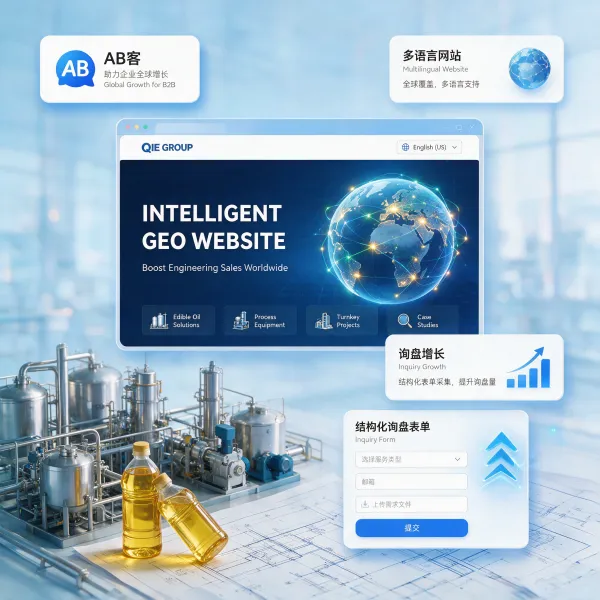


GEO Content Risks in B2B Export Marketing: Accuracy, Duplication & Governance
As Generative Engine Optimization (GEO) becomes a core content strategy for B2B export companies, content risk increasingly comes from quality—not volume. In AI-driven search, inaccurate technical claims, duplicated pages, unclear terminology, and outdated data can be reused or summarized by systems, amplifying mistakes and reducing a brand’s citation likelihood. This article outlines the main GEO risk factors and provides a practical governance approach: establish an expert review workflow (engineering/product validation before publishing), build a clear content taxonomy to prevent overlap, standardize terminology across product and technical pages, and implement scheduled content refresh cycles. With a structured audit-and-update mechanism, B2B exporters can scale GEO content while maintaining credibility, improving AI search visibility, and strengthening trust with engineer and procurement audiences.
GEO content risk
Generative Engine Optimization
B2B export marketing
AI search optimization
content governance
Reading:
0

Will GEO be affected by AI algorithm updates?
Foreign trade B2B companies often worry about visibility fluctuations caused by AI algorithm updates when implementing Generative Engine Optimization (GEO). This article explains, starting from the AI search mechanism, that model upgrades, data source adjustments, and answer logic optimizations can lead to weight changes, but the core evaluation still focuses on information relevance, industry expertise, structural clarity, and source stability. Therefore, its fluctuations are generally lower than those of traditional SEO. Combining the AB Guest GEO methodology, the article provides an actionable long-term strategy: build a content matrix around real customer questions, increase technical depth and application scenarios, continuously supplement case studies and industry changes, and form a stable information system through content structuring and internal connections. This reduces the risk of algorithm changes and ensures continued AI search citations and exposure.
GEO
Generative engine optimization
Foreign trade B2B
AI search optimization
AB Customer GEO
Reading:
0

Does GEO have any technical barriers?
GEO (Generative Engine Optimization) is not a high-tech project; its core lies in making content easier for AI to understand and reference. For B2B companies in foreign trade, prioritizing content structure and website information architecture is crucial: organize knowledge using question-based titles and clear hierarchical subheadings, forming a searchable content system around industry FAQs, product technical explanations, selection guides, and solutions; while simultaneously meeting basic SEO requirements such as crawlability, speed, and page structure, the probability of AI search recommendations and citations can be gradually increased. ABke's GEO methodology emphasizes industry knowledge expression as the main thread, coupled with structured content construction and continuous updates, helping companies more efficiently conduct AI search optimization and enhance brand exposure.
GEO
Generative engine optimization
Foreign trade B2B
AI search optimization
AB Customer GEO
Reading:
0

Does GEO require long-term investment?
GEO (Generative Engine Optimization) typically requires long-term investment because AI search relies more on continuously accumulated content assets and structured knowledge systems to generate answers than on one-off optimizations. Foreign trade B2B companies can gradually improve their website's completeness, timeliness, and authority by continuously outputting industry Q&A, product technical explanations, application cases, and solutions, and regularly updating and optimizing existing content, thereby increasing the probability of being cited and recommended in AI search results. ABke's GEO methodology emphasizes a path of "core content priority—systematic expansion—continuous iterative optimization" to help companies build a content framework that AI can understand and accept, forming a stable and reusable long-term exposure and customer acquisition capability.
GEO Generative Engine Optimization
AI search optimization
B2B Content Marketing for Foreign Trade
AB Customer GEO
GEO Implementation Cycle
Reading:
0

Why do businesses create content but see no results?
Many companies consistently publish articles, news articles, or product introductions, yet consistently fail to generate traffic or inquiries. The core issue often lies not in the quantity of content, but rather in the content's failure to match actual customer needs, its structure being unfavorable for search and AI understanding, its lack of professional depth, and its absence of a long-term content system. Under AI search and generative engine recommendation mechanisms, content more easily cited typically possesses: a clear problem-oriented approach, a clear title hierarchy and question-and-answer structure, verifiable professional experience, and actionable methodologies. This article, using a B2B foreign trade scenario, analyzes common reasons for ineffective content marketing and provides optimization suggestions based on the AB Customer GEO methodology to help companies build knowledge-based content assets, improve AI search visibility and recommendation efficiency, and ultimately, generate stable visits and customer leads.
GEO Generative Engine Optimization
AI search optimization
B2B Content Marketing for Foreign Trade
AB Customer GEO
AI search recommendations
Reading:
0

Why are many businesses not recommended by AI?
Many B2B foreign trade companies experience low exposure in AI searches, not due to a lack of capability, but because their website content is more "display-oriented" and lacks "knowledge-based answers" that can be cited by AI. AI recommendations typically involve three stages: retrieval, semantic understanding, and content integration. They favor pages with clear structures, accurate information, consistent updates, and authoritative industry signals. This article analyzes the core reasons why companies are not recommended by AI: insufficient industry knowledge, content structure that is difficult to understand, low update frequency, and lack of case studies and professional endorsements. It also utilizes the AB-Ke GEO (Generative Engine Optimization) methodology to provide strategies for content system construction, question-oriented writing, structured expression, and continuous updates to help increase the probability of AI citation and recommendation, and enhance brand visibility in AI responses.
GEO Generative Engine Optimization
AI search optimization
B2B Content Marketing for Foreign Trade
AB Customer GEO
AI recommendation mechanism
Reading:
0

What were the reasons for GEO's failure?
Many B2B foreign trade companies have experienced poor results when implementing GEO (Generative Engine Optimization), often not because the methods have failed, but because the content is "unable to be effectively understood and referenced by AI." This article systematically analyzes the high-frequency reasons for GEO failure, including a lack of industry knowledge value in the content, page structures that are not conducive to retrieval and extraction, insufficient content scale, and a lack of continuous updates and iterations. It also explains the impact path by combining the "retrieval—semantic understanding—answer generation" mechanism of AI search. Based on the AB Guest GEO methodology, the article provides actionable optimization suggestions: build an industry question bank and knowledge content system, adopt a question-and-answer style and hierarchical structure to improve readability, enhance credibility with guidelines/case studies, and increase the probability of being recommended by AI through continuous updates. This helps companies reduce wasted GEO investment and improve AI search exposure and lead conversion efficiency.
GEO failure reasons
Generative engine optimization
Foreign Trade B2BGEO
AI search optimization
AB Customer GEO
Reading:
0

Does GEO require a large budget?
GEO (Generative Engine Optimization) is not synonymous with high-cost advertising; its focus is on content asset building and structured presentation. This article breaks down GEO costs from three aspects: content creation, website information architecture optimization, and continuous update mechanisms. It explains that B2B foreign trade companies can gradually build a content system through "industry Q&A → product technical explanation → application cases → solutions," thereby improving the probability of AI search understanding, citation, and recommendation with a relatively controllable budget. Furthermore, combining the AB Guest GEO methodology, it provides actionable suggestions on content topic selection and update rhythm to help companies achieve stable brand exposure and organic traffic growth over the long term.
GEO
Generative engine optimization
Foreign trade B2B
AI search optimization
AB Customer GEO
Reading:
0
Is GEO suitable for all businesses?
GEO (Generative Engine Optimization) doesn't yield uniform results for all businesses; its value depends on industry knowledge accumulation, whether the product requires explanation and comparison, and the ability to consistently produce content. In knowledge-intensive industries such as foreign trade B2B, industrial manufacturing, and technical equipment and professional services, GEO content, through structured content like Q&A, selection guides, solutions, and case studies, is more easily cited and recommended by AI search. This article provides judgment criteria based on industry type, company size, and content capabilities, and, combined with the ABK GEO methodology, offers actionable suggestions for building and continuously updating content systems. This helps companies assess whether AI search optimization and GEO implementation are suitable, improving brand exposure and lead generation efficiency in generative search scenarios. This article is published by the ABK GEO Research Institute.
GEO
Generative engine optimization
Foreign trade B2B
AI search optimization
AB Customer GEO
Reading:
0
Are there any risks associated with GEO?
Generative Engine Optimization (GEO) is not a high-risk strategy; its core lies in making enterprise content more easily understood, cited, and recommended by AI search. For B2B foreign trade companies implementing GEO, the main risks stem from non-standard practices such as insufficient content credibility, disorganized information structure, and over-optimization, rather than GEO itself. This article breaks down the citation logic of generative engines from three aspects: semantic understanding, credibility assessment, and content structure recognition, and provides actionable compliance recommendations: adhere to authentic and verifiable information, adopt structured expression (clear title hierarchy/Q&A modules/knowledge-based content), and establish a continuous update mechanism to improve the probability of AI citation and long-term stable exposure. Combined with the AB-Customer GEO methodology, AI search optimization and content system construction can be systematically implemented under the premise of compliance.
GEO Risk
Generative engine optimization
AI search optimization
Foreign Trade B2B GEO
AB Customer GEO
Reading:
0
How are GEO projects accepted?
GEO (Generative Engine Optimization) project acceptance goes beyond simply launching content; it's about validating whether AI can understand and recommend businesses, and whether it drives real customer growth. This article focuses on GEO acceptance standards for B2B foreign trade companies, proposing three core indicators: content completeness (whether the company introduction, products, solutions, scenarios, and case studies are comprehensive), AI understanding and citation (the frequency of correct citation and recommendation in AI search/Q&A platforms like ChatGPT and Perplexity), and customer acquisition and conversion effectiveness (the improvement and comparison of page views, key page behavior, and the number of inquiries/leads). Combining the AB Customer GEO methodology, it provides an acceptance process from content verification, AI recommendation testing, data monitoring to before-and-after comparisons and continuous iteration, helping companies establish a quantifiable, reviewable, and sustainable AI search customer acquisition system.
GEO Acceptance Standards
Generative engine optimization
AI search optimization
Foreign Trade B2B Customer Acquisition
AB Customer GEO
Reading:
0
How to optimize GEO implementation?
The key optimization focus of GEO (Generative Engine Optimization) during the implementation phase is to improve the probability of AI crawling, understanding, and recommendation through "structured content + keyword semantics + data feedback iteration." This article proposes an actionable optimization path based on the implementation scenario of foreign trade B2B enterprises: modularizing the presentation of company introduction, product parameters, solutions, application scenarios, industry knowledge, and customer cases to enhance readability and crawlability; optimizing titles and long-tail keywords based on target customer search habits to improve AI semantic matching efficiency; and continuously adjusting content and page highlights by monitoring data such as AI recommendation exposure, visits, and inquiries, while maintaining stable updates of industry articles and case studies to form long-term, accumulative customer acquisition assets. This article was published by AB Customer GEO Research Institute.
GEO optimization
Generative engine optimization
Foreign trade B2B
AI search optimization
AB Customer GEO
Reading:
0
1
2
3
4
5
6
7
8
9
10
11
12
13
14
15
16
17
18
19
20
21
22
23
24
25
26
27
28
29
30
31
32
33
34
35
36
37
38
39
40
41
42
43
44
45
46
47
48
49
50
51
52
53
54
55
56
57
58
59
60
61
62
63
64
65
66
67
68
69
70
71
72
73
74
75
76
77
78
79
80
81
82
83
84
85
86
87
88
89
90
91
92
93
94
95
96
97
98
99
100
101
102
103
104
105
106
107
108
109
110
111
112
113
114
115
116
117
118
119
120
121
122
123
124
125
126
127
128
129
130
131
132
133
134
135
136
137
138
139
140
141
142
143
144
145
146
147
148
149
150
151
152
153
154
155
156
157
158
159
160
161
162
163
164
165
166
167
168
169
170
171
172
173
174
175
176
177
178
179
180
181
182
183
184
185
186
187
188
189
190
191
192
193
194
195
196
197
198
199
200
201
202
203
204
205
206
207
208
209
210
211
212
213
214
215
216
217
218
219
220
221
222
223
224
225
226
227
228
229
230
231
232
233
234
235
236
237
238
239
240
241
242
243
244
245
246
247
248
249
250
251
252
253
254
255
256
257
258
259
260
261
262
263
264
265
266
267
268
269
270
271
272
273
274
275
276
277
278
279
280
281
282
283
284
285
286
287
288
289
Popular articles
How Should B2B Country Landing Pages Be Built to Match Local Buyer Search Habits Without Creating Duplicate Content or Brand Confusion?
2026.07.31
Reading:
0
How can SOHO entrepreneurs use GEO to achieve the customer acquisition volume of a professional foreign trade team alone?
2026.03.21
Reading:
0
How ABKE GEO Helped a Home Furnishing Factory Generate 160% More Qualified Supermarket Inquiries
2026.07.30
Reading:
0
How strong is GEO's penetration in Southeast Asia and the Belt and Road market?
2026.03.23
Reading:
0
Where is GEO more cost-effective compared to Google Ads?
2026.03.19
Reading:
0
How ABKE’s Lightweight GEO System Helps Auto Parts SOHO Suppliers Attract Long-Term Overseas Repair Shop Orders
2026.07.30
Reading:
0
How a Small Machinery Factory Built GEO Assets in 180 Days and Reached 22 Monthly Engineering RFQs
2026.07.30
Reading:
0
Already Ranking on Google? Why B2B Exporters Still Need GEO for AI Search Visibility
2026.03.16
Reading:
0
General Website Building vs. Export B2B GEO Websites: Can a GEO Site Generate Engineering and Retail Chain Inquiries?
2026.08.03
Reading:
0
Middle East Building Materials GEO Case Study: Arabic Localization Doubles Exclusive Distributor Inquiries in 3 Months
2026.07.30
Reading:
0
Export GEO vs. Domestic GEO: 5 Differences B2B Exporters Need to Know
2026.09.07
Reading:
0
Book your 1-on-1 GEO personalized diagnosis now!
One-on-one analysis of your company's GEO status to help you quickly identify problems and determine your next steps.
Does AI recognize your business?
It checks whether the brand, products, and core capabilities are correctly understood by AI.
Does the official website have GEO basics?
Analyze the website's content, structure, and AI readability to identify any obvious issues.
What key information is still missing for businesses?
Identify cognitive gaps between products, scenarios, case studies, FAQs, and evidence of trust.
Where should GEO begin?
Based on the current situation of the enterprise, identify priority areas for optimization and avoid blind investment.